




Oil's Hormuz Rally Faces a Supply Test as US Output Climbs 3.8%


Iran's Hormuz risk lifts oil prices, but rising US crude output and tight inventories create a key test for crude's next move.
- Iran proposed a draft bill banning US, Israeli, and other "hostile" vessels from the Strait of Hormuz, with fines of up to 20% of a ship's cargo value, raising the risk of higher oil prices.
- Brent crude rose 1% to $83 a barrel as Hormuz tensions increased, but the benchmark remained down 7% for the week.
- US crude oil production reached 13.804 million barrels a day, with the four-week average up 3.8% from a year earlier, adding supply as Hormuz tensions supported prices.
- US commercial crude inventories rose 2.5 million barrels to 407 million barrels but remained 6% below the five-year average, supporting crude prices despite the weekly build.
- No Iran-Oman transit agreement has been announced, leaving the Hormuz risk premium in Brent prices until a deal is confirmed.
Brent's $83 Rally Tests Mining Costs as Diesel Prices Stay Elevated
Brent crude rose 1.25% to $83.52 a barrel after Iran proposed a draft bill restricting transit through the Strait of Hormuz, adding a geopolitical risk premium to oil prices. WTI crude rose 1.10% to $78.14 a barrel on the same supply concerns. The draft would bar US and Israeli ships from the strait until compensation is paid, increasing uncertainty over oil shipments through the world's busiest energy trade route.
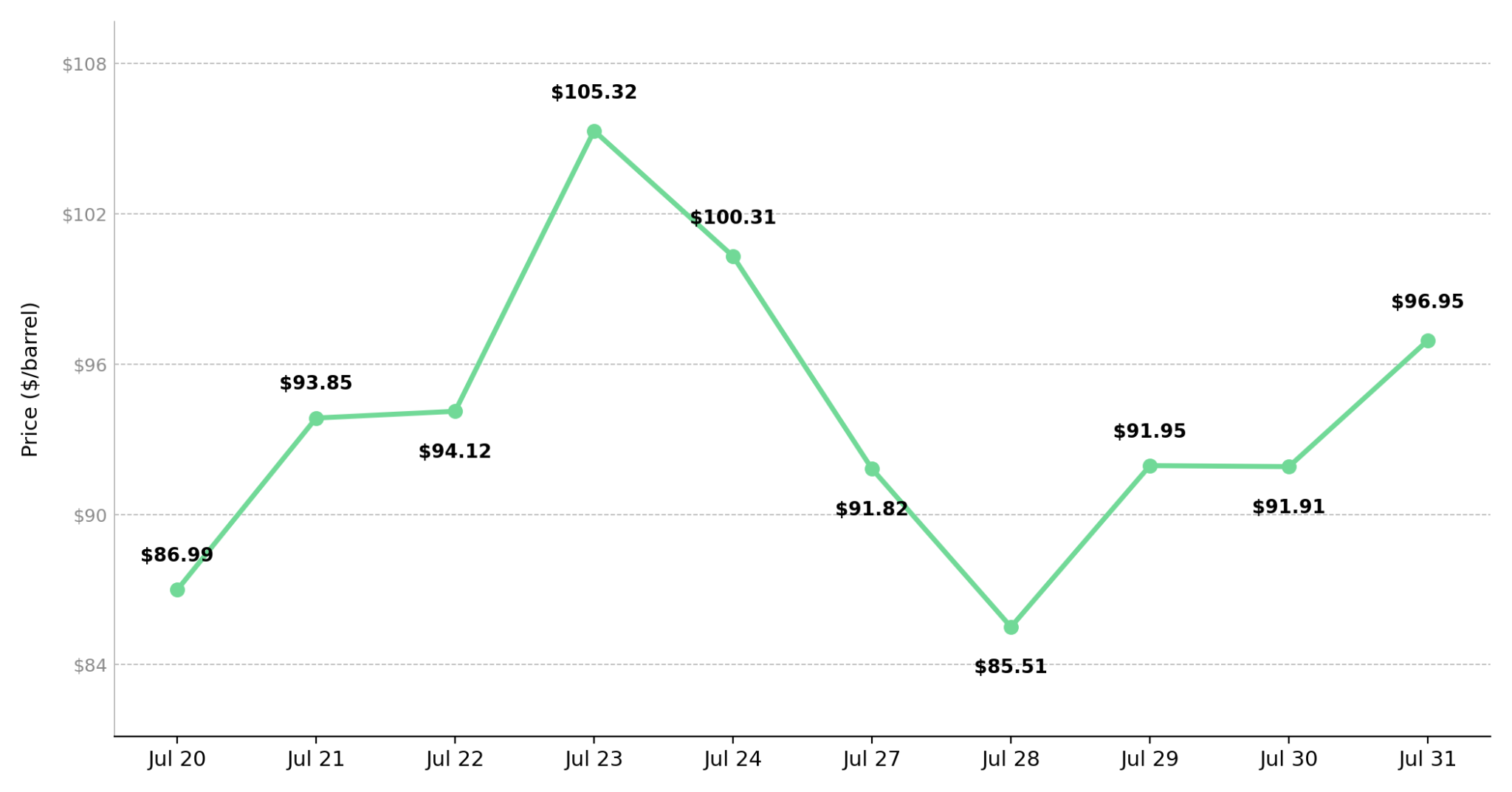
Despite the rebound, Brent was still down 7% for the week and traded well below the $102 a barrel high reached two weeks earlier. Tight fuel supply remained evident as California Reformulated Gasoline Blendstock for Oxygenate Blending (CARBOB) recorded the largest gasoline price increase among US regional benchmarks because California did not adopt the Environmental Protection Agency's (EPA) expanded summer fuel waiver. Higher diesel prices continue to pressure operating costs for mining operations.
Russian Refinery Losses & Zero Saudi Imports Pressure Global Fuel Supply
Ukraine struck Russia's Yaroslavl/Yanos and Bashneft Novoil oil refineries, reducing refining capacity and supporting refined fuel prices. US imports of Saudi crude fell to zero in July, the first such occurrence since 1985, reducing a key source of crude supply. Together, these disruptions tightened crude and refined fuel supplies to US and European markets while uncertainty over Strait of Hormuz transit continued.
The disruption persists because Iran has proposed restrictions but has not enforced them or reached a transit agreement with Oman. Iran's draft bill would fine transit violators up to 20% of a ship's cargo value, while Iran and Oman continue negotiating an alternative shipping route without reaching an agreement. Houthi attacks on Saudi Arabia and warnings of further regional attacks increased the risk of additional supply disruptions. President Trump said a resolution was near, but Tehran rejected the proposal, leaving uncertainty over Hormuz transit unresolved.
US Crude Output Climbs 3.8% as Hormuz Risk Supports Oil Prices
Brent remained volatile as uncertainty over Hormuz transit coincided with uncertainty over the Fed's next interest rate decision. Money markets remain split on the Fed's next rate decision, leaving the July payrolls report as the next major catalyst for oil prices. Caxton strategist David Stritch said markets were likely to remain volatile until incoming economic data provided clearer direction on interest rates.
If no Iran-Oman transit deal is announced, Brent's Hormuz risk premium could remain near $83 a barrel while US refinery utilization holds near 96.5% of operable capacity. A confirmed Iran-Oman agreement would remove part of the near-term risk premium and shift attention back toward underlying supply conditions. In both scenarios, US crude production remained a key offset, with the four-week average up 3.8% from a year earlier, limiting the impact of geopolitical supply concerns.
Diesel Hits $5.35 a Gallon, But Mining Costs Stay Under Pressure
Mining operations using diesel-powered haul trucks and generators are exposed to the same diesel price movements that affect operating costs across the economy. The national average retail diesel price reached $5.348 a gallon, up $1.548 from a year earlier, increasing fuel costs for mining operations. Higher diesel prices increase operating expenses, while crude price volatility makes fuel-cost planning more difficult.
J.P. Morgan chief US economist Michael Feroli said economic data could drive uneven market reactions, with a strong jobs report supporting higher rate expectations and a weaker report pushing yields lower. The same forces affect mining equities because interest rates influence company valuations while crude prices influence fuel costs on operating statements.
With money markets split and the Fed providing limited guidance, the timing of the next rate decision remains uncertain. The more durable signal is the gap between daily crude price moves and distillate inventories, which remained 12% below their five-year average according to Energy Information Administration (EIA) data, showing that fuel supply remains constrained.
Why EIA Inventories Matter as Hormuz Uncertainty Persists
Brent remains near $83 a barrel because Iran's Hormuz restrictions have been proposed but not enforced, keeping uncertainty around oil shipments elevated. While restrictions remain unresolved, US refinery utilization near 96.5% of operable capacity and crude inventories 6% below their five-year average indicate limited supply flexibility.
An announced Iran-Oman transit agreement could reduce the Hormuz risk premium and pressure Brent lower by improving confidence in regional oil shipments. If Iran enforces the draft bill's 20% cargo-value fine, higher shipping risk could keep the Hormuz risk premium elevated.
The EIA's weekly Petroleum Status Report provides the next confirmation point for US crude inventory trends. The next release will show whether US commercial crude inventories move closer to their five-year average or remain pressured by supply disruptions linked to Hormuz.
Analyst's Notes





Subscribe to Our Channel




Stay Informed


