




Nickel's Slide to $16,000 Hides a Widening Supply Deficit


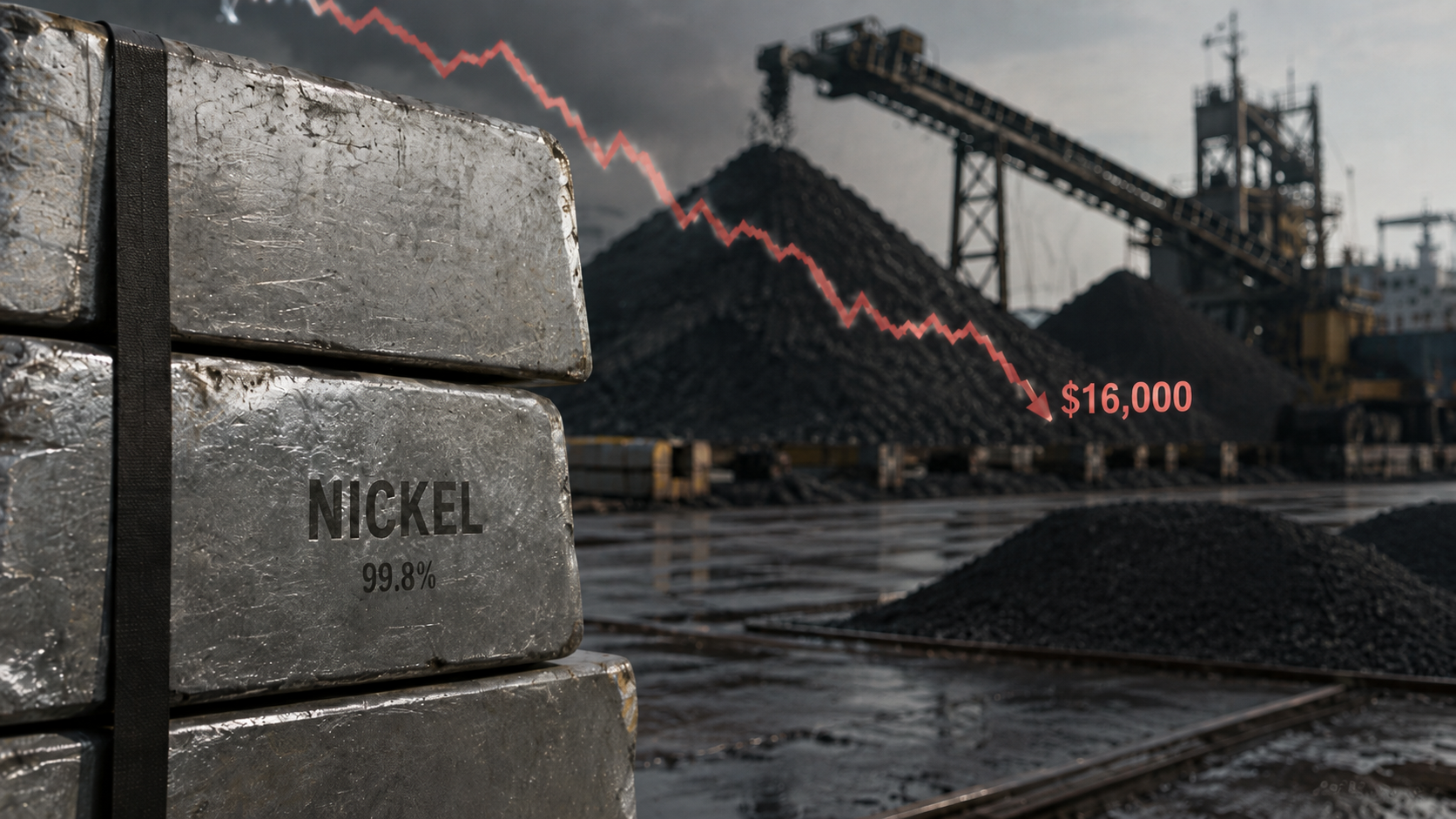
Nickel slides to $16,000 on Indonesian quota noise, but 35% battery-sector demand growth and a 3-4% supply drop point to a 20-30% price recovery by year-end.
- Nickel down to $16,000-$17,000, bottom of a six-month range, on Indonesian ore quota uncertainty rather than weaker fundamentals
- Battery-sector nickel demand up 35% year-over-year against 5% stainless demand growth and 3-4% supply decline
- Talon Metals' 13% nickel, 16% copper Tamarack hole draws valuation caution versus Voisey's Bay and Raglan-scale builds
- Canada Nickel closed its main federal permit, a ninth district resource, a ~C$1.5 billion Komatsu fleet deal and a $21 million financing
- Selby expects a 20-30% nickel price recovery by year-end on Indonesian supply tightness and understated demand growth
Mark Selby, Chairman and CEO of Canada Nickel Company (TSXV:CNC), joined Crux Investor for a wide-ranging Battery Show update covering nickel price action, the physical supply-demand picture, and a round-up of corporate developments across the sector. The conversation ranges from Indonesian ore quota politics through to drill results, financings and permitting news at half a dozen companies exposed to the battery-metals trade.
Nickel Price Action: Indonesia's Ore Quota Standoff
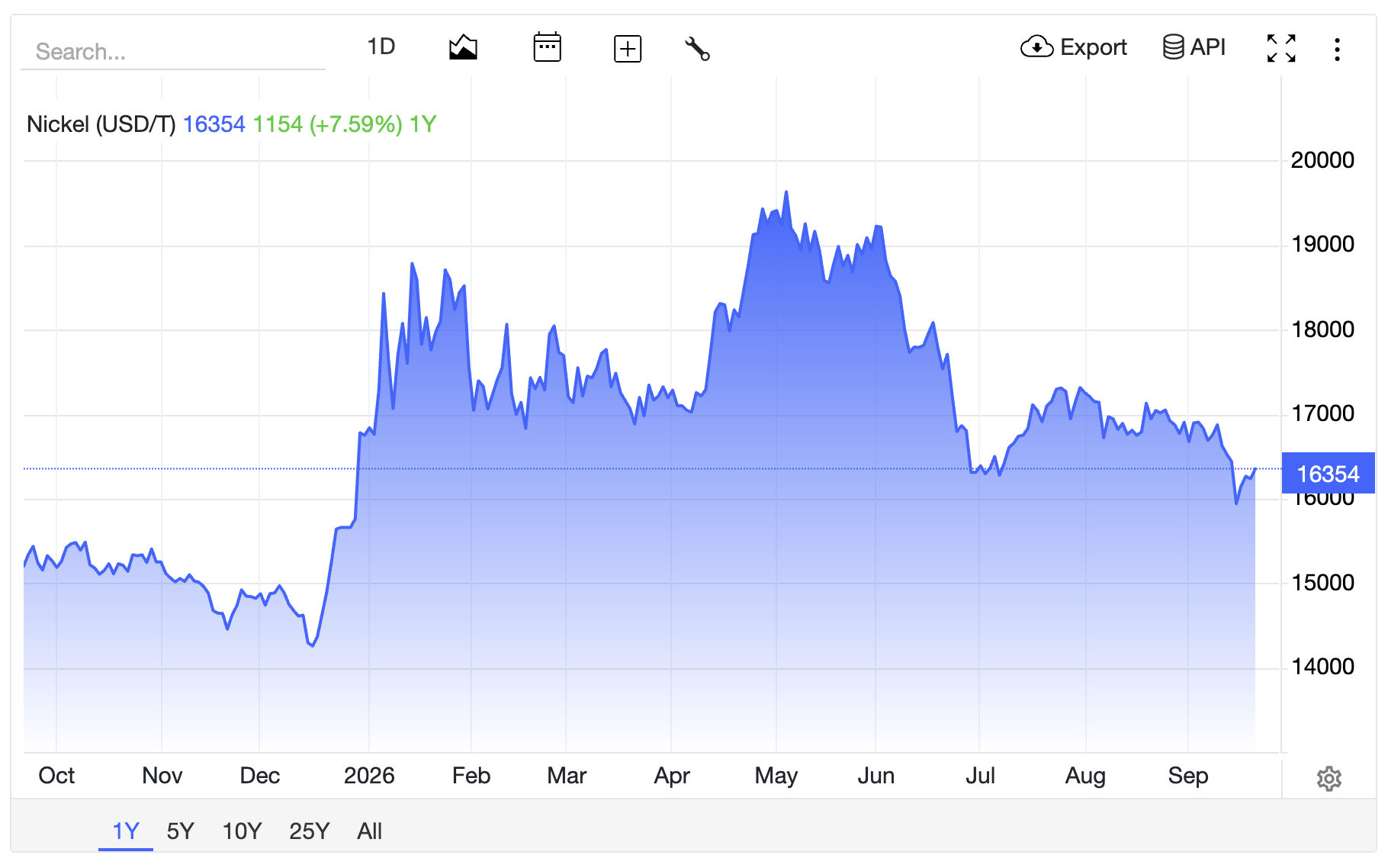
Nickel on the London Metal Exchange has slid back to around $16,000-$17,000 a tonne, the bottom of a six-month trading range, after briefly touching over $17,000. Selby frames the pullback as speculative positioning around Indonesian export policy rather than a genuine change in fundamentals. Indonesian ore production is running meaningfully below last year's levels, and the government has yet to confirm whether it will approve the full 280-290 million tonne quota requested for the year, or the roughly 10% top-up companies have flagged as possible.
A separate move that briefly rattled sentiment was a revised ore pricing formula for limonite ore feeding high-pressure acid leach (HPAL) plants, which moved so far that high sulphur costs meant HPAL producers could not actually pay the new benchmark price. Selby also points to the seasonal pattern: Philippine ore production is strongest from roughly April to September and drops to a quarter or a third of that level from October through March, meaning physical supply typically tightens through the winter regardless of quota politics.
"We're trading around $16,000 to $17,000... we should go back up to the $19,000 to $20,000 range by year end, and maybe a little bit higher than that come January, February... you should see a good 20 to 30% increase in nickel prices before year-end."
Signs of Underlying Tightness: Demand Outpacing Supply
Selby's case for higher prices rests on a gap between what analysts assumed at the start of the year and what the data now shows. Stainless steel demand, roughly two-thirds of total nickel demand, is up 5% year to date. Demand from the battery and precursor supply chain is up 35% year-over-year, even though end-market EV sales growth has only run around 5%.
"Stainless demand's up 5% year to date. Nickel used in the battery sector... is up 35% year-over-year. So you've almost got a 6% demand growth... global supply is down 3 to 4%."
Selby contrasts this with analyst forecasts at the start of the year that called for nickel demand growth of only 2-3%, alongside projections of 6-7% supply growth next year that he argues would require Indonesia to expand quotas well beyond its own interests. Cobalt is a related swing factor for HPAL economics: prices spiked to around $25 a pound in mid-2026 on a Congolese export ban, have since eased to roughly $18 as stockpiled material reaches market, and Selby expects a further drift toward $15, an important byproduct credit for HPAL producers already squeezed by high sulphur costs.
Interview with Mark Selby, CEO of Canada Nickel
Corporate Developments
Beyond the price and demand picture, Selby ran through a round-up of news across several companies exposed to the nickel and battery-metals trade - from a standout high-grade drill result to fresh financings and Canada Nickel's own run of project milestones.
Talon Metals' High-Grade Tamarack Discovery
Talon Metals (TSX: TLO) released what Selby calls one of the best drill holes he has seen in the nickel space at its Tamarack project in Minnesota, run as a joint venture with Rio Tinto.
"13% nickel, 16% copper... basically an ounce of precious metals per ton. It's one of the best holes in the nickel space I've ever seen... it is 750 to 800 metres deep, but it is a good interval."
Selby cautions that the interval sits 750-800 metres deep and the resource size around it is not yet established, and flags the market's roughly $1.5 billion implied valuation for Talon's stake as steep relative to comparable high-grade nickel builds such as Voisey's Bay and Glencore's Raglan, both of which cost around $2.5 billion and took roughly six years to build. He also points to KGHM's Victoria discovery near Sudbury, a comparably high-grade deposit that has sat undeveloped for over 15 years, as a reminder that grade alone does not guarantee a fast path to production.
Homeland Nickel's Oregon Consolidation
Homeland Nickel, led by CEO Steve Balch, has consolidated a portfolio of nickel laterite properties in Oregon after Selby connected Balch with a former RNC Minerals shareholder base. Selby positions Homeland's roughly $100 million valuation against comparable names: Ardea Resources (ASX), advancing a feasibility study with Japanese partners including Sumitomo Metal Mining near Kalgoorlie; Nickel 28, which holds an interest in an operating PNG project at a similar valuation; and Horizonte Minerals, whose Araguaia project went to zero despite a higher-grade resource than Homeland's, illustrating the funding risk still facing pre-resource nickel laterite stories.
Magna Mining's Capital Raise
Magna Mining, under CEO Jason Jessup, continues drilling in the Sudbury basin and recently closed a financing with a South American private investor providing a significant capital injection to fund further exploration and development.
Cobalt, Sulfide Financings & the Wyoming Frontier
On the sulfide side, Centaurus Metals flagged plans to reach financing and a final investment decision by the third quarter on its Brazilian nickel project. Cobalt prices remain a factor to watch here too: material held back by the Congo's export ban is now reaching the market, alongside sizeable stockpiles already sitting in China, which is part of why prices have eased. Cuban nickel assets have drawn multiple new bidders as US policy constrains operators' ability to work with Cuba, with Selby noting that individuals linked to the Trump administration have shown interest in picking up the asset. Visionary Metals has begun early-stage drilling on an underexplored, roughly 2.7-3 billion-year-old rock package in Wyoming that has seen little prior exploration work. Magna Mining continues drilling in the Sudbury basin, with financing now in place via Alpayana, a South American private investor that took a significant equity stake to fund further exploration and development.
Canada Nickel's Crawford Milestones & RWE Offtake
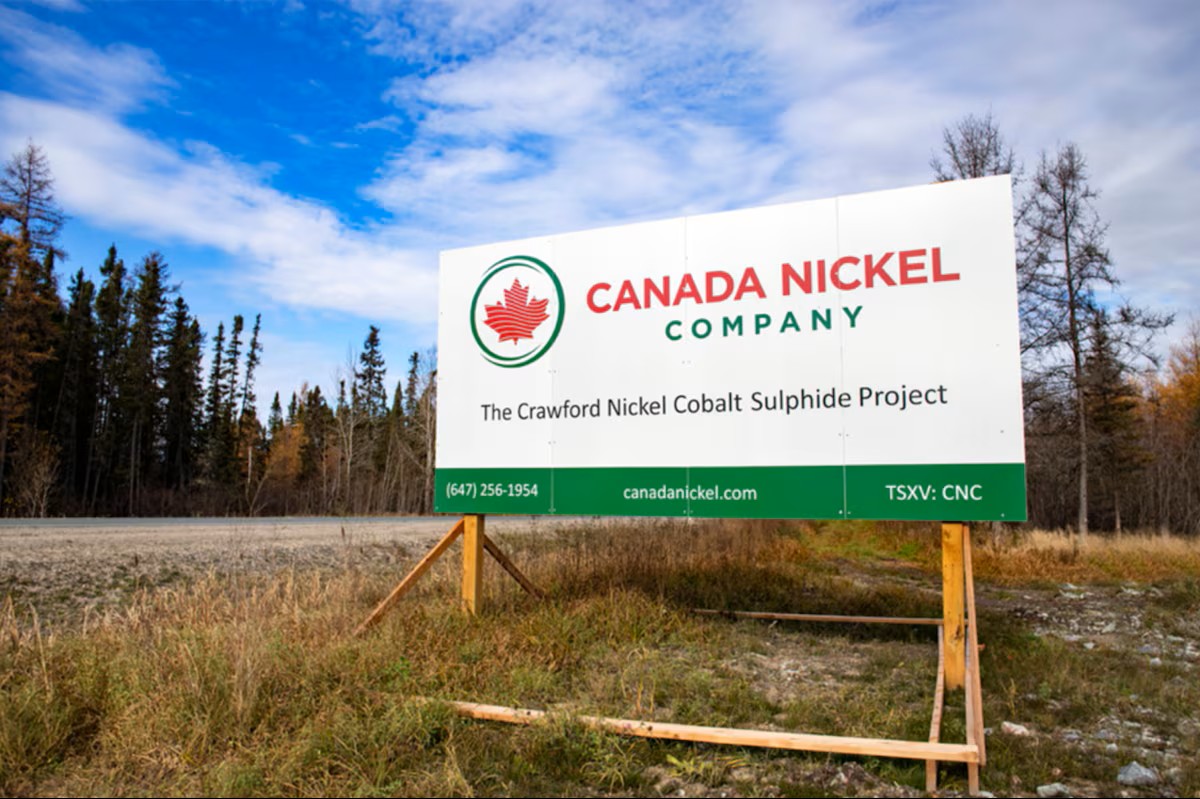
Canada Nickel itself closed out a run of milestones: the company's main federal permit at the end of July, a ninth Timmins Nickel District resource, upgraded infill drill results at Reed, selection of Komatsu for a roughly $1.5 billion mining fleet contract, and a $21 million financing at the end of August. Selby noted vendor enthusiasm around the Komatsu deal has been strong even before Crawford has generated any cash flow, reflecting confidence in the project team and jurisdiction. He also discussed Canada's Investment Summit, held shortly after Prime Minister Mark Carney's trip to Europe to strengthen bilateral ties, where the federal government's new immediate capital-cost write-off, worth an estimated $80 million to Crawford alone, and a "one project, one process" permitting push featured heavily, alongside the company's RWE Supply and Trading offtake agreement signed over the summer, positioned to serve European demand for low-carbon nickel.
Key Takeaways
Selby's core argument is that nickel's pullback to $16,000-$17,000 reflects positioning around Indonesian quota politics rather than deteriorating fundamentals, and that stainless and battery-sector demand growth running well ahead of consensus, combined with supply constrained near the bottom of Indonesia's quota range, points to a 20-30% price recovery into year-end and early 2026. Across the corporate round-up, the recurring caution is valuation discipline: several richly priced discovery stories are being compared to Voisey's Bay and Raglan-scale builds that took years and billions of dollars to realise, while names such as Homeland Nickel, Nickel 28 and Ardea offer lower-cost entry points into comparable exposure. Readers should note that this commentary reflects the perspective of a company executive with a direct financial interest in the nickel price and in several of the companies discussed, and should weigh it alongside independent market data and company disclosures.
TL;DR
Nickel has slid to $16,000-$17,000 a tonne on Indonesian quota uncertainty, but Canada Nickel CEO Mark Selby argues fundamentals point higher: stainless demand is up 5% and battery-sector nickel demand up 35% year-over-year, against supply down 3-4% globally. He expects a 20-30% price recovery by year-end. The round-up covers a standout high-grade hole at Talon Metals' Tamarack project (with a valuation caution attached), Homeland Nickel's Oregon consolidation, Magna Mining's new financing, and Canada Nickel's own permit, resource, Komatsu fleet and financing milestones.
FAQ (AI-Generated)
Analyst's Notes





Subscribe to Our Channel











Stay Informed


