




Saudi Rerouting Cuts Brent to $104 as Refiners Keep Diesel Edge


Yanbu holds about four export days as a six-week repair window keeps oil supply tight, with WTI below $92.69 signaling the outage no longer supports prices.
- Brent futures fell 1.6% to $104.09 per barrel and West Texas Intermediate (WTI) declined 1.2% to $101.15 on September 17, as Saudi ship-to-ship offers eased immediate supply fears.
- Saudi Arabia is targeting half of East-West pipeline capacity within days and full capacity within six weeks, but Yanbu storage below 15 million barrels, down from nearly 21 million in July, preserves the crude risk premium.
- Prospects for US-Iran talks could cap Brent near term, but any pipeline repair delay could return prices to the week’s $108 high.
- US distillate stocks remained 13% below the five-year average in the week ending September 11, supporting refining margins while the pipeline restart remains unconfirmed.
- WTI below its September 4 level of $92.69 would erase the subsequent $8.58 weekly gain and show that the pipeline outage no longer supports prices.
Saudi Rerouting Pushes Brent to $104 Before New Barrels
Brent futures fell 1.6% to $104.09 per barrel and WTI slipped 1.2% to $101.15 for a second day as Saudi ship-to-ship (STS) offers to Asian refiners near Sohar, Oman, eased immediate supply concerns.
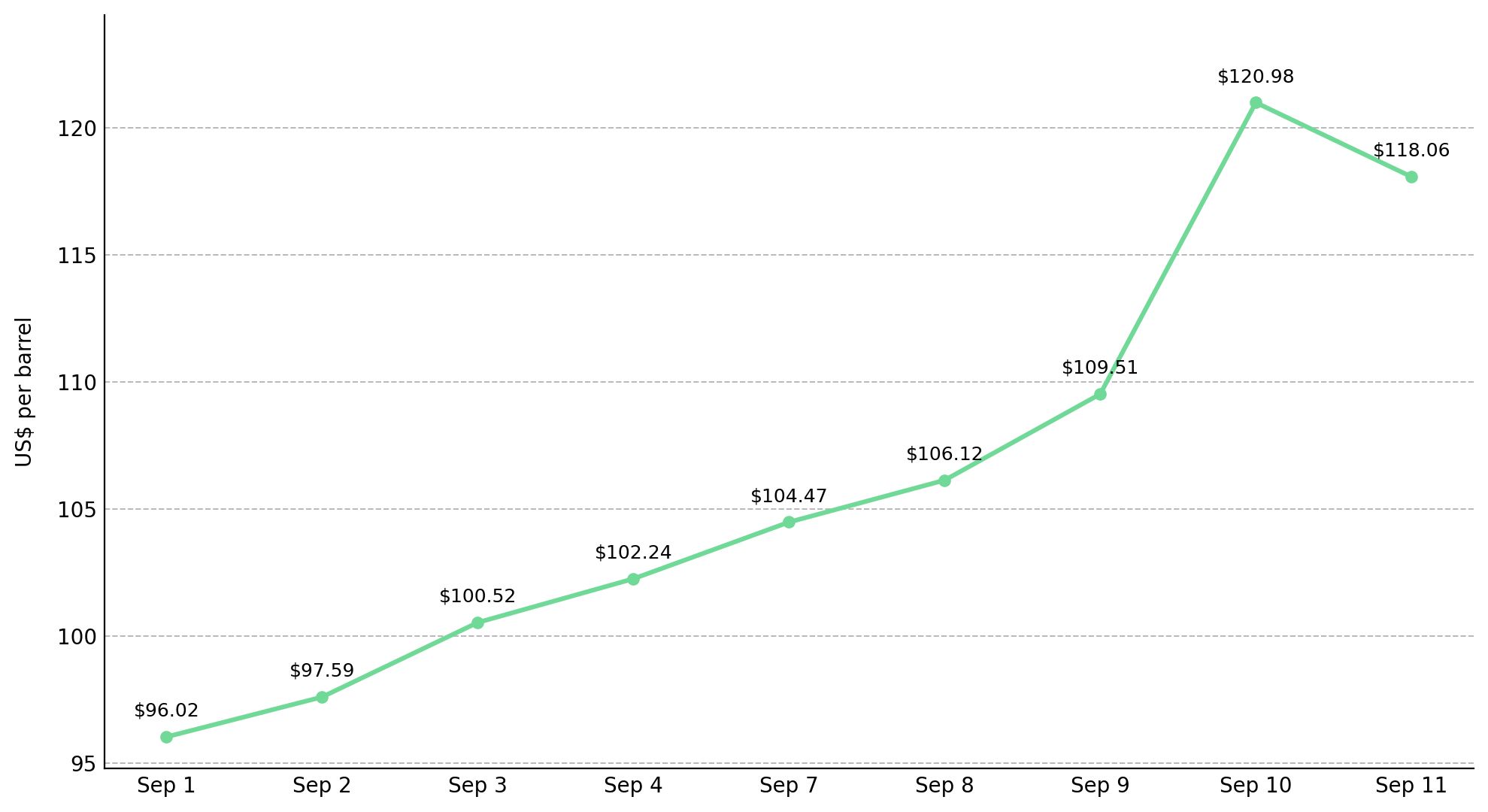
Futures fell before rerouted barrels reached buyers, so the pullback reflects expected supply rather than confirmed delivery. Yanbu inventories dropped below 15 million barrels from nearly 21 million in July, enough for about four days of exports at 3.5 million barrels per day. With Brent spot up 26% from $96.02 to $120.98 in nine days, limited storage preserves further price upside if pipeline repairs miss their target.
Hormuz Blockade & Pipeline Outage Cut Yanbu Storage
Houthi attacks shut the East-West pipeline to Yanbu, halting loadings and prompting Riyadh to cancel some European shipments. Soojin Kim, Research Analyst at Mitsubishi UFJ Financial Group (MUFG), says Saudi Arabia is targeting half capacity within days and full capacity within six weeks, supporting crude prices until full flow returns.
The East-West pipeline feeds Yanbu, Saudi Arabia’s main alternative outlet since Iran blockaded the Strait of Hormuz after US and Israeli attacks in February, while tanker traffic remains in single digits. Peter Massabni, Head of Business Development at XS.com, says renewed escalation would keep inflation high and lift bond yields, supporting oil prices while pressuring rate-sensitive assets.
Six-Week Restoration Timeline Preserves Crude Upside
US Energy Secretary Chris Wright says the outage should last days, but the reported repair plan targets only partial flow within that period and full capacity within six weeks. The gap keeps crude prices sensitive to any delay in restoring full throughput. Soojin Kim, Research Analyst at MUFG, told The Wall Street Journal:
“A faster restoration of Saudi pipeline capacity could ease physical market pressures, although constrained Hormuz flows and continued Russian supply disruption will keep crude prices elevated."
Diesel Shortage Lifts Gulf Coast Crack Spread to $107.26
US on-highway diesel reached $6.285 per gallon, up $2.546 or 68% year over year, raising unhedged trucking costs. Refiners benefit from the same shortage as the US Gulf Coast ultra-low sulfur diesel (ULSD) crack spread rose 15.5% from its August average of $92.84 to $107.26 per barrel, widening diesel margins.
Saudi Arabia is testing an STS route near Sohar, a method Abu Dhabi National Oil Company has used to supply crude outside Hormuz. The route could restore some crude flows, but US refinery utilization at 96.8% leaves little room to increase fuel output, supporting diesel margins.
Keep crude and refining positions small until Saudi Arabia confirms restored pipeline flows. WTI at or below $92.69 would erase the $8.58 weekly gain and show that the outage no longer supports prices, while leveraged products would amplify losses.
What Tests WTI Above $100
Crude above $100 per barrel is supported by Hormuz tanker traffic remaining in single digits and the East-West pipeline operating below full capacity ahead of its six-week restoration target. While both constraints persist, refiners benefit from high diesel margins and producers with export routes outside Hormuz retain stronger pricing, as 96.8% US refinery utilization limits additional fuel output.
WTI below $92.69 would erase the weekly gain and show that the pipeline outage no longer supports crude prices, while rebuilding distillate stocks would weaken refining margins. Until either signal appears, the futures decline reflects expectations of partial pipeline recovery within days rather than confirmed full restoration within six weeks.
The September 23, 2026 EIA Weekly Petroleum Status Report will show whether diesel inventories are rebuilding. Distillate stocks above the year-ago level of 124.7 million barrels would signal supply recovery and pressure diesel crack spreads.
Analyst's Notes





Subscribe to Our Channel





Stay Informed


