




Olive Resource Capital’s Q4 Shopping List: Why Tax-Loss Season Is an Opportunity


Olive Resource Capital explains how tax-loss selling and Q4 seasonality create entry points, naming seven lithium, copper and gold stocks it plans to buy.
- Tax-loss selling has returned to junior resources for the first time in the Compass series, after being absent last year and immaterial in 2024.
- Q4 is historically the weakest quarter, with November typically marking the bottom ahead of a December Fed meeting and the Christmas and January rallies.
- Olive held about $3 million in cash at the end of September and plans to deploy it over six weeks.
- The shopping list covers Li-FT Power, Gladiator Metals, Prospector Metals, K92 Mining, Troilus Mining, Sunday Lake Gold and White Gold.
- Execution rules: avoid companies needing financing before year end, wait for free-trading dates and flow-through raises, and buy market-driven weakness in quality assets.
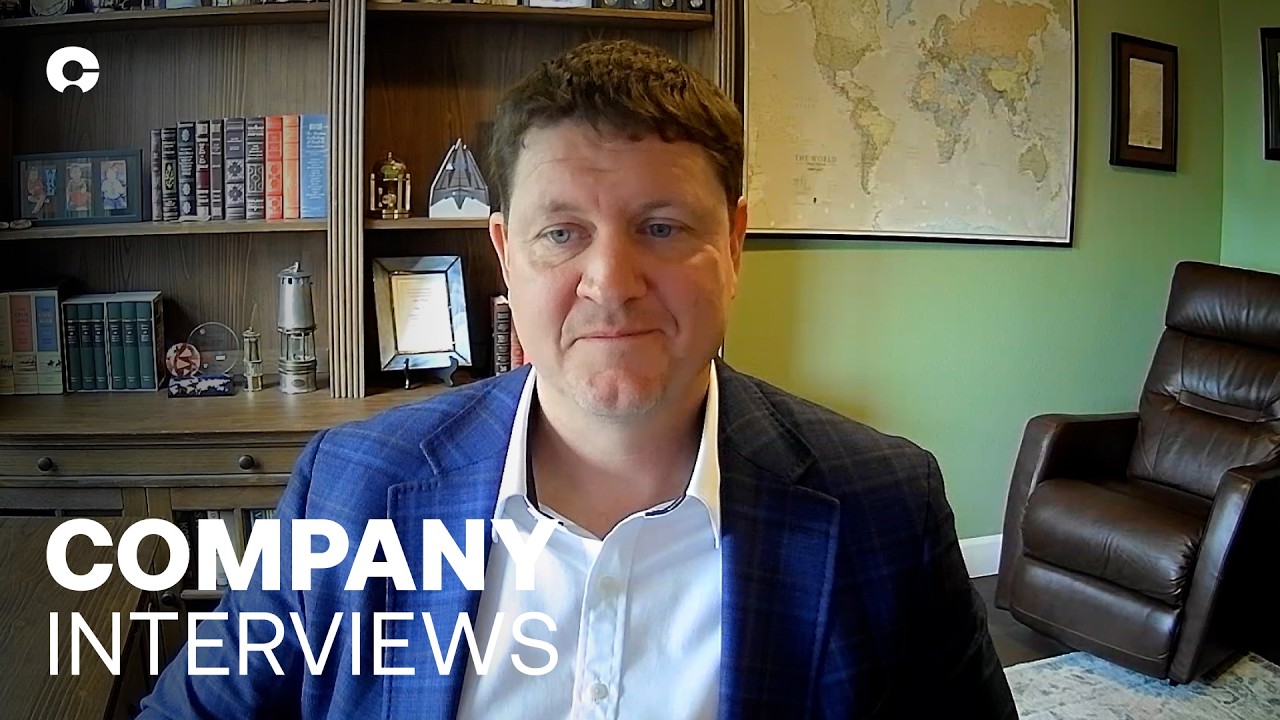
Tax-loss selling has returned to the junior resource sector for the first time since Olive Resource Capital (TSXV:OC) began recording its Compass series. In the latest episode, Samuel Pelaez, President, CEO and CIO, and Derek Macpherson, Executive Chairman, set out how the firm reads the fourth-quarter calendar, why seasonal selling pressure can create opportunity, and which holdings it plans to add to over the coming six weeks.
The pair sat down immediately before recording to go through every name in the portfolio. The result is a shopping list of seven companies spanning lithium, copper and gold, from early-stage explorers to a producing mine. Some of the positions had not previously been disclosed. Macpherson noted that tax-loss selling was largely absent last year, when stocks and the gold price were running, and was not material in 2024 either. That makes this year's weakness unfamiliar territory for investors who have only known the recent bull phase.
Seasonality & the Mechanics of Tax-Loss Selling
Pelaez treats seasonality as one factor among several when buying and selling. Q1 is typically the strongest quarter for resource investing, and Q2 also tends to be positive. Q4 is usually the weakest. It brings tax-loss selling, portfolio readjustment and the flow-through investing season, alongside macro events such as this year's US midterm elections. Pelaez noted that most of the largest single-day drawdowns in US capital markets have occurred in October. In resources, November tends to mark the bottom. A late-November or early-December Federal Reserve meeting has typically coincided with markets bottoming and the start of the run into the Christmas rally.
The mechanics explain the timing. Macpherson said that in Canada, investors with non-registered accounts can crystallise a capital loss and set it against capital gains in past or future years. A stock bought at a dollar and now worth 50 cents therefore has value to its holder as a loss. To claim it, the investor must stay out of the stock for 30 days. Selling in late November or early December allows a buy-back in January, when small, less liquid names often see a further rally.
Tax-loss selling can technically run until the second or third last trading day of the year, once trade settlement is accounted for. In practice, Macpherson observed, the season starts earlier each year, often at the end of September after the autumn conferences. Pelaez added the institutional view. Fund managers typically receive a realised-gains figure at the end of September, sort the portfolio by unrealised losses and work down the list for sale candidates. Many US financial institutions also have an October 31 fiscal year end, which pulls some of the selling forward.
Lithium and Copper
The list opens with Li-FT Power (TSXV:LIFT), a lithium developer with large-scale assets in Quebec and the Northwest Territories. The company holds an option on the former Renard diamond mine as a processing facility. The stock has been hit hard alongside most lithium equities and, as both partners noted, is trading at an all-time low. Pelaez argued that very few lithium developers have the resources, people and potential to become operations. Li-FT is the one Olive chose on that basis. The position has never been outsized, in keeping with Olive's practice of buying in intervals over time. With the stock at its lowest level, Pelaez reasoned, every holder is carrying a loss, Olive included. The plan is to average down and increase the stake. Macpherson tied the name to a core principle of buying good assets in commodities that are out of favour.
Gladiator Metals (TSXV:GLAD) is a copper explorer in the Yukon, close to Whitehorse. Macpherson highlighted spectacular drill results, but the stock has fallen materially since the summer. Olive likes copper and copper exploration names and sees the pullback as a chance to add.
Both companies financed this summer, and both have shares approaching their free-trading dates. Gladiator's falls around mid-November and Li-FT's around mid-December. Macpherson prefers to wait until after those dates before buying aggressively, as newly free-trading stock in a weak market can add supply. Pelaez stressed why the summer raises still matter.
"One of the key considerations for buying something during tax [loss] selling is ensuring that it is not a candidate that needs financing before [year] end."
The risk otherwise is that an investor buys into the weakness and is then shown a new deal well below their entry price. Both stocks now trade below their summer financing prices, but neither carries the overhang of an imminent capital raise.
Precious Metals
Prospector Metals (TSXV:PPP) is one of Olive's favourite exploration names and a regular feature on the Compass. The market has not rewarded its drill results, although Macpherson considers them decent for the stage of exploration. Olive was buying at around a dollar earlier this year, and the stock now trades in the mid-60-cent range. Pelaez said the company is well funded, with no imminent capital raise expected. He pointed to a summer drill programme of around 100 holes, only a handful of which have been reported. That leaves a pipeline of results landing during the tax-loss window. Macpherson acknowledged that this is not the usual entry point for seasonal explorers, which typically falls in March and April after PDAC (the Prospectors & Developers Association of Canada convention). The depth of the sell-off, the volume of pending news and the low financing risk justify the exception.
The remaining four names are less obvious tax-loss candidates, but Olive sees them as buying opportunities on any market weakness.
K92 Mining (TSX:KNT) sits in Olive's liquid portfolio and has been hit, probably disproportionately, by the broader sell-off. Macpherson was encouraged by the company's update in Denver, presented by David Medilek, who has taken over as CEO. He sees K92 near the end of the capital spend on its current expansion, with a new mill due to lift production. At $4,000 an ounce gold, he expects the operation to generate substantial cash, giving the stock its own fundamental momentum.
"The weakness isn't related to the fundamental operations, it's the market. And so, it's a great opportunity to step in and buy."
Troilus Mining (TSX:TLG) is a smaller company than K92 but still sizeable. Olive has been a shareholder for a long time, has traded around the position and recently exercised 45-cent warrants. Pelaez described it as one of very few advanced developers that will be built this cycle. He believes nearly all of Olive's past purchases were made in Q4 of different years. The firm considers the current window an attractive entry point given how far the company has advanced, and this would be its first purchase in some time.
Sunday Lake Gold (TSX:SNDY) is the former Wallbridge Mining, which completed a name change and 20-to-1 share consolidation. The stock trades at around $1.50, equivalent to seven and a half cents before the consolidation. What first drew Olive in was the move by Agnico Eagle and Waratah Capital Advisors to roughly 19.9% each, placing around 40% of the company with two groups. Macpherson said Waratah is not investing to be passive. He sees the name change and consolidation as early steps in a wider transformation, with more to come. The Fenelon project offers good grade in a tier-one jurisdiction, and nearby mills would welcome the feed, particularly from its high-grade parts. Macpherson also identified Agnico as a potential buyer, as the major moves underground at Detour. Olive began buying around mid-June and may now be more aggressive. Pelaez noted that the strategic investors paid a premium to today's price. Being able to buy below the price of such a recapitalisation financing is unusual, and he attributed it to the macro backdrop and a softer gold price.
White Gold Corp. (TSXV:WGO) rounds out the list. Its key change this year was the appointment of Donovan Pollitt as President. Both partners hold Pollitt in high regard, and his decision to join signalled the company's potential to them. Olive has owned the stock on and off and is now building a position. Pelaez sees the appointment as a signal of intent to move the asset from advanced exploration towards development, the stage at which Olive prefers to invest. The stock re-rated after the change but has since returned to a price the firm finds attractive.
Macro Backdrop
Beyond the calendar, Macpherson flagged an unusually large pool of flow-through money this year, which should bring a wave of flow-through financings before December 31. None of this, in the partners' view, changes the underlying direction of the sector.
"The longer term fundamentals of a commodity bull market haven't really changed and so if they haven't really changed, then this is a buying opportunity [...] Look at as an opportunity to build a position in names that you really like because sometimes the reason your favorite name is getting sold off when it shouldn't be."
He expects a material lift in many of these stocks over the next three to four months. On that reading, the current weakness is a timing effect layered on top of an intact trend, rather than a change in the trend itself.
Positioning
Olive enters the season with a strong cash position. Macpherson said the firm held about $3 million in cash at the end of September. That reflects its recent financing and the measured pace at which it deployed capital into a falling market through the year. Pelaez said the plan is to put that cash to work over the coming six weeks.
Sequencing matters as much as selection. For companies likely to raise flow-through money in the autumn, Macpherson advises waiting until the financing has closed, even for investors buying in the market rather than participating. He sees the practical cut-off as early to mid-December. Waiting longer risks missing the tax-loss window altogether. Olive is not chasing tax-loss opportunities in its liquid portfolio, as the effect is far less pronounced in large, liquid names.
Stock Selection Philosophy
Macpherson described the screen he used as an analyst to find tax-loss candidates. He compared each stock with its last financing price, its average daily traded volume and its high for the year. Candidates are often names that suffered a negative event during the year. This year, many have simply been dragged down by broader market malaise, or face poorly timed free-trading dates on underwater financings. Olive layers its own criteria on top: teams and assets capable of becoming operations, a willingness to buy out-of-favour commodities, and corporate change such as the strategic shareholders at Sunday Lake and new leadership at White Gold.
Both partners stressed that the list reflects Olive's own portfolio and criteria. It is not investment advice, and investors should do their own research and consult a professional.
Key Takeaways
Olive's message is that tax-loss season, which investors routinely complain about, is better treated as an opportunity. The firm has around $3 million to deploy over six weeks across seven names, from a lithium developer at an all-time low to a gold producer nearing the end of its expansion spend. The common threads are funding, timing and quality. The seasonal pattern Pelaez describes points to a November bottom, a December Fed meeting and a rally into the new year. Investors who share the view that the commodity bull market remains intact may find this window offers entry prices that are rarely available. The key watch-items are the mid-November and mid-December free-trading dates, Prospector's pending drill results, production from K92's new mill and further corporate change at Sunday Lake.
TL;DR
Olive Resource Capital sees this year's return of tax-loss selling as a buying opportunity rather than a threat. Samuel Pelaez and Derek Macpherson expect resource stocks to bottom in November, around a late-year Fed meeting, before a rally into January. With about $3 million in cash at the end of September, the firm plans to deploy over six weeks into Li-FT Power, Gladiator Metals, Prospector Metals, K92 Mining, Troilus Mining, Sunday Lake Gold and White Gold. Its filters are simple: avoid companies that need financing before year end, wait for free-trading dates and flow-through raises to pass, and buy quality assets whose weakness is market-driven rather than fundamental.
FAQ (AI-generated)
Analyst's Notes





Subscribe to Our Channel






Stay Informed


