Open-Pit Veteran George Bee Leads U.S. Gold Corp's US$394 Million CK Gold Build


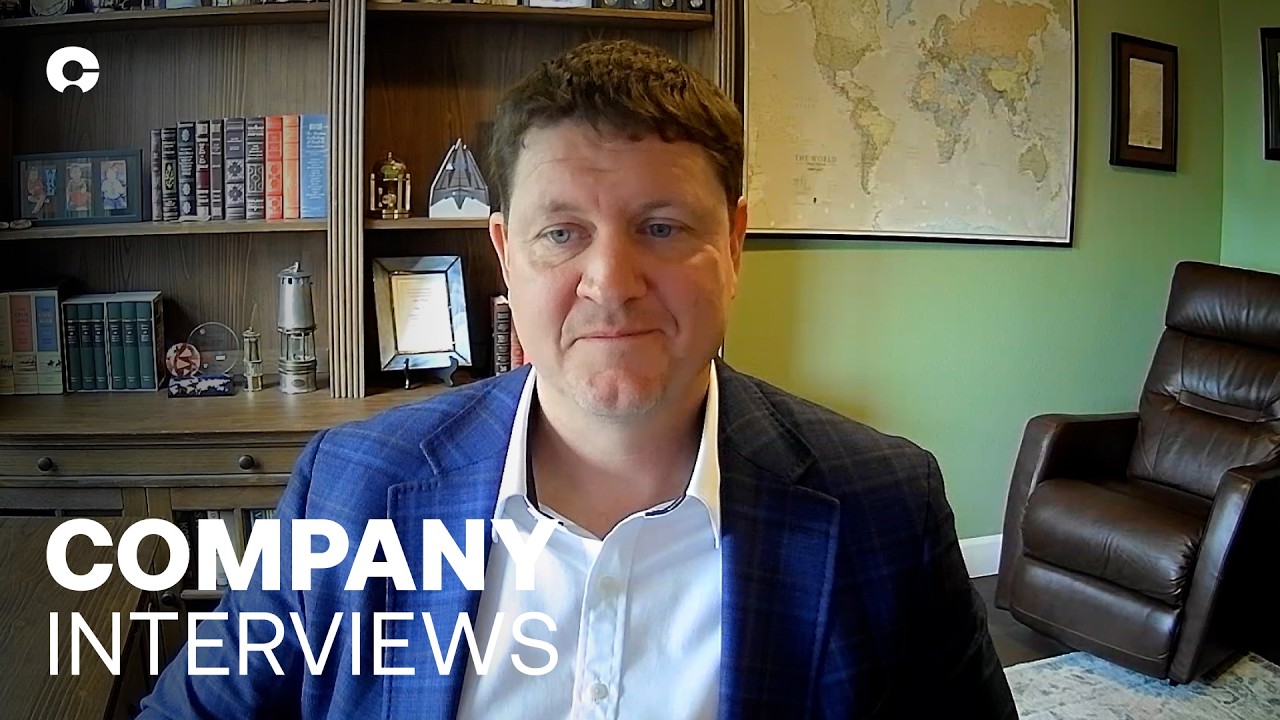
U.S. Gold Corp chief executive George Bee brings a career in large open-pit mining to the simple truck-and-shovel plan for the company's CK Gold project in Wyoming.
- George Bee worked in Cornish tin mines and South African gold mines before moving into open-pit mining.
- At the Palabora copper mine, oil sanctions pushed the operation to trolley-assisted haulage.
- At Goldstrike in Nevada, Barrick moved large tonnages to reach deep sulfide ore treated in autoclaves.
- CK Gold is planned as simple truck-and-shovel mining feeding a crush, grind, and flotation plant.
- U.S. Gold Corp plans to add experienced personnel and appoint a financing advisor.
U.S. Gold Corp (Nasdaq: USAU) is assembling financing for a US$394 million initial build at its CK Gold project in Wyoming, with a construction decision targeted as soon as the second half of 2026. The mine plan is simple, truck-and-shovel mining similar to nearby quarry operations, and the executive leading it built his early career in large mines in South Africa and Nevada. President and Chief Executive Officer of U.S. Gold Corp, George Bee, has taken several mines from development to production. He worked for Rio Tinto and Anglo American and was recently a senior vice president at Barrick Gold.
From Cornish Tin to Deep-Level Gold in South Africa
Bee's career started underground. He earned a mining degree at Camborne School of Mines in Cornwall. He then spent 6 months after graduating as a day's-pay miner in the county's tin mines, breaking rock with a 16-pound hammer.
With no Canadian work permit, he went to South Africa in 1980. He joined Anglo American's engineering training program at Welkom, where the gold workings lay about a mile and a half underground. The shaft he worked on hoisted between 2,500 and 4,500 people per day across both day and night shifts. By 23, he was a shift boss overseeing about 150 people underground.
Bee traces the safety discipline of that work to mine standards set after past accidents:
"All those mine standards had been written in blood."
After about 3 years underground, he moved to open-pit mining, which he saw as a little more technically challenging.
Open-Pit Copper Under Sanctions
The move took Bee to the Palabora copper mine near Phalaborwa, operated by Rio Tinto, where the pit was starting its final expansion. The ore body was a pipe, a roughly cylindrical body of ore reaching to depth, grading about 0.5% copper, with the best grades near 1.25%, and the mine ran about 83 Unit Rig R170 haul trucks with P&H rope loaders. By the time he left, the mine was putting in infrastructure to go underground by block caving, a method that undercuts the ore so it breaks and falls under its own weight.
Oil sanctions against South Africa made diesel expensive, so the mine installed trolley-assisted haulage, in which trucks run on electric power drawn from overhead lines through a pantograph. The change saved diesel, extended engine life, and cut maintenance costs. With Bee as drill-and-blast engineer, the mine switched to emulsion explosives and, with imported emulsions costly, reverse-engineered an emulsifier from a South African food factory.
He rose from engineer through short-range planning, blasting, loading, and hauling to superintendent. He ranks this low-grade operation, run under sanctions, as the most formative stretch of his first 20 years in mining.
Large Tonnages & Deep Sulfides at Goldstrike
Former South African colleagues had joined American Barrick, then run from a townhouse in Toronto, and Bee followed after immigrating to Canada. Barrick had acquired Goldstrike in Nevada, where crews finished mining near-surface oxide ore by heap leaching, which dissolves gold from stacked ore with a cyanide solution, while digging toward deep sulfide ore. That ore needed autoclaves, pressure vessels that oxidize sulfide minerals so the gold can be dissolved, and a carbon-in-leach plant, which captures the dissolved gold on activated carbon.
At the Betze-Post pit, crews removed 700 to 800 feet of material with P&H 2800 shovels to reach the gold-bearing horizon. Pumps lowered the water table at a rate recalled as about 33,000 gallons per minute. Bee arrived in Elko around 1989.
In Bee's telling, the Goldstrike build joined his copper-pit experience to precious-metals recovery:
"When I came to Goldstrike, we had to move a lot of material to make the Goldstrike mine what it was. So we were applying the brute force of a base metal operation where moving large tonnages, but then when you got down to the ore body, applying the finesse to properly recover the precious metals and get them into the right processes to optimize recovery."
U.S. Gold Corp's own Nevada ground is Keystone, an exploration project on Nevada's Cortez Trend that carries the Wenban Formation, the host unit at the nearby Cortez Complex. Management expects to find deposits in the Wenban Formation at Keystone, as Nevada Gold Mines has at Cortez.
A Truck-and-Shovel Plan at CK Gold
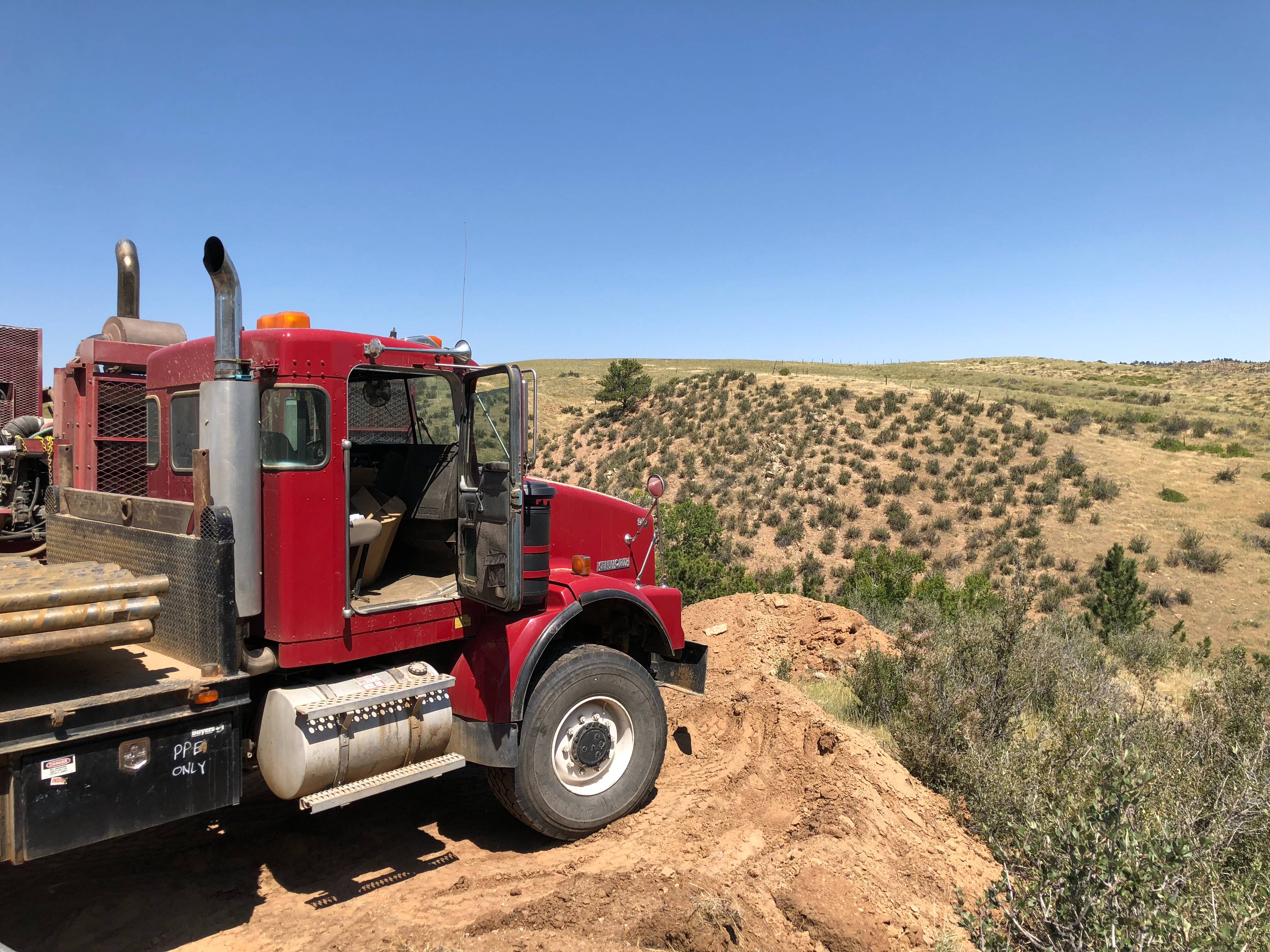
CK Gold is designed around 100- to 150-ton trucks and 20-yard shovels and loaders working over very short haul distances, and many existing equipment fleets are operated by cost-competitive contractors. Processing runs through crushing, grinding, and flotation, a process that separates minerals from waste rock using air bubbles. Tailings, the ground waste left after processing, are dewatered and dry-stacked, and gold-copper concentrates are shipped to off-site smelters. The plant would treat about 20,000 tons per day over an 11-year mine life.
On cost and difficulty, Bee's view of CK Gold comes with a caveat about development:
"I see this financing very doable for the metric that we've got, round numbers $400 million. And execution, nothing's ever easy in the mining space, certainly when you get into development, but this is a relatively simple project to develop."
Development risks include sourcing primary equipment amid changing tariffs and rising diesel prices, while power costs for the project are very low.
Team, Contractors & Financing Ahead
U.S. Gold Corp has kept its team very small, relying on people it has worked with over the years, and now plans to add experienced personnel to the development team. The build-out of strategic development and operations personnel is scheduled for 2027.
Process plant design is at the feasibility study level, bids for major equipment are being solicited, and early contractor engagement has improved capital costs and schedule. The next steps are a relationship with an engineering, procurement, and construction management firm, a financing advisor to be appointed shortly, and a financing package with term sheets already on the table.
An 18- to 24-month build is expected to support first production as soon as late 2028.
FAQs (AI-Generated)
Analyst's Notes





Subscribe to Our Channel




Stay Informed