Solar Panel Recycling Bottlenecks Sustain Reliance on Mined Silver



Long solar panel lifetimes delay silver recovery, while only an estimated 10% of retired modules are recycled, keeping mining central to global supply.
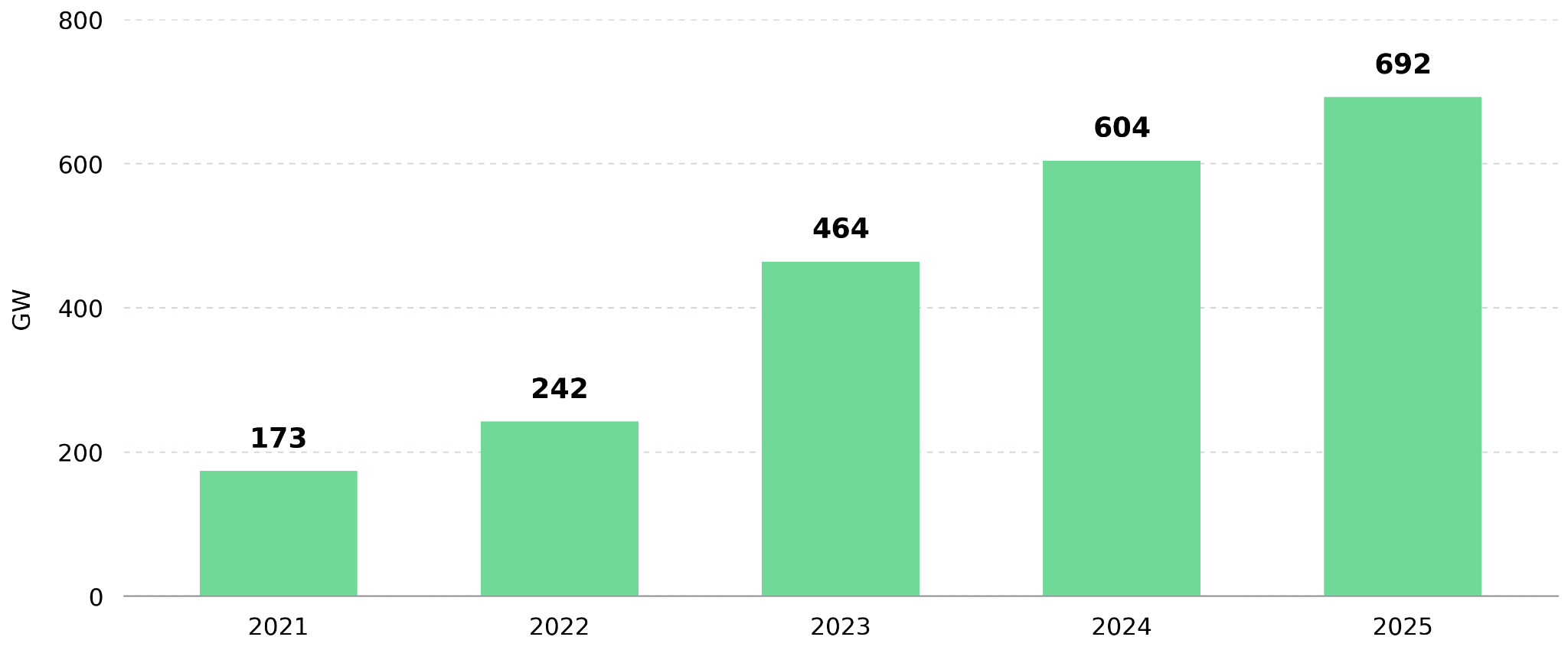
- Global solar photovoltaic capacity reached 2.96 terawatts at the end of 2025 after 690 gigawatts of new installations, but silver in operating panels remains unavailable for recycling until retirement.
- International Energy Agency Photovoltaic Power Systems Programme (IEA PVPS) assumes average operating lives of 18 years for residential systems and 26 years for utility-scale systems, delaying potential silver recovery from retired panels.
- Only an estimated 10% of retired photovoltaic modules worldwide are recycled, while collection gaps and processing losses further limit silver recovery.
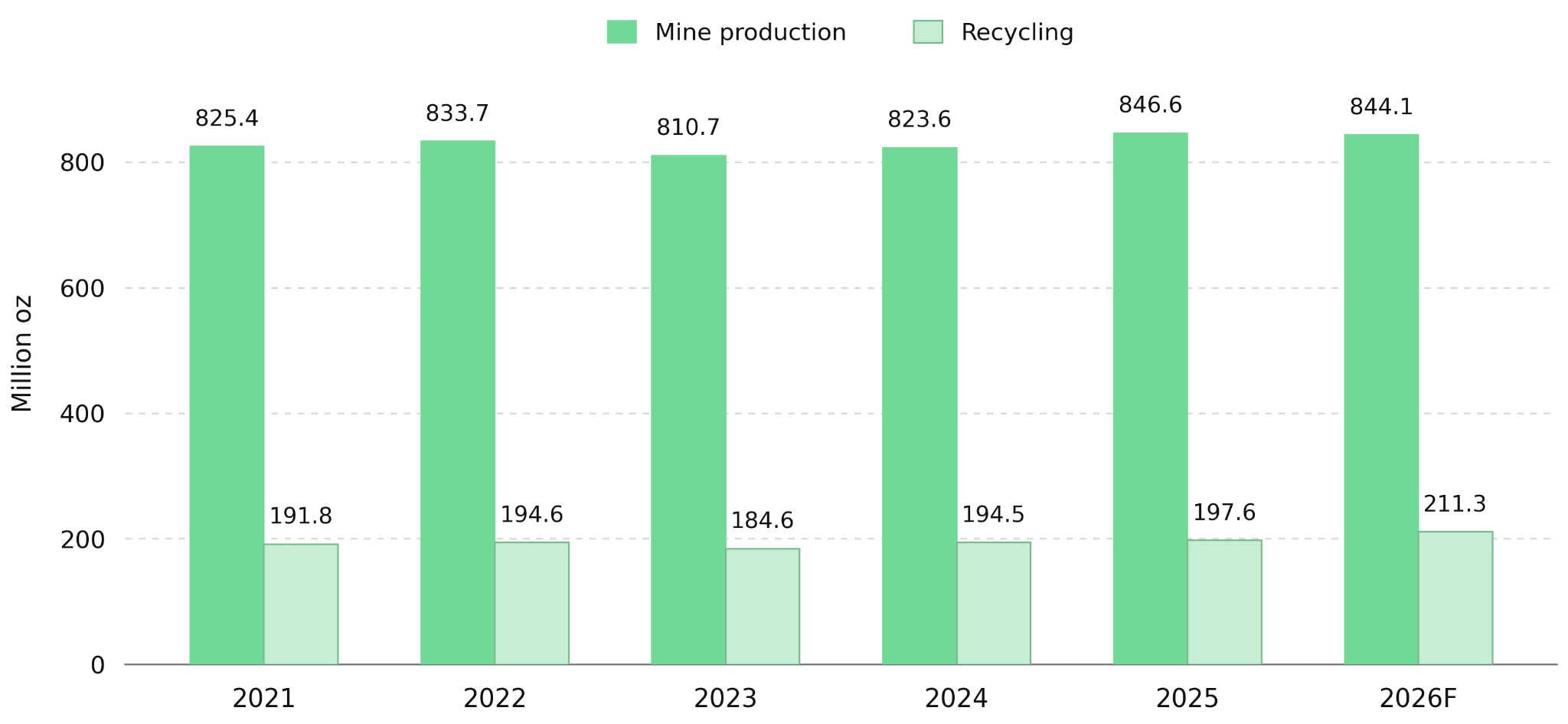
- The Silver Institute forecasts 844.1 million ounces of mined silver in 2026 versus 211.3 million ounces from recycling, with retired solar panels contributing only a small share of recycled supply.
- Recycled solar silver could theoretically meet 30% to 45% of photovoltaic silver requirements between 2025 and 2050, but this assumes 100% collection and recovery, well beyond current recycling capabilities.
Long Solar Lifetimes Delay Silver Recycling
Global photovoltaic capacity reached 2.96 terawatts at the end of 2025 after 690 gigawatts of new installations, 15% more than in 2024. IEA PVPS models average operating lifetimes of 18 years for residential systems and 26 years for utility-scale installations, delaying the availability of silver from these panels for recycling.
IEA PVPS projects more than 15 million metric tons of end-of-life photovoltaic system material from 2025 to 2030 and approximately 131 million metric tons from 2030 to 2040, including panels and supporting components rather than recovered silver. Despite these projected volumes, only an estimated 10% of retired solar panels worldwide are currently recycled. Silver accounts for roughly half the value recovered from a recycled panel, but limited collection and processing capacity restrict how much silver returns to the market, maintaining reliance on mined supply.
74% Byproduct Share Limits Supply Response
The Silver Institute's World Silver Survey 2026 reports that mines primarily producing other metals supplied 625.5 million ounces of silver in 2025, representing approximately 74% of global mine output. Primary silver mines contributed just 26.1%, down from 32.1% in 2016. With most silver produced alongside other metals, higher silver prices alone may not drive a proportional increase in mine supply, as production decisions depend largely on the economics of those primary commodities.
Lead and zinc mines supplied 249.1 million ounces of silver in 2025, followed by copper operations at 237.3 million ounces and gold mines at 134.7 million ounces. Byproduct silver production from copper and gold mines increased 6% and 5%, respectively, while primary silver mine output declined 1%. These differences show how silver supply growth depends on production across other commodity markets, increasing the relevance of dedicated silver projects and existing operations capable of expanding output.
7% Recycling Growth Leaves Mine Supply Four Times Larger
The Silver Institute's World Silver Survey 2026 forecasts 844.1 million ounces of global mine production in 2026, down 0.3%, compared with 211.3 million ounces from recycling, up 7% from 197.6 million ounces in 2025. Despite growing recycling volumes, mines are projected to supply approximately four times as much silver, reinforcing their role as the primary source of available metal.
Operating Cash Flow Funds Mine Upgrades
While silver contained in operating solar panels remains unavailable for recycling, existing mines continue to provide immediate supply. Investments in mine infrastructure and operating efficiency can help sustain production and increase output from existing operations.
Americas Gold & Silver reported record silver production of 800,458 ounces and sales of 860,850 ounces in the third quarter of 2026, with Cosalá output increasing 23% from the previous quarter to 415,879 ounces. Cash generation from its Mexican operations is supporting upgrades at Galena aimed at increasing future production, while US$113 million in available liquidity, including US$63 million in cash as of September 30, provides financial flexibility for its growth plans.
Oliver Turner, Executive Vice President of Corporate Development at Americas Gold & Silver, explains why low prices changed silver production economics:
“When you look at the broad investable silver producing universe, about 50% of silver producers' silver exposure is actually below 50%. That happened because in the last silver price cycle when silver prices were extremely low, it was hard to make money just mining silver.”
16-Year Mine Timelines Favor Early Project Investment
S&P Global's study of 232 mining assets estimated an average 16-year timeline from discovery to production, highlighting the importance of advancing projects well before additional supply is needed. With silver recovery from retired solar panels still limited, feasibility studies and project financing support future mine development, while exploration expands the longer-term supply pipeline.
Project Funding Advances Future Mine Production
Feasibility studies provide a clearer picture of a silver project's potential production and the investment required to bring it into operation. Strong financial resources can help advance these plans toward construction, while permitting and project execution remain essential to achieving future production.
Vizsla Silver's completed Panuco feasibility study projects average annual production of 20.1 million payable silver-equivalent ounces during its first five years, with initial capital costs of US$238.7 million. The company reported US$411 million in cash and short-term investments as of July 31, 2026, exceeding the project's estimated initial capital requirement and strengthening its financial position ahead of construction. The company is targeting first silver production in the second half of 2028 as it advances Panuco toward a construction decision.
Resource Drilling Tests Long-Term Silver Supply Potential
With recycled silver from retired solar panels still limited, exploration helps identify deposits that could support longer-term mine supply. Drilling can improve confidence in a deposit's size and quality, while early economic studies help assess its potential for future development.
GR Silver Mining is advancing its Plomosas project with a 20,000-meter drilling program aimed at expanding its existing resource of 55 million indicated silver ounces and 22 million inferred silver ounces. The company plans to release an updated resource estimate and preliminary economic assessment in the first half of 2027, supported by C$26 million in cash as of October 22, 2026. These milestones are expected to provide a clearer picture of the project's potential size and economic viability.
Eric Zaunscherb, Chairman and Chief Executive Officer of GR Silver Mining, describes industrial demand trends influencing silver market sentiment:
“With regard to the industrial uses, we continue to see growth in silver consumption in photovoltaics, solar cells, and in EVs. I think that the outlook is pretty good for silver.”
Lower Silver Use Cuts Solar Demand 19%
Silver from retired photovoltaic systems could theoretically meet 30% to 45% of cumulative photovoltaic-sector silver requirements between 2025 and 2050. The projection assumes 100% collection and recovery, with lower silver use per cell and copper substitution also influencing the estimated contribution.
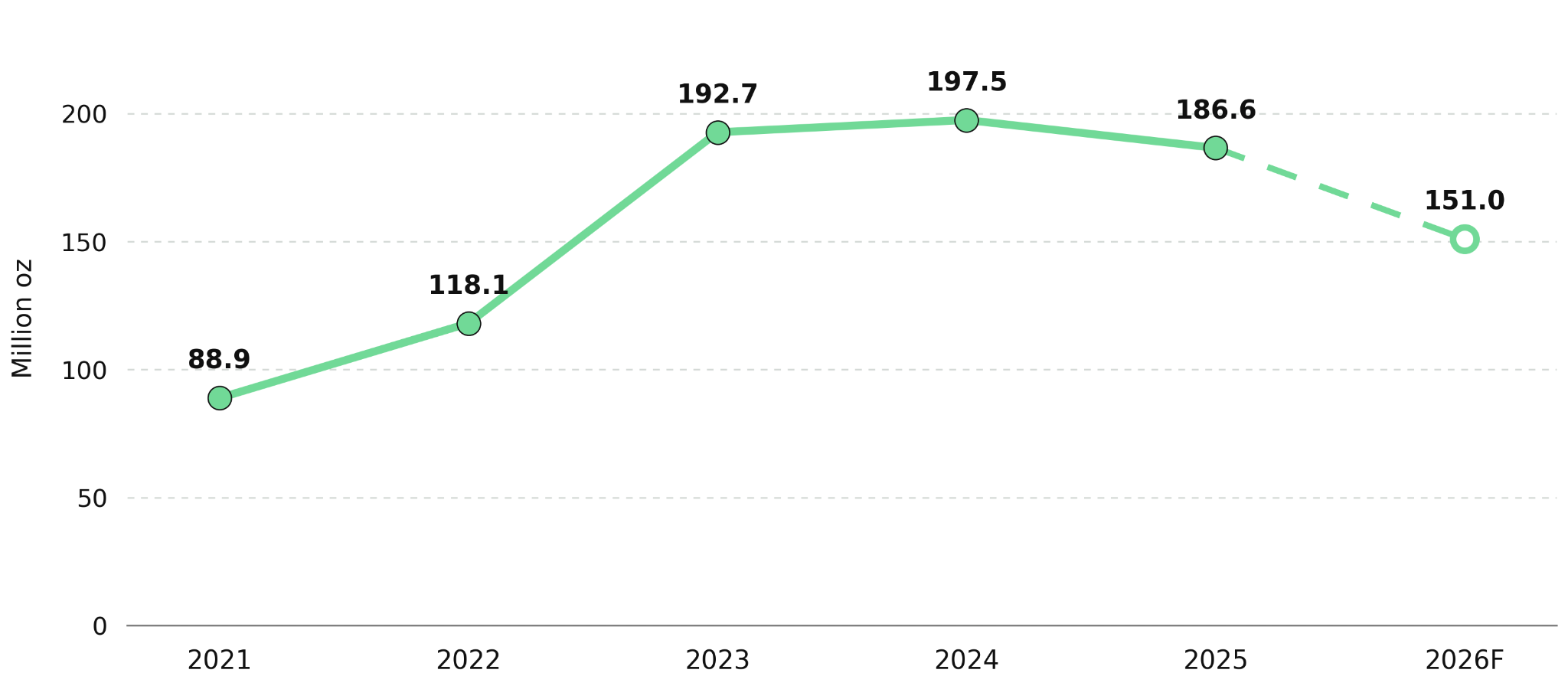
The Silver Institute forecasts photovoltaic silver fabrication demand declining from 186.6 million ounces in 2025 to 151.0 million ounces in 2026, despite increasing installed solar capacity. Manufacturers are reducing silver use per cell, allowing installations to expand even as silver consumption declines. Beyond solar applications, rising chip sales could support long-term silver demand through semiconductor packaging and power electronics. After 2040, increasing panel retirements could make larger volumes of silver-bearing material available for recycling.
The Investment Thesis for Silver
- Producers provide available metal today, while recycling from retired solar equipment remains limited by long panel lifetimes and collection constraints.
- Producers can improve mine capacity through ore access, metallurgical recovery and infrastructure investment, creating supply opportunities tied to execution rather than price forecasts.
- Developers offer potential future silver production when credible engineering, sufficient funding and permitting milestones establish a practical route to construction.
- Explorers contribute longer-term supply options by defining mineral resources and testing whether new deposits can justify economic studies and eventual mine development.
- Recycling improvements may expand secondary supply over time, but assessing future silver supply requires distinguishing theoretical recovery potential from commercially recovered ounces and evaluating each mine or project on its own merits.
Solar expansion keeps silver locked in operating panels for years, while collection and processing constraints delay its return to the market. Mining therefore remains central to silver supply, even as recycling offers greater potential when more panels reach retirement. The long-term investment opportunity lies in expanding mine capacity alongside advances in silver recovery, with both sources contributing to supply over different timelines.
TL;DR
Solar capacity reached 2.96 terawatts in 2025, but silver remains locked in operating panels for decades, with only an estimated 10% of retired modules recycled. Global mine production is forecast at 844.1 million ounces in 2026, nearly four times recycled supply. With 74% of mined silver produced as a byproduct of other metals, silver supply growth depends partly on production decisions across other commodity markets. Existing producers can expand output through mine upgrades, while funded development projects and exploration contribute to longer-term supply potential. Solar recycling could eventually meet a larger share of photovoltaic silver demand, but collection rates and processing capacity remain important constraints.
FAQs (AI-Generated)
Analyst's Notes





Subscribe to Our Channel












Stay Informed