




P2 Gold's Gabbs Drill Results Confirm Near-Surface Continuity, Setting Stage for Resource Upgrade & Feasibility Milestones



P2 Gold's Gabbs drilling confirms near-surface gold-copper continuity in Nevada, supporting $943M NPV project ahead of mid-2026 MRE and feasibility milestones.
- Initial infill and expansion drilling at the Gabbs Project confirms near-surface gold-copper continuity, reinforcing confidence in scale, grade distribution, and future resource growth ahead of an updated mineral resource estimate targeted for mid-2026
- Results arrive at a critical development juncture where drill-driven upgrades have disproportionate impact on EV/oz, mine planning assumptions, and feasibility outcomes, with the October 2025 PEA outlining after-tax NPV of $942.9 million at 5% discount rate
- Nevada-based gold-copper developers with infrastructure, permitting momentum, and advanced studies remain scarce relative to institutional demand for jurisdictionally secure supply
- The Sullivan Zone demonstrates characteristics that support both open-pit optimization and long-life production scenarios, with mineralization thickness reaching 175 meters and metallurgical recoveries improved to 85% gold and 67% copper through SART technology
- Upcoming catalysts including permitting, updated MRE, and feasibility study delivery frame drilling as valuation-relevant rather than exploratory, with construction targeted for 2028 and production in 2029
P2 Gold Inc. (TSXV: PGLD) has reported initial results from its infill and expansion drilling program at the Sullivan Zone within the Gabbs Project, located on the Walker Lane Trend in Nevada. The December 2025 drill results confirm grade continuity and thickness in near-surface gold-copper mineralization, reinforcing the geological foundation ahead of an updated mineral resource estimate targeted for mid-2026 and a feasibility study targeted for completion in late 2026.
Six reverse circulation drill holes (GBR-050 to GBR-055) returned broad intercepts that support open-pit development assumptions outlined in the project's October 2025 preliminary economic assessment. The PEA established after-tax net present value of $942.9 million at a 5% discount rate and internal rate of return of 33.8%, based on a 14.2-year mine life producing an average of 109,000 ounces of gold and 15,000 tonnes of copper annually.
Why Infill & Expansion Drilling Matters at the PEA-to-Feasibility Stage
The transition from preliminary economic assessment to feasibility study represents a critical juncture for development-stage mining projects. Drilling at this stage serves a fundamentally different purpose than early-stage exploration. Rather than seeking new discoveries, infill and expansion programs focus on reducing geological uncertainty in ways that directly influence mine planning, capital allocation, and ultimately project valuation.
From Geological Confirmation to Economic Optionality
Infill drilling tightens the spacing between drill holes, which allows geologists to model grade distribution with greater precision. This precision matters because feasibility studies require confidence in ore body geometry, grade continuity, and metallurgical characteristics before committing to detailed mine designs and capital expenditure estimates. At Gabbs, the drilling program is designed to convert conceptual scale into mineable confidence.
Expansion drilling, meanwhile, tests the extensions of known mineralization. Where successful, it can influence strip ratio assumptions, cut-off grade decisions, and throughput optimization. The December results demonstrate that mineralization at the Sullivan Zone extends to surface along its northeast flank, which has implications for pit shell optimization and early-years production scheduling.
Market Implications for Advanced Developers
Institutional investors typically re-rate development assets when drilling programs convert inferred ounces into indicated or measured categories. This resource classification upgrade reflects reduced geological risk, which feeds directly into discount rate assumptions and EV/oz comparisons. Projects that demonstrate consistent grade and thickness through systematic infill drilling tend to attract capital more efficiently than those relying on speculative exploration upside.
Joe Ovsenek, President and Chief Executive Officer of P2 Gold, describes what investors prioritize at this stage of development:
"The people we've spoken to aren't looking for how many ounces you have. People say, 'How are you getting into production, how quickly can you get into production, and how are you doing that?'"
Gabbs as a Case Study in Late-Stage Resource De-Risking
The Sullivan Zone drilling results illustrate how advanced-stage projects use targeted drill programs to strengthen development assumptions rather than pursue headline grades. The six holes reported in December 2025 were specifically designed to test up-dip extensions of known mineralization, and all intersected gold-copper mineralization at or near surface.
Near-Surface Continuity & Thickness at the Sullivan Zone
The drill results demonstrate broad intercepts that begin from surface or within meters of surface. Hole GBR-054 intersected 0.76 g/t gold and 0.29% copper over 85.34 meters from surface, including a higher-grade interval of 1.63 g/t gold and 0.50% copper over 30.48 meters. Hole GBR-053 returned 0.58 g/t gold and 0.35% copper over 67.06 meters from surface. Hole GBR-051 intersected 0.96 g/t gold and 0.32% copper over 38.10 meters, including 12.19 meters grading 2.37 g/t gold and 0.37% copper.
In porphyry-style gold-copper systems, thickness matters as much as grade. The main mineralized body at Sullivan, combined with footwall mineralization ranging from 20 to 60 meters thick, forms a continuous zone reaching up to 175 meters in thickness. This geometry supports the open-pit development logic outlined in the PEA and provides optionality for mine plan optimization.
Implications for Resource Classification
The infill drilling program is designed to tighten drill spacing sufficiently to convert inferred mineral resources into indicated or measured categories. Currently, Gabbs hosts indicated 1.69 M oz gold equivalent and inferred mineral resources of 2.29 M oz gold equivalent. Upgrading resource classification improves confidence in mine plans and reduces the contingency factors applied to capital estimates during feasibility studies.
As of December 16, 2025, P2 Gold had completed 24 holes at the Sullivan Zone since mid-October and moved drilling operations to the Lucky Strike Zone, where eight holes had been completed. The updated mineral resource estimate targeted for mid-2026 will incorporate all drilling and form the basis for the feasibility study.
Gold-Copper Systems & Secure Jurisdictions
Gold-copper deposits offer economic characteristics that differ from single-commodity projects. The presence of copper as a by-product provides margin resilience through diversified revenue streams, while jurisdiction quality increasingly influences both capital availability and project economics.
Gold-Copper as a Dual-Margin Development Strategy
Copper by-product credits can materially lower all-in sustaining costs on a gold-equivalent basis. At Gabbs, the mineralized material contains an average of 0.24% copper based on the PEA mine plan, with a portion recoverable through heap leach processing. The introduction of SART (sulphidization, acidification, recycling, and thickening) technology represents a key metallurgical advancement for oxide gold-copper recovery.
Joe Ovsenek explains how metallurgical advances have strengthened the project's economic foundation:
"Our gold recoveries have gone from 78% to 85%. Copper recoveries in the oxides have gone from 54% to 67%. Big jumps…The real game-changer for Gabbs is the introduction of a SART plant, which is a development for the recovery of gold and copper oxides. "
Investors increasingly favor multi-metal cash flow resilience in volatile price environments. Projects that can generate revenue from both gold and copper are better positioned to maintain margins across commodity cycles, reducing the binary risk profile associated with single-metal operations.
Nevada's Role in Jurisdictional Risk Compression
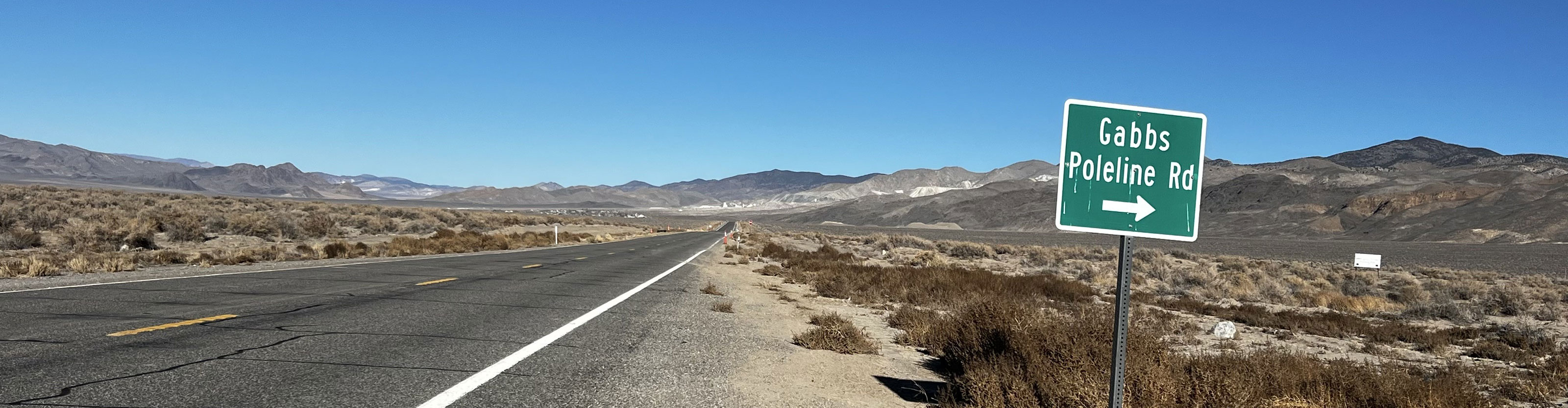
Nevada's established permitting track record, infrastructure availability, and policy stability influence both development timelines and project discount rates. The Gabbs Project benefits from paved Highway 361 access and a powerline crossing the property, materially reducing capital expenditure and operating costs compared to remote greenfield developments.
Joe Ovsenek emphasizes how jurisdiction and process simplicity influence development approach:
"Nevada, everybody loves Nevada, and not only for geology but permitting. It's well known and especially heap leaching in Nevada. It's straightforward."
The company was targeting water permit approval in late 2025, with a mining plan of operation filing to follow. The project consists of 543 lode mining claims on Bureau of Land Management federal land plus one patented claim, providing secure land tenure in a Tier-1 mining jurisdiction.
Economic Sensitivity & Incremental Resource Value
The relationship between resource growth and project economics is non-linear at the development stage. Incremental ounces added through drilling can have outsized effects on net present value, internal rate of return, and payback period, particularly when those ounces fall within optimized pit shells.
NPV & IRR Leverage from Resource Growth
The October 2025 PEA established after-tax NPV of $942.9 million at 5% discount rate based on commodity price assumptions of $2,350 per ounce gold and $4.50 per pound copper. Preproduction capital requirements total $382.7 million. At a 15% discount rate, after-tax NPV remains positive at $298.0 million, demonstrating project resilience under more conservative discount assumptions. At spot metal prices, project economics strengthen materially, with NPV at 5% discount exceeding $2.2 billion.
Metallurgical Considerations & Cost Control
Gold-copper processing presents specific technical requirements, particularly regarding cyanide consumption and copper recovery in heap leach circuits. P2 Gold has engaged Kappes, Cassiday & Associates in Reno, Nevada for ongoing metallurgical testwork, with Phase Three testing demonstrating significantly accelerated recovery kinetics. Recent results showed 98% gold recovery and 85% copper recovery within 58 days, representing material improvements in processing efficiency.
The metallurgical improvements contribute to operating cost predictability rather than representing technical novelty. Higher recoveries translate directly to revenue per tonne processed, strengthening project economics without requiring fundamental process changes.
Capital Discipline, Timing & Development Windows
The period between PEA and feasibility study represents both opportunity and constraint for development-stage companies. Advancing technical work requires capital, while market conditions influence both funding availability and the strategic value of completed studies.
Funding Advanced Studies Without Excessive Dilution
Balance sheet strength matters most during the transition from study to construction decision. Markets tend to reward developers that maintain optionality through disciplined capital deployment, avoiding excessive share dilution while maintaining technical momentum. P2 Gold has awarded contracts for feasibility-level studies including pit slope stability, cultural inventory, hydrogeologic modeling, biological surveys, and geotechnical assessments.
Development Timeline & Execution Track Record
The company's December 2025 corporate presentation outlines construction in 2028 with production commencing in 2029. Key milestones including updated mineral resource estimates and feasibility study delivery function as step-change valuation events rather than representing linear progress.
Joe Ovsenek points to the management team's execution track record as a differentiator:
"What we think is our claim to fame is Pretium Resources, where we took the Brucejack mine from discovery through to production in under eight years... One thing we've learned is you have to set aggressive targets. If you don't, you fill that time."
How the Market Prices This Stage of the Development Curve
Development-stage gold projects trade at varying multiples of in-situ resource value, with the discount applied reflecting market assessment of execution probability. Projects with higher proportions of inferred resources typically trade at steeper discounts than those with feasibility-ready resource classifications.
EV/oz vs. Development Confidence
Drilling that tightens confidence bands around grade and tonnage estimates can shift peer comparisons meaningfully. The transition from PEA to feasibility typically involves narrowing the range of possible outcomes, which in turn compresses the discount applied to project value. Nevada-based gold-copper projects with advancing studies remain scarce relative to institutional demand for jurisdictionally secure development exposure.
Residual Risks & Analytical Considerations
Development-stage projects carry inherent uncertainties that warrant objective assessment. Permitting timelines, while generally predictable in Nevada, remain subject to regulatory process requirements. Capital cost estimates will be refined through feasibility-level engineering, and construction cost inflation could affect economics. Commodity price volatility influences project returns across the development timeline.
The Investment Thesis for P2 Gold
The strategic rationale for investor attention to advanced gold-copper development in secure jurisdictions rests on several reinforcing factors:
- Drill-driven de-risking at advanced projects directly feeds feasibility outcomes rather than speculative exploration upside, with resource classification upgrades enabling discrete valuation improvements
- Economic leverage from incremental resource growth at scale has outsized impact on NPV, IRR, and mine life, particularly when additional ounces fall within optimized pit shells
- Jurisdictional scarcity positions Nevada-based gold-copper projects favorably relative to global demand for politically stable, infrastructure-served development opportunities
- Cost structure resilience through by-product copper credits and demonstrated SART-enhanced metallurgical recoveries supports margin durability across commodity price cycles
- Catalyst density from near-term permitting, mineral resource estimate updates, and feasibility study delivery provides visible valuation checkpoints for portfolio positioning
- Management execution track record from discovery through production at comparable assets provides operational credibility for development timelines
Why These Results Matter Now
The significance of P2 Gold's December 2025 drill results lies not in headline grades but in what they unlock economically. Confirmation of near-surface gold-copper continuity at the Sullivan Zone strengthens confidence ahead of feasibility-level decisions by validating the geological model that underpins the project's economics.
With drilling systematically building the resource foundation for the updated mineral resource estimate and subsequent feasibility study, combined with metallurgical advances that have lifted gold recoveries to 85% and copper recoveries to 67%, the Gabbs Project demonstrates how late-stage drilling functions as a catalyst for valuation compression rather than speculation.
TL;DR
P2 Gold's December 2025 drilling at the Gabbs Project in Nevada confirms near-surface gold-copper mineralization continuity at the Sullivan Zone. Six reverse circulation holes returned broad intercepts supporting open-pit development assumptions from the October 2025 PEA, which outlined after-tax NPV of $942.9 million at 5% discount rate. Metallurgical advances have boosted gold recovery to 85% and copper recovery to 67% through SART technology. The infill program aims to upgrade inferred resources to indicated/measured categories ahead of a mid-2026 mineral resource estimate and late-2026 feasibility study. Construction is targeted for 2028 with production in 2029, positioning Gabbs as a rare Nevada-based gold-copper development opportunity.
FAQs (AI-Generated)
Six reverse circulation holes at the Sullivan Zone returned broad near-surface intercepts, including 0.76 g/t gold and 0.29% copper over 85.34 meters from surface (GBR-054), with higher-grade intervals of 1.63 g/t gold and 0.50% copper over 30.48 meters. Mineralization thickness reaches up to 175 meters.
The October 2025 PEA established after-tax NPV of $942.9 million at 5% discount rate and IRR of 33.8%, based on a 14.2-year mine life producing 109,000 ounces gold and 15,000 tonnes copper annually. At spot prices, NPV exceeds $2.2 billion.
An updated mineral resource estimate is targeted for mid-2026, followed by a feasibility study in late 2026. Construction is planned for 2028 with production commencing in 2029.
Through SART technology implementation, gold recoveries improved from 78% to 85% and copper recoveries from 54% to 67%. Phase Three testing demonstrated 98% gold recovery and 85% copper recovery within 58 days.
Nevada offers established permitting processes, infrastructure availability, and policy stability. Gabbs benefits from Highway 361 access and existing powerlines, reducing capital and operating costs compared to remote developments.
Analyst's Notes





Subscribe to Our Channel







Stay Informed






















