




Permitting Constraints Reshape Gold Development Economics & Shift Investor Focus to Execution-Stage Assets


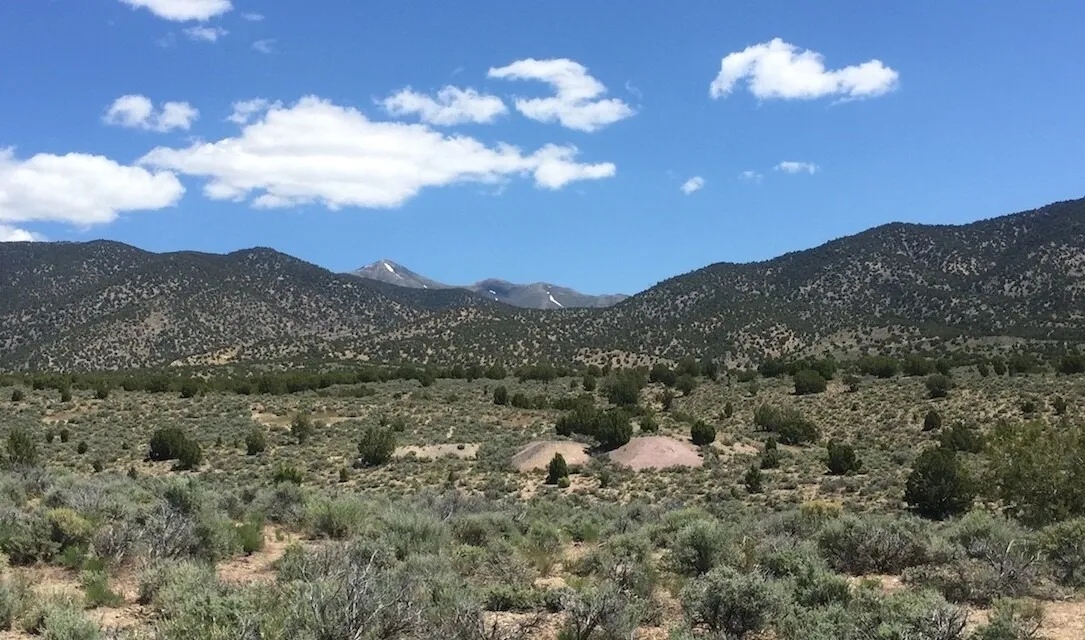
Fully permitted gold projects command premiums as permitting timelines reshape development economics. U.S. Gold Corp's CK Gold advances toward construction readiness.
- North American gold development has entered a structural bottleneck phase, where permitting timelines, not geology, increasingly determine project value and investor re-rating potential.
- Fully permitted, state-level U.S. gold projects now represent scarce infrastructure-like assets, attracting capital as execution-risk plays rather than exploration or regulatory optionality.
- Wyoming has emerged as a jurisdictional outlier, offering faster permitting through the Wyoming Department of Environmental Quality, with materially reduced execution risk versus federally regulated peers.
- U.S. Gold Corp's CK Gold Project exemplifies this transition, having secured all required permits including Mine Operating, Air Quality, Industrial Siting, and Water Discharge approvals.
- With a Definitive Feasibility Study expected within the coming weeks and a $31.2 million private placement completed in December 2025, the project highlights how permitting certainty can act as a valuation inflection point for gold equities.
Permitting as the Primary Scarcity Constraint in Gold Development
The gold mining sector has undergone a structural shift in how investors evaluate development-stage assets. Over the past decade, the dominant risk factor has migrated from geological uncertainty to regulatory execution. High-quality deposits with compelling grades and scale routinely fail to translate into investable projects when permitting timelines extend beyond capital deployment horizons. This dynamic has created a widening valuation gap between projects with theoretical resource optionality and those with executable construction pathways.
From Geological Risk to Regulatory Risk
Institutional capital increasingly distinguishes between geological optionality and executable assets. A project may demonstrate robust mineralization, favorable metallurgy, and attractive economics on paper, yet remain stranded in permitting processes that extend five to ten years or longer on federally regulated land. For investors managing capital against finite time horizons, the distinction between a high-quality resource and a construction-ready project has become the primary screening criterion. Projects that have navigated permitting successfully now occupy a separate valuation category, commanding premiums that reflect their scarcity rather than their resource base alone.
Capital Allocation in a Post-Inflation Mining Cycle
Cost inflation across mining inputs, including labor, energy, and equipment, has reinforced capital discipline among both equity investors and project lenders. Financing committees now prioritize permitted, de-risked builds over projects requiring extended regulatory timelines. This preference manifests in enterprise value per ounce multiples and net asset value discounts, where developers lacking permitting certainty trade at persistent discounts regardless of resource quality. The implication for gold equities is that permitting completion represents a discrete valuation catalyst, often more material than resource expansion or economic study upgrades.
Luke Norman, Co-founder and Executive Chairman of U.S. Gold Corp, describes the current market positioning:
"We're one of the only permitted projects, shovel-ready projects out there in North America."
Wyoming: Jurisdictional Context for State-Level Mining Development
Wyoming's regulatory framework offers structural differences relative to federally administered mining jurisdictions. These differences affect permitting timelines, capital requirements, and project risk profiles in ways that increasingly influence asset allocation decisions among institutional mining investors.
State-Level Permitting Versus Federal Bottlenecks
The CK Gold Project is located entirely on State of Wyoming land with no direct federal involvement. This jurisdictional positioning enables permitting through the Wyoming Department of Environmental Quality rather than federal agencies, avoiding National Environmental Policy Act review requirements and Bureau of Land Management coordination that can extend timelines indefinitely. For gold developers, the jurisdictional distinction translates directly into risk-adjusted discount rates applied by lenders and equity investors.
Infrastructure, Workforce & Capital Intensity
Wyoming's mining corridor provides established infrastructure that materially affects project economics. The CK Gold Project benefits from proximity to interstate highways, with paved road access to the site approximately 90 minutes from Denver International Airport. Supply hubs in Gillette, Denver, and Salt Lake City provide access to equipment and services without requiring dedicated warehousing or remote site infrastructure. Projects within this corridor avoid fly-in, fly-out workforce models and the associated cost structures that burden remote operations.
Policy Alignment & Social License
Wyoming's resource-based economy creates alignment between mining development and state fiscal interests. The project's royalty structure includes a 2.1% Net Smelter Royalty payable to the State of Wyoming, with proceeds earmarked for education funding. This revenue-sharing mechanism supports community alignment and reduces permitting friction relative to jurisdictions where mining faces greater political opposition.
Project Status: The Transition from Development Asset to Construction-Ready Classification
The distinction between "advanced developer" and "construction-ready" represents more than marketing terminology. From a capital markets perspective, these classifications determine which investor pools can participate, what financing structures apply, and how risk-adjusted returns are modeled.
Defining Construction Readiness from an Investor Perspective
Construction-ready classification requires completion of all material permits, technical studies sufficient for financing, and demonstrated capital pathway. U.S. Gold Corp has secured the complete permit package required for construction, with management stating that permitting bottlenecks are now resolved.
The permit status as of January 2026 includes the Mine Operating Permit approved in April 2024 with a 10-year renewable term, the Industrial Siting Permit approved in June 2023 with a 3-year renewable term extended through 2026, the Air Quality Permit approved in November 2024, and the WYPDES Water Discharge Permit approved in May 2024. This comprehensive permit package eliminates regulatory uncertainty as a material risk factor.
Technical Study Progression & Capital Visibility
The company completed a Pre-Feasibility Study in February 2025 and is advancing toward Definitive Feasibility Study completion, expected within the coming weeks. The DFS will provide updated economic metrics and form the basis for project financing discussions. In December 2025, the company completed a $31.2 million private placement, strengthening its balance sheet ahead of construction financing.
Luke Norman outlines the development status:
"All of those bottlenecks are in our rear-view mirror, we've secured everything… We have every permit in hand."
Asset Characteristics & Mine Design: Geological Simplicity as an Operational Variable
Mine design complexity directly affects construction risk, operating cost stability, and recovery predictability. Projects featuring straightforward extraction methods and proven metallurgical processes reduce technical risk factors that can compromise economic performance during operation.
At-Surface Mineralization & Open-Pit Configuration
The CK Gold deposit features at-surface porphyry mineralization amenable to conventional open-pit extraction. This configuration eliminates underground mining complexity, reduces geotechnical risk, and provides operational flexibility that supports consistent production over mine life. The Pre-Feasibility Study contemplates average annual gold-equivalent production of approximately 111,000 ounces over a 10.2-year mine life.
Metallurgy & Flowsheet Configuration
The project employs a crush-grind-flotation processing configuration using Jameson Cell technology secured from Glencore Technologies, with two units awaiting shipment for installation. This flowsheet selection improves recovery rates while reducing plant footprint and power consumption relative to alternative configurations. The deposit's mineralogy is characterized as clean and simple with low overall sulfide content, producing a high-value copper-gold concentrate with minimal deleterious elements that would attract smelter penalties.
Gold-Copper Revenue Structure
The deposit's gold-copper mineralization provides by-product credit contribution to revenue. Copper credits reduce all-in sustaining costs and provide margin protection against gold price volatility. The concentrate quality has attracted offtake interest, with the company noting expressions of interest from potential concentrate buyers.
Economic Structure: Cost Position & Infrastructure Advantages
Project economics determines investment returns across commodity price scenarios. Cost structure positioning relative to global production curves, capital intensity relative to output, and infrastructure arrangements define the economic risk profile that investors underwrite.
Infrastructure Agreements & Operating Cost Stability
The company has secured a power supply agreement with Black Hills Energy at approximately 7.6 cents per kilowatt-hour, providing cost visibility for a major operating input. A water purchase agreement with the City of Cheyenne, approved in February 2022, addresses process water requirements. These utility arrangements reduce infrastructure capital requirements and provide operating cost predictability.
Non-Modeled Revenue Potential
Mining operations often generate revenue streams not captured in primary economic models. The CK Gold Project has received a non-binding letter of intent for the delivery of aggregate and ballast material to a major railway, representing potential incremental cash flow from waste rock that would otherwise require management costs. Markets typically assign zero value to these opportunities until demonstrated through binding agreements and delivery.
Luke Norman describes the construction timeline:
"We're ready for construction… We’re going to initiate project financing… The timeline to build is 18 months. "
Financing Considerations: Balance Sheet Structure & Capital Stack Flexibility
Project financing structures determine equity dilution, cash flow allocation, and long-term shareholder returns. Asset encumbrances, existing obligations, and financing sequencing affect the terms available at construction financing and the value retained by equity holders.
Unencumbered Assets & Financing Flexibility
The CK Gold Project is described as completely unencumbered, with no streaming agreements, no banking mandates, and no third-party interests beyond the standard 2.1% state royalty. This clean capital structure provides maximum flexibility for construction financing, enabling debt-heavy structures that preserve equity upside. The December 2025 private placement of $31.2 million strengthened the balance sheet ahead of project financing discussions.
Institutional Behavior at Construction Threshold
Historical patterns demonstrate equity re-rating following final investment decisions at permitted projects. The company's current market capitalization of approximately $319 million, with 16.4 million shares outstanding as of January 2026, provides context for potential re-rating as the project advances through financing and construction milestones. Project finance lenders and institutional equity investors underwrite construction-ready assets differently than development-stage companies, expanding the capital pool available and improving terms.
Exploration Portfolio: Adjacent Asset Optionality
Development companies often hold exploration assets beyond their primary construction projects. U.S. Gold Corp's Keystone property, located within the Cortez trend approximately 11 miles from the Cortez complex, represents exploration optionality that could benefit from cash flow generated by CK Gold production. Capital allocation between development execution and exploration programs presents strategic choices that affect near-term valuation and long-term growth potential.
The Investment Thesis for U.S. Gold
The current gold development environment presents specific investment considerations that differentiate execution-stage assets from earlier-stage development projects:
- Permitting certainty now commands a premium as regulatory timelines, rather than grades alone, constrain new supply additions globally.
- State-level jurisdictions like Wyoming materially outperform federal permitting pathways on timeline predictability and execution certainty.
- Execution-stage developers benefit from multiple re-rating catalysts including Definitive Feasibility Study completion, final investment decision, and construction commencement.
- Unencumbered balance sheets enable construction financing on favorable terms, preserving equity upside that streaming or royalty agreements would transfer to counterparties.
- Infrastructure-proximate assets with secured utility agreements reduce capital intensity and operating cost variability relative to remote development projects.
- Concentrate quality characteristics that avoid smelter penalties improve realized revenue relative to projects with complex or penalty-bearing mineralogy.
The CK Gold Project's transition from development to fully permitted, construction-ready status illustrates a broader dynamic in gold equity valuation: regulatory certainty has become as material to project value as resource scale or grade. With all major permits secured, a Definitive Feasibility Study advancing toward completion, and recent equity financing strengthening the balance sheet, the project is positioned to advance toward construction financing and final investment decision.
This framework shifts analytical focus from discovery potential toward execution capability, emphasizing jurisdictional positioning, permitting status, and financing pathway clarity. Within this context, fully permitted U.S. gold projects on state land represent execution assets positioned for potential re-rating as capital rotates toward construction certainty.
TL;DR
The gold development sector has shifted from geological risk to regulatory execution as the primary determinant of project value. Fully permitted projects now represent scarce, infrastructure-like assets commanding valuation premiums. Wyoming's state-level permitting framework offers materially faster timelines than federally regulated jurisdictions. U.S. Gold Corp's CK Gold Project has secured all required permits and is advancing toward Definitive Feasibility Study completion within coming weeks. With an unencumbered balance sheet strengthened by a $31.2 million December 2025 private placement, the project is positioned for construction financing discussions. The 18-month construction timeline and secured utility agreements provide execution visibility that differentiates CK Gold from earlier-stage development peers.
FAQs (AI-Generated)
Institutional investors now face finite capital deployment horizons, making projects stranded in multi-year federal permitting processes uninvestable regardless of resource quality. Fully permitted projects occupy a separate valuation category based on execution certainty rather than geological optionality alone.
Wyoming enables state-level permitting through the Wyoming Department of Environmental Quality, avoiding National Environmental Policy Act reviews and federal agency coordination that can extend timelines indefinitely. The state's resource-based economy also creates policy alignment supportive of mining development.
The project holds all required permits including the Mine Operating Permit (April 2024), Industrial Siting Permit (June 2023, extended through 2026), Air Quality Permit (November 2024), and WYPDES Water Discharge Permit (May 2024).
Management has indicated an 18-month construction timeline from final investment decision to production.
The project is completely unencumbered with no streaming agreements, banking mandates, or third-party interests beyond the standard 2.1% state royalty, providing maximum flexibility for debt-heavy construction financing that preserves equity upside.
Analyst's Notes





Subscribe to Our Channel



Stay Informed






















