




Perseus Mining's Self-Funded Growth Pipeline & the Path to 500,000 oz: Which Catalysts Could Drive the Next Re-Rating?



Perseus Mining targets a transition to 500,000+ oz annual production through the Nyanzaga and CMA Underground projects, supported by US$755M cash, zero debt, and reduced hedging to increase leverage to higher gold prices.
- Perseus produced 496,551 ounces in FY2025 at an AISC of US$1,235 per ounce, establishing a low-cost, cash-generating base across three West African mines
- The company is targeting 500,000+ ounces annually, driven by the Nyanzaga project and the CMA Underground at Yaouré.
- Nyanzaga holds 2.34 million ounces of reserves and targets first gold in January 2027, pushing production beyond the key mid-tier threshold.
- CMA Underground will add higher-grade ore, extend mine life to at least 2035, and improve costs using existing infrastructure.
- As of December 2025, Perseus had US$755 million in cash and bullion, zero debt, and a US$400 million undrawn facility, allowing both projects to be funded without equity dilution.
- FY2026 cost volatility reflects planned sequencing, with margins expected to improve as higher-grade zones are mined.
- Hedge coverage of about 11% preserves downside protection while increasing exposure to higher gold prices.
Catalyst-Driven Valuation in Mid-Tier Gold Producers
Mid-tier gold producers are valued mainly on scale, cost structure, and capital discipline rather than exploration upside. Investors focus on EV/oz, EV/EBITDA, and AISC versus peers, with multiples shifting based on cash flow growth and risk reduction.
Mid-tiers typically produce 300,000-1,000,000 ounces per year. Moving from about 300,000 to 400,000 ounces can attract institutions, while exceeding 500,000 ounces often improves liquidity, analyst coverage, and index eligibility.
Lower-cost assets earn EV/oz premiums, and larger producers benefit from diversification and reduced single-asset risk. Low-AISC operators also see stronger margin expansion during gold rallies.
Capital discipline is crucial. Companies that self-fund growth or use non-dilutive debt generally maintain stronger valuations than those relying heavily on equity financing.
Perseus Mining's Current Operating Base
Perseus Mining operates three producing gold mines across West Africa: Edikan in Ghana, and Yaourén and Sissingué in Côte d’Ivoire. The portfolio generated 496,551 ounces during FY2025 at an AISC of US$1,235 per ounce, positioning the company within the second quartile of global producers by cost competitiveness and providing the cash flow base for construction activities and dividend distributions.
Edikan, acquired in 2012, is the largest and longest-running asset, while Yaouré, which began commercial production in 2021, adds stability. Sissingué provides supplemental cash flow as extension options are reviewed. The West Africa focus offers operational synergies and familiarity, but also brings regional regulatory and fiscal risks, making government relationships important for future expansions.
Operational sequencing across the portfolio during Q1 FY2026 reflected planned transitions at multiple sites. Managing Director Craig Jones commented on the complexity of these shifts:
"Transitioning to new mining fronts introduces new complexities to mining operations, and despite this, we delivered a strong operational result."
The December 2025 quarter showed margin volatility during operational transitions. AISC rose to US$1,800 per ounce due to lower grades at Edikan, reduced output at Sissingué during planned cutbacks, and development costs at Yaouré ahead of CMA Underground commissioning.
Despite higher costs, the company maintained a US$1,637 per ounce cash margin, supported by an average gold price of US$3,437. These pressures reflect normal mine-planning cycles, where grade shifts and waste stripping can cause short-term cost spikes even when long-term plans remain intact.
Management emphasized the temporary and coordinated nature of these shifts. Jones stated:
"Our performance reflected a period where all of our sites transitioned into new mining area."
This simultaneous adjustment across multiple assets compounds near-term cost impacts but positions the portfolio for improved grade profiles in subsequent periods. Historical operating patterns suggest AISC normalization typically follows these transitional quarters as higher-grade zones enter production and development spending moderates.
Catalyst #1: Nyanzaga & the 500,000 oz Production Threshold
The Nyanzaga Gold Project in Tanzania is the company’s main growth driver to sustain 500,000 ounces annually. It hosts 2.34 million ounces of reserves at 1.40 g/t, supporting an initial mine life of about eleven years, with first gold targeted for January 2027.
Reaching consistent 500,000+ ounce production can improve liquidity, analyst coverage, and index eligibility. Producers in the 500,000-600,000 ounce range have historically traded at EV/oz premiums of about 15-25% over those producing 300,000-400,000 ounces.
By late 2025, construction was about one-third complete, with US$262 million spent of a US$524 million budget. The project remains on schedule, with costs tracking expectations.
"Nyanzaga project’s progressing very well, on time, on budget, which is what we like, and we’re looking at ramping up gold production in January 2027.”
Critical path items center on the process plant, particularly grinding mill fabrication and installation. Jones commented:
"The fabrication of the ball mills and the SAG mills is progressing well also. That’s obviously the critical path for the project, so they’re actually ahead of schedule."
Ahead-of-schedule performance on long-lead equipment reduces late-stage construction risk and supports confidence in the commissioning timeline.
Catalyst #2: CMA Underground at Yaouré: Higher Grades, Lower Costs, and Self-Funded Expansion
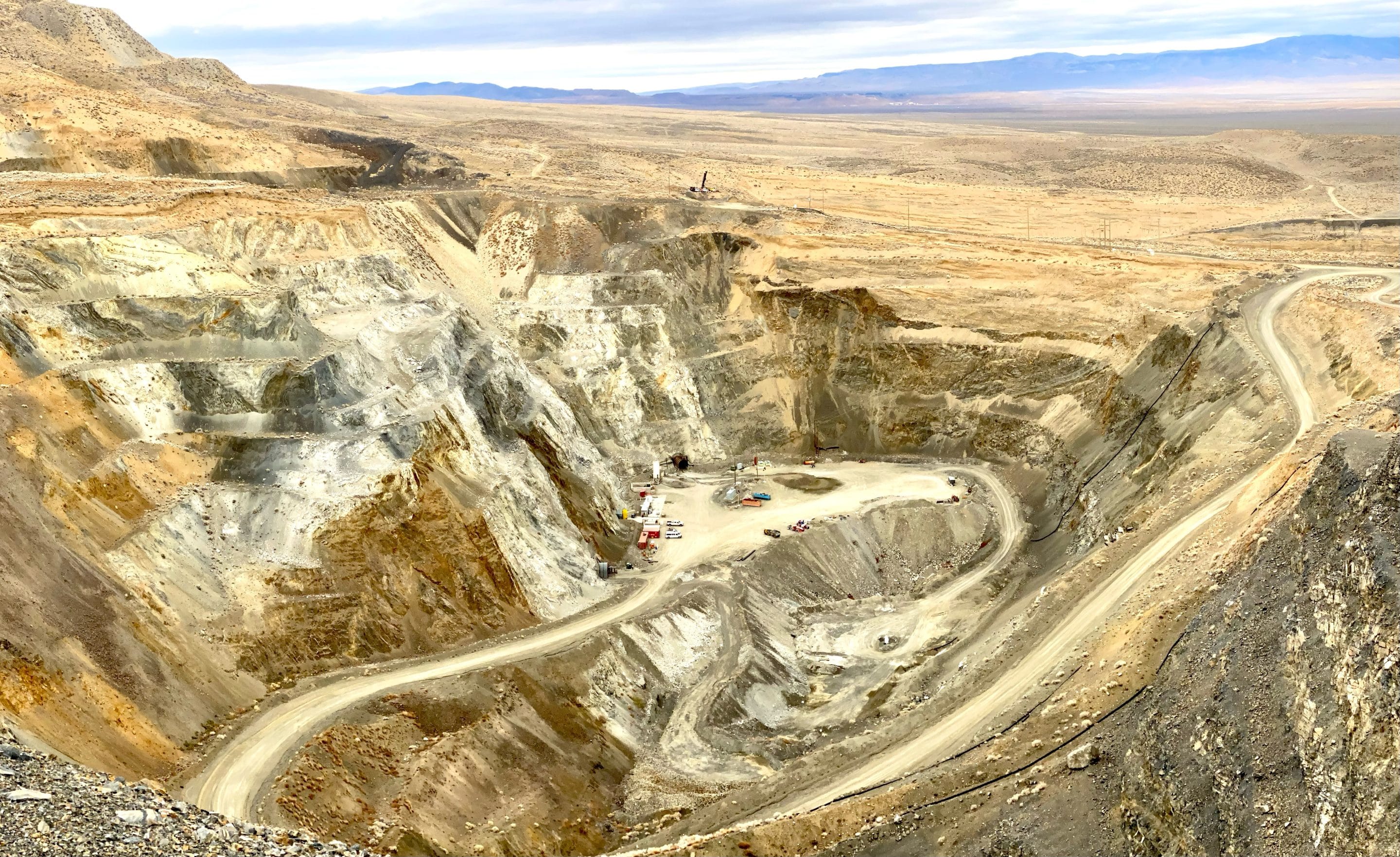
The CMA Underground project at Yaouré will introduce higher-grade ore into the existing mill without major capacity expansion. First ore is targeted for January 2026, with commercial production expected by March 2027 after approval of the US$170 million development in September 2025.
Underground material will be blended with open-pit ore to raise average grades and improve costs without increasing throughput. The project taps higher-grade zones beneath the CMA pit, extending mine life to at least 2035 while leveraging existing plant and site infrastructure to keep capital intensity low.
Its economics are driven by grade rather than volume. Higher-grade ore spreads fixed costs across more ounces, lowering AISC, and the project is being funded through operating cash flow.Jones stated:
"We can pay for all of our aspirations within our current cash flows. At this stage, there’s no need for us to take any debt on. We can fund all of our aspirations through the cash that we have on the balance sheet."
This self-funded approach preserves balance sheet flexibility while advancing a project expected to extend mine life and improve consolidated cost positioning once commercial production begins.
Catalyst #3: Balance Sheet Strength as a Re-Rating Factor
Perseus Mining reported US$755 million in cash and bullion as of December 2025, with no debt and US$400 million in undrawn credit. This strong liquidity can fund both Nyanzaga and CMA Underground while reducing reliance on external capital and limiting dilution risk.
By avoiding equity issuance, the company preserves per-share metrics through the development cycle. Production and cash flow gains flow directly to shareholders, unlike peers that diluted share counts during weaker gold markets and later needed significant growth just to offset that impact.
The undrawn credit facility provides additional flexibility, serving as contingency funding for cost escalation or opportunistic capital deployment while avoiding current interest costs. Management has indicated no immediate intention to draw on the facility. Jones stated:
"We've got over $800 million of money in the bank. So we're covering our costs at the same time as having some headroom as well. At this stage there's no need for us to take any debt on. We can fund all of our aspirations through the cash that we have on the balance sheet."
For institutional investors, funding certainty during construction is critical. Projects with financing gaps carry dilution and timeline risks, which often compress valuation multiples until funding is secured. A fully funded balance sheet lets investors focus on execution rather than financing, especially in volatile markets. Companies with net-cash positions and self-funded growth often receive valuation premiums for this reason.
Catalyst #4: Increased Leverage to the Gold Price
As of December 2025, Perseus’ hedge book covered about 11% of expected three-year production, down from roughly 14%, increasing spot price exposure while retaining downside protection. It includes 70,000 ounces in forwards at US$2,626, 105,000 ounces in calls at US$3,692, and 215,000 ounces in puts at US$2,619.
Lower hedge coverage increases earnings sensitivity to gold prices. In the December 2025 quarter, the company realized US$3,437 per ounce, generating a US$1,637 cash margin and demonstrating strong leverage to higher gold prices.
Jones explained the rationale behind the hedging adjustments:
"In more recent times we've been focusing on zero-cost collars and that gives us better exposure to upside in the gold price at the same time as maintaining the floor for us."
At current costs, each US$100 increase in gold price above AISC adds about US$100 in cash margin per ounce. With production nearing 500,000 ounces annually after Nyanzaga, a sustained US$100 price increase could generate roughly US$50 million in additional annual operating cash flow, assuming minimal hedge impact.
"We're finding ways of having more exposure to the upside but at the same time protecting the downside moving forward."
This strategy balances risk protection with increased participation in gold price rallies, giving shareholders more direct exposure to spot price movements while preserving financial flexibility during development phases.
Catalysts That Matter Less Than Investors Think
Not all developments drive valuation changes. Structural re-ratings in gold producers usually come from sustained shifts in production scale, costs, or funding certainty, not short-term volatility or peripheral corporate activity.
Quarterly AISC spikes during mine sequencing are common. The December 2025 AISC of US$1,800 per ounce was driven by lower grades and transitional phases, which management described as planned and temporary. Costs are expected to normalize as higher-grade zones are mined, so long-term investors focus on full-year guidance and multi-year trends.
Acquisition activity, or the lack of it, is also not automatically a catalyst. The company emphasizes disciplined capital allocation and operating within its core jurisdictions and areas of expertise. Jones stated:
"You have to be able to bring something to the table when you're looking at these acquisitions and if you started to compete in Australia or somewhere else it kind of it would look very off strategy."
He also emphasized the company’s historical approach to growth:
“It's been built on smart acquisitions and accretive growth and um and the company's earned its reputation of being able to build and operate mines in Africa."
This focus on strategic coherence and operational expertise within its existing African footprint reflects a capital discipline approach that many institutional investors view more favorably than expansion into unfamiliar jurisdictions or acquisitions that do not enhance the company’s core competitive advantages.
The Investment Thesis for Gold Producers
- The company operates a low-cost, three-mine base that produced nearly 500,000 ounces in FY2025, supporting internal project funding.
- Nyanzaga is the main growth driver, targeting first gold in January 2027 and pushing output beyond the 500,000-ounce threshold linked to stronger liquidity and coverage.
- The CMA Underground at Yaouré is expected to extend mine life and lower costs through higher-grade feed without major plant expansion.
- A net-cash balance sheet, with US$755 million in cash and bullion and a US$400 million undrawn facility, allows both projects to be funded without equity dilution.
- Lower hedge coverage increases upside to gold prices while keeping downside protection.
- Recent cost increases reflect planned grade sequencing, with normalization expected as higher-grade zones are mined.
- Over the next 18-24 months, valuation will depend on Nyanzaga construction, CMA ramp-up, and sustained production above 500,000 ounces per year.
The cost pressures in Q1 FY2026 appear temporary, tied to planned mine sequencing across the portfolio. Past performance suggests AISC should normalize as higher-grade zones are mined and development spending declines.
Over the next 18-24 months, the market will focus on three catalysts: Nyanzaga construction staying on schedule and budget, the CMA Underground ramp-up improving Yaouré’s cost profile, and production growth toward 500,000+ ounces annually to support potential multiple expansion.
The strong balance sheet allows the company to reach these milestones without equity dilution, shifting the main valuation driver from financing risk to execution. First gold at Nyanzaga in January 2027, alongside successful CMA Underground commissioning, represents the clearest path to a re-rating.
TL;DR
Perseus Mining produced nearly 500,000 ounces in FY2025 at competitive costs and is targeting a step-change to a 500,000+ ounce annual profile through the Nyanzaga project and the CMA Underground expansion at Yaouré. With US$755 million in cash and bullion, zero debt, and a US$400 million undrawn credit facility, the company can fund both projects without equity dilution. Recent cost increases reflect planned mine sequencing rather than structural issues, with grade improvements expected to support margin normalization. Over the next two years, valuation is likely to hinge on three core catalysts: successful Nyanzaga construction, CMA Underground ramp-up, and sustained production above the 500,000-ounce threshold, with reduced hedging providing additional leverage to gold prices.
FAQs (AI-generated)
Growth is mainly from two projects: Nyanzaga in Tanzania and the CMA Underground at Yaouré. Nyanzaga targets first gold in January 2027, while CMA will add higher-grade ore and extend mine life. Together, they are expected to push production beyond 500,000 ounces.
Crossing this threshold can improve liquidity, analyst coverage, and index eligibility. These factors often support higher EV/oz and EV/EBITDA multiples if performance is consistent.
As of December 2025, the company had US$755 million in cash and bullion, zero debt, and a US$400 million undrawn credit facility. This allows it to fund projects through internal cash flow and existing liquidity.
AISC increased to US$1,800 per ounce due to planned mine sequencing, including lower grades at Edikan, cutbacks at Sissingué, and development at Yaouré. These are typical temporary factors expected to normalize.
Hedge coverage fell to about 11% of three-year production. The mix of forwards, calls, and puts protects downside while allowing more upside, increasing sensitivity to stronger gold prices.
Analyst's Notes





Subscribe to Our Channel



Stay Informed






















