Mexico’s Silver Mine Output Rises 1.8% Against a 1.4% Global Decline


Improved mine recoveries, development financing, and resource expansion in Mexico could support additional silver supply amid a projected global deficit.
- Mexico's silver mine production rose 1.8% year over year during January-July 2026, while global output declined 1.4%.
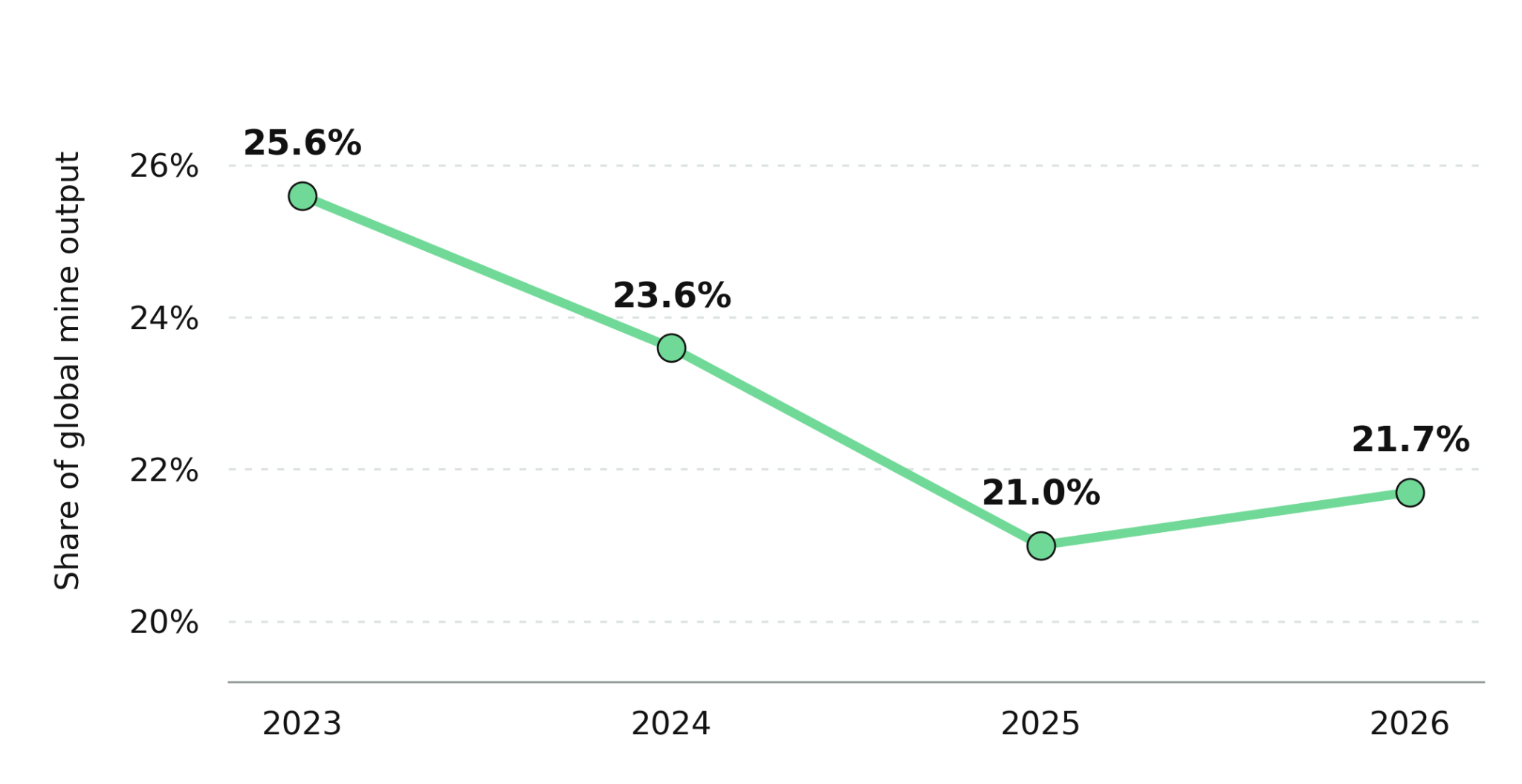
- Mexico accounted for 21.7% of global silver mine production during January-July 2026, up from 21.0% during the same period in 2025.
- Silver mine production declined 5% in Mexico during 2025, while cumulative year-over-year growth slowed from 2.8% through June 2026 to 1.8% through July.
- Higher ore grades and improved recovery rates can increase saleable silver production without proportional increases in mined tonnage, while near-mine drilling can identify additional mineralization for future mine plans.
- Silver mine production declined 10.7% in China and 2.9% in Peru during January-July 2026, while Chile recorded a 7.7% increase, revealing uneven supply growth across major producing countries.
Mexico’s Output Gain Against Global Decline Lifts Its Share to 21.7%
According to the Chilean Copper Commission (Cochilco), Mexico's silver mine production rose 1.8% year over year to 3,059.5 metric tons during January-July 2026, while global output declined 1.4% to 14,110.7 metric tons. Mexico's share of global silver mine production consequently increased by 0.7 percentage points, from 21.0% to 21.7%.
China's silver mine output declined 10.7% and Peru's fell 2.9%, while Chile's increased 7.7% during January-July 2026. Further production growth in Mexico depends on operating performance at existing mines, while development and exploration projects require progress in resource evaluation, financing, and construction before contributing additional supply.
Projected 46.3M-Ounce Deficit Raises Need for Mexico’s Mine Output
The Silver Institute's World Silver Survey 2026 reported that Mexico's silver mine production declined 5% to 172.9 million ounces in 2025, while North American output fell 3% to 218.4 million ounces, its lowest level in a decade. Mexico accounted for approximately 79% of North American production, making its mine output a major contributor to regional supply. Operational disruptions, government policy changes, and reserve depletion contributed to Mexico's decline. Cochilco's data show that cumulative year-over-year production growth slowed from 2.8% through June 2026 to 1.8% through July.
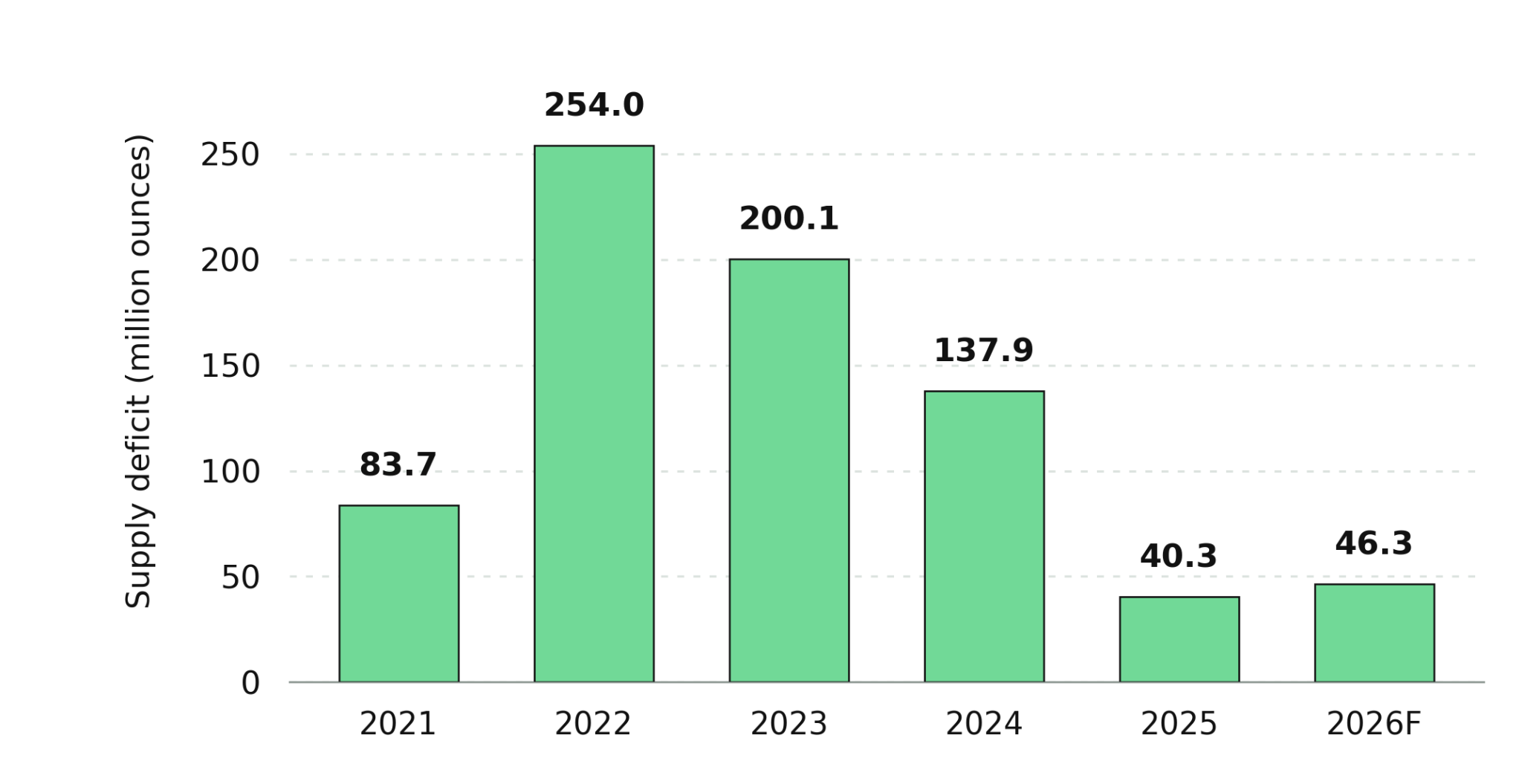
The same survey projects a 46.3-million-ounce global silver market deficit in 2026 despite a forecast 2% decline in total demand to 1.11 billion ounces. With global mine production projected to remain broadly flat, additional mined silver could help narrow the supply shortfall.
Higher Recovery Rates Support Silver Mine Output Growth
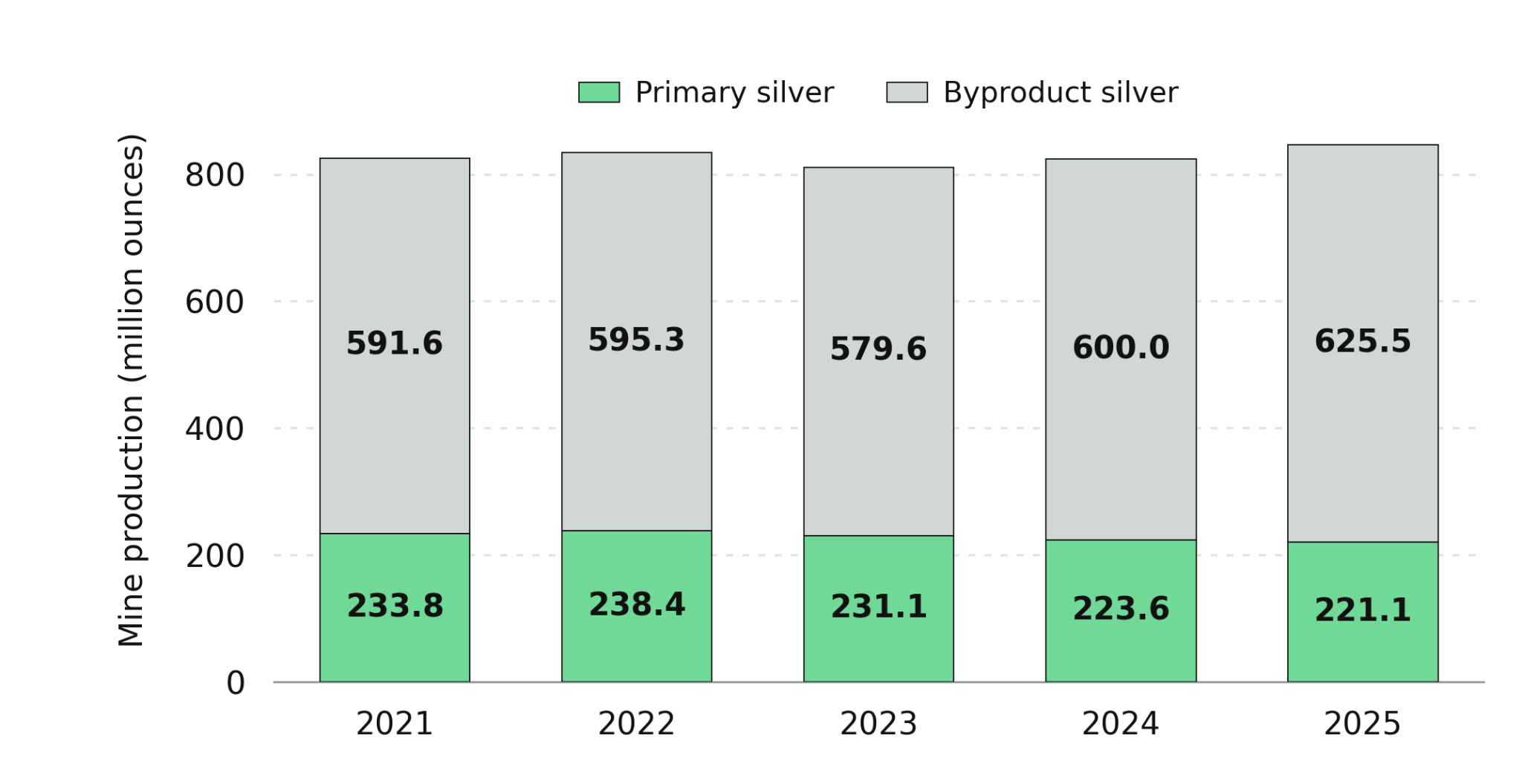
The Silver Institute reported that silver output from copper and gold mines increased 6% and 5%, respectively, in 2025, while primary silver mine production declined 1%. At existing operations, higher ore grades and improved recovery rates can increase saleable silver output and support operating margins without proportional increases in mined tonnage.
Americas Gold & Silver produced 337,270 ounces of silver at Cosalá in the second quarter of 2026, up 26% year over year. Processing improvements increased silver recovery by eight percentage points, while September drilling identified 20.5 meters grading 654.7 grams per metric ton (g/t) silver near existing mine infrastructure. These developments improve silver recovery and provide opportunities to incorporate higher-grade mineralization into its planned 2027 mine update.
Oliver Turner, Executive Vice President of Corporate Development at Americas Gold & Silver, describes projected silver production growth across Mexican operations:
“Mexico recorded a record 1.1 million ounces in 2025. That is going to be exceeded this year and next year we'll see some growth beyond that.”
Funding Above Initial Capital Needs Supports Planned Silver Output
Future silver supply also depends on projects progressing toward commercial production. Feasibility studies establish their projected output, capital requirements, and expected returns, while available financing and development milestones provide a clearer indication of their readiness for construction.
Vizsla Silver is advancing its Pánuco silver-gold project in Sinaloa, where its November 2025 feasibility study projects average annual production of 17.4 million payable silver equivalent ounces over a 9.4-year mine life. The study estimates initial capital requirements of US$238.7 million, compared with US$411 million in cash and short-term investments as of July 31, 2026. A June 2026 equipment supply agreement further advances preparations for construction, supporting the project's planned transition toward silver production.
Exploration Drilling Supports Mexico’s Future Silver Resource Growth
Beyond projects advancing toward production, exploration plays a role in identifying additional silver resources. Step-out drilling that confirms mineralization beyond existing resource boundaries can support resource expansion and provide a stronger foundation for future economic assessments.
GR Silver Mining's September 2026 drilling at its San Marcial project in Sinaloa confirmed silver mineralization extending at least 300 meters southeast and 75 meters deeper than its 2023 resource boundary. The results, including 16.1 meters grading 162 grams per metric ton (g/t) silver, strengthen the geological basis for potential resource expansion. Its ongoing 20,000-meter drilling program supports a planned resource update and preliminary economic assessment (PEA) in the first half of 2027.
Eric Zaunscherb, President and Chief Executive Officer of GR Silver Mining, explains how limited capital restricts Mexican silver exploration:
“When we look at the grand landscape in Mexico, it's full of very attractive little projects that are stymied due to a lack of capital. They haven't conducted exploration.”
Project Progress Determines Timing of Future Silver Supply
Mexico's higher share of global silver mine production reflects output already entering the market, excluding potential contributions from development and exploration projects. Existing mines can increase saleable output through higher ore grades and improved recoveries, while new projects require progress in resource evaluation, financing, permitting, and construction before adding production.
The projected 46.3-million-ounce global silver deficit in 2026 makes the timing of additional mine supply relevant to the market balance. Feasibility studies establish projected production and capital requirements, while exploration drilling supports potential resource expansion. Delays in bringing new capacity into production postpone potential silver sales and reduce the present value of expected cash flows.
The Investment Thesis for Silver
- A projected 46.3-million-ounce silver deficit in 2026 persists despite an expected 2% decline in demand, keeping additional mine supply relevant to the global market balance.
- Mexico accounted for approximately 79% of North American silver mine production in 2025, making its production recovery an important contributor to regional supply growth.
- Mexico's share of global silver mine production increased to 21.7% despite a 1.4% global output decline, raising the contribution of its operating mines to worldwide supply.
- Silver output from copper and gold mines increased 6% and 5% in 2025 while primary silver production fell 1%, linking silver supply growth to activity across other mining sectors.
- Mexico's cumulative production growth slowed from 2.8% through June to 1.8% through July 2026, placing greater emphasis on sustained operating performance and recoverable silver output.
- Development and exploration projects offer additional silver supply potential beyond current mine production, with feasibility economics and resource expansion providing separate measures of future capacity.
Mexico's position in global silver supply reflects both the performance of its producing mines and the potential of projects advancing toward future production. Higher ore grades and improved recoveries can increase saleable output, while exploration results and feasibility studies provide the foundation for expanding future supply. The broader investment opportunity lies in measurable operating improvements and project milestones that can translate Mexico's silver resources into additional production and long-term cash flow.
TL;DR
Mexico's silver mine production increased 1.8% year over year during January-July 2026, while global output declined 1.4%, lifting Mexico's share to 21.7%. The recovery follows a 5% decline in 2025, when Mexico accounted for approximately 79% of North American silver production. The Silver Institute projects a 46.3-million-ounce global silver deficit in 2026 despite weaker demand. Improved recovery rates and higher ore grades can increase output at existing mines, while development projects and exploration drilling offer additional supply potential. Project financing, resource assessments, and construction progress will influence when future production can enter the market.
FAQs (AI-Generated)
Analyst's Notes





Subscribe to Our Channel




.png)




.png)
Stay Informed