




Russia’s Diesel Deal Cuts Crude Prices, Not Diesel Costs



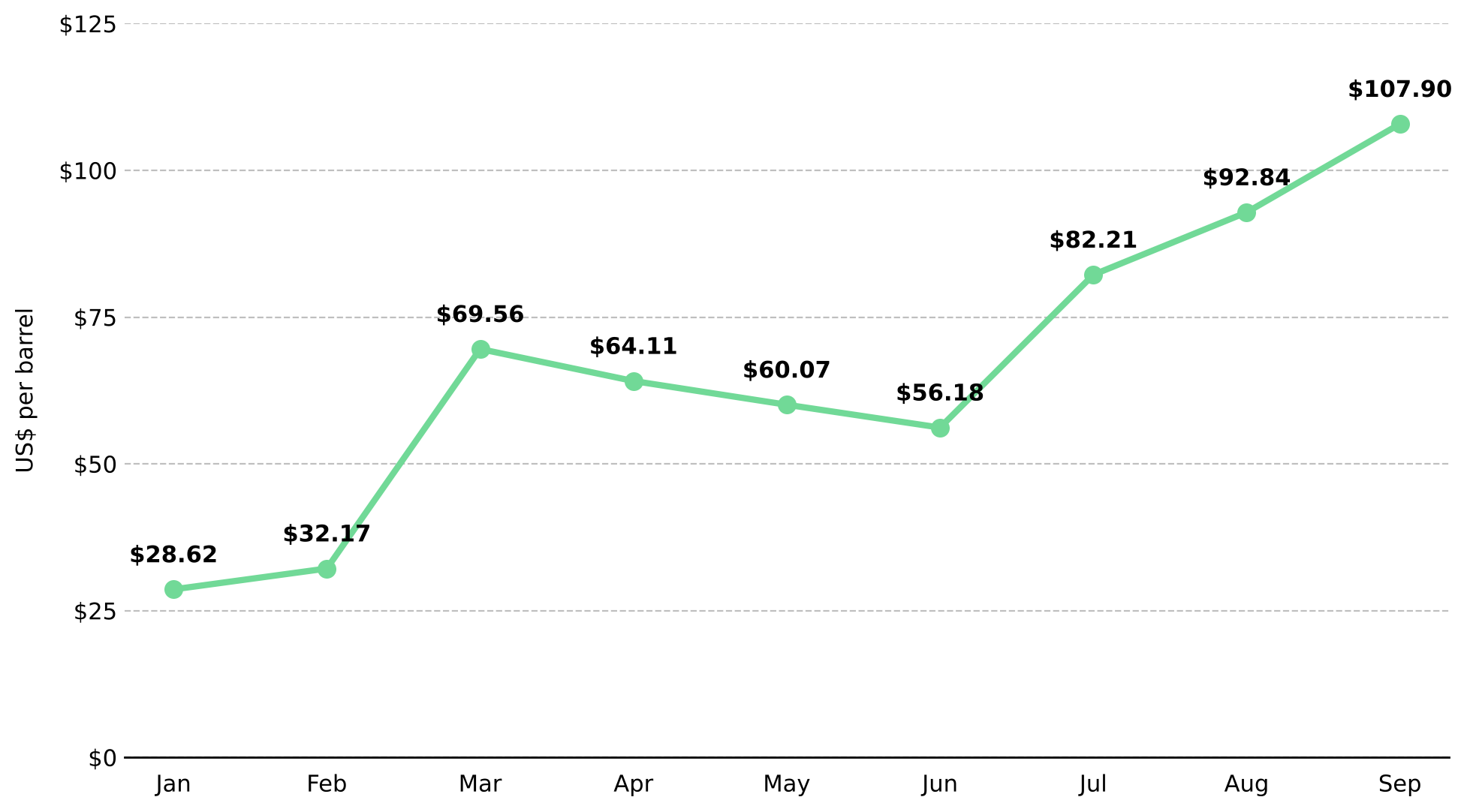
Seaborne diesel exports fell 20% year over year, while Gulf Coast crack spreads averaged $107.90 a barrel in September, favoring refiners with higher diesel yields.
- Brent fell $1.18, or 1.1%, to $105.47 a barrel, while US West Texas Intermediate (WTI) dropped to $92.57 on October 13, after President Trump announced Russia would supply diesel to global markets.
- The deal delivers about 100,000 barrels per day in October and 125,000 in November against 800,000 shipped last year.
- Goldman Sachs estimated 800,000 metric tons of Russian supply would cut Gulf Coast and European wholesale diesel by $1 to $2 a barrel.
- The US Gulf Coast ultra-low sulfur diesel (ULSD) crack spread averaged $107.90 a barrel in September against $28.62 in January.
- Legal uncertainty over the Russian diesel waiver and Hormuz attack risks remain, while four consecutive EIA reports showing crack spreads below $60 a barrel would invalidate the refining-margin case.
Russian Supply Deal Pulls Brent Below $106
Brent fell $1.18, or 1.1%, to $105.47 a barrel from its highest settlement since September 15, while US WTI dropped $1.17 to $92.57 after President Trump announced Russia's agreement to supply diesel globally and the US temporarily lifted sanctions on Russian fuel.
Russia's diesel agreement reversed a supply-driven crude rally despite an attack by Iran-aligned Houthi forces on Riyadh's King Khalid International Airport that killed 12 and reported tanker attacks near the Strait of Hormuz. US distillate inventories stood at 105.1 million barrels, 12% below the five-year average, limiting the supply buffer against further disruptions.
Refinery Outages Contribute to 20% Drop in Diesel Exports
Global diesel production has declined for seven consecutive months, with seaborne exports down 1.4 million barrels per day, or 20%, year over year. The Iran War reduced Middle Eastern fuel exports, Ukrainian strikes increased Russian refinery outages by 3 million barrels per day year over year, and Russia banned diesel exports in July. US refineries operated at 92.7% of their 18.027 million-barrel-per-day capacity, leaving limited room to offset supply losses.
The Russian fuel waiver faces legal uncertainty under a 2022 US law barring Russian energy imports until Russia ends its aggression against Ukraine, according to the Senate Foreign Relations Committee. OPEC and non-OPEC ministers reported freight and insurance costs exceeding one-third of commodity value, raising delivered fuel costs.
Limited Russian Deliveries Support Gulf Coast Margins
Russian diesel shipments of just over 100,000 barrels per day in October and 125,000 in November remain well below last year's 800,000, supporting margins for US Gulf Coast refiners with higher diesel yields. Aubrey Hilliard, President of Texican Natural Gas's Carolinas division, said the additional supply would not provide significant cost relief.
High Diesel Prices Favor Refiners Over Fuel-Heavy Sectors
Retail diesel averaged $6.27 a gallon, up 71% year over year, squeezing margins in freight, agriculture, and construction. Meanwhile, lower crude prices support wider refining margins for US Gulf Coast refiners with higher diesel yields, provided diesel prices remain elevated.
Crude-linked positions depend on oil prices, while refining margins depend on the diesel-to-crude price spread. ClearView Energy Partners said US imports of Russian diesel may provide little price relief, even if legally permitted.
The Russian diesel waiver's legal outcome and potential Hormuz tanker attacks remain unpredictable, complicating position timing. A Russia-Ukraine ceasefire combined with restored Hormuz traffic could lower fuel prices, creating downside risk for positions tied to US Gulf Coast refining margins.
Why Does Refinery Scarcity Support Valuations
Refining capacity, rather than crude availability, is limiting fuel supply, with US operable capacity falling from 18.160 million to 18.027 million barrels per day year over year.
Wider diesel-to-crude price spreads benefit US Gulf Coast refiners with higher diesel yields, making refining margins, rather than crude prices alone, central to their valuations.
Limited refinery investment over the past decade has constrained future capacity additions, supporting the long-term value of existing refining assets beyond any single conflict.
Analyst's Notes





Subscribe to Our Channel








.png)
Stay Informed


