




Serabi Gold Puts Capital Allocation at the Centre of Growth & Shareholder Return


Serabi Gold is using stronger cash flow to fund plant expansion, drilling, and mine sequencing while weighing shareholder return against growth needs.
- Serabi Gold is shifting from a three-phase strategy to a capital allocation story as current cash flow and balance sheet strength cover expansion, drilling, and development.
- The fourth ball mill at Palito is the clearest near-term capital decision, raising milling capacity to 330,000 tonnes per annum and addressing the current plant bottleneck.
- The company has added a shareholder return dimension by stating an intention to return around 25% of 2025 free cash flow (FCF) while still funding growth internally.
- Brownfield drilling is being linked to a larger consolidated mineral inventory that would support a later throughput increase beyond the current system.
- Coringa permitting remains the main external dependency, with approvals still required from the National Institute for Colonization and Agrarian Reform (INCRA) and the National Indigenous Peoples Foundation (FUNAI) ahead of the current Guia de Utilização (GUIA) expiry on 29 January 2027.
Why the March Update Put Capital Allocation at the Centre
Serabi Gold’s March 2026 update shifted emphasis from production growth alone to capital allocation across the existing operating base. The fourth ball mill at the Palito Complex, the mining method change at Coringa, the economic review of São Chico, the new 2026 drilling budget, and the unchanged 2026 production guidance all sit within that framework.
The fourth mill is expected to raise annual processing throughput to 330,000 tonnes per annum and to be operational by late 2026. It is intended to ease plant capacity constraints and allow lower-grade stockpiles to be processed. At Coringa, the company is moving from selective open stoping toward longhole open stoping after ore sorting results in 2025 and trials since late 2025. São Chico, which was suspended in 2023 on economic rather than geological grounds, has returned to review as higher gold prices and expected additional plant capacity change the economics of a restart.
The update also left 2026 consolidated production guidance unchanged at 53,000 to 57,000 ounces. That combination of steady near-term guidance, defined plant expansion, continued drilling, and a stated shareholder return places capital sequencing at the centre of the current narrative.
Palito Remains the Hub, Coringa Expands the System & São Chico Returns as Optionality
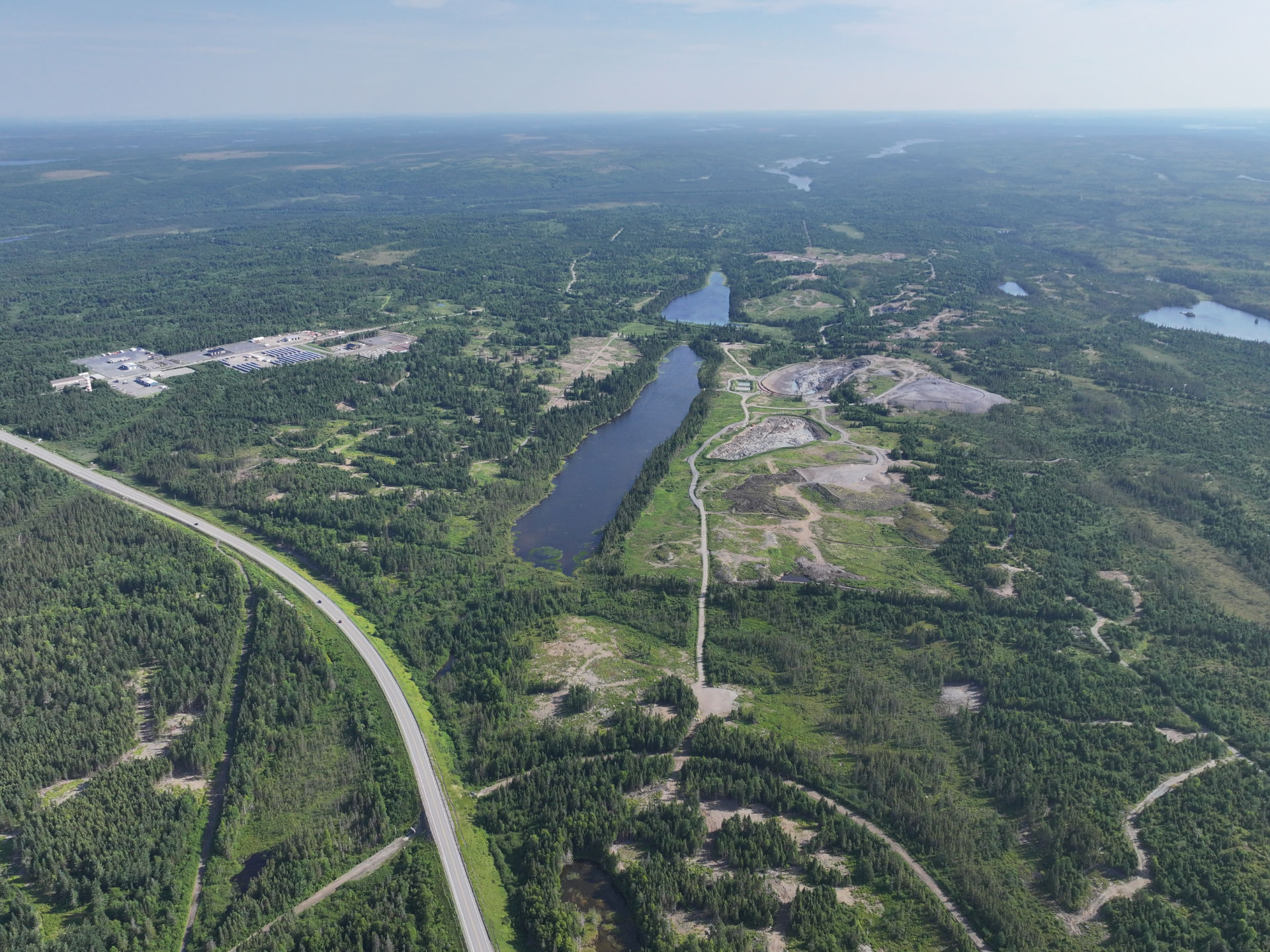
Palito remains the centre of the current operating configuration. The complex operates as a 650 tonne per day conventional flotation and carbon-in-pulp processing hub with ore sorting, and plant capacity remains the main bottleneck until the fourth mill is installed. In that context, Palito is the natural site for the next step in expansion, with the fourth mill presented as a low-cost installation that can be funded from cash flow and the existing cash balance.
That logic reflects the system already in place. Coringa Gold Project ore is pre-concentrated, trucked about 200 kilometres by road, and processed at Palito, which makes additional milling capacity at Palito the preferred route over building a separate Coringa process plant. Coringa’s role within that system is also changing, with the move toward longhole open stoping intended to increase mine output, lower mining costs, and improve safety, while ore sorting removes much of the added dilution before haulage.
São Chico remains outside the base case, but it has returned as an economic option. The combination of higher gold prices and expected additional plant capacity has brought the asset back into review. Even so, it has not been presented as a committed restart decision.
Cash Flow Covers Growth & Opens the Door to Shareholder Return
In December 2025, Serabi reported US$54.3 million of cash and US$7.1 million of debt. Through the third quarter of 2025, earnings before interest, tax, depreciation, and amortisation (EBITDA) were US$48.2 million, post-tax profit was US$34.3 million, and all-in sustaining costs (AISC) per ounce was US$1,816 per ounce. That balance sheet and earnings base place the near-term growth plan in an internally funded context.
Coringa development, plant expansion, and the next phase of activity are being framed as fundable from cash flow rather than from new equity or additional debt. Within that framework, the fourth ball mill and underground development appear to be the first call on capital. The Palito plant expansion is one of the central uses of capital, and a further US$13 million of underground development is planned for 2026. Brownfield drilling remains another major allocation item, with 38,400 metres completed in 2025 and a further 30,000 metres approved for 2026 under a US$9 million programme.
Chief Executive Officer of Serabi Gold, Michael Hodgson, sets out the funding position directly:
“We can do all of this out of cash flow. Starting up Coringa, we can fund it all out of cash flow. We are not going out to investors for more money or raising debt.”
The same framework now includes a distribution decision. The stated intention is to return around 25% of 2025 free cash flow (FCF) to shareholders while continuing to fund growth internally. Hodgson puts that point plainly:
“It is our intention, as things stand today, to return around 25% of our 2025 free cash flow to shareholders once we complete our year-end process.”
Resource Growth Comes Before the Next Throughput Step
Serabi’s three-phase strategy sets out a clear order of growth. Phase 1 targets production of about 60,000 ounces by 2026, Phase 2 targets a 1.5 million to 2.0 million ounce consolidated resource across 2025 and 2026, and Phase 3 targets a production-capacity expansion in 2027. That sequence places resource growth ahead of the next larger throughput step.
The drilling programme is what supports that progression. Current exploration at Palito and Coringa is aimed at expanding the consolidated mineral inventory ahead of the next production-capacity step. The current resource base already provides a foundation, with Palito at 350,000 ounces measured and indicated plus 162,000 ounces inferred, and Coringa at 179,000 ounces measured and indicated plus 271,000 ounces inferred.
Hodgson frames the next throughput step as dependent on a larger mineral inventory:
“By the end of 2026, we expect to be at around 1.5 million to 1.6 million ounces. From that point, we can justify and support a higher throughput rate by adding more milling capacity at the Palito plant, which could take us to around 70,000 to 80,000 ounces.”
Within that framework, 70,000 to 80,000 ounces sits as a later-stage outcome rather than a present operating target. Current 2026 production guidance remains 53,000 to 57,000 ounces.
Coringa Permitting & Timing Gaps Still Define the Outer Boundary
The operating and capital sequence is relatively clear, but Coringa permitting remains unresolved. The current 3-year Guia de Utilização (GUIA) expires on 29 January 2027, and the full mining licence still requires Instituto Nacional de Colonização e Reforma Agrária (INCRA) change-of-land-use approval and Fundação Nacional dos Povos Indígenas (FUNAI) approval of the Indigenous Study. INCRA is described as being in the final stages at the state level before federal review in Brasília, while FUNAI is presenting the study to the indigenous community.
That leaves permitting as the main external dependency in the current operating and capital sequence. Receipt of the approvals is still being targeted in the first half of 2026, but they remained outstanding in the latest update. The fourth-mill installation is expected to be installed this year, with the March press release and presentation both anchoring timing around late 2026.
The plant bottleneck also remains in place until the new mill is installed. That is among the reasons the 2026 production guidance has not changed despite the operational developments at Coringa and the expanded drilling programme. Assays were still pending for part of the 2025 programme, and the updated mineral resource estimate had not yet been released.
The Investment Thesis for Serabi Gold
- Current cash flow and balance sheet strength give Serabi room to fund plant expansion, underground development, and drilling without immediate dilution.
- The fourth ball mill is the clearest near-term capital decision, directly addressing the Palito bottleneck and lifting milling capacity to 330,000 tonnes per annum.
- Brownfield drilling is being presented as inventory-building spend tied to a later throughput increase, rather than as open-ended growth spending.
- The capital framework now includes shareholder return as well as reinvestment, with around 25% of 2025 free cash flow identified for potential distribution.
- Coringa adds a lower-cost production stream through ore sorting, trucking, and shared processing, with no standalone process plant in the current plan.
- The main risk lies in permitting progress and resource growth still needing to keep pace with the operating and capital sequence now being set out.
Serabi is ordering growth more explicitly around cash deployment, with processing expansion, underground development, drilling, shareholder return, and project optionality now sitting within the same framework. Coringa permitting remains the main condition outside that internal sequence.
TL;DR
Serabi Gold is moving from a production-growth framing to a capital allocation framing, using current cash flow to fund plant expansion, drilling, and underground development while also preparing a shareholder return. The fourth ball mill at Palito is the clearest near-term capital decision, while Coringa permitting remains the main external dependency on timing.
FAQs (AI-Generated)
The fourth mill directly addresses the current bottleneck at the Palito plant and raises milling capacity to 330,000 tonnes per annum. That makes it the clearest near-term use of capital within the current operating system.
The latest update ties plant expansion, drilling, underground development, and shareholder return to the same funding base. The focus therefore shifts from production growth alone to how Serabi is sequencing cash deployment across the business.
Serabi has stated an intention to return around 25% of 2025 FCF to shareholders. That would add a shareholder return element while the company continues to fund growth internally.
A larger throughput increase depends first on building a bigger consolidated mineral inventory. That makes drilling and resource growth prerequisites for any later move toward 70,000 to 80,000 ounces.
Coringa permitting remains the main external dependency. Approval from INCRA and FUNAI is still required ahead of the current Guia de Utilização expiry in January 2027.
Analyst's Notes





Subscribe to Our Channel




Stay Informed






















