




Serabi Gold Restructures Its Production Base & Reduces Execution Risk Ahead of 330ktpa Expansion


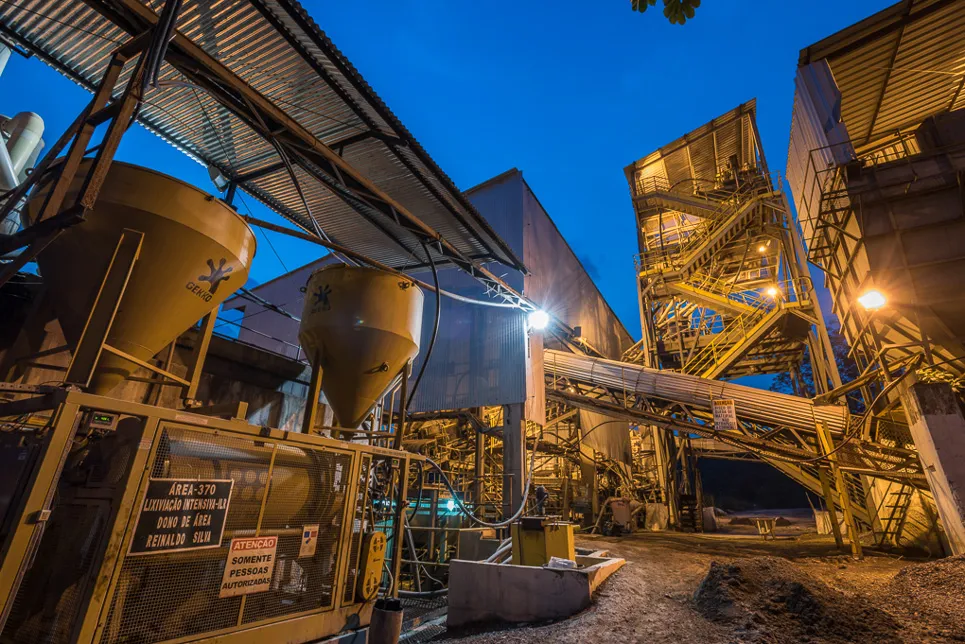
Serabi Gold targets 330 ktpa capacity at the Palito Complex, using self-funded expansion, mechanised mining, and ore sorting to scale production.
- Plant constraint risk is being structurally addressed through a fourth ball mill installation, lifting Palito Complex capacity to 330,000 tonnes per annum (330ktpa) before the fourth quarter of 2026.
- The mining method transition at Coringa reduces safety and cost risk, shifting from selective open stoping to mechanised sublevel (longhole) open stoping.
- Balance sheet strength underpins self-funded growth, with a year-end 2025 cash balance of $54 million and zero long-term debt following full repayment in January 2026.
- Exploration and resource upgrades support inventory growth, with 38,400 metres drilled in 2025 and updated Mineral Resource Estimates due in the first quarter of 2026.
- Permitting remains the key external risk, with approvals required from the Instituto Nacional de Colonização e Reforma Agrária (INCRA) and from the Fundação Nacional dos Povos Indígenas (FUNAI), ahead of the January 2027 expiry of the Coringa Guia de Utilização (GUIA) licence.
Plant Configuration & Throughput Capacity at the Palito Complex
Serabi Gold is undertaking a structural repositioning, moving from a high-grade, plant-constrained operator toward a self-funded, multi-asset producer leveraging shared infrastructure across the Palito Complex in Pará State, Brazil. The Palito Complex has historically operated as a plant-constrained system. Limited processing capacity meant high-grade feed was prioritised while marginal ore from satellite deposits could not be economically treated; this constraint ultimately led to the 2023 suspension of the São Chico satellite mine. For investors, a constrained mill effectively caps the value of a multi-deposit system. Net present value (NPV) and internal rate of return (IRR) potential are limited when throughput is restricted, as strong grades cannot translate into earnings before interest, taxes, depreciation, and amortisation (EBITDA) growth if the plant cannot process more ore.
Serabi’s response is a low-capacity expansion. The installation of a fourth ball mill, repurposed from dormant equipment acquired with the Coringa asset in 2018, will increase total processing capacity to 330,000 tonnes per annum (330ktpa). Crucially, this is not greenfield capital expenditure. It is incremental infrastructure leveraging sunk capital, with the ball mills already on site at Palito and ready for installation.
Production growth is already emerging. Serabi delivered 44,000 ounces in 2025, a record year that surpassed its previous best of just over 40,000 ounces. Guidance for 2026 is 53,000 to 57,000 ounces, with output expected to be weighted toward the second half as the fourth ball mill comes online. The expansion is being funded entirely from internal cash flow. No new equity issuance is required, and no additional debt is being taken on. With $54 million in cash at the end of 2025 and the remaining $7 million in debt retired in January 2026, Serabi enters this phase of growth with a clean balance sheet.
Chief Executive Officer of Serabi Gold, Mike Hodgson, summarised the strategic rationale:
"The biggest return for us is putting in a fourth ball mill, which we're doing right now. We've already got the ball mills from the redundant plant at Coringa, which we're now going to build, so the ball mills are already at Palito, ready to be installed. We can do all this out of cash flow."
Improved plant utilisation across multiple ore sources, nominal capital expenditure funded from existing cash, and no reliance on external capital markets collectively lower financial risk relative to peers funding growth through dilutive equity raises or project debt.
Mining Method Transition at Coringa & Operational Risk Profile
Coringa initially relied on selective open stoping after stoping commenced in 2023. While selective mining preserves grade, it introduces higher labour intensity, entry-related safety risks, and production volatility. For investors, safety risk extends beyond environmental, social, and governance (ESG) considerations. It directly affects production continuity, insurance costs, regulatory scrutiny, and valuation multiples.
Since late 2025, Serabi has been trialling mechanised sublevel (longhole) open stoping at Coringa. This non-entry method increases mine output, reduces mining costs, and eliminates the need for personnel to enter active stoping areas. However, it introduces greater dilution in run-of-mine ore, increasing reliance on downstream sorting to maintain feed quality.
The shift from labour-intensive to equipment-driven mining improves scalability and carries a lower all-in sustaining cost (AISC) potential through mechanisation. Dilution risk is mitigated, but not eliminated, through ore sorting.
Ore Sorting Performance & the Multi-Asset Processing Model
The viability of mechanised mining at Coringa depends partly on ore sorting as a pre-concentration step. Mechanised mining increases waste dilution, and transporting unsorted material to the Palito plant would raise trucking costs and reduce plant recovery efficiency. Serabi Gold operates ore sorting at both sites, with 12 months of operational results now available from Coringa, where ore is pre-concentrated before being trucked to the Palito mill. Ore sorting protects head grade, reduces the processing of waste tonnes, and preserves margins despite the shift to bulk mining methods. This validation supports the company’s two-mine, one-plant model and improves the economics of São Chico, where management now indicates the ore is viable even without ore sorting under current gold price conditions.
Notably, ore sorting has never been successful on São Chico material, meaning feed from the satellite would bypass the sorting step entirely and enter the Palito plant on grade alone. This differentiates São Chico from Coringa feed, which relies on ore sorting as a pre-concentration step to manage dilution. Serabi is now assessing the possibility of rehabilitating the upper levels at São Chico, which may benefit from existing underground development. The combination of record gold prices and expanded plant capacity creates a window that did not exist when operations were suspended in 2023.
Hodgson addressed the rationale for revisiting the asset:
"We mustn't forget our old mine São Chico, which never got exhausted. We just closed it because, being plant-constrained, we didn't have space to continue mining that deposit. It was marginal really at the time with the gold price we had of the day, but at these gold prices São Chico is very, very much a viable business."
São Chico represents embedded optionality within the existing asset portfolio, offering potential incremental ounces through expanded plant capacity without new mine builds or significant capital outlay.
Exploration Activity & Resource Inventory
Serabi completed 38,400 metres of drilling in 2025, comprising 17,600 metres at Palito and 20,800 metres at Coringa, with 65 holes returning grades above 3 grams per tonne of gold. These results support near-term Mineral Resource Estimate updates expected in the first quarter of 2026.
The 2025 programme generated several targets with near-term resource potential. At Coringa, the most significant result was the Serra South discovery, located approximately 500 metres south of the existing Serra mine infrastructure. Geological work indicates the zone is formed by the intersection of 2 main structures, one trending from the Fofão area and the main structure associated with the Serra and Meio zones. Three rigs operated on a 50-metre grid spacing during the fourth quarter of 2025 to define the extent of mineralisation, though drilling to date suggests a separate portal will be required to access the Serra South zone.
At Palito, the Senna target returned mineralisation both north and south of the existing resource, which was previously mined between 2015 and 2019. Highlight results included hole 25-SE-012, which returned 2.56 metres at 7.05 grams per tonne gold, and hole 25-SE-014, which returned 0.25 metres at 25.42 grams per tonne gold. The Piauí target, located southwest of the main Palito resource, presents a different mineralisation style with a broader hydrothermal alteration halo locally exceeding 10 metres in thickness. This offers potential for lower-grade disseminated mineralisation enveloping the high-grade vein zones, a mineralisation style not previously exploited at the Palito Complex, enhancing the overall potential of the target.
Hodgson framed the exploration trajectory directly:
"Our 2025 brownfield exploration programme has concluded with a number of discoveries and zones to follow up with drilling in 2026. The drill results in totality are encouraging, and we remain optimistic for what lies ahead in the 2026 brownfield exploration programme."
Brownfield drilling reduces inferred resource uncertainty, supports conversion toward indicated categories, and extends mine life assumptions in NPV models. In January 2026, Serabi commenced a $9 million, 30,000-metre drill campaign as the second phase of a two-year exploration strategy targeting a consolidated mineral inventory of 1.5 million ounces (Moz) or more by 2027. Resource growth offsets depletion risk, supports production guidance of 53,000 to 57,000 ounces for 2026, and provides leverage to the gold price without acquisition risk.
Permitting Timeline & Licence Conditions at Coringa
Coringa operates under a three-year Guia de Utilização (GUIA) licence expiring January 29, 2027. Transition to a full mining licence (LI license), issued by the State Environmental Agency (SEMAS), requires two prerequisite approvals: a change of land use authorisation from Instituto Nacional de Colonização e Reforma Agrária (INCRA) and approval of the Estudo de Componente Indígena (ECI) from the Fundação Nacional dos Povos Indígenas (FUNAI).
Separately, Serabi has held discussions with the Agência Nacional de Mineração (ANM) regarding the future of the existing GUIA licence, including a potential extension or modification of the current terms. This dialogue provides a secondary regulatory pathway that could provide optionality for operations beyond the current January 2027 term.
On the FUNAI process, the company reports progress. FUNAI is now presenting the ECI to the indigenous community, following what management describes as numerous positive consultations between Serabi and the community. A compensation study must be agreed upon before the ECI can receive formal approval. The INCRA change of land use application, submitted in final form, has cleared state-level review and will proceed to Brasília for federal-level approval. Management targets receipt in the first half of 2026.
The Investment Thesis for Serabi Gold
- Throughput expansion to 330,000 tonnes per annum supports multi-asset processing flexibility and removes the historical plant bottleneck that constrained production across the Palito Complex.
- The transition to mechanised longhole stoping at Coringa lowers both safety exposure and per-unit cost risk relative to selective mining methods.
- 12 months of ore sorting operational data provide validation for the dilution management strategy that underpins the two-mine, one-plant model.
- A $54 million cash position and zero long-term debt reduce financing risk and support self-funded capital allocation without equity dilution.
- A combined 38,400 metres drilled in 2025 and a 30,000-metre program underway in 2026 support a resource inventory growth objective of 1.5 million ounces or more.
- A defined permitting pathway ahead of the January 2027 Guia de Utilização (GUIA) licence expiry provides timeline visibility, though external approval risk persists.
Serabi’s strategy combines throughput expansion, operational mechanisation, and internally funded exploration to position the Palito Complex for scalable production growth while maintaining balance sheet strength, with permitting at Coringa remaining the final key external catalyst.
TL;DR
Serabi Gold is restructuring its operating model to support scalable production growth ahead of a planned 330 ktpa processing capacity at the Palito Complex by late 2026. The strategy combines a low-capital plant expansion using existing equipment, a shift to mechanised mining at Coringa to reduce safety and cost risk, and operational validation of ore sorting to support a two-mine, one-plant system. With $54 million in cash, no long-term debt, and exploration programs targeting resource growth beyond 1.5 Moz, the company aims to fund expansion internally while reopening optional assets such as São Chico. The primary remaining uncertainty is permitting, with prerequisite approvals from INCRA and FUNAI still required for SEMAS to issue the full mining licence before the Coringa GUIA expires in January 2027.
FAQs (AI-Generated)
Serabi Gold is expanding production primarily by increasing processing capacity at the Palito Complex to 330,000 tonnes per annum through the installation of a fourth ball mill. Because the equipment was acquired with the Coringa asset in 2018 and is already on site, the expansion requires relatively low capital investment. This allows the company to increase throughput without relying on external financing.
The São Chico satellite mine was suspended in 2023 because the Palito plant lacked the capacity to process ore from multiple deposits simultaneously. With the upcoming mill expansion and higher gold prices, the deposit may once again be economically viable. Management is assessing whether rehabilitating existing underground development could allow production to resume with limited capital.
At Coringa, Serabi is transitioning from selective open stoping to mechanised sublevel (longhole) open stoping. This method reduces the need for workers to enter active stoping areas, improving safety and lowering labour intensity. Mechanisation can also support higher and more consistent production rates.
Ore sorting at Coringa acts as a pre-concentration step before material is transported to the Palito processing plant. The technology removes waste rock, improving feed grade and reducing the amount of material that needs to be milled. This helps offset dilution introduced by mechanised mining methods and supports the company’s two-mine, one-plant strategy.
The key external risk is permitting the Coringa project before the current Guia de Utilização licence expires in January 2027. Approvals are required from Brazilian agencies responsible for land-use changes and Indigenous consultation processes. While the company reports progress, these decisions remain outside management’s direct control.
Analyst's Notes





Subscribe to Our Channel



.jpg)
Stay Informed






















