




From 44,000oz to 70,000oz+: How Serabi Gold Is Scaling Production Without Dilution


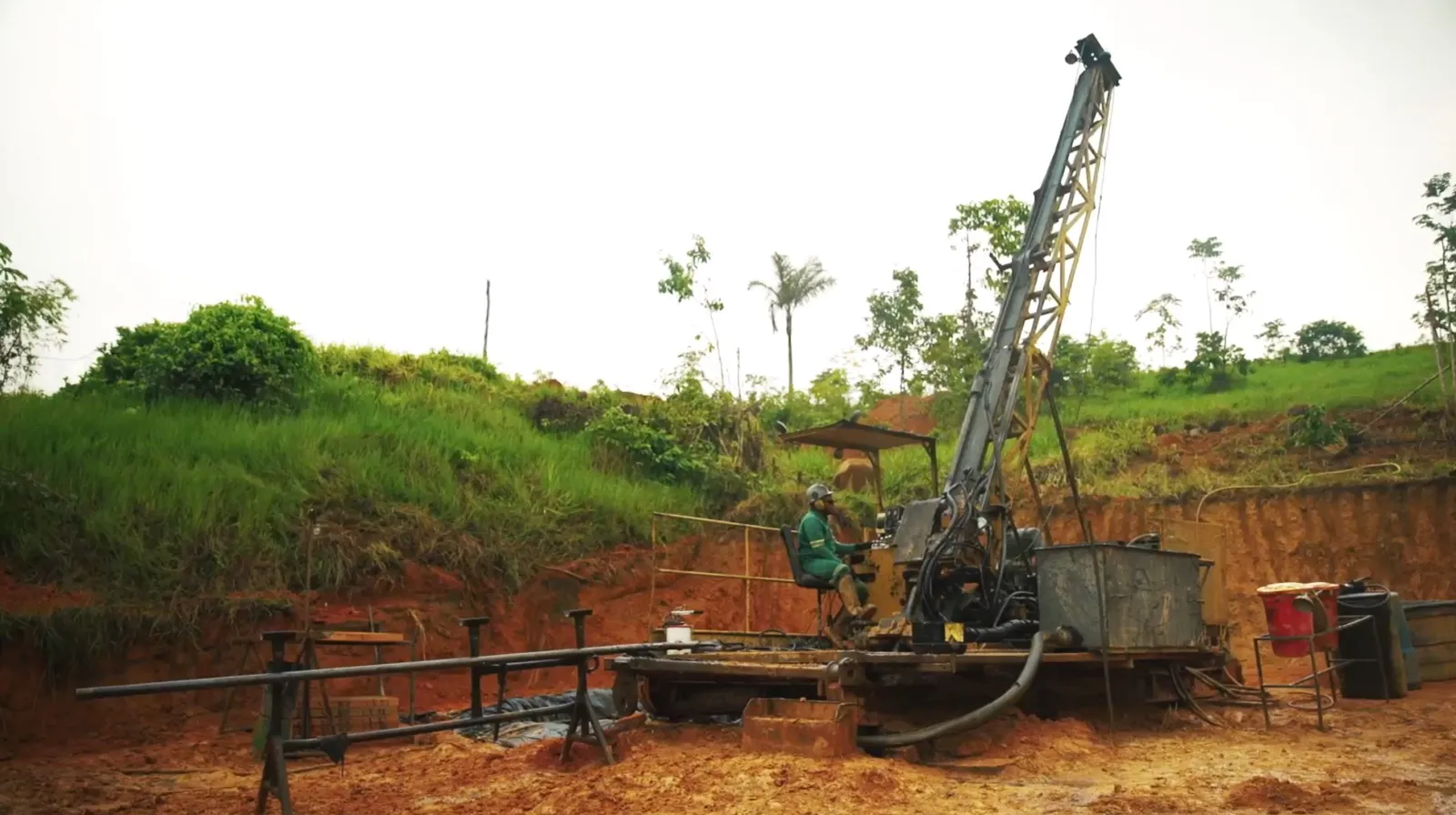
Serabi Gold targets 54-57k oz in 2026 (+23-30%), debt-free, returning 25% FCF to shareholders. Self-funding expansion to 70-100k oz/yr by 2027-28. Coringa permitting progressing.
- Serabi Gold delivered its best year ever with 44,000 ounces produced, exceeding guidance, while cash reserves grew from $20M to $54M despite funding a $12M exploration program.
- The company is targeting 54,000-57,000 ounces in 2026, with plans to reach 70,000-80,000 ounces through plant expansion at Palito and potential Sao Chico restart.
- With quarterly profits reaching $13-14M at current gold prices, all capital expenditures including the fourth ball mill installation, exploration, and mine expansions are being funded from cash flow without additional equity or debt.
- Serabi aims to increase its resource base from 1 million to 1.6 million ounces by year-end 2026, with resource updates expected in March showing progress toward the 1.3 million ounce milestone.
- The company has committed to returning approximately 25% of 2025 free cash flow to shareholders through dividends and/or share buybacks, while maintaining disciplined exploration spending at $12M annually.
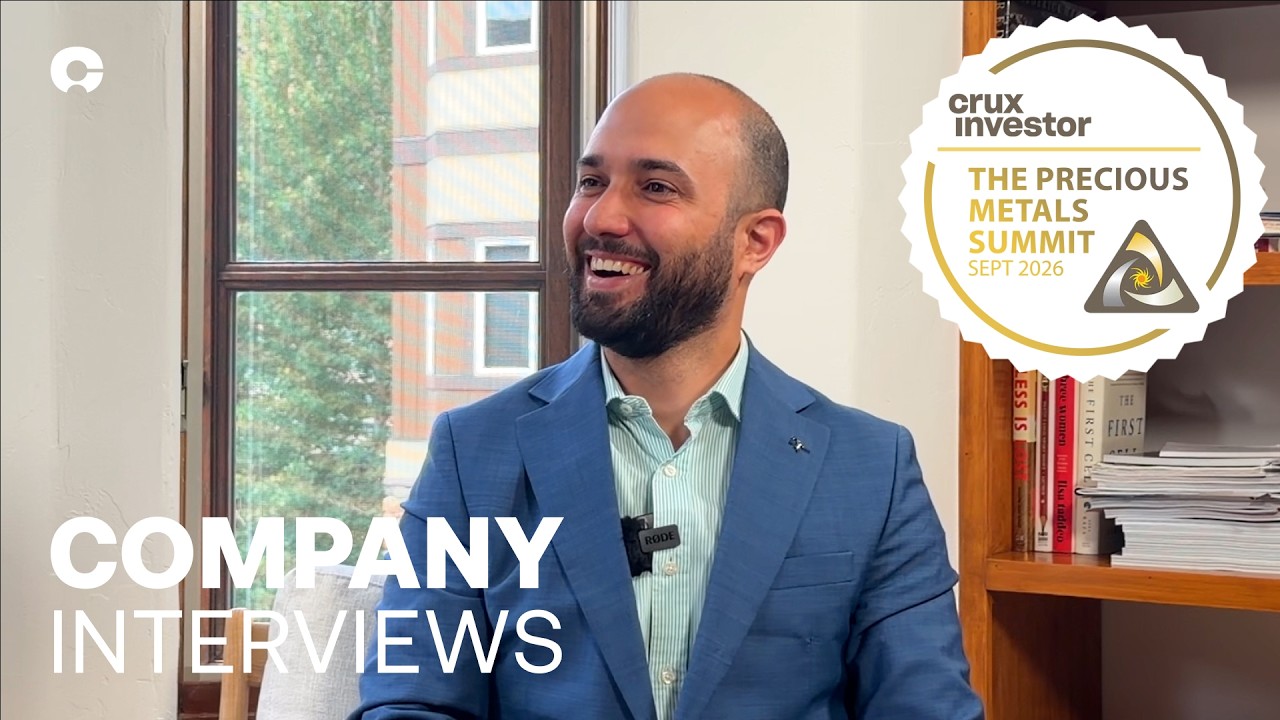
Serabi Gold (LSE: SRB), a Brazilian-focused gold producer, has emerged as one of the sector's most compelling growth stories, with shares reaching unprecedented heights following a transformative 2025. In a detailed interview, CEO Michael Hodgson outlined the company's strategic roadmap for sustaining production growth, expanding resources, and returning capital to shareholders. The discussion reveals a mining operation that has successfully navigated the transition from plant-constrained production to a well-capitalised growth platform, perfectly positioned to capitalise on elevated gold prices while maintaining cost discipline.
The interview provides critical insights into Serabi's operational strategy, capital allocation priorities, and permitting progress at its flagship Coringa project. For investors evaluating the company's trajectory, the CEO's comments offer a detailed framework for understanding how Serabi plans to scale production from 44,000 ounces in 2025 to potentially 100,000 ounces by 2028, all while maintaining its commitment to shareholder returns and exploration-driven resource growth.
Record 2025 Performance: Setting New Benchmarks Across All Metrics
Serabi Gold's 2025 performance represented a watershed moment in the company's history. The operation produced 44,000 ounces of gold, surpassing both guidance and the previous record of just over 40,000 ounces. More impressively, the company generated substantial cash flow despite funding an ambitious $12 million exploration program, with cash reserves growing from approximately $20 million at the start of 2025 to $54 million by year-end.
This financial transformation was driven by a combination of operational excellence and favorable market conditions. The company averaged a realised gold price of $3,480 per ounce throughout 2025, a figure that CEO Hodgson emphasised is often overlooked given the year-end surge to $4,500.
The operational improvements extended beyond production volumes. Quarterly output stabilised at approximately 12,000-13,000 ounces across quarters, demonstrating production consistency. Quarterly profits increased from approximately $6 million in Q3 2025 to $9 million in Q4 2025, with projections suggesting Q1 2026 profits could reach $13-14 million at current gold prices. Additionally, Serabi retired its remaining $7 million in debt in January 2026, achieving a debt-free balance sheet.
Strategic Production Roadmap: From 44,000 to 100,000 Ounces
Serabi's production growth strategy is built on a carefully sequenced expansion plan that addresses both immediate bottlenecks and longer-term capacity constraints. For 2026, the company has set guidance of 54,000-57,000 ounces, representing a meaningful 23-30% increase over 2025 production. This growth will be achieved through incremental improvements in plant throughput and mine productivity, with the second half of 2026 expected to deliver significantly stronger quarters than the first half.
The cornerstone of near-term expansion is the installation of a fourth ball mill at the Palito processing plant, scheduled for completion in Q3 2026. This expansion leverages equipment from the redundant Coringa plant, which was never built, significantly reducing capital requirements. The additional milling capacity will enable Serabi to process stockpiled material from both Coringa and Sao Chico while ramping up production at both mine sites.
Looking beyond 2026, Serabi's production trajectory targets 70,000-80,000 ounces annually supported by a 1.6 million ounce resource base, with potential to approach 100,000 ounces by 2028. This longer-term vision incorporates three key elements: continued plant expansion at Palito, the probable restart of the Sao Chico mine, and exploration success at both Palito and Coringa. The Sao Chico opportunity is particularly noteworthy - previously closed as marginal at lower gold prices, the deposit has become highly viable at current price levels.
Cost Discipline: The Foundation of Margin Expansion
One of the most striking aspects of Serabi's performance is its ability to maintain flat costs despite inflationary pressures affecting the broader mining sector. This cost stability stems from the structural characteristics of Serabi's Brazilian operations and the regulated nature of key input costs.
Labor represents approximately 45% of total costs and is governed by collective agreements with the national mine workers union, negotiated annually each April. These agreements typically result in 7-8% annual increases, which are predictable and easily incorporated into budgeting processes. Diesel fuel, another significant cost component, is heavily regulated and subsidised by the Brazilian government. Attempts to increase diesel prices have historically been met with nationwide protests by truck drivers, ensuring price stability. Combined with power costs, these three categories - labor, diesel, and power - account for 65% of Serabi's total cost structure.
The company's camp-based operations at both Palito and Coringa further contribute to cost predictability. Serabi accommodates, feeds, and transports its workforce, creating a substantial fixed cost component that provides month-to-month consistency.
"We actually know what our costs are month on month. It's the revenue that's just going up and up,"
Hodgson explained, emphasising how margin expansion has been driven almost entirely by price realisation rather than cost inflation.
This cost discipline becomes particularly powerful when combined with elevated gold prices. While Serabi averaged $3,480 per ounce in 2025, gold prices have remained above $4,000 for much of early 2026. With costs remaining flat, each incremental dollar of gold price appreciation flows directly to operating margin, creating substantial leverage to the gold price environment.
Interview with Michael Hodgson, CEO of Serabi Gold PLC
Resource Expansion: Building the Foundation for Sustainable Growth
Serabi's resource growth strategy is central to its multi-year production expansion plan. The company is executing a two-year, $24 million exploration program ($12 million in 2025 and $12 million in 2026) focused on expanding resources at both Palito and Coringa. The objective is to grow the total resource inventory from approximately 1 million ounces to 1.5-2 million ounces by the end of 2026.
Resource updates scheduled for March 2026 are expected to show progress toward the 1.3 million ounce milestone, representing the midpoint of this expansion journey. By year-end 2026, Serabi anticipates reaching 1.6 million ounces, a level the company believes will adequately support annual production of 70,000-80,000 ounces.
The exploration program is being executed with discipline, with management emphasising the importance of a drill-analyse-drill approach rather than indiscriminate spending. Hodgson highlighted that $12 million annually represents a "very healthy budget" that allows for comprehensive work without becoming wasteful. The company's focus on data-driven decision-making and systematic resource definition reflects a mature approach to exploration that maximises return on capital while minimising execution risk.
Ore Sorting Technology: Unlocking Mechanisation and Safety Benefits
One of Serabi's most significant technological advantages is its ore sorting capability at Coringa, which has emerged as a transformative tool for both operational efficiency and safety improvement. The ore sorting technology enables higher-grade material to be trucked to the Palito plant while discarding waste at source, maximising the value extracted from the plant-constrained operation.
Perhaps more importantly, ore sorting is enabling Serabi to pursue greater mechanisation at Coringa. Traditional selective mining methods are labor-intensive and carry inherent safety risks. Ore sorting allows the company to employ more mechanised mining approaches, with the sorting equipment effectively performing the grade selection that would otherwise require manual methods.
Capital Allocation: Balancing Growth Investment with Shareholder Returns
With strong cash generation and a debt-free balance sheet, Serabi faces the enviable challenge of deploying capital across competing priorities. The company's approach reflects a balanced strategy that funds organic growth while providing meaningful returns to shareholders.
On the growth investment side, all capital expenditures are being funded from operating cash flow without requiring additional equity or debt financing. The fourth ball mill installation, exploration program, mine expansions, and eventual Sao Chico restart are all being financed internally.
"We're generating so much cash at the moment we can fund it all out of cash flow comfortably,"
Hodgson noted, highlighting the company's financial flexibility.
Simultaneously, Serabi has committed to returning approximately 25% of 2025 free cash flow to shareholders through some combination of dividends and share buybacks. The specific mechanism has not been finalised, as management continues to solicit input from shareholders regarding their preferences. This commitment to shareholder returns was established during the 2025 secondary offering, when the company facilitated liquidity for two major shareholders through a book-build process.
The company is also evaluating potential M&A opportunities, though management emphasised discipline in this area. Hodgson acknowledged that the current gold price environment has made valuations challenging, citing the Equinox-Chinese transaction as an example of "crazy money" being paid for assets. Serabi worked on three potential M&A transactions in 2025 - one involving a company interested in acquiring Serabi, and two involving potential acquisitions by Serabi - none of which came to fruition. Hodgson indicated that the company is comfortable focusing on organic growth if M&A opportunities don't meet disciplined valuation criteria.
Coringa Permitting: De-Risking the Key Asset
The Coringa project represents both Serabi's most significant asset and its primary permitting challenge. The decision not to build a processing plant at Coringa - instead trucking ore to Palito for processing - has significantly reduced permitting complexity by eliminating the need for water discharge permits and chemical handling approvals. The operation now runs a chemical-free plant at Coringa where ore is concentrated using gravity separation and ore sorting before being transported.
Three key permitting milestones remain for full licensing at Coringa. First, a land use agreement with INCRA (the land registry authority) is nearing completion, with an announcement expected "fairly soon." Second, the Ministry of Mines is working with Serabi on an increase and potential extension of the current mining license under which operations continue. Third, the company is negotiating agreements with local indigenous communities, where Hodgson reported "making real progress" through ongoing consultations.
Full permitting resolution would remove a key discount factor from Serabi's valuation and provide long-term operational certainty for what is currently the company's highest-grade asset.
The Investment Thesis for Serabi Gold
- Exceptional Leverage to Gold Prices: With flat cost structure and predictable input costs (65% from regulated labor, diesel, and power), Serabi captures nearly all gold price appreciation as margin expansion. Current prices above $4,000/oz versus $3,480 average in 2025 drive quarterly profits from $9M to $13-14M.
- Self-Funded Growth Without Dilution: Debt-free balance sheet and strong cash generation ($20M to $54M in 2025) enables all expansion capex to be funded internally. No equity raises or debt financing required for 23-30% production growth in 2026 or longer-term expansion to 70,000-100,000 oz/year.
- De-Risked Production Growth: Clear path from 44,000 oz (2025) to 54,000-57,000 oz (2026) to 70,000-80,000 oz (2027-2028) through sequential plant expansion, Sao Chico restart, and existing stockpile processing. Ball mill equipment already on-site at Palito reduces execution risk.
- Resource Growth Underpinning Long-Term Production: $24M two-year exploration program (2025-2026) targeting resource expansion from 1M to 1.6M oz provides foundation for sustainable production scaling and future plant expansions.
- Shareholder Return Commitment: 25% of 2025 free cash flow to be returned via dividends/buybacks, providing income component while maintaining growth investment capacity. Management discipline on M&A prevents value-destructive acquisitions.
- Coringa Permitting Catalyst: Final permitting resolution expected in 2026 could remove significant valuation discount. Chemical-free processing at Coringa via ore sorting has simplified the permitting pathway while progress on INCRA land use agreement and indigenous consultations advances toward full licensing.
- Mechanisation Initiatives: Ore sorting technology enabling safer, more efficient mechanised mining at Coringa reduces labor intensity and improves safety profile while supporting production growth.
Macro Thematic Analysis
Serabi Gold exemplifies how established mid-tier producers in stable jurisdictions can capitalise on elevated gold prices through operational leverage rather than transformational M&A. With 65% of costs fixed or regulated in Brazil, the company captures margin expansion directly proportional to gold price appreciation. The current environment - gold sustaining above $4,500/oz versus 2025's $3,480 average - creates exceptional cash generation for debt-free producers with near-term growth optionality.
Brazil's regulated diesel subsidies and structured labor agreements provide cost certainty unavailable in many jurisdictions, while ore sorting technology enables capital-efficient expansion without traditional processing plant construction. For investors seeking leveraged gold exposure without exploration risk or development timelines, producing companies with proven expansion pathways and shareholder return commitments offer compelling risk-adjusted returns in sustained high-price environments.
TL;DR
Serabi Gold delivered record 2025 performance (44,000 oz, $34M cash generation) and targets 23-30% production growth in 2026 to 54,000-57,000 oz, fully self-funded from operations. With flat costs, debt-free balance sheet, and gold above $4,500/oz, quarterly profits have expanded to $13-14M. The company will return 25% of 2025 free cash flow to shareholders while investing $12M in exploration to grow resources from 1M to 1.6M oz, supporting a roadmap to 70,000-100,000 oz/year by 2027-2028.
FAQs (AI Generated)
Installation is currently underway with operations expected to commence in Q3 2026. The ball mill equipment was sourced from the redundant Coringa plant, significantly reducing capital costs for the expansion.
All expansion activities including the $12M exploration program, fourth ball mill installation, mine expansions, and Sao Chico restart are funded entirely from operating cash flow without requiring equity raises or debt.
Eliminating plant construction significantly simplified permitting by removing water discharge and chemical handling requirements. Ore sorting and trucking pre-concentrated ore to Palito proved more capital-efficient while maintaining plant-constrained throughput optimization.
Serabi committed to returning approximately 25% of 2025 free cash flow through dividends and/or share buybacks. The specific mechanism hasn't been finalised as management solicits shareholder preferences between the two options.
Management emphasised discipline, acknowledging elevated valuations make acquisitions challenging. Three 2025 MnA processes yielded no transactions. The company is comfortable pursuing organic growth if MnA opportunities don't meet disciplined valuation criteria.
Analyst's Notes





Subscribe to Our Channel

.png)
Stay Informed






















