




Serabi Gold's Margin Expansion Reinforces the Case for High-Grade Underground Producers in a Tightening Gold Cycle


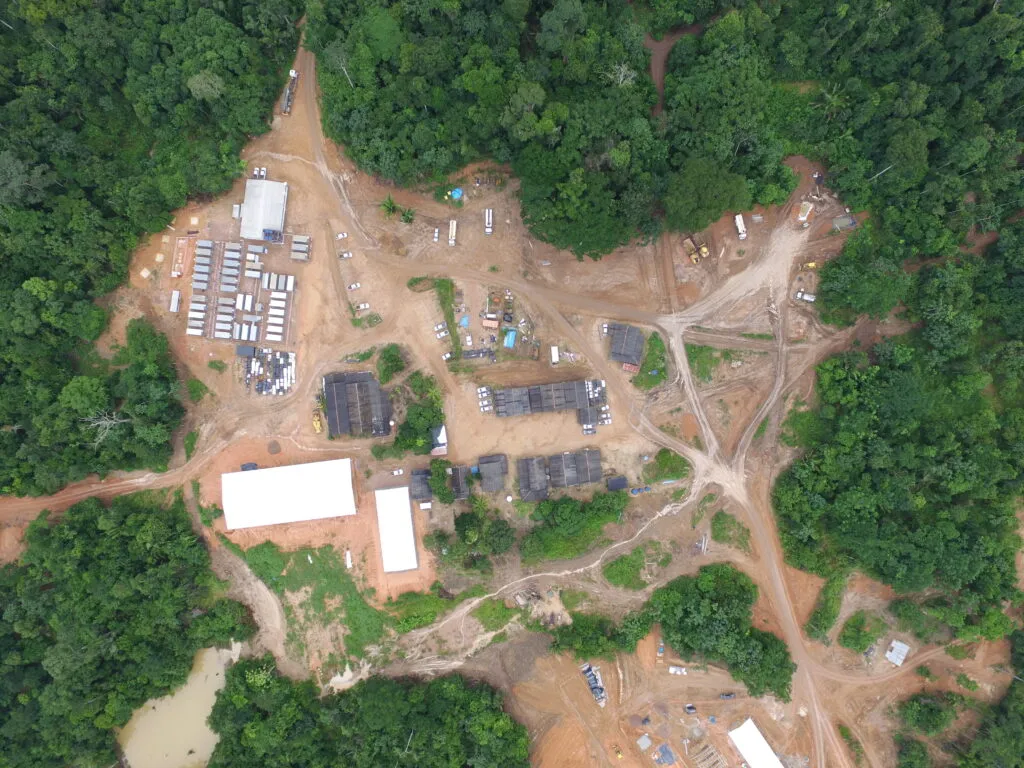
Serabi Gold's nine-month 2025 results show margin expansion through high-grade underground mining, demonstrating operational leverage in favorable gold markets.
- Serabi Gold's nine-month 2025 results demonstrate significant margin expansion, with revenue increasing to US$104.5 million and profit after taxation nearly doubling to US$34.9 million, illustrating the operational leverage inherent in high-grade underground systems during sustained gold price strength.
- Gold's macroeconomic environment, characterized by persistent geopolitical uncertainty, inflation resilience, and compressed real yields, continues to favor producers with low all-in sustaining costs, grade stability, and disciplined capital allocation frameworks.
- Operational enhancements, including ore sorting commissioned at Coringa in December 2024 and integrated processing through the Palito mill, improve feed quality and position Serabi to target production expansion toward 60,000 ounces per annum while maintaining cost discipline.
- Strong cash generation in operating cash flow and minimal leverage enable Serabi to organically fund growth initiatives while accelerating brownfield exploration programs targeting resource base expansion toward 1.5 to 2.0 million ounces between 2025 and 2026.
- The company's 2025 financial performance through September indicates that high-grade junior producers operating in supportive jurisdictions may represent undervalued opportunities as the gold sector enters a multi-year cycle favoring margin quality over production scale.
High-Grade Gold Producers Re-Enter the Spotlight
Gold's price environment has demonstrated sustained strength, with persistent inflation pressures, deglobalization dynamics, and central bank accumulation supporting elevated pricing. In this environment, gold producers demonstrating grade-driven cost stability are beginning to outperform those relying exclusively on tonnage-based economies of scale. High-grade underground mining operations benefit from superior insulation against diesel and consumables inflation, stronger margin expansion when gold prices appreciate, and materially shorter development timelines compared to bulk-tonnage surface operations.
Investors are increasingly differentiating between producers based on grade quality, jurisdictional stability, and balance sheet strength. Serabi Gold serves as a relevant case study. The company's 2025 performance through September exemplifies how high-grade underground producers are positioned to deliver disproportionate margin expansion when operational discipline intersects with favorable commodity price environments.
Management's strategic emphasis on grade optimization and organic funding distinguishes Serabi within the junior producer segment. Chief Executive Officer Michael Hodgson frames the funding opportunity:
"We're generating so much money, and even with all the exploration we're doing. As much as we can, we can't actually sensibly do a lot more. We can fund all of that through cash flow. We can fund the plant growth out of cash flow when we come to do it."
Why Grade, Margin & Jurisdiction Are Becoming the Dominant Gold Investment Filters
Gold's Multi-Year Tightening Cycle
Persistent real-yield compression and geopolitical risk continue directing capital flows toward gold. Gold's advance from approximately US$2,000 per ounce in early 2024 to levels exceeding US$3,500 per ounce during 2025 reflects sustained institutional demand. Higher gold prices magnify differences in margin quality across the producer universe. Production cost structures, jurisdictional risk profiles, and capital efficiency determine which companies translate higher gold prices into shareholder value creation versus those that merely offset rising input costs.
Inflation's Uneven Impact on Cost Curves
All-in sustaining cost inflation remains a principal concern for institutional gold investors. Industry-wide AISC has increased approximately 15 to 20 percent since 2021 due to diesel price volatility, labor cost pressures, and consumables inflation. Underground vein systems operating at significantly higher grades, such as Serabi's Palito and Coringa deposits, often demonstrate lower sustaining capital expenditure requirements, reduced exposure to energy price volatility per ounce produced, and superior grade elasticity.
High-grade underground operations typically process substantially lower tonnage volumes to produce equivalent gold output compared to bulk-tonnage operations. When combined with ore sorting technologies that further upgrade mill feed, these operations can maintain or improve cost structures even as broader industry costs inflate.
Jurisdictional Competitiveness & Policy Stability
Pará State in Brazil has historically supported mining operations with transparent regulatory processes and developed regional service infrastructure. Lower effective corporate tax rates, in Serabi's case, approximately 15.25 percent due to development incentives, function as meaningful valuation inputs when comparing jurisdictional attractiveness. Serabi's track record of over 20 years of successful operation with stakeholders in the region demonstrates the value of maintained community relationships and environmental management systems.
Serabi Gold as a Case Study: What Record Margins Tell Us About High-Grade Operating Leverage
Revenue & Cash Flow Performance Demonstrate High-Grade Resilience
For the nine months ended September 30, 2025, revenue reached US$104.5 million, representing a 49 percent increase from US$70.3 million in the comparable 2024 period. Gross profit nearly doubled to US$49.9 million compared to US$27.2 million year-over-year, while profit after taxation increased to US$34.9 million from US$17.8 million.
These metrics illustrate a fundamental principle: higher-grade ore bodies generate lower unit costs per ounce produced, translating into outsized margin expansion when gold prices appreciate. The average gold sales price achieved during the nine-month period was US$3,244 per ounce. The company's cost structure remained relatively stable despite broader industry inflation pressures.
Michael Hodgson addresses the company's strengthened position:
"The great economic tailwind, not just gold price, but gold price plus Brazilian exchange rate, the real to the dollar, that's really helped too. The challenge at the moment is we don't need any money."
Ore Sorting as a Structural Margin Enhancer
The ore sorting classification plant was fully commissioned and operational in December 2024. During 2025, the ore sorter processed low-grade stockpile material accumulated at Coringa, with this stockpile utilization completed in the third quarter. Beginning in 2026, operations will process run-of-mine ore directly through the classification plant, representing the first full year of steady-state ore sorting operations.
Ore sorting upgrades feed grade while reducing processing volumes and transportation costs. Higher mill feed grades directly reduce all-in sustaining costs per ounce, reduced haulage volumes from Coringa to Palito lower diesel consumption, and improved feed grade consistency enhances metallurgical recovery predictability. The Coringa mine plan involves trucking preconcentrated ore approximately 200 kilometers by road to the Palito Complex for processing, an arrangement that became economical following the paving of the federal highway connecting the two complexes.
Foreign Exchange & Cost Control Tailwinds
The Brazilian Real weakened approximately 8 percent year-over-year against the US dollar, reducing local operating costs when translated into gold sales denominated in US dollars. This foreign exchange benefit partially offset operating cost increases of approximately 21 percent, which primarily reflected higher production volumes, increased labor costs, and consumables inflation.
The net effect, operating costs increasing 21 percent while revenue increased 49 percent, demonstrates how high-grade operations with favorable currency exposure can maintain and expand margins even during periods of input cost inflation.
Operational Outlook: How Production Growth Reinforces Investment Conviction
Serabi's nine-month 2025 gold production reached 32,634 ounces, representing a 19 percent increase from 27,499 ounces in the comparable 2024 period. Full-year 2025 guidance projects production between 44,000 and 47,000 ounces.
Management has articulated a phased growth strategy targeting 60,000 ounces per annum as Phase 1, achievable by maximizing existing plant capacity. This approach minimizes capital intensity, requiring low initial capital expenditure of less than US$10 million plus underground development expenditure. The growth plan is characterized as de-risked and organically funded, maximizing the Palito Complex processing infrastructure without expansion. Chief Executive Officer Michael Hodgson outlines this strategy:
"Our objective initially has been to maximize production from existing facilities, that's a process plant capped at about 600 to 650 tons per day, 230,000 tons per year. We're actually getting more out of that plant by high-grading it. We don't high-grade the mine; we take the ore out of the mine and put it through ore sorters, so we're just upping that feed grade going into that plant, and that gets us to 60,000 ounces."
The Palito Complex processing capacity of 650 tonnes per day utilizes conventional flotation and CIP processing along with ore-sorting technology. The 2024 Preliminary Economic Assessment for the Coringa Project uses a conservative base case gold price assumption of US$2,100 per ounce.
Resource Growth Potential: Exploration as a Valuation Catalyst
Serabi has committed to a consolidated US$9 million exploration program covering 2025 and 2026, which includes drilling 30,000 meters of diamond drilling per year. Deferred exploration costs increased to US$28.0 million as of September 30, 2025, demonstrating substantial capital allocation toward future resource conversion.
Recent drilling results from 2025 exploration programs validate the geological models. At the Palito Complex Senna Orebody, drilling returned 1.36 meters grading 18.10 grams per tonne gold including 0.33 meters grading 58.14 grams per tonne gold in Hole 25-SE-004. At the Coringa Mine Serra South orebody, drilling returned 0.53 meters grading 151.00 grams per tonne gold in Hole 25-SR-010 and 0.87 meters grading 137.48 grams per tonne gold in Hole 25-SR-028. Historical drilling at São Domingos returned 7.15 meters grading 258 grams per tonne gold in Hole 21-SD-010.
The Palito Complex received an updated NI 43-101 Mineral Reserve in April 2025 totaling 162,000 ounces gold at 7.4 grams per tonne gold. NI 43-101 Resources effective April 2025 total 350,000 ounces Measured and Indicated at 9.9 grams per tonne gold, plus 162,000 ounces Inferred at 7.4 grams per tonne gold. The Coringa Mine NI 43-101 Resource dated April 2024 totals 179,000 ounces Measured and Indicated at 7.0 grams per tonne gold, plus 271,000 ounces Inferred at 5.8 grams per tonne gold.
The company targets amassing a consolidated 1.5 to 2.0 million ounce gold resource between 2025 and 2026, pursued through an aggressive brownfield exploration program. Michael Hodgson emphasizes the opportunity:
"Both of these deposits have a lot of upside, a lot of potential to grow. We're aiming by the end of 2026 to have at least grown our resource from one million to 1.5 million ounces, hopefully beyond."
Capital Strength & Balance Sheet Quality
The company began amortizing Coringa development costs beginning January 1, 2025, following renewal of the three-year trial mining license, signaling that sufficient reserves and resources exist to support multi-year production plans. Coringa currently operates under a three-year trial mining license, with the final operating permit pending regulatory approval. The Environmental Compliance Inspection for Coringa has been completed.
ESG Performance & Jurisdictional Stability
Serabi's greenhouse gas intensity of 0.53 tonnes carbon dioxide equivalent per ounce produced in 2024 stands approximately 46 percent below the industry group average of 0.98 tonnes carbon dioxide equivalent per ounce. This carbon efficiency primarily reflects the company's underground mining method and ore sorting implementation, which reduces energy intensity.
Risks to Monitor
Coringa operates under a three-year trial mining authorization, while final operating license approval remains pending. Delays in securing full licensing could affect long-term production planning. Underground mining remains exposed to inflationary trends affecting labor, consumables, energy, and equipment. Brazilian Real volatility introduces both risk and opportunity for companies that incur costs primarily in local currency while generating revenue in US dollars.
The Investment Thesis for Serabi Gold
Investors evaluating gold producer investments should prioritize companies demonstrating:
- Grade-driven cost stability that preserves operating margins during volatile inflation environments and provides superior downside protection compared to higher-cost bulk-tonnage operations.
- Demonstrated cash generation capacity enabling organic funding of exploration, development, and sustaining capital requirements, thereby reducing shareholder dilution risk.
- Resource expansion potential supported by geological models indicating mineralization continuity, combined with management commitment to brownfield exploration programs.
- Clear production scaling pathways that lower all-in sustaining costs through operating leverage and support long-term shareholder value creation without requiring transformational acquisitions.
- Established social license and demonstrated jurisdictional track record that reduce permitting uncertainty and enable long-term operational planning.
- ESG-aligned operations including low carbon intensity, supporting access to institutional capital and reducing reputational risks.
- Operational enhancements such as ore sorting technology that improve feed grade quality, reduce processing costs, and provide strategic flexibility.
Why Serabi Gold’s 2025 Results Matters
Serabi Gold's financial performance through September 2025 reinforces a broader market signal: high-grade underground producers with disciplined capital allocation are emerging as structurally advantaged assets in the current gold cycle. As investors sharpen their focus on margin quality rather than production scale alone, companies demonstrating consistent operational execution, organic funding capacity, and resource growth optionality may represent undervalued opportunities within the junior producer segment. Serabi's results exemplify this trend, indicating potential for equity re-rating as production targets advance, exploration success extends the resource base, and sustained cash generation validates the financial model supporting multi-year growth.
TL;DR
Serabi Gold's nine-month 2025 results demonstrate how high-grade underground gold producers can achieve disproportionate margin expansion during sustained commodity price strength. Revenue increased 49% to US$104.5 million while profit after taxation nearly doubled to US$34.9 million, reflecting the operational leverage inherent in low-cost, grade-driven mining systems. The company's ore sorting technology, commissioned at Coringa in December 2024, enhances feed quality and positions Serabi to target 60,000 ounces annual production with minimal capital intensity. Strong cash generation enables organic funding of a US$9 million exploration program targeting resource base expansion toward 1.5 to 2.0 million ounces by 2026. Operating in Brazil's Pará State with established infrastructure and social license, Serabi exemplifies how grade quality, jurisdictional stability, and disciplined capital allocation are emerging as dominant investment filters in the current gold cycle.
FAQs (AI-Generating)
Analyst's Notes





Subscribe to Our Channel




.jpg)
Stay Informed






















