




Silver at $100 Marks the Shift From Speculation to Execution


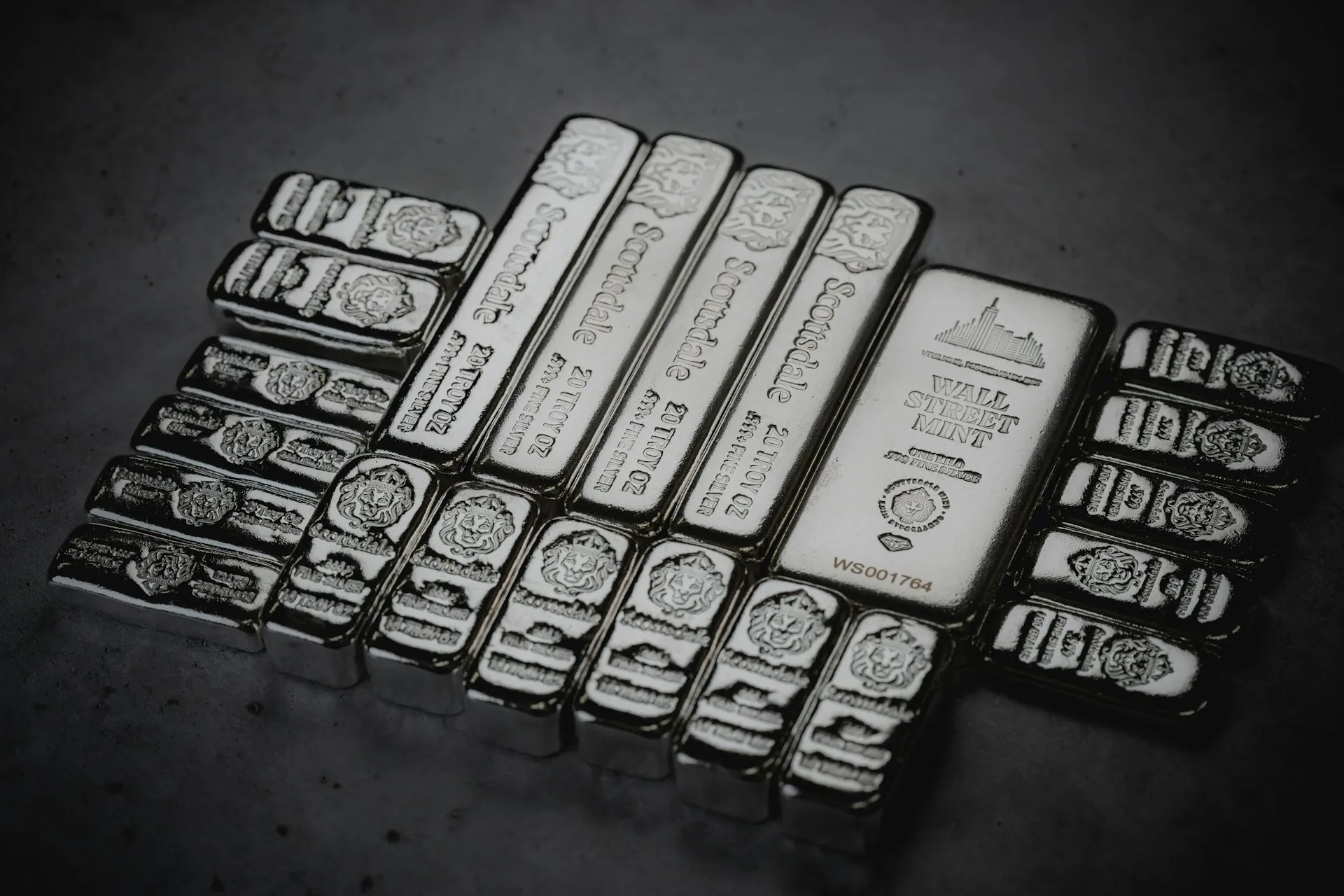
Silver above $100 forces investors to separate momentum from execution. Analysis of Vizsla, Americas Gold & Silver, Hycroft, and GR Silver Mining strategies.
- Silver's 40% gain in early 2026 following a 147% surge in 2025 has been driven by waves of retail buying, ETF inflows, and prolonged tightness in London commercial vaults, though the gold-silver ratio compressing to 50:1 signals stretched positioning and rising correction risk.
- COMEX inventories have declined 114 million ounces from October peaks, but expected outflows from US stocks following tariff policy clarity should accelerate physical market easing and increase profit-taking pressure as liquidity conditions normalize.
- Bank of America estimates fundamentally justified silver prices around $60, suggesting current levels above $100 reflect momentum and positioning rather than industrial demand, with solar consumption likely having peaked in 2025 and industrial buyers pressured by record prices.
- The market is differentiating between companies with funded balance sheets, near-term construction decisions, and credible operational milestones versus high-beta exploration stories dependent on sustained momentum and favorable financing windows.
- Developers with permit visibility like Vizsla, turnaround operators capturing margin expansion like Americas Gold & Silver, and companies with existing infrastructure like Hycroft are positioned to outperform if correction risk materializes, while exploration names like Capitan Silver and GR Silver require continued momentum to maintain valuation support.
Silver Surpasses $100: Execution Now Matters More Than Exposure
Silver's vault above $100 per ounce in early 2026 marks a psychological milestone for a metal that spent most of the past decade trading between $15 and $30. The rally has been massive - 40% gains in the opening weeks of 2026 following a 147% surge in 2025 - but the drivers behind the move are beginning to diverge. Retail demand, ETF inflows, and prolonged tightness in London commercial vaults pushed prices higher, yet liquidity conditions are now normalizing and positioning has become stretched. The gold-silver ratio compressed to 50:1, down from 105:1 in April, signaling that silver's outperformance may have run ahead of fundamental support.
For investors in silver equities, the move to above $100 forces a recalibration. Momentum and price exposure delivered substantial gains through 2025, but correction risk is rising as physical market conditions ease and technical analysts warn of profit-taking pressure. The market is beginning to separate companies that can convert elevated prices into durable cash flow from those whose valuations depend on sustained momentum. This shift matters because late-cycle leadership typically moves from high-beta optionality toward execution, funded balance sheets, and credible operational milestones.
The question facing investors is no longer whether silver can rally further, it's which companies can deliver if prices hold, and which can survive if a 25% to 35% correction materializes.
The Move Above $100: What Changed & Why It Happened
Silver's rally has been powered by several distinct waves of buying. Retail participation accelerated through small bar and coin purchases beginning in October 2025, while physically backed silver ETFs saw sustained inflows. These demand surges coincided with prolonged tightness in the London silver market, where available stocks in commercial vaults fell to a record low of 136 million ounces by end-September 2025, down from roughly 360 million ounces during the Reddit-driven rally in early 2021.
The tightness reflected five consecutive years of structural deficits in the silver market, compounded by limited high-grade refining capacity that constrained the speed at which recycled material could return to supply. By end-2025, London stocks had recovered to nearly 200 million ounces, helping drive down lease rates from their October spike, but inventory levels remained well below historical norms. COMEX inventories peaked at 532 million ounces on October 3 before declining 114 million ounces to 418 million ounces by year-end, the lowest level since March.
"We can't ignore what's happened to the commodity prices - spectacular," said Diane Garrett, CEO of Hycroft Mining. "That combined with cleaner balance sheet, new institutional shareholders, and awesome drill results has landed us at starting the year with over a $2 billion market cap."
The rally, however, now faces a different backdrop. Outflows from US stocks are expected to accelerate following mid-January clarity on tariff policy, potentially easing the physical tightness that provided support. Bank of America strategist Michael Widmer estimates a fundamentally justified silver price around $60, with demand from solar panel producers likely having peaked in 2025 and overall industrial consumption under pressure from record-high prices. Technical analysts have flagged the rapid nature of silver's gains as positioning it for a major correction.
Positioning Is Stretched: Why Correction Risk Is Rising
The gold-silver ratio compression to 50:1 marks a significant milestone. It has taken just 50 ounces of silver to buy one ounce of gold for the first time in 14 years. Traders and analysts use this ratio as a gauge for future direction, and the current level signals that silver's outperformance has become stretched relative to gold. When ratios compress this sharply in a short period, mean reversion risk increases.
Profit-taking pressure is building. BNP Paribas senior commodities strategist David Wilson noted that "profit taking following the frenzied nature of the investor-driven rally since late November is likely sooner rather than later, particularly in view of ongoing physical market easing." The combination of normalizing liquidity, elevated positioning, and a fundamental disconnect between price and industrial demand creates conditions where corrections can be swift and severe.
This does not invalidate the structural bull case for silver. Deficits are expected to persist in 2026, recycling supply faces refining bottlenecks, and investment demand remains robust. But it changes what the market rewards. In momentum phases, high-beta exploration stories and optionality plays outperform as investors chase exposure. In late-cycle or correction scenarios, leadership shifts toward execution, funded balance sheets, and companies with near-term paths to cash flow.
The New Framework for Silver Equities at Plus $100
At plus $100 silver, investors need a decision framework that accounts for both upside capture and downside protection. Five questions provide a baseline for evaluating silver equities in this environment:
- Can the company self-fund the next phase? Developers and turnarounds dependent on equity financing face dilution risk if markets tighten or silver corrects. Companies with cash on hand or committed financing can advance projects without waiting for favorable capital market windows.
- Is there a clear path to cash flow inside the cycle? First production timelines matter. Projects targeting late 2027 or 2028 face execution risk if the cycle turns before ramp-up. Companies with production visibility inside 18 to 24 months are better positioned.
- Are catalysts binary and near-dated? Permit approvals, construction decisions, and ramp-up milestones drive re-ratings. The market pays up for catalysts that reduce uncertainty, particularly in volatile price environments.
- What de-risking evidence exists? Feasibility studies, metallurgical work, test mining, and early contracting signal that a project can transition from paper to execution. The market differentiates between promotional timelines and credible delivery pathways.
- What happens in a 25% to 35% pullback? Balance sheet resilience, operational leverage, and funding security determine which companies can weather volatility. High-beta stories dependent on sustained momentum face sharper corrections than companies with delivery visibility.
This framework segments the silver equity landscape into distinct categories: execution-ready developers, operating turnarounds capturing margin expansion, exploration-driven growth stories, and complex optionality plays where liquidity drives valuation more than fundamentals.
Developers with Execution Visibility: Why the Market Pays Up
At $100 silver, the market shifts from buying exposure to buying delivery. Developers that are funded and permitted, or close to permitted, begin to trade less like explorers and more like future producers. The scarce asset becomes execution capability: the ability to advance engineering, secure permits, mobilize contractors, and move earth.
Vizsla Silver provides a case study in this dynamic. The company holds a fully funded position following a capped call financing that brought cash on hand to over $400 million USD.
"That was the reason why we did the capped call financing," said CEO Michael Konnert, "to bring our cash on hand to over $400 million US so we can build this as fast as possible. That's not the case with traditional project finance."
The company's 2026 priorities include detailed engineering, contractor selection, test mining, bulk sampling, underground infill drilling, district surface exploration, and early work on new claims acquired in the Panuco district. The construction decision awaits receipt of the MIA permit, expected in Q2 or Q3 2026.
"The big hurdle is receiving our MIA permit around Q2 Q3 of 2026," Konnert noted. "We do expect positive permit news and drive the project forward."
Once permits are secured, Vizsla is positioned to move quickly. "The biggest thing when we get the green light is earthworks. That really drives the pace of the project," Konnert said. The company targets first production in the second half of 2027, a timeline that positions it to capture elevated silver prices if the rally holds while reducing exposure to extended permitting or financing delays.
The project economics at current prices underscore why execution matters. With a feasibility study showing $10.60 AISC at base case pricing and 20 million ounces of annual production, the margin expansion at over $100 silver is substantial. Konnert noted:
"At today's prices, it's eye-watering. The value of the project that we have here, as well as the cash flow that comes out of this project....$10.60 AISC at a $100 silver price and 20 million ounces of production is just a stupendous amount of cash."
Vizsla's approach illustrates why funded balance sheets matter more late cycle. Companies dependent on equity financing face dilution risk if capital markets tighten or if silver corrects before permits are secured. Those with cash on hand can advance permitting, contract long-lead items, and mobilize construction without waiting for favorable financing windows.
The company also holds conversion upside, with approximately 25 million ounces in inferred resources close to the mine plan. "We have about 25 million ounces in inferred very close to the mine plant. A meaningful upgrade to the reserve," Konnert noted. The 9.4-year mine life in the feasibility study "is really just a moment in time. We're expecting to grow that reserve, likely grow the mine life with the drilling."
Producers & Turnarounds: Capturing Price with Operating Discipline
Producers benefit immediately from elevated silver prices, but the market rewards those with credible cost control, stable operations, and a path to improving margins, not simply exposure. At plus $100 silver, the premium shifts toward companies that can convert price into cash and demonstrate operational discipline through the cycle.
Americas Gold & Silver fits this profile as a turnaround and operating delivery case study. The company operates Galena in Idaho and Cosalá in Mexico, with 2025 production guidance of 2.65 million ounces - the highest production level in 20 years and up 52% year-over-year.
The turnaround story centers on capital allocation and operational stabilization. Oliver Turner, Executive Vice President of Corporate Development noted:
"These assets have been capital starved for many years. Early on we raised $50 million, then $100 million in debt, then north of $130 million. We capitalized the business."
The company addressed infrastructure bottlenecks that constrained production and margins, including a power cost reduction at Cosalá that dropped costs "from 65 cents a kilowatt hour down to five cents. Tremendous impact."
Revenue capture has improved through byproduct credits.
"We are now getting paid for antimony, copper, as well as lead, silver and gold. All of our byproducts we're getting paid for," Turner said.
At current commodity prices, this diversification provides margin support even if silver corrects.
The company plans to accelerate exploration across its asset base. "We are going to be more aggressive with the drill bit, targeting 15 to 20 drills across our asset base," Turner said. At Galena, the 34 vein discovery offers grade upside. "Galena is already the third highest grade operating silver mine in the world. [34 vein] is double the grade and it's triple the minimum mining width."
The near-term catalyst is integrating Crescent into Galena's operations. "That ore will be directly dropped into Galena's mill, generating revenue from Crescent in this very first year of owning it," Turner said. The integration provides mill feed flexibility and demonstrates the value of infrastructure synergy in a high-price environment.
For investors, Americas Gold & Silver illustrates the operating leverage available in the producer segment. The company is focusing on execution and delivery, positioning it to capture margin expansion if prices hold while maintaining operational stability if silver corrects.
"We've just got to execute on what we say we're going to do and deliver, deliver, deliver."
Avino Gold & Silver demonstrates what operating leverage looks like at $100 silver. The company reported revenues at all-time highs with approximately $21 million in gross profit and free cash flow around $5 million. In a recent interview, published December 12th, with silver at a mere $60, margins have expanded substantially:
“It’s very good margin with our all-in sustaining costs around $23 or $24," said CEO David Wolfin.
The company's expansion strategy centers on organic growth funded by operations rather than dilutive capital raises. "We have a clear path to transformational growth because we own the assets that are going to drive our growth organically," Wolfin said. "We're going to go from one producing asset to three within five years."
Execution visibility is already evident. Within six months of starting the ramp at La Preciosa, the company is pulling ore, hauling it to the mill, and processing it. "We're already processing ore one month ahead of schedule," Wolfin noted. "That will start making its way into our earnings." The company plans to more than double its exploration budget to 20,000-30,000 metres next year, funded by operational cash flow rather than equity issuance.
The discipline extends to capital markets:
"The bankers are knocking down our door, but we're being strategic, growing our balance sheet organically from the current operation," Wolfin said. "We've issued shares at higher prices, not at discounts, no warrants - just filling the treasury in anticipation of expansion."
Exploration & Optionality: Upside Is Real but the Market Is Selective
Explorers can outperform in momentum phases as investors chase high-beta exposure to price moves. But after a fast rally, the market becomes more selective. Investors begin asking what converts discoveries into mine plans, how drilling translates to economics, and whether resource growth alone justifies valuation.
Capitan Silver operates in the high-quality end of this spectrum, having transformed from a single high-grade trend into a complete mineral system through strategic consolidation.
"We understand now that we not only have a silver trend - we have a broader, very complete mineral system," said CEO Alberto Orozco. "What we had before was about seven kilometres of veins to test. After consolidation, we now have 20 kilometres of veins."
The company finished 2025 raising $29 million and plans an aggressive 60,000-metre drill program. "With the currently announced drill program of 60,000 metres, we believe we can really show the scale of this project," Orozco said. The drilling strategy reflects capital efficiency: "We use RC drilling to test targets quickly and cost-effectively, and diamond drilling for resource expansion at depth."
Critically, Capitan is approaching development with infrastructure and permitting in mind from the outset.
"We started working early on understanding what it will take to build this - community, water, permitting - not years into the future," Orozco said.
The consolidation provided not just geological potential but also ground suitable for infrastructure such as mills and waste dumps.
The company's intent signals a commitment to building rather than flipping assets. "We're developing this for the long haul. We want to see this turn into an operating mine, not sell it early," Orozco said.
"We believe we can do this at an advantage to our competition because of the team we brought in, not only on exploration, but on development and building as well."
GR Silver Mining operates in this category as an exploration-driven growth story with development pathway questions. The company has delivered strong exploration results and holds a growing resource base.
"Our discovery cost per ounce is 17 cents," said VP Corporate Development & Corporate Relations Daniel Schieber. "When we put a dollar in the ground, we get about five ounces of silver out of that."
The company benefits from strong liquidity. "We trade six and a half to seven million shares a day. Yes, we're in a silver backdrop, but we're also delivering," Schieber noted. Post-closing of recent financing, "we are going to have a cash position very close to $28 million Canadian dollars, the healthiest position this company ever been," said President and CEO Marcio Fonseca.
The 2026 priorities include aggressive resource expansion and advancing Plomosas toward a pilot plant scenario.
"We're going to split capital between aggressive step-out drilling to multiply the size of the resource and bring Plomosas back from a pilot plant perspective," Fonseca said.
Drilling activity is set to double from prior years. "In the last three and a half years, 18,000 metres. We want at least to double drilling next year."
The strategic focus on permitting reflects lessons learned in the Mexican mining environment. "You can have a beautiful PEA, but if you don't have the permits, what's the value of that?" Fonseca said. "So we are trying to de-risk earlier on in the process." The company plans to use Plomosas as a permitting wedge. "We have an area with most permits, including water permits. [Pilot plant] as a seed concept. Expand our permit and bring San Marcial under the same umbrella instead of starting from zero."
For investors, GR Silver offers resource growth upside and exploration torque, but the path to production remains multi-year.
"This is an advanced-stage silver company. The inflection point of 2026 is to grow the resource and for the first time show what the economics are going to look like," Schieber said.
The company fits the profile of names that can outperform if momentum continues but face valuation pressure if silver corrects before economic studies and permitting pathways are secured.
Large-Scale Optionality: Infrastructure Edge Meets Execution Complexity
Hycroft Mining operates at a different scale and complexity level, representing large-scale optionality with execution challenges. The company holds a substantial resource base and existing infrastructure, positioning it as both an exploration story and a near-term developer. "We fall at two places," said CEO Diane Garrett. "We are an exploration story, but we are also a developer, near-term type producer."
The transformation in 2025 centered on balance sheet cleanup. "The main goals for 2025 was to clean up the balance sheet and eliminate all of the debt," Garrett said. "We've now transformed our shareholder base into over 80% institutional investors." The debt burden had become untenable for a non-cash-flowing developer. "As a non-cash flowing developer, you really don't want to have debt. It increased at a 10% Pay-In-Kind (PIK) interest. Every month it was going up by a million dollars."
The company now holds funding visibility for the next three-plus years without additional dilution.
"We have no need to raise capital for the next three plus years. We have plenty of cash, and we have no need to raise additional cash," Garrett said.
The exploration story centers on two high-grade discoveries that could enable a staged development approach.
"The market is very much focused on these two high-grade discoveries," Garrett said. "We don't have to build a massive 50, 60,000 ton-a-day plant out of the chute. Start smaller, higher grade, lower capital, better cash flow up front, and scale up. Less dilution."
De-risking priorities for 2026 include completing engineering studies, finalizing metallurgical work, and updating the resource. "We are completing engineering studies, the metallurgical work completed, the economics coming out in the first quarter, a resource update, the mine planning," Garrett said. Metallurgy has been the critical focus.
"Metallurgy is step number one in de-risking any project. If you don't get the metallurgy right, then nothing else really matters."
The company's existing permits and infrastructure provide a timeline advantage relative to greenfield developers.
"We are years ahead of our developer peers because we have permits, infrastructure on site. We're essentially like a plug and play opportunity. It would take almost a billion dollars and many years to permit," Garrett said.
A near-term cash flow option exists through a potential heap leach restart. "We're going to make a decision in the first half of this year to restart heap leach with minimal cash. Permits, started up in six months, cash flow as we bridge constructing the mill," Garrett said.
For investors, Hycroft illustrates both the opportunity and complexity of large-scale optionality plays. The leverage to silver prices is substantial, the infrastructure exists, and the balance sheet has been stabilized. But the path to production requires sequencing multiple technical workstreams, securing additional capital for construction, and executing on a staged development plan. At plus $100 silver, optionality looks powerful, but the market still prices execution risk aggressively once momentum fades.
Physical Market Mechanics: What Investors Should Track in 2026
Silver equity valuations remain sensitive to underlying physical market dynamics. Several metrics warrant monthly monitoring as indicators of whether tightness persists or liquidity continues to normalize.
London available stocks and lease rates provide the clearest signal of physical market conditions. If available stocks continue to rebuild above 200 million ounces and lease rates remain subdued, easing liquidity supports the correction risk narrative. If stocks decline or lease rates spike, physical tightness reasserts itself as a price support.
COMEX inventory trends and delivery dynamics offer insight into institutional positioning. The 114 million ounce decline from October peaks reflects metal leaving the warehouse system. Further outflows of approximately 113 million ounces would return COMEX stocks to pre-Trump-election levels. The pace and direction of these flows signal whether institutional participants are adding or reducing exposure.
ETF flows and retail coin/bar demand indicators capture investment appetite. Sustained inflows support prices, while outflows or declining retail activity signal waning momentum. Almost 20% of annual silver supply comes from recycling, with activity heightened at record prices. The speed at which recycled material returns to the market depends on refining capacity and bottleneck resolution.
If liquidity continues to ease, correction risk rises and the market favors funded developers with execution visibility and stable operators with margin expansion. If physical tightness returns, high-beta exploration names reassert leadership but volatility increases. The interplay between these dynamics determines which segment of the silver equity market leads in 2026.
Catalysts & Milestones: What Matters Through 2026
The differentiation framework for silver equities centers on near-term catalysts that reduce uncertainty and de-risk delivery pathways. Companies with binary, near-dated milestones are positioned to re-rate regardless of whether silver consolidates or continues higher.
- Vizsla Silver: MIA permit approval expected Q2-Q3 2026, construction decision following permit receipt, contractor mobilization and earthworks initiation, underground infill drilling to convert inferred resources, district exploration across new claim areas. De-risking evidence includes capped call financing completed, engineering advanced, early contracting underway, and metallurgical work finalized. Market sensitivity is high to permit timing.
- Americas Gold & Silver: 2025 production guidance of 2.65 million ounces, Crescent integration into Galena mill system, 34 vein exploration and resource definition, margin expansion through byproduct credit optimization, and operational consistency across both asset platforms. De-risking evidence includes capital program completion, infrastructure upgrades delivered, and production growth trajectory established. Market sensitivity is medium, with focus on execution consistency.
- Avino Silver & Gold: La Preciosa ramp-up integration into earnings, new reserve estimate in Q1 2026, exploration expansion to 20,000-30,000 metres funded by operational cash flow, and evaluation of mill expansion to maximize production. De-risking evidence includes ahead-of-schedule ore processing, free cash flow generation, and disciplined capital markets approach. Market sensitivity is medium, with focus on organic growth delivery.
- Capitan Silver: 60,000-metre drill program execution across 20 kilometres of vein structures, resource expansion from shallow drilling (150m depth) to deeper targets (150-300m), and early-stage infrastructure and permitting planning. De-risking evidence includes $29 million financing completed, transformation from single trend to complete mineral system, and capital-efficient drilling strategy. Market sensitivity is high to resource growth and system scale demonstration.
- GR Silver Mining: Resource expansion drilling doubling from prior years, economic study advancement showing potential mine plan economics, permitting pathway clarity using Plomosas as anchor, and pilot plant feasibility assessment. De-risking evidence includes discovery cost efficiency demonstrated and cash position strengthened. Market sensitivity is high to resource growth and permitting progress.
- Hycroft Mining: Metallurgical results and economic study in Q1 2026, resource update incorporating high-grade discoveries, heap leach restart decision in first half 2026, and staged development sequencing clarity. De-risking evidence includes balance sheet cleanup completed, institutional shareholder base established, and existing permits/infrastructure in place. Market sensitivity is high to technical study outcomes and financing pathway.
The market will pay up for companies that deliver on these milestones, particularly if silver corrects and investors rotate toward execution visibility. Conversely, companies that miss timelines or fail to advance de-risking workstreams face valuation compression as momentum fades.
The Investment Thesis for Silver
- Separate momentum from fundamentals: Silver's 40% gain in 2026 reflects retail demand and physical tightness, but Bank of America's $60 fundamental estimate and stretched gold-silver ratio at 50:1 signal correction risk as liquidity normalizes. Investors should prioritize funded developers and stable operators over high exploration exposure in this environment.
- Focus on execution-ready developers with permit visibility: Companies like Vizsla Silver with funded balance sheets ($400M+ cash), near-term permit milestones (Q2-Q3 2026), and first production targeting 2027 offer delivery upside without dependence on sustained price momentum or favorable financing windows.
- Prioritize producers demonstrating operational discipline: Operating leverage matters at plus $100 silver. Target companies like Americas Gold & Silver delivering production growth (2.65M oz, up 52% YoY), margin expansion through byproduct credits, and infrastructure synergies that provide stability if silver corrects 25-35%.
- Demand de-risking evidence from explorers: Resource growth alone no longer justifies valuation. Require clear pathways to economic studies, permitting strategies using existing infrastructure (pilot plant approaches), and metallurgical work that converts discoveries into credible mine plans.
- Monitor physical market indicators for positioning signals: Track London available stocks (currently 200M oz vs 136M oz trough), COMEX inventory trends (418M oz, down 114M oz from October peak), and ETF flows monthly to gauge whether tightness persists or liquidity continues easing. This determines whether execution stories or momentum plays lead.
- Apply the balance sheet resilience test: In late-cycle environments, companies with three-plus years of funding visibility, minimal debt, and institutional shareholder bases (Hycroft's 80% institutional ownership post-cleanup) outperform financing-dependent names if capital markets tighten or silver corrects sharply.
Silver's rally above $100 has been powered by retail demand, ETF inflows, and prolonged physical market tightness. The move has been spectacular, but the setup now includes elevated correction risk as liquidity normalizes, positioning becomes stretched, and fundamental justification lags price action. The gold-silver ratio at 50:1 and technical analyst warnings signal that profit-taking pressure is building.
For investors, this environment requires differentiation. Funded developers with near-dated construction decisions and permit visibility (such as Vizsla Silver) offer execution upside without dependency on continued momentum. Operating turnarounds that can convert price into margin expansion (such as Americas Gold & Silver and Avino Gold & Silver) provide cash flow delivery regardless of whether silver consolidates or rallies further. Exploration-driven growth stories (such as Capitan Silver and GR Silver Mining) offer high-beta upside but require sustained momentum to justify valuations. Complex optionality plays (such as Hycroft Mining) provide leverage to prices but carry execution risk that the market prices aggressively once volatility rises.
The five-question framework provides a baseline for navigating this landscape: Can the company self-fund the next phase? Is there a clear path to cash flow inside the cycle? Are catalysts binary and near-dated? What de-risking evidence exists? What happens in a 25% to 35% pullback?
Silver's structural deficits, refining bottlenecks, and investment demand remain intact. But at plus $100, the market is beginning to reward companies that can convert price into delivery rather than those dependent on sustained momentum. Late-cycle leadership typically shifts from high-beta optionality to execution and cash flow visibility. Investors who adjust positioning accordingly are better positioned for both scenarios: capturing upside if the rally extends and protecting capital if correction risk materializes.
TL;DR
Silver's vault above $100 per ounce in early 2026 marks a psychological milestone, but correction risk is rising as liquidity normalizes and the gold-silver ratio compresses to 50:1. Bank of America estimates fundamental value around $60, with momentum and positioning driving prices beyond industrial demand fundamentals. For investors, the framework shifts from chasing price exposure to evaluating execution capability. Funded developers with permit visibility like Vizsla Silver, operating turnarounds capturing margin expansion like Americas Gold & Silver, and companies with existing infrastructure like Hycroft Mining are positioned to outperform if volatility increases. High-beta exploration names like GR Silver Mining offer upside if momentum continues but face sharper corrections. Balance sheet resilience and near-term delivery milestones now matter more than optionality.
FAQs (AI-Generated)
Silver's rally above $100 has been driven by several waves of retail buying through small bar and coin purchases, sustained inflows into physically backed silver ETFs, and prolonged tightness in London commercial vaults where available stocks fell to record lows of 136 million ounces by end-September 2025. Five consecutive years of structural market deficits, combined with limited high-grade refining capacity that constrains recycled material from returning to supply, have supported elevated prices. However, BofA strategists estimate fundamental value around $60, suggesting current levels reflect momentum and positioning rather than industrial demand fundamentals.
The gold-silver ratio compressing to 50:1—meaning it takes just 50 ounces of silver to buy one ounce of gold—represents the tightest ratio in 14 years, down from 105:1 in April. Traders and analysts use this ratio as a gauge for future direction, and the current level signals that silver's outperformance relative to gold has become stretched. When ratios compress this sharply over short periods, mean reversion risk increases and correction probability rises. This technical signal, combined with normalizing physical market conditions, suggests that profit-taking pressure is building.
Investors should apply a five-question framework: (1) Can the company self-fund its next development phase without dilutive equity financing? (2) Is there a clear path to cash flow within 18-24 months? (3) Are catalysts binary and near-dated, such as permit approvals or construction decisions? (4) What de-risking evidence exists, including feasibility studies, metallurgical work, or early contracting? (5) How resilient is the balance sheet in a 25-35% silver price correction? This framework separates execution-ready developers and stable operators from high-beta exploration names dependent on sustained momentum.
Companies with funded balance sheets can advance permitting, secure long-lead equipment, and mobilize contractors without waiting for favorable capital market windows. Vizsla Silver's $400 million cash position from capped call financing enables rapid construction mobilization following permit approval, avoiding dilution risk if equity markets tighten. Americas Gold and Silver capitalized its business with $130+ million raised earlier in the cycle, allowing operational improvements without financing pressure. Hycroft Mining eliminated debt and secured three-plus years of funding visibility, removing the PIK interest burden that was costing $1 million monthly. In correction scenarios, financing-dependent developers face dilution or timeline delays, while funded companies maintain execution momentum.
For Vizsla Silver: MIA permit approval (Q2-Q3 2026), construction decision, and earthworks initiation targeting first production in H2 2027. For Americas Gold and Silver: 2.65 million ounce production delivery, Crescent integration into Galena mill, and 34 vein resource expansion. For GR Silver Mining: resource expansion drilling (doubling prior activity), economic study release showing mine plan economics, and permitting pathway clarity using Plomosas infrastructure. For Hycroft Mining: Q1 2026 metallurgical results and economic study, resource update incorporating high-grade discoveries, and heap leach restart decision in H1 2026. Companies delivering on these milestones will re-rate even if silver consolidates, while missed timelines face valuation compression as momentum fades.
Analyst's Notes





Subscribe to Our Channel













Stay Informed






