Silver Price Weakness Opens Recovery Opportunities in Low-Cost Producers


.png)
A sixth silver supply deficit supports the rebound case. Watch $63.07 resistance and futures positioning to assess whether the rally can hold.
- Silver traded near $61.30 an ounce on October 12 after breaking above a narrowing downward trading range, about 50% below its January 2026 record of $121.64.
- Data published October 9 showed net speculative positions in US silver futures rising to 23,200 contracts, recovering one-third of the previous week’s 3,300-contract decline.
- Resistance near $63.07 was identified within a declining 72-day cycle, targeting another low in late October or early November before a year-end rally.
- J.P. Morgan Global Research’s August 13 outlook targets a $63 Q4 2026 average as physical tightness recedes and rates rise, supporting a focus on producers profitable near that price.
- Positions above September’s 26,700-contract peak would strengthen the recovery case. Further price weakness could offer lower entry prices in low-cost, adequately funded producers, while higher realized prices would lift unhedged revenue at unchanged sales volumes.
Recovering Speculative Positions Help Silver Rebound Above $61
Silver rebounded to about $61.30 an ounce after breaking above a narrowing downward trading range on the four-hour chart, remaining roughly 50% below its January record of $121.64.
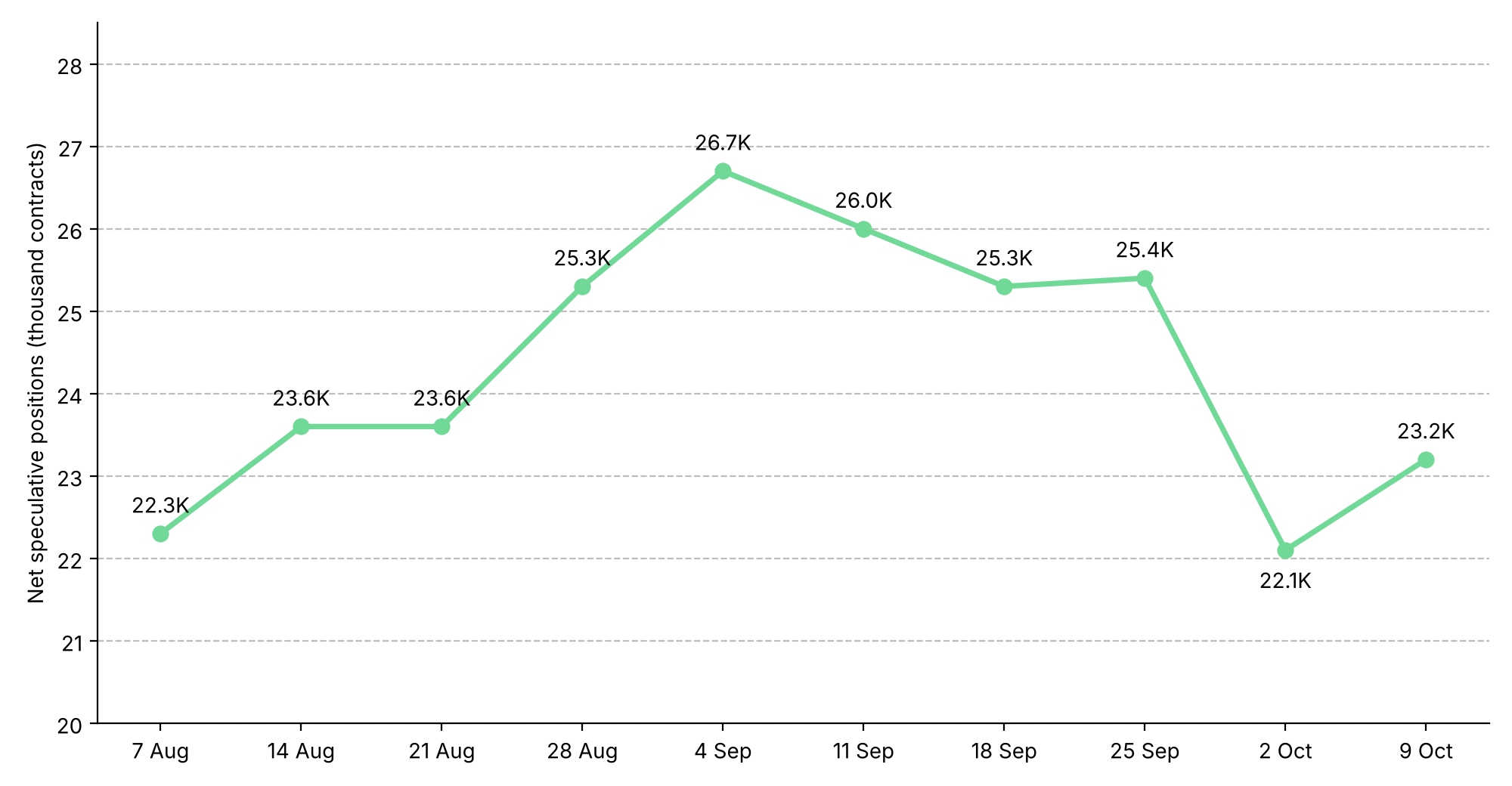
Net speculative positions in US silver futures rose from 22,100 to 23,200 contracts, recovering one-third of the previous week’s 3,300-contract decline but remaining 3,500 below the early-September peak. The rebound signals more bullish positioning, while prices remain well below January’s peak.
A Sixth Supply Deficit Supports the Case for Higher Prices
The Silver Institute projects a sixth consecutive annual deficit, with demand down about 2% to 1.11 billion ounces. Michael DiRienzo, Executive Director of the Silver Institute, estimates the shortfall at 46-50 million ounces, below February’s 67 million-ounce forecast. This shortage supports a recovery case but cannot guarantee a near-term rally. The 3,300-contract decline represents 16.5 million ounces of futures exposure, which cannot be treated as an equivalent change in physical inventories.
Rate Pressure Favors Producers Profitable Near $63 Silver
J.P. Morgan Global Research’s August 13 silver outlook targets averages of $63 for Q4 2026 and $63.90 for 2027, assuming reduced physical tightness and higher interest rates. Producers covering costs near $63 retain exposure to a recovery without depending on January’s peak prices.
Jim Curry, Cycle Analyst at Gold Wave Trader, targets resistance near the $63.07 20-day average, followed by a new low in late October or early November and a year-end rally. Under the bank’s base case, revenue forecasts using January’s peak would overstate sales. A deeper decline would compress unhedged producers’ margins at unchanged costs.
Watch silver’s response near $63.07 alongside weekly futures-positioning data. Net speculative positions above September’s 26,700-contract peak would indicate more bullish positioning, but would not rule out another price low. Higher realized silver prices would lift Q4 revenue at unchanged sales volumes.
Partial Hedging Protects Mine Cash Flow During Price Swings
Higher silver prices lift unhedged primary producers’ revenue and operating profit when output and costs remain stable. Revenue from other metals reduces byproduct producers’ dependence on silver. Physically backed silver exchange-traded funds (ETFs) track the metal’s price, less fees, without mine operating risks.
Stockpiling concentrate or delaying sales preserves exposure to later prices but postpones cash receipts and can add storage costs. Hedging part of production can protect cash flow while retaining recovery exposure on unhedged sales.
Silver Deficit Sets a Price Floor While Rates Cap the Rally
Interest-rate expectations and speculative positioning can pressure silver despite a physical deficit. The shortfall supports a recovery case but does not guarantee higher prices.
Price weakness can create opportunities in unhedged producers whose cash and operating cash flow cover planned spending at current silver prices, limiting borrowing and dilution risk. Byproduct producers gain additional support from revenue earned on other metals.
Permitted developers with viable project economics and sufficient construction funding can advance through price weakness, preserving exposure to a recovery. If lower prices delay competing projects, a slower supply response could strengthen their future production opportunity.
Analyst's Notes





Subscribe to Our Channel




.png)

Stay Informed