Existing Reactor Life Extensions Could Sustain Uranium Demand Through 2050


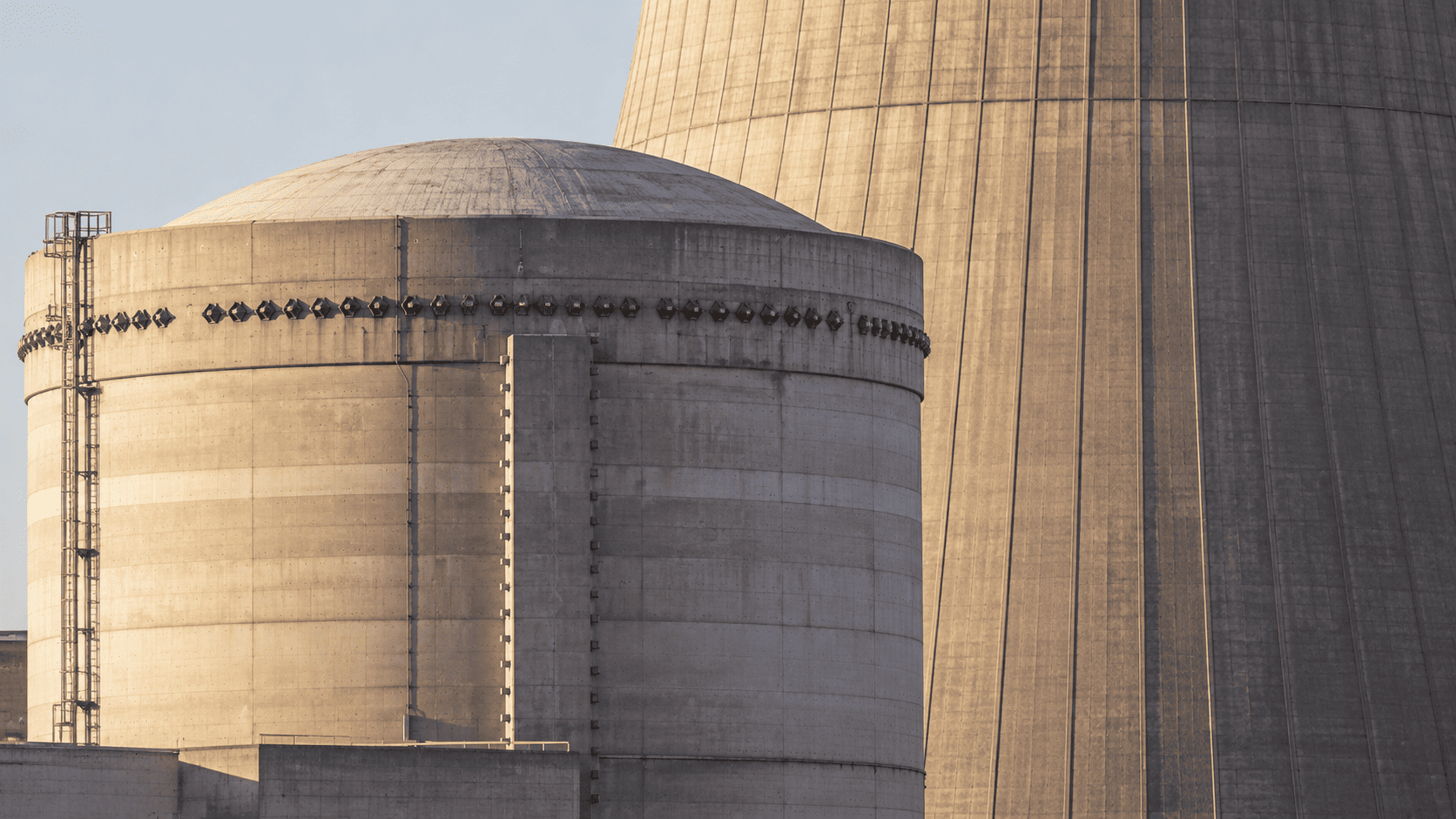
Unfilled US uranium requirements for 2033 could drive future supply contracts, improving producer revenue visibility and supporting new mine development.
- World Nuclear Association (WNA) projects that 401 gigawatts electrical (GWe) of today's 423 GWe operating reactor capacity could remain in service through 2050, preserving a substantial base of recurring uranium demand.
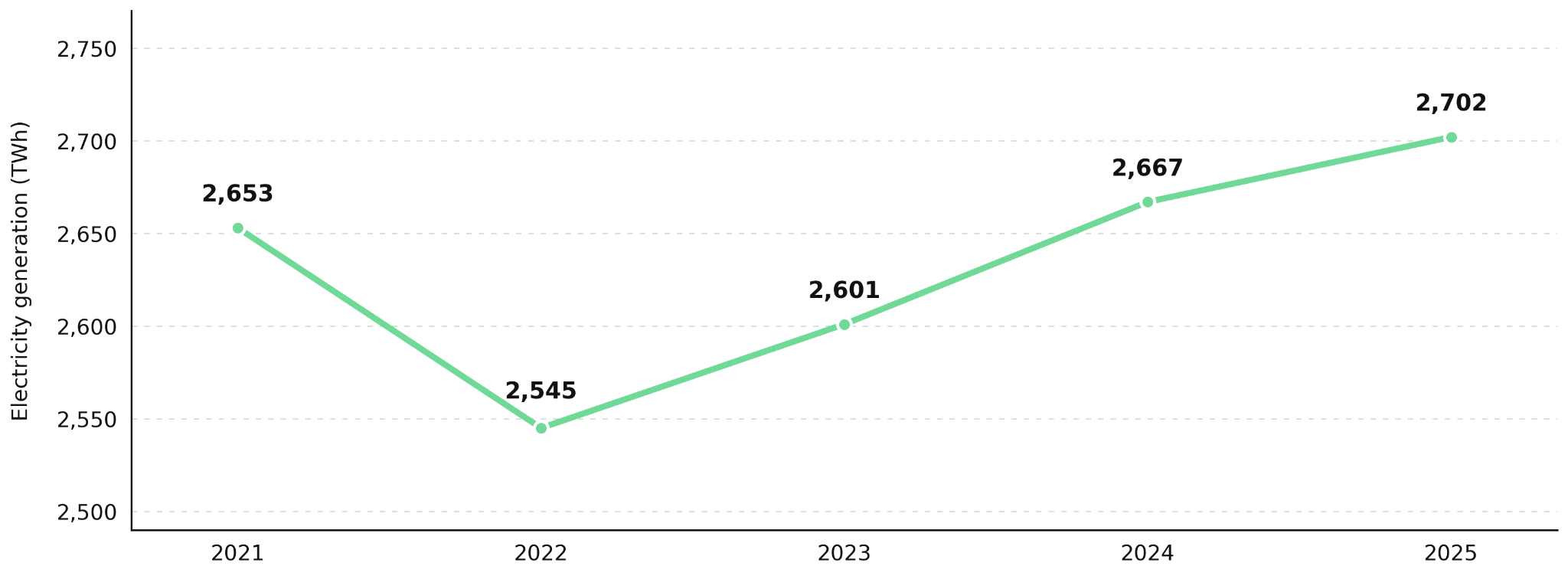
- Global nuclear electricity generation reached a record 2,702 terawatt-hours (TWh) in 2025, supported by an average reactor capacity factor of 83.7%, demonstrating the continued contribution of existing facilities.
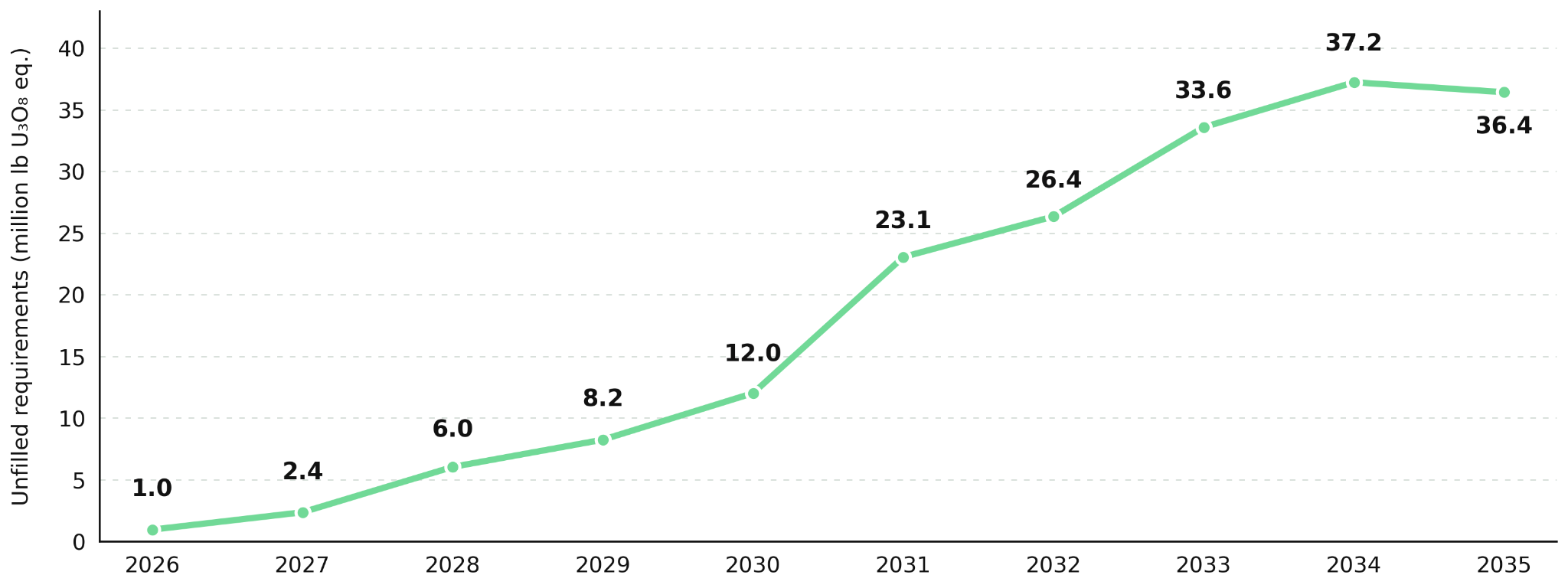
- US utilities reported 33.591 million pounds of unfilled uranium requirements for 2033, creating opportunities for new supply agreements as existing contracts cover a declining share of future demand.
- The latest international uranium outlook projects annual requirements of 84,800 to 143,900 tonnes by 2050, supporting continued investment in resource exploration, project development, and uranium production.
- With 87% of US uranium deliveries covered by long-term contracts in 2025, new utility agreements could strengthen producer revenue visibility and support financing for future uranium projects.
Reactor Life Extensions Preserve Uranium Demand Beyond 2030
WNA's September 2026 outlook projects that 401 GWe of the 423 GWe of gross nuclear capacity currently operating worldwide could remain online through 2050, assuming reactor lifetimes of up to 80 years. Of that projected capacity, 171 GWe would have operated for fewer than 60 years by 2050, while 230 GWe would have operated for 60 to 80 years, subject to national policies and technical constraints. Keeping these reactors operational would sustain recurring uranium fuel requirements through 2050 without relying on new reactor construction.
Global nuclear generation reached a record 2,702 TWh in 2025, increasing by 35 TWh from 2024, with an average reactor capacity factor of 83.7%. WNA also found no general performance decline among reactors operating for more than 40 years, supporting their ability to maintain electricity generation and recurring uranium fuel requirements during extended operating periods.
In the US, the Nuclear Regulatory Commission (NRC) allows qualifying reactors to seek successive 20-year license renewals. On June 11, 2026, the NRC approved subsequent renewals for Edwin I. Hatch Units 1 and 2, permitting operations through 2054 and 2058, respectively. Continued operation through these extended licensing periods would sustain replacement nuclear fuel requirements, creating additional uranium purchasing opportunities beyond 2030.
Recurring Reactor Refueling Sustains Uranium Consumption
According to the WNA's Nuclear Fuel Cycle Overview, a typical reactor replaces approximately one-third of its fuel every 12 to 18 months, creating recurring uranium requirements throughout its operating life. Uranium must undergo extraction, processing, and fuel fabrication before delivery, with enrichment required for certain reactor designs. These steps require utilities to secure uranium supplies ahead of scheduled refueling, extending purchasing commitments beyond the initial construction of a reactor.
Uranium consumption per reactor varies with fuel efficiency, enrichment practices, recycling, and inventory management, meaning longer operating lives do not translate into a fixed amount of uranium demand. The September 2026 report by the OECD Nuclear Energy Agency (NEA) and International Atomic Energy Agency (IAEA) projects annual uranium requirements of 84,800 to 143,900 tonnes by 2050 across different demand scenarios. These projections include potential nuclear capacity expansion, while the existing reactor fleet provides a continuing source of uranium consumption.
The report identifies more than 8.1 million tonnes of uranium resources recoverable below US$260 per kilogram, but these resources do not represent uranium currently available for commercial delivery. Bringing them into production requires project financing, technical development, and infrastructure capable of supplying buyers. The ability to advance these resources toward production will determine how much additional uranium becomes available to meet future fuel requirements.
Unfilled Uranium Requirements Create New Supply Contract Opportunities
US Energy Information Administration (EIA) shows that US utilities reported maximum contracted deliveries of 17.934 million pounds of uranium oxide equivalent for 2030, leaving 12.021 million pounds of anticipated requirements unfilled as of year-end 2025. For 2033, maximum contracted deliveries totaled 3.151 million pounds against 33.591 million pounds of unfilled requirements, out of an anticipated 36.742 million pounds. This leaves most projected 2033 requirements available for potential new uranium supply agreements.
Euratom Supply Agency (ESA) reports that European Union utilities purchased 14,678 tonnes of natural uranium in 2025, including 13,790 tonnes under multiannual contracts and 889 tonnes through spot transactions. With approximately 94% of purchases covered by multiannual agreements, European utilities demonstrate a clear preference for securing uranium through longer-term supply commitments rather than relying on spot purchases.
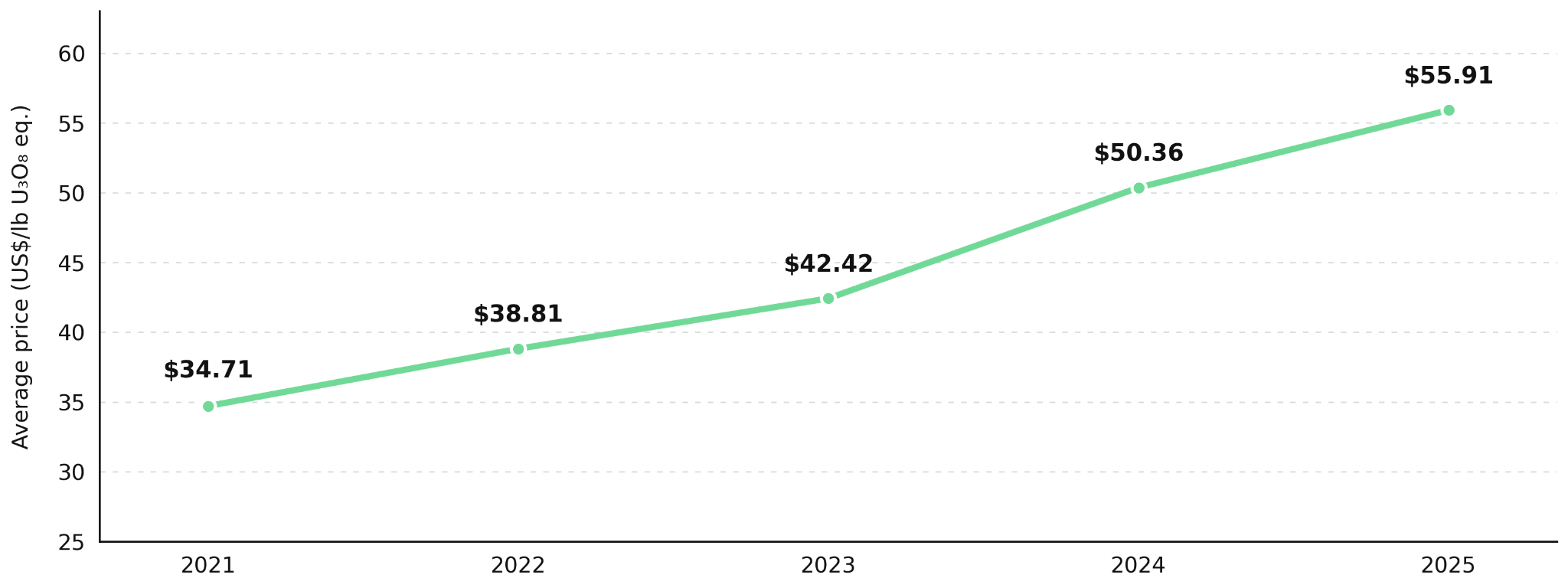
87% of uranium delivered to US reactor operators in 2025 came through long-term contracts, compared with 13% under spot agreements. Long-term deliveries averaged US$55.91 per pound of uranium oxide equivalent, while spot-contract deliveries averaged US$76.01, reflecting different pricing arrangements. Long-term agreements establish future delivery volumes and pricing terms, helping producers plan revenue while providing development-stage projects with potential support for financing once production schedules and technical assumptions are established.
Long-Term Reactor Demand Supports Uranium Resource Investment
Expanding future uranium supply requires progress across both exploration and development projects. Exploration drilling helps establish the potential scale of new deposits, while development-stage recovery testing assesses how efficiently identified uranium resources can be extracted and their potential production costs.
Exploration Drilling Expands Resource Potential for Future Supply
Longer reactor operating lives increase the importance of identifying uranium deposits that could contribute to future supply. Establishing continuity across mineralized zones helps define a discovery's potential scale and provides a stronger basis for resource development.
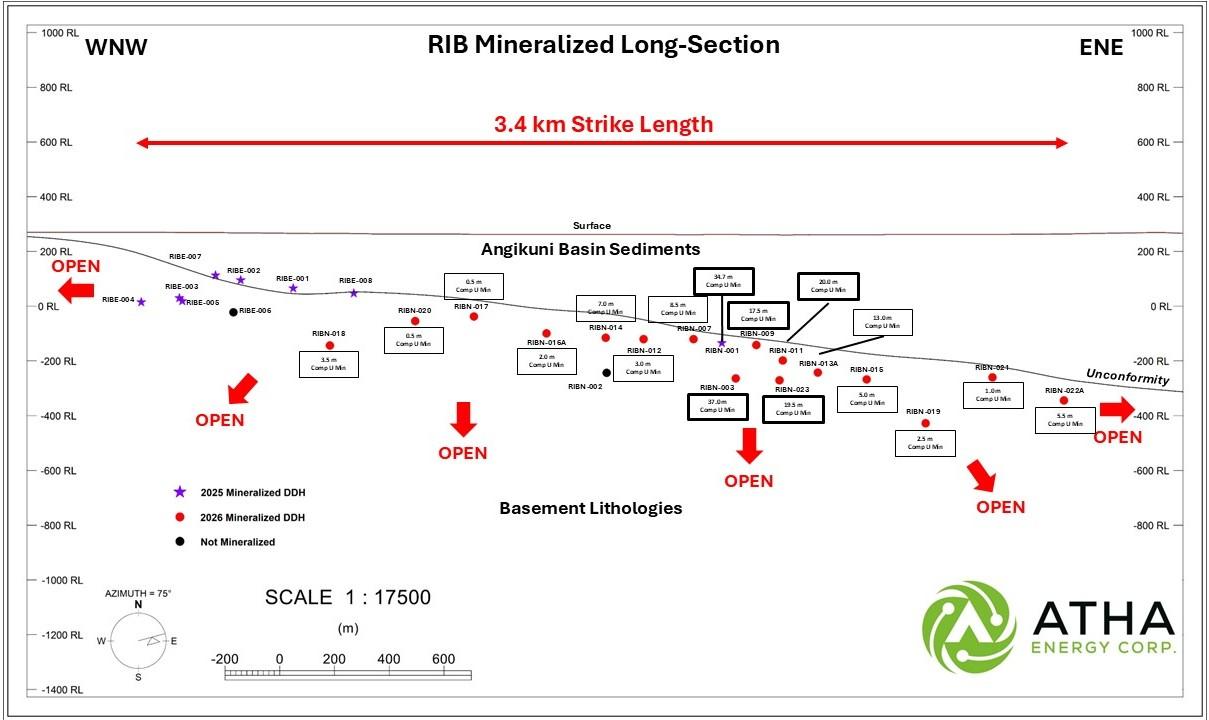
ATHA Energy more than doubled the connected uranium-mineralized strike at its Angilak Uranium Project in Nunavut, expanding it from 1.45 to 3.4 kilometers. With uranium mineralization encountered in 21 of 23 drillholes, the results strengthen the project's resource growth potential and provide a stronger foundation for further resource delineation.
Troy Boisjoli, Chief Executive Officer of ATHA Energy, explains why scalable uranium assets matter after 2030:
“I think it's clear to me what the market is looking for, and this is what the industry needs. It is large scalable assets that can become a meaningful component to help solve what is nearly an existential supply deficit going into the 2030 decade.”
81% Uranium Recovery Supports Heap-Leach Project Economics
Expanding uranium supply depends not only on resource size but also on how economically the material can be processed. Higher recovery rates and efficient extraction methods can improve project economics and strengthen the potential for future production.
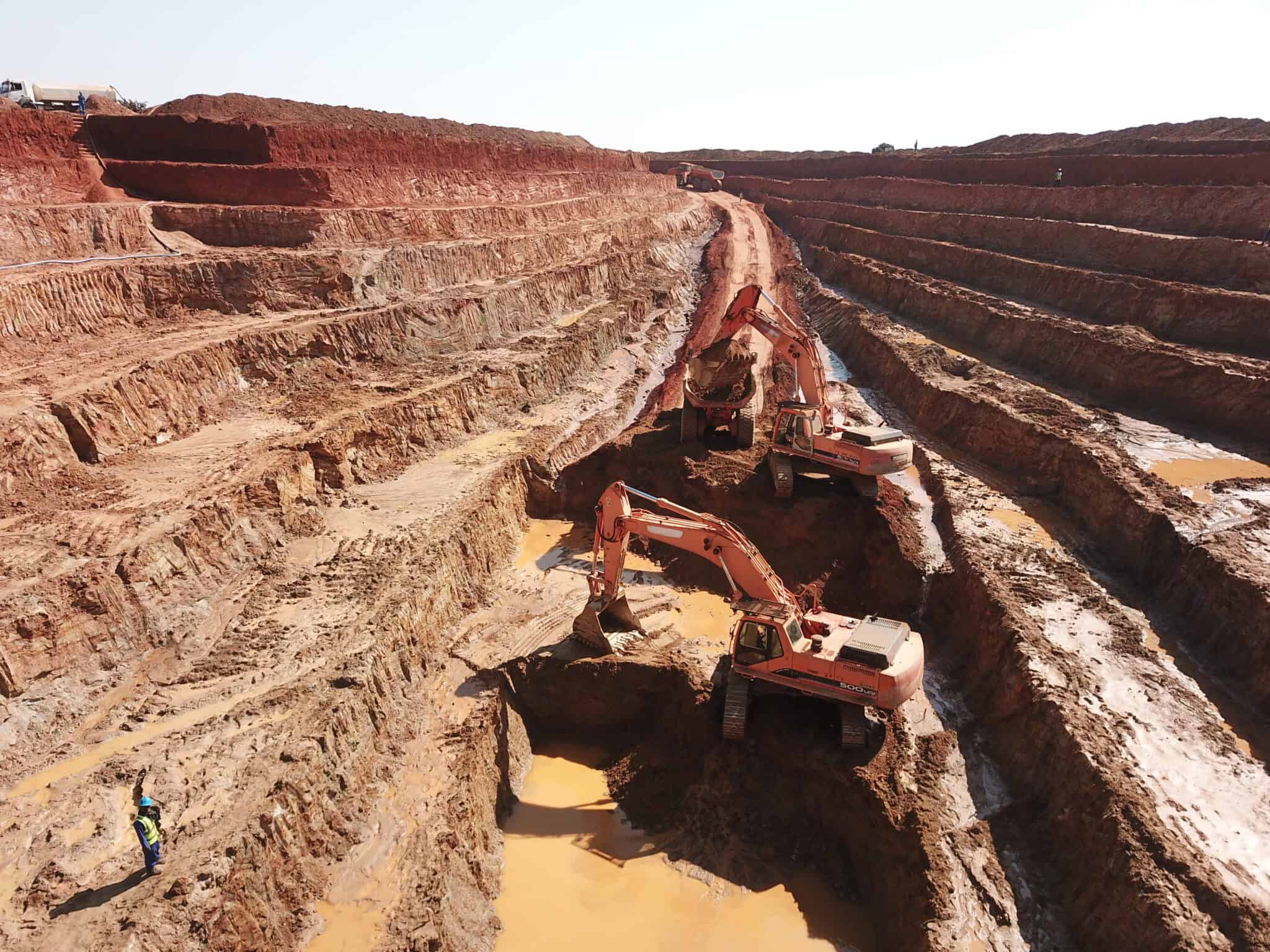
Atomic Eagle achieved approximately 81% uranium recovery in heap-leach testing at Muntanga East in Zambia, with most uranium extracted within 15 to 20 days. The results extend favorable processing performance to the newly discovered deposit within its broader 58.8-million-pound Muntanga Uranium Project, supporting its potential inclusion in future mine plans and opportunities to improve overall project economics.
Phil Hoskins, Chief Executive Officer of Atomic Eagle, explains how resource growth can strengthen project economics:
“Increasing the resource, having that flow through to a larger production profile for a heap leach project is how you make the economics stack up and that's without the uranium price increasing.”
Future Fuel Commitments Increase the Value of Advanced Uranium Supply
Meeting future uranium requirements depends on both advancing development-stage projects and expanding production at established operations. High-grade deposits and more efficient processing can improve project economics, while existing production infrastructure can support additional uranium deliveries without requiring entirely new processing facilities.
Higher Uranium Grades Could Reduce Processing Costs
Meeting long-term uranium requirements also depends on the economic viability of future production. High-grade deposits can yield more uranium from less material, while improved processing technologies can reduce transportation and operating costs, strengthening project economics.
IsoEnergy holds a 48.6-million-pound indicated uranium resource grading 34.5% at its Hurricane Deposit in Saskatchewan. Through its 33% interest in DISA Uranium, the company also has exposure to processing technology that increased uranium concentration fourfold while recovering 88% during Tony M testing. These results offer potential transportation and processing cost savings, with an updated preliminary economic assessment targeted for year-end 2026 to further evaluate project economics.
Philip Williams, Director and Chief Executive Officer of IsoEnergy, links lower material volumes to reduced processing costs:
“If you can reduce the amount of material that's being trucked to that central processing facility, you have tremendous savings. The other thing is you're processing a lot less tons of ore for the same amount of uranium.”
Wellfield Approvals Could Expand Uranium Output at Existing Facilities
For established uranium producers, processing infrastructure offers a different commercial advantage. Additional wellfields can potentially supply existing facilities without requiring a separate central processing plant at each deposit.
enCore Energy is preparing to expand uranium production through its existing South Texas facilities, including Alta Mesa, which has an annual operating capacity of 1.5 million pounds of uranium oxide. Its Wellfield 3 Extension is ready to operate upon final permit approval, while the completed Upper Spring Creek satellite facility is positioned to supply the Rosita processing plant. These developments provide a pathway to additional uranium deliveries, supported by inflation-adjusted sales contracts that offer revenue visibility while retaining exposure to higher uranium prices.
Utility Contracts Could Turn Reactor Demand Into Revenue Visibility
Reactor life extensions could sustain uranium fuel requirements through 2050, while future utility contracts will determine how much of that demand translates into committed purchases. With 33.591 million pounds of US uranium requirements for 2033 still unfilled as of year-end 2025, additional supply agreements represent a significant commercial opportunity for uranium producers.
Future EIA reports will provide a measurable indication of how quickly utilities are securing uranium beyond 2030. Increases in contracted delivery volumes would signal additional purchasing commitments, while agreed pricing terms could improve revenue visibility for producers and strengthen the commercial basis for financing new uranium projects. The pace of these agreements will help determine when long-term nuclear fuel requirements translate into new uranium sales and development opportunities.
The Investment Thesis for Uranium
- Reactor life extensions could sustain uranium demand through 2050, with the WNA projecting that 401 GWe of existing nuclear capacity could remain operational and require recurring fuel purchases.
- Declining contract coverage creates future uranium sales opportunities, with 33.591 million pounds of US uranium requirements for 2033 remaining unfilled under existing contracts as of year-end 2025.
- Producers can expand supply using existing infrastructure, with permitted wellfields supporting additional deliveries without requiring entirely new processing facilities.
- Developers can improve their path to production through favorable grades, higher recovery rates, and controlled capital costs that strengthen project economics.
- Exploration drilling can expand the future uranium resource base by establishing mineralization continuity and advancing discoveries toward defined resources that could support future production.
- Permitting approvals and uranium supply contracts can advance projects toward cash flow by enabling planned production and securing future sales commitments.
Uranium's long-term investment case extends beyond new reactor construction, as existing nuclear facilities require recurring fuel purchases throughout their operating lives. As utilities secure future supplies through long-term agreements, opportunities extend across uranium exploration, project development, and established production. The strongest investment potential lies in connecting these recurring fuel requirements with expanding uranium resources, improving project economics, and additional production capacity, creating multiple avenues for commercial growth across the uranium sector.
TL;DR
Existing nuclear reactors could sustain uranium demand for decades without relying entirely on new construction. The World Nuclear Association projects that 401 GWe of today's operating nuclear capacity could remain online through 2050, subject to reactor lifetime assumptions. Meanwhile, US utilities reported 33.591 million pounds of unfilled uranium requirements for 2033, creating opportunities for additional long-term supply agreements. These contracts could improve revenue visibility for producers and support financing for development-stage projects. Across the uranium sector, resource expansion, improved recovery methods, and established processing infrastructure provide different opportunities to meet future fuel requirements.
FAQs (AI-Generated)
Analyst's Notes





Subscribe to Our Channel











Stay Informed