




Lithium Falls on EU Hybrid Quota While Chinese Battery Output Rises


A $100 drop in the spodumene index pressures producer revenue, making production costs, contract terms, and cash reserves critical to protecting margins.
- Spot battery-grade lithium carbonate averaged 115,400 yuan per tonne on October 12, 2026, down 5.7% on the day, while the most-traded Guangzhou Futures Exchange (GFEX) contract fell to an intraday low of 105,320 yuan per tonne.
- The lithium selloff followed an EU proposal to cap Chinese hybrid vehicle imports at about 350,000 units in the first year, against an estimated 800,000 in 2026, with implementation no earlier than December 1, 2026.
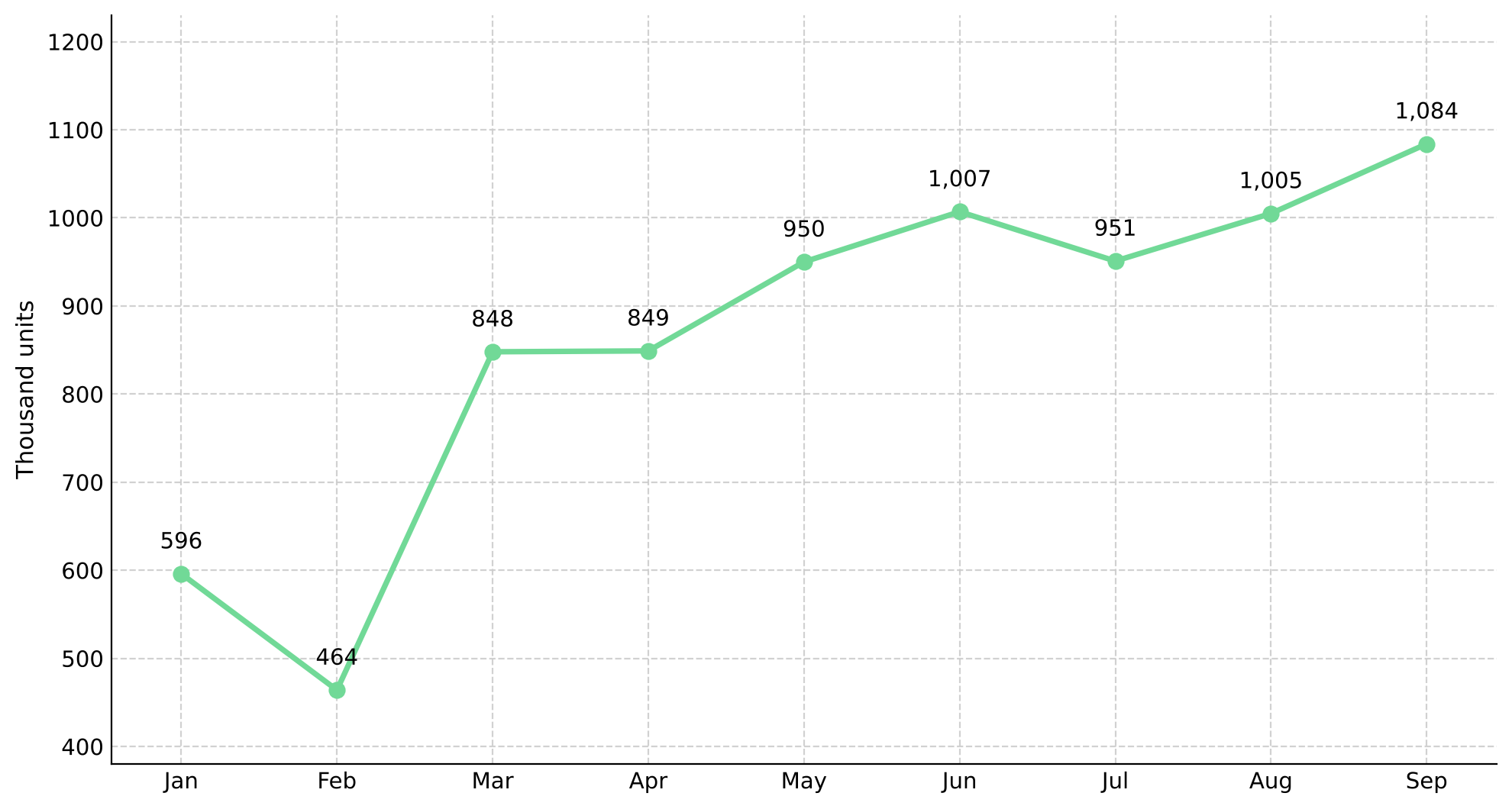
- China's scheduled battery cell output for October 2026 reached approximately 320 GWh, up 6% month on month.
- Lithium carbonate inventories declined 9,260 tonnes to 139,517 tonnes as of October 8, 2026, while weekly output fell 523 tonnes to 25,418 tonnes.
- Lower-cost spodumene producers with stronger cash reserves are better positioned to withstand falling concentrate prices.
EU Hybrid Quota Proposal Sends Lithium Futures Down Nearly 11%
Shanghai Metals Market (SMM) quoted spot battery-grade lithium carbonate at 111,500-119,300 yuan per tonne, averaging 115,400 yuan, down 6,950 yuan (5.7%) from the previous business day. The most-traded GFEX contract 2701 fell nearly 11% intraday to 105,320 yuan per tonne, its largest recorded intraday decline.
Open interest rose about 17,000 lots to 440,000 as lithium futures declined, while carbonate inventories fell 9,260 tonnes to 139,517 tonnes.
China's 320 GWh Battery Schedule Signals Continued Lithium Demand
EU plans to cap Chinese hybrid vehicle imports at about 350,000 units in the first year, down from an estimated 800,000 in 2026, with the cap increasing 6% annually over four years and implementation no earlier than December 1, 2026. Chinese hybrid vehicle exports to the EU tripled in value to $7.5 billion in the first half of 2026, up from $2.5 billion a year earlier.
The EU and China have yet to disclose the quota's implementation terms, leaving its impact on trade volumes uncertain. Maros Sefcovic, European Trade Commissioner, stated that the agreement would reduce EU vehicle imports by several million over four years, a figure not explained by the proposed quota. Meanwhile, China's scheduled October battery cell output reached approximately 320 GWh, up 6% month on month, with lithium iron phosphate (LFP) cathode production schedules near 500,000 tonnes.
Unresolved Trade Rules Leave EU Hybrid Import Volumes Uncertain
Citi analysts described the agreement as reducing trade-related risk, although implementation rules and volume caps remain under negotiation. Bill Russo, founder of Shanghai-based consultancy Automobility, noted that localizing production requires capital, which could lead smaller companies to reconsider their European expansion plans.
$100 Spodumene Index Drop Cuts Producer Revenue
Spodumene is a lithium-bearing hard-rock mineral processed into concentrate used to produce battery-grade lithium chemicals. The SMM delivered-China spodumene index fell $100 to $1,615 per tonne, reducing revenue for producers selling 6% lithium oxide concentrate under index-linked contracts and projected selling prices for near-production developers. Lower concentrate costs partly offset declining lithium carbonate selling prices for integrated Chinese converters.
Fixed-price contracts offer greater protection from falling concentrate prices than index-linked contracts. SMM identified lithium carbonate cost support near 100,000 yuan per tonne, suggesting a potential price floor.
Unhedged exposure to index-linked concentrate prices increases downside risk, with operating losses possible when selling prices fall below production costs. Sufficient cash reserves give producers greater capacity to withstand prolonged low prices.
What Drives Spodumene Producer Margins
Western spodumene producer margins depend on concentrate selling prices, contract terms, and production costs rather than Chinese lithium carbonate futures alone.
Lower lithium carbonate prices are prompting high-cost lepidolite and recycling operations to cut production. Restart delays and reduced investment could constrain future lithium concentrate supply from 2027 as demand recovers.
Analyst's Notes





Subscribe to Our Channel




Stay Informed


