Dollar Pressure Opens Lower Gold Entry Prices as China Adds 23 Metric Tons


.png)
US inflation could reshape gold’s recovery prospects, favoring producers with strong margins and developers with sufficient funding.
- Spot gold fell 0.4% to $4,176.86 per ounce by 09:11 GMT on October 12 as a dollar near an 18-month high made bullion more expensive overseas.
- Data released October 7 showed the People’s Bank of China (PBOC) added 740,000 ounces, about 23 metric tons, in September, extending its buying streak to 23 months and supporting gold demand.
- On October 12, CME FedWatch put December Fed hike odds at 85%. Stronger-than-forecast US Consumer Price Index (CPI) data on October 14 could pressure gold through higher yields and a stronger dollar; weaker data could support recovery.
- Gold weakness around the October 14 CPI release could offer lower entry prices in unhedged producers and developers, provided their costs and funding can withstand further declines.
- Unchanged October PBOC gold holdings in November’s reserve release would weaken evidence of continued buying, leaving gold more exposed to pressure from higher rates.
Dollar Strength Opens Lower Gold Entry Prices
Spot gold fell 0.4% to $4,176.86 per ounce as a dollar near an 18-month high made bullion more expensive overseas. December COMEX futures fell 0.4% to $4,200.90.
Chinese buying provides demand support during gold’s pullback: the People’s Bank of China (PBOC) added 740,000 ounces, about 23 metric tons, in September. China also imported more than 1,000 metric tons worth $158.8 billion in January through August, exceeding the 886 metric tons imported throughout 2025.
Reserve Diversification Drives Chinese Bullion Purchases
Higher US rate expectations make interest-bearing assets more competitive with gold: CME FedWatch puts October hike odds at 18% and December odds at 85%. China’s one-year government bond yields about 1.2%, versus 4.46% in the US, so domestic savers forgo less interest by holding gold. With the CSI 300 down about 8% this year and property prices struggling, households are buying bars, coins and jewelry to protect savings.
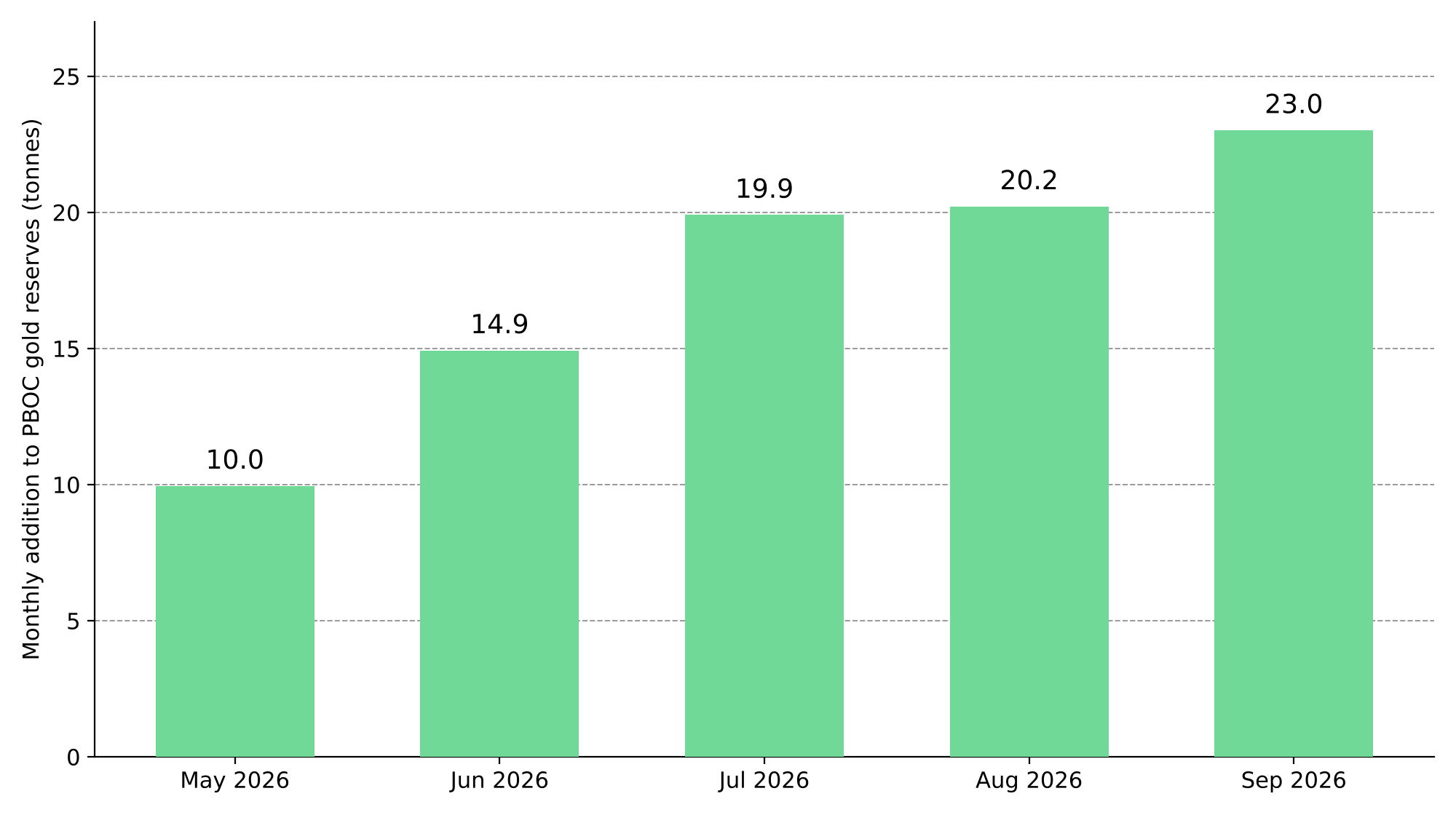
Reserve diversification provides gold demand beyond short-term rate expectations. Carsten Menke, Analyst at Julius Baer, identifies reducing reliance on the dollar and US Treasuries as the PBOC’s main buying motive. He estimates purchases reached 190 metric tons through August, including 110 metric tons not officially reported, and links buying to Beijing’s plans to expand its domestic gold market.
Softer US Inflation Could Support Gold’s Recovery
Reserve diversification can support gold during rate-driven selloffs. Ole Hansen, Head of Commodity Strategy at Saxo Bank, sees neither an end to central-bank diversification nor a cooling of geopolitical tensions as imminent.
Gold-price declines reduce unhedged producers’ revenue and developers’ projected project values. Ricardo Evangelista, Director and CEO of ActivTrades told Reuters that stronger-than-forecast inflation could reinforce Fed hike expectations, lifting yields and the dollar and pressuring gold. Softer inflation could support recovery. State Street Investment Management is targeting $4,750 to $5,500 per ounce by the end of Q1 2027, supported by Chinese demand; one inflation release cannot confirm that outcome.
US CPI on October 14 and Producer Price Index (PPI) data on October 15 could change rate expectations, potentially offering lower gold-equity entry prices where costs and funding withstand further declines. Unchanged October PBOC holdings in November’s reserve release would weaken the demand-support case without proving purchases had stopped.
Higher Treasury Yields Favor Gold Miners With Strong Funding
At unchanged production and costs, lower gold prices reduce unhedged producers’ profit by a larger proportion than revenue. Higher US yields can also lower developers’ project valuations by increasing the discount rate applied to future cash flows.
Central-bank buying supports demand but cannot guarantee a price floor. Ewa Manthey, Commodities Strategist at ING, says central banks buy for the long term and are less price-sensitive than retail buyers. Western gold ETF outflows could still outweigh that support.
CPI-driven weakness could offer lower entry prices where producer margins and developer funding withstand further gold declines. Position sizes should account for that downside, since monthly reserve disclosures may omit purchases and cannot establish continuous buying.
Rate-Driven Gold Swings Pass While Reserve Demand Persists
Dollar strength, Fed hike odds and the October CPI and PPI releases are short-term drivers, and gold-equity moves around them may reverse within weeks. Price swings tied to one data release leave mine reserves, costs and timelines unchanged. PBOC buying, now 23 months long, reflects reserve diversification with no announced end. Unhedged producers with wide margins and funded developers face less exposure to rate-driven declines.
Analyst's Notes





Subscribe to Our Channel






.png)

Stay Informed