




Silver Tiger Metals Advances El Tigre Project with US$750 million NPV and Mexican Permit Approval


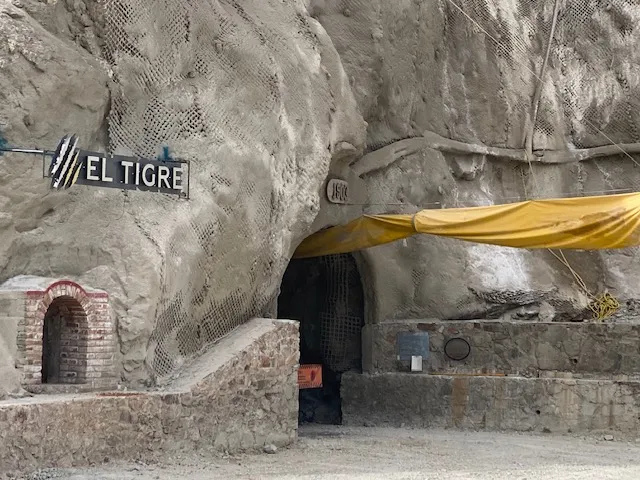
Silver Tiger secures Mexico's first mining permit since 2020; US$750M NPV, 92% IRR project entering 18-month construction with US$60M cash against US$186M capex.
TL;DR
Silver Tiger Metals has transitioned from explorer to near-term developer following receipt of Mexico's first new mining permit since 2020. The company's El Tigre project demonstrates exceptional economics at current precious metals prices, with an NPV of US$750 million, 92% IRR, and projected annual cash flow exceeding US$100 million supporting an 18-24 month pathway to production. Strategic capital management has positioned Silver Tiger with US$60 million in treasury against US$186 million capital requirements, enabling advancement without the operational constraints typical of debt-heavy financing structures. The appointment of Francisco Albelais, a mining engineer with a proven track record building bulk tonnage mines in Sonora, combined with completion of critical long-lead items including final engineering and site infrastructure, substantially de-risks execution timelines.
The forthcoming January 2026 preliminary economic assessment for underground mining, combined with significant regional exploration potential across a 30-kilometre mineralised trend, provides multiple pathways for value creation beyond the initial bulk tonnage open pit operation. For investors seeking exposure to silver production with near-term catalysts and district-scale upside, Silver Tiger presents a compelling opportunity at current valuations.
The El Tigre Project Economics and Scale
Silver Tiger Metals has achieved a significant milestone in securing Mexico's first new mining permit since 2020, enabling the company to advance its El Tigre bulk tonnage stockwork deposit in Sonora state towards construction. The permit approval represents the culmination of nearly eight years of systematic exploration, engineering, and environmental work on a project that President and CEO Glenn Jessome describes as having exceptional economics at current precious metals prices.
The company's pre-feasibility study demonstrates compelling project metrics, with an after-tax NPV of US$750 million, an internal rate of return of 92%, and projected annual cash flow exceeding US$100 million once in production. With US$60 million currently in treasury against a US$186 million capital requirement, Silver Tiger has positioned itself to advance the project without the constraints typically associated with debt-heavy financing structures.
Strategic Financing Approach: Operational Flexibility
Silver Tiger's capital structure reflects a deliberate strategy to maintain operational flexibility whilst advancing towards production. The company has raised over US$100 million through bought-deal financings from institutional investors, all without warrants, enabling systematic advancement of exploration and engineering work over the past six to seven years. This approach stands in contrast to alternative financing structures that might have constrained the company's ability to pursue parallel development objectives.
"Maybe people would like me to have 10 million and a few less shares out and then I'm going to go borrow 100 million bucks and be at the total mercy of a debt provider and the covenants," Jessome noted. "I will guarantee you anybody who's here for the rest of the ride until we build this in 18 to 24 months from now, you should be very happy what we just did."
The company has secured debt financing options that will be finalized in 2025, with terms that Jessome characterises as highly favourable. The strategic decision to maintain substantial cash reserves enables Silver Tiger to pursue multiple objectives simultaneously, including advancement of underground mine engineering, regional exploration programmes, and early-stage work at satellite deposits.
Interview with Glenn Jessome, President & CEO of Silver Tiger Metals
Advanced Preparation Accelerate Timeline
A critical element in Silver Tiger's execution strategy involves the appointment of Francisco Albelais, a Mexican mining engineer with 25 years of experience building and operating bulk tonnage mines in Sonora. From 2010 to 2023, Albelais served as the driving force behind Argonaut Gold's Mexican operations, building two large bulk tonnage mines of 55,000 tonnes per day each and managing teams of 400 personnel through development, construction, and operational phases.
"Everything that I tell you in the plan, the PFS, the last two years of planning, into the permit, and now on the other side, he gets up every day and that's all he thinks about," Jessome said of Albelais' role.
The mining engineer brings not only extensive personal experience but also relationships with key lieutenants from previous projects and access to a 200-person construction team based in Hermosillo, approximately two hours from the El Tigre site.
Silver Tiger has made strategic decisions over the past six to eight months to accelerate project timelines once permit approval appeared imminent. The company engaged KCA, described by Jessome as "the top engineering firm on the planet with respect to bulk tonnage surface deposits" to complete final engineering work commencing in summer 2024. This $2 million engineering programme will be completed on December 2025, enabling construction to commence in January 2026 without the typical six-month delay for detailed engineering.
Additional preparatory work includes completion of a 53-kilometre, all-weather road capable of transporting heavy equipment and mill components, and securing long-term power supply arrangements with Mexico's federal electricity regulator, CFE. The power infrastructure plan involves operation on generator sets during the initial 18-month construction period, with grid power connection scheduled within two years to provide permanent supply and redundancy.
Technical Approach: Simplicity and Proven Methods
The El Tigre bulk tonnage operation employs straightforward mining and processing methods well-suited to the deposit characteristics. The first three years of production will involve minimal waste stripping to a three-stage crushing facility. The crushed material will be heap-leached and processed through an off-the-shelf Merrill-Crowe system to produce doré bars.
Contract mining will play a significant role in the operation, with three major mining contractors in Hermosillo already providing quotes for services. This approach reduces capital requirements for mobile equipment whilst leveraging existing capacity in Sonora's mining sector.
"We will contract mine a big portion of this, which basically makes it so much easier," Jessome explained, "and all that equipment is available [...] We wanted those first three years of production to be at complete feasibility study level with respect to the resource."
The company has undertaken additional work to de-risk the initial production period, drilling the first three years of ore reserves at 25-metre spacing and conducting supplementary metallurgical testing.
Underground Development Provides Growth Pathway
Silver Tiger plans to release a preliminary economic assessment in January 2026 for an 800 tonnes-per-day underground mining operation targeting high-grade silver mineralization. The underground resource currently contains 113 million silver-equivalent ounces, with an 800 tonnes-per-day processing rate representing a 31-year mine life based on current resources before considering exploration upside.
The development strategy mirrors successful approaches at other Mexican epithermal systems, such as Alamos Gold's Mulatos mine, which operated bulk tonnage surface mining for 15-20 years before transitioning to underground production.
"It was only this year that they announced that they'd emptied all that bulk tonnage out and they were going to go and build a 2,000 tonnes-per-day underground mine," Jessome noted. "That's step two. One and two. It's how it works in Mexico in these systems."
Silver Tiger has already purchased and delivered an 800 tonnes-per-day mill to site and completed substantial underground development work, including advancing a half-kilometre decline that will serve as the main haulage way. The company aims to commence underground production whilst surface mining operations continue, though this requires careful planning to address safety concerns associated with simultaneous surface and underground mining in overlapping ore zones.
Current Resources and Expansion Potential
Silver Tiger's current mineral resource estimate contains approximately 100 million silver-equivalent ounces in the bulk tonnage deposit covered by the pre-feasibility study and 113 million ounces in the underground resource. Independent geological consultants have identified exploration potential for an additional 73 to 100 million silver-equivalent ounces within the immediate El Tigre area through infill drilling and near-mine expansion.
The resource base exists within only the first 2-3 kilometres of the 30-kilometre trend, suggesting substantial potential for district-scale resource growth. The geological model supporting this optimism draws on the characteristics of epithermal silver systems in Mexico, where mineralisation often extends along structural trends for considerable distances. The presence of multiple historical mines along the El Tigre trend, all exhibiting similar geology and mineralisation styles, reinforces the potential for additional discoveries.
The Investment Thesis for Silver Tiger Metals
- Near-Term Production Catalyst: With final engineering complete in December 2025, US$186 million capital and an 18-24 month construction timeline, Silver Tiger offers investors exposure to a near-term production scenario with exceptional project economics (92% IRR, US$750 million NPV) in a jurisdiction where new mine permits have been scarce.
- Experienced Development Team: Francisco Albelais' 25-year track record building and operating bulk tonnage mines in Sonora, combined with access to established contractor networks and a proven 200-person construction team, significantly de-risks execution compared to development projects led by less experienced operators.
- Dual Production Profile: The January 2026 preliminary economic assessment for 800 tonnes-per-day underground mining creates a pathway to sustained, multi-decade production combining initial bulk tonnage operations with subsequent high-grade underground mining, mirroring the successful development model employed at other Mexican epithermal systems.
- Strong Leverage to Silver Prices: With production plans centred on silver-dominant mineralisation and project economics demonstrating substantial sensitivity to metal prices (NPV increases from US$221 million at US$26 silver to over US$750 million at current prices around US$55), investors gain direct exposure to silver price appreciation in a supply-constrained market.
- District-Scale Exploration Upside: The 30-kilometre mineralised trend with multiple historical mines offers significant blue-sky potential beyond the initial 2-3 kilometre El Tigre development area, whilst the company's treasury position enables systematic exploration without requiring additional equity capital raises that would dilute near-term production economics.
- Valuation Disconnect: Trading at approximately C$380 million market capitalisation against a C$1.1 billion NPV (converted from US$750 million) for just the initial nine-year bulk tonnage operation – before considering underground mining or regional exploration – suggests substantial re-rating potential as construction progresses and de-risking occurs.
- Conservative Financial Structure: The decision to minimise debt financing in favour of equity capital from institutional investors eliminates covenant restrictions that might otherwise constrain exploration programmes, underground development, or operational flexibility, whilst avoiding the dilution and volatility associated with warrant-based financings.
Silver's Critical Role in the Energy Transition and Supply Deficit Dynamics
Silver Tiger Metals' development timeline coincides with structurally supportive fundamentals for silver, driven by the metal's indispensable role in solar photovoltaic technology and broader electrification trends. The Silver Institute projects industrial demand, particularly from the solar sector, will continue growing as countries pursue net-zero emissions targets, whilst primary mine supply remains constrained following years of underinvestment in new projects. Mexico's permit restrictions since 2020 have further tightened the supply pipeline for new silver production, making Silver Tiger's El Tigre project one of the few advancing towards near-term output.
The intersection of supply constraints and demand growth has created a structural deficit in the silver market, with above-ground inventories declining and price volatility increasing. Unlike gold, which primarily serves monetary and investment functions, silver's industrial applications mean that demand proves relatively inelastic to price increases, particularly in high-value end uses such as solar panels and electric vehicle components where silver represents a small fraction of total manufacturing costs.
Silver Tiger's development strategy positions the company to capitalise on this supply-demand imbalance at a critical juncture. The project's economics demonstrate substantial leverage to silver prices, with NPV increasing from US$350 million at US$26 per ounce to over US$750 million at current prices around US$31-32 per ounce. Should silver prices continue appreciating towards historical inflation-adjusted levels or respond to intensifying supply deficits, the project's cash flow generation could substantially exceed current forecasts.
As Glenn Jessome noted regarding the project's economics: "This bulk tonnage deposit generates, when in production, an NPV of 750 million – these are US dollars – an IRR of 92%, and pays back all capital in a year. But in nine years this bulk tonnage deposit generates well over 100 million USD net cash flow after tax." For investors seeking leveraged exposure to silver in an environment of tightening supply and structural demand growth, few development-stage projects offer comparable economics and near-term production timelines.
Frequently Asked Questions (FAQs) AI-Generated
The permit approval process extended over several years as part of Mexico's broader regulatory environment, which had not issued new mining permits since 2020. However, Silver Tiger used this time productively, completing extensive engineering work, environmental studies, and infrastructure development. CEO Glenn Jessome notes that the average exploration project takes 17 years from start to production, and Silver Tiger is in year eight – ahead of industry averages. The permit specifically authorises the exact mine plan detailed in the pre-feasibility study, eliminating regulatory uncertainty about the development approach. The company also secured permits for underground mining, providing a clear pathway for the dual-production strategy that mirrors successful Mexican epithermal systems like Alamos Gold's Mulatos mine.
Silver Tiger has already secured debt financing options with favourable terms that will be finalised in 2025. Management deliberately chose to maintain substantial equity capital rather than relying entirely on debt to avoid restrictive covenants that would constrain operational flexibility, exploration programmes, and underground development work. The combination of US$60 million cash and secured debt provides sufficient capital to complete the bulk tonnage operation whilst maintaining financial flexibility. This approach contrasts with debt-heavy structures that might require companies to focus exclusively on repayment rather than value-creating activities like regional exploration and underground advancement.
Francisco brings 25 years of Mexican mining experience, including his role as the driving force behind Argonaut Gold's Sonora operations from 2010 to 2023. During this period, he built and operated two bulk tonnage mines processing 55,000 tonnes per day each – substantially larger than Silver Tiger's planned 15,000 tonnes per day operation. He managed teams of 400 personnel through complete project lifecycles from development through depletion. Francisco brings not only personal expertise but also relationships with key lieutenants from previous projects and access to a 200-person construction team based in Hermosillo. His involvement significantly de-risks execution compared to development projects led by teams without comparable track records.
Silver Tiger will release a preliminary economic assessment for an 800 tonnes-per-day underground mine in January 2025. The company has already purchased and delivered the processing mill to site and completed substantial underground development work, including a half-kilometre decline that will serve as the main haulage way. The integration strategy mirrors successful Mexican epithermal systems where bulk tonnage surface mining operates for 10-20 years before transitioning to underground production. However, Silver Tiger aims to commence underground production whilst surface operations continue by carefully planning extraction sequences to address safety concerns. Not all underground ore lies directly beneath the surface deposit, enabling parallel operations in certain areas.
The current mine plan covers only 2-3 kilometres of a 30-kilometre mineralised trend controlled by Silver Tiger. The original El Tigre mine produced 100 million silver ounces between 1908-1938 before closure due to low silver prices rather than ore depletion. To the north, the North Tiger mine operated during the same period and represents the company's most advanced regional target, with 2 kilometres of historical workings now mapped and sampled. Early 2017 drilling returned high-grade intercepts exceeding 10 kilograms per tonne silver. To the south, three additional historical mines (Livia, El Toro, La Lancha) discovered by the same prospector offer earlier-stage opportunities. Independent consultants have identified potential for an additional 73-100 million silver-equivalent ounces through near-mine infill drilling alone, suggesting the current 213 million ounce resource base could expand substantially.
Analyst's Notes





Subscribe to Our Channel





.png)

.jpg)


Stay Informed






