




Sovereign Metals' Traxys Agreement & Rare Earth Recovery Expand Strategic Optionality - But Which Catalysts Actually Drive a Kasiya Re-Rating?



Kasiya targets Q4 DFS with $2.3B NPV, $400M EBITDA, and $241/t graphite costs. Rio Tinto's $60M investment backs the path to financing.
- The Traxys graphite marketing memorandum of understanding links Sovereign Metals' Kasiya Project to US strategic mineral procurement initiatives, improving downstream visibility but stopping short of binding revenue certainty.
- Heavy rare earth monazite recovery introduces multi-commodity optionality at potentially low incremental cost, aligning with Western supply diversification priorities and defence-linked procurement programs.
- Definitive Feasibility Study completion remains the dominant valuation inflection point, determining financing access, capital cost certainty, and project bankability for institutional lenders.
- By-product graphite economics position Kasiya near the bottom of the global graphite cost curve, improving margin resilience across commodity price cycles.
- Investors must distinguish between sentiment catalysts and execution milestones as Kasiya advances toward development decisions.
Structural Tightening in Critical Minerals Is Changing How Development Assets Are Valued
The global critical minerals market has shifted significantly in recent years as titanium feedstock shortages, rising battery-driven graphite demand, and tighter Chinese export controls on heavy rare earths increase the strategic importance of Tier-1 development projects.
This revaluation reflects policy action rather than sentiment alone. Western governments, including the US, EU, and Australia, are moving toward active procurement through strategic stockpiles and supply agreements aimed at reducing geopolitical supply risks, creating a structural premium for aligned projects.
Supply Chain Security Is Becoming a Valuation Driver, Not Just a Policy Theme
For development-stage miners, alignment with Western procurement programs is increasingly shaping how investors and lenders assess bankability and risk. Titanium feedstock, natural graphite, and heavy rare earths such as dysprosium and terbium are gaining policy focus due to concentrated supply and export control risks.
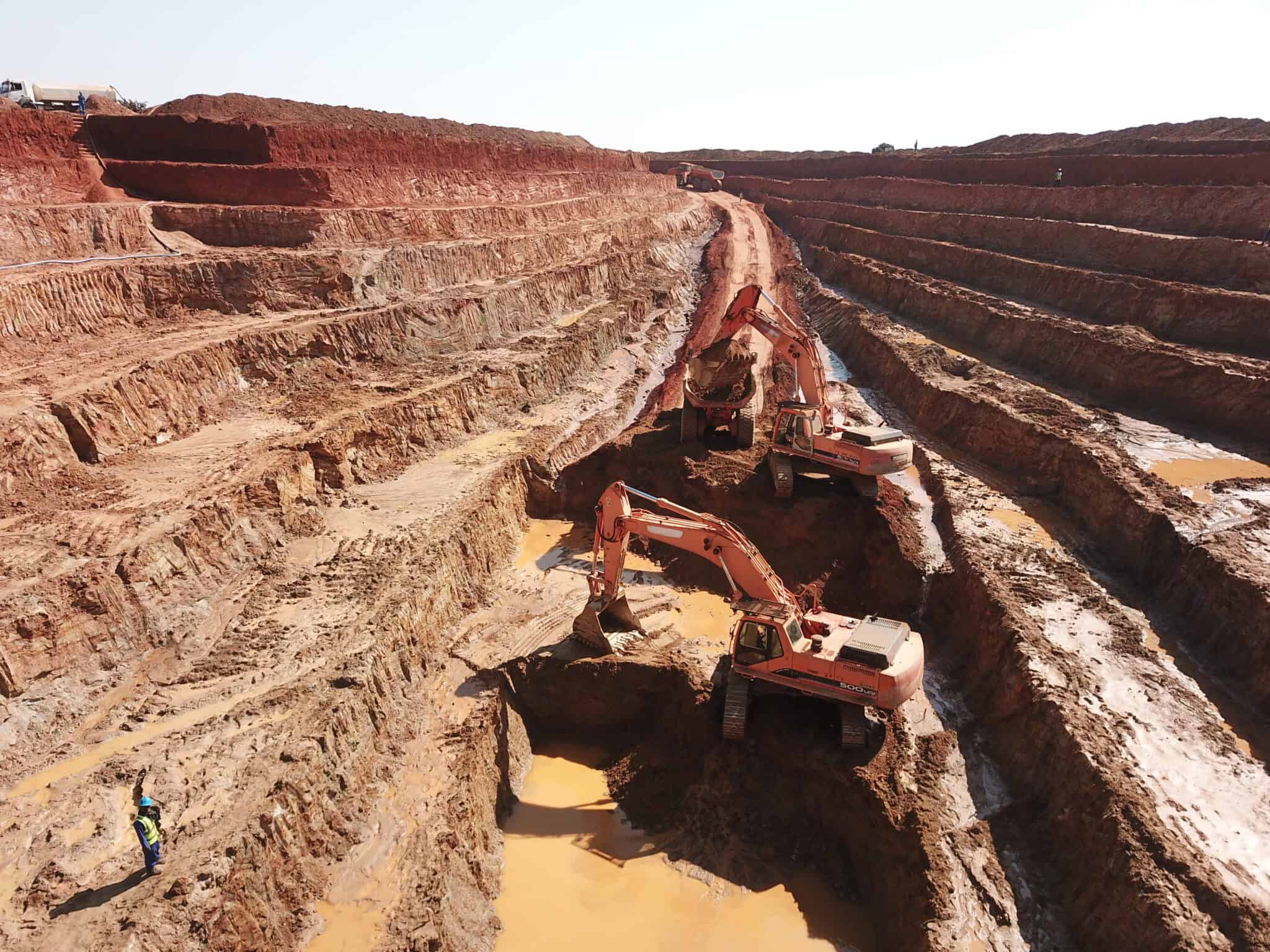
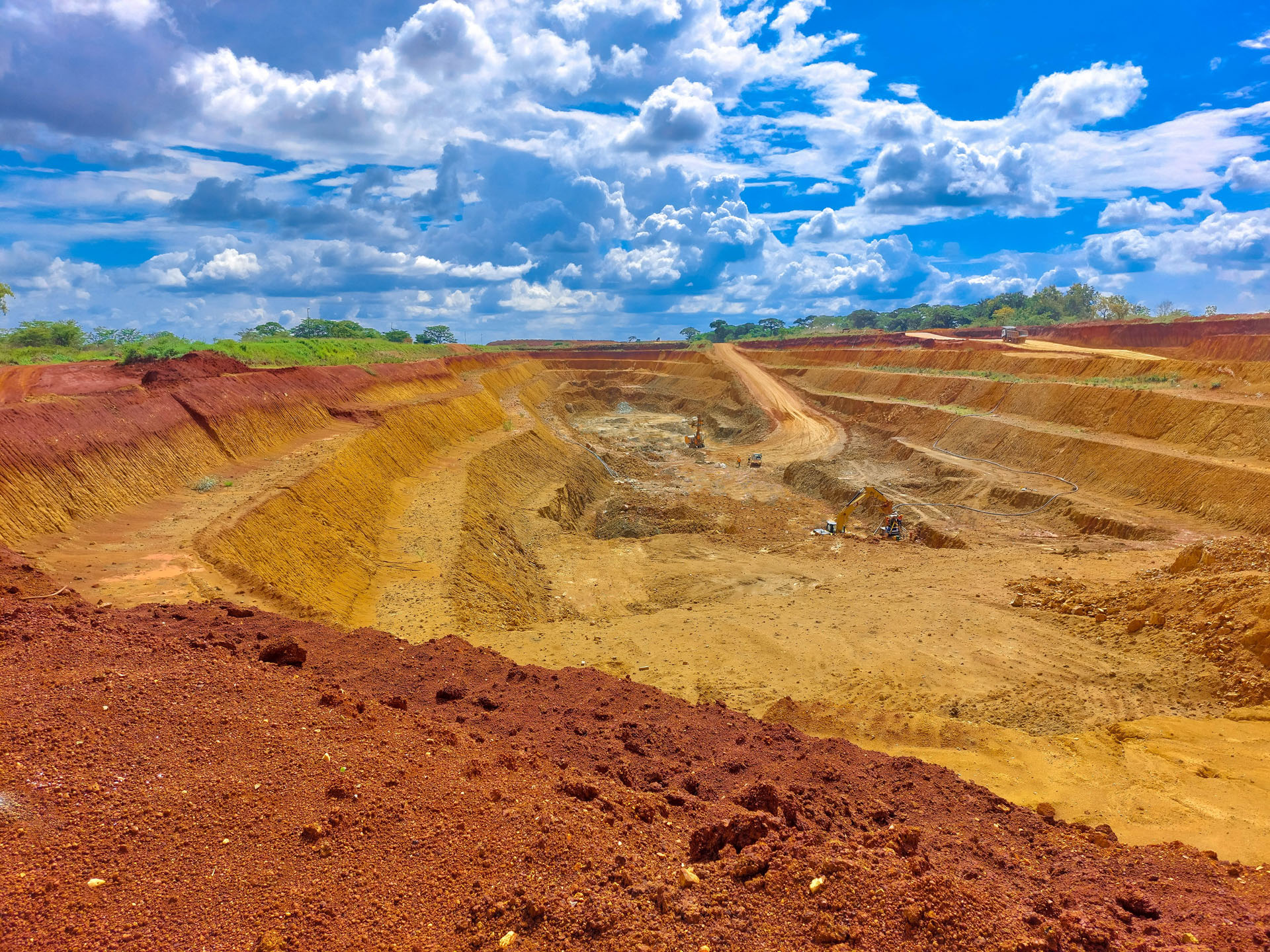
Sovereign Metals’ Kasiya Project in Malawi sits within this shift. As the largest known rutile deposit and the second-largest natural graphite resource globally, its multi-commodity profile aligns with growing Western supply diversification priorities.
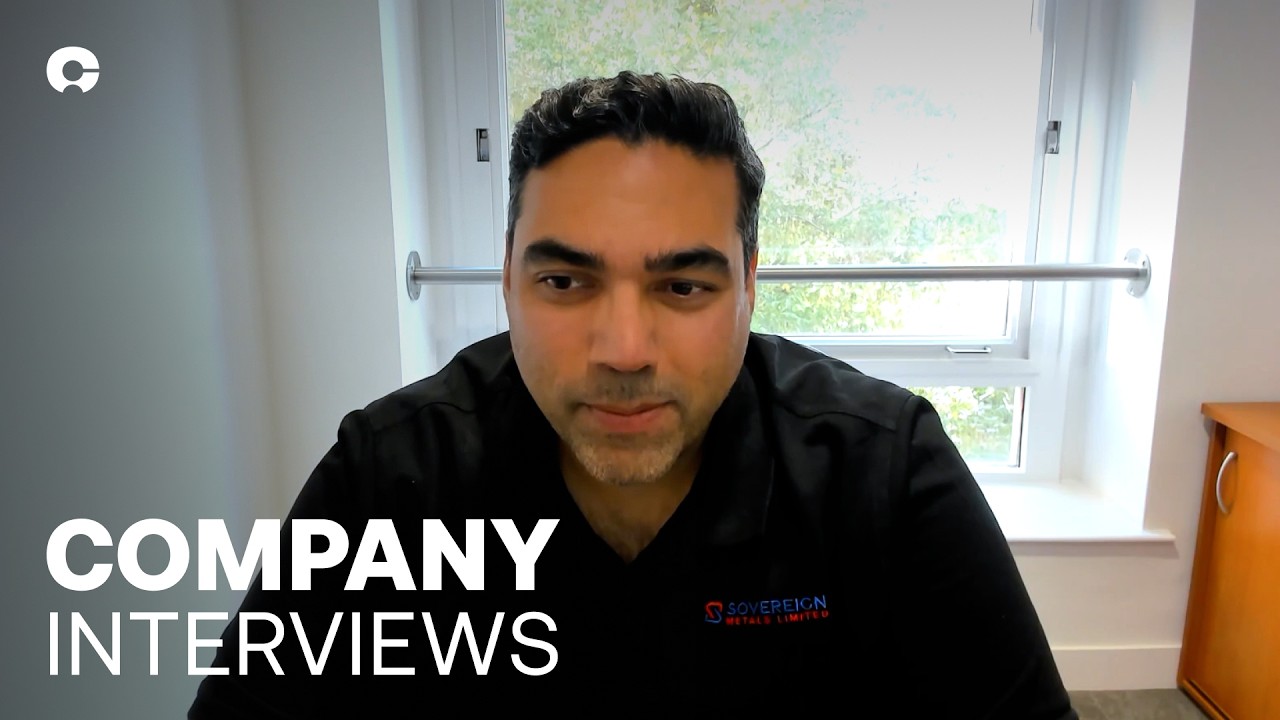
Ben Stoikovich, Chairman of Sovereign Metals, defines the asset's scale and strategic position directly:
"It is a massive deposit, it's world class, covering over 200 square kilometres. It's the largest rutile deposit ever discovered and globally it ranks as the second largest natural graphite deposit.”
The project's multi-commodity profile has positioned it as a structurally relevant asset in the context of accelerating Western supply diversification, underpinned by a geological configuration that is without direct parallel in the global development pipeline.
Catalyst Versus Narrative: What Actually Moves Development-Stage Mining Valuations?
Before analyzing individual catalysts, institutional investors benefit from a clear framework separating valuation-relevant milestones from developments that improve market visibility without materially changing project economics or financing probability.
For a development-stage asset of Kasiya's scale, the milestones that historically drive re-rating events fall into four categories: completion of a Definitive Feasibility Study confirming capital cost estimates and engineering assumptions; financing alignment with major institutions or strategic partners; binding offtake agreements that reduce volume and pricing uncertainty for lenders; and strategic partner validation that transfers technical credibility and balance sheet support. Marketing memoranda of understanding, laboratory recovery results, and exploratory discussions, while supportive of longer-term positioning, do not independently move net present value or alter financing timelines with the same materiality.
The key metrics investors track through this transition include NPV sensitivity to commodity price assumptions, internal rate of return confirmation against capital cost estimates, and capex certainty as the project moves from pre-feasibility to definitive study. Institutional investors, particularly those operating within resource-focused mandates, focus specifically on timeline compression and execution certainty as the primary determinants of when a development asset justifies capital allocation.
Catalyst One: Does the Traxys Graphite MoU Change Economics or Just Visibility?
Sovereign Metals’ memorandum of understanding with Traxys outlines a marketing framework for Kasiya graphite, starting at 40,000 tonnes per year and potentially increasing to 80,000 tonnes. While non-binding and not confirming revenue or pricing, its significance lies in market validation rather than immediate economics.
Traxys brings established credit capacity, logistics networks, and global customer access across refractory, expandable, and battery graphite markets, factors lenders consider when assessing offtake risk. Product mix also matters, as refractory and expandable graphite can sell for up to $1,200 per tonne, compared with weaker battery graphite pricing influenced by Chinese supply dominance.
The distinction between refractory and battery graphite markets is material to this analysis. Stoikovich provides direct product-level context:
"Almost 70% of our product will be in the medium, large, and jumbo flake sizes that sell for up to $1,200 a ton."
This flake distribution, a direct consequence of Kasiya's weathered saprolite geology, differentiates the project from peers operating in harder, transitional, or fresh rock environments, where product quality and flake preservation are structurally constrained.
Project Vault Exposure & Financing Psychology
Traxys’s involvement in Project Vault, the US$12 billion strategic minerals reserve, adds significance beyond a typical offtake discussion. Alignment with government-backed procurement initiatives can influence lender risk assessments and financing terms, even without binding contracts, positioning Kasiya within preferred Western critical minerals supply frameworks.
Management also notes that Traxys’s global industrial network provides access to multiple end markets, including higher-value refractory and expandable graphite segments supported by Kasiya’s flake size distribution.
Catalyst Two: Heavy Rare Earth Recovery - Revenue Stream or Strategic Optionality?
Heavy rare earths such as dysprosium and terbium are strategically critical for electric vehicles, wind turbines, and defence technologies, yet China controls about 90% of global processing capacity, exposing Western supply chains to export restriction risks.
At Kasiya, Sovereign Metals has identified recoverable monazite within the existing processing stream, creating potential heavy rare earth by-product recovery at incremental cost. The saprolite-hosted, free-dig orebody allows recovery within the current processing circuit, avoiding the standalone infrastructure typically required for rare earth projects.
Strategic Premium Versus Cash Flow Contribution
The distinction institutional investors must draw is between near-term cash flow contribution and longer-term strategic optionality value. Heavy rare earth processing requires downstream separation infrastructure that Sovereign Metals has explicitly indicated it does not intend to develop internally. The company's stated strategy, focused on mining rather than downstream chemical processing, limits the near-term revenue contribution from rare earth recovery but preserves optionality for partnership or tolling arrangements with downstream processors.
Stoikovich's framing of the company's strategic identity is instructive here:
"Other companies need to go downstream to capture margin and make a return on investment. We don't need to, and we have no intention to. We are a mining company, not a chemistry company."
The strategic premium associated with dysprosium and terbium supply may nonetheless carry independent valuation significance, as defence procurement agencies and Western governments have signaled willingness to support supply chain development for these elements through financing mechanisms and strategic purchasing commitments.
Catalyst Three: Definitive Feasibility Study - The Real Re-Rating Threshold
The Definitive Feasibility Study (DFS) is Kasiya’s most important near-term valuation catalyst. Unlike pre-feasibility studies, which carry capital cost uncertainty of ±25-35%, a DFS narrows accuracy to about ±15%, meeting the requirements of institutional lenders and export credit agencies.
For Kasiya specifically, the DFS will confirm or refine capital cost estimates, engineering assumptions around processing plant configuration, infrastructure requirements, and water and power logistics in Malawi. It will also incorporate updated commodity price assumptions and operating cost refinements informed by the pilot plant program. Stoikovich has confirmed the empirical foundation this program provides:
"The pilot phase has provided substantial empirical data that has informed our forward project design. It makes our optimized pre-feasibility numbers much more accurate."
The pre-feasibility study metrics already established a compelling baseline. As Stoikovich summarizes:
"The results of our optimized pre-feasibility study were exceptional; it shows a pre-tax NPV of over $2.3 billion US with an annual average EBITDA of over $400 million. We would be the world's largest rutile producer and we'd have a 64% operating margin."
These figures, if confirmed and refined within DFS accuracy ranges, would position Kasiya among the most economically robust critical mineral development projects globally at comparable scale. DFS completion historically drives material re-rating in development-stage mining equities because it enables the transition from speculative project valuation to project finance-eligible asset valuation.
Catalyst Four: Cost Curve Positioning & Multi-Commodity Leverage
Kasiya’s graphite economics are distinctive because graphite is produced as a rutile by-product, resulting in an estimated incremental cost of about $241 per tonne. This places the project at the bottom of the global graphite cost curve, even amid price pressure from Chinese oversupply.
This low-cost position supports margin resilience across cycles. Even at current battery graphite prices, Sovereign Metals estimates roughly a 50% operating margin, unlike many standalone graphite projects that struggle to remain profitable at today’s prices.
Rutile Dominance Still Drives Core Economics
Kasiya’s primary economic driver remains rutile, the highest-purity natural titanium feedstock, which commands a premium due to its use in chloride pigment production and titanium metal manufacturing. With global supply tightly constrained, Sovereign Metals expects Kasiya to become the world’s largest rutile producer at full production.
Its multi-commodity model, rutile as the main revenue source, low-cost by-product graphite, and potential rare earth recovery, reduces single-commodity exposure and supports stronger financing risk profiles.
Catalyst Timing Risk: Which Milestones Matter in the Next 18 Months?
For investors constructing a timeline-based view of Kasiya's development trajectory, the near-term catalyst sequence is clear. DFS completion, targeted for the fourth quarter of the current year, represents the primary near-term event. Following DFS publication, the critical path moves to project financing discussions, which require DFS-level capital cost certainty as a precondition for term sheet engagement with lenders. Environmental and social impact assessment permitting in Malawi, a jurisdiction with a functional mining regulatory framework supported by the existing Sovereign and Rio Tinto technical committee, represents a parallel workstream rather than a sequential bottleneck.
Medium-term milestones include financing mandate award, finalization of binding offtake agreements, and Final Investment Decision, which is unlikely to occur before 2026 at the earliest given the DFS timeline. Construction commencement and first production represent longer-term milestones that, while central to ultimate equity value realization, are beyond the 18-month investment horizon relevant for most development-stage position sizing decisions.
Delay sensitivity is real and should not be dismissed. Any extension of the DFS timeline into 2026 would push financing discussions, permitting completion, and construction commencement schedules by a corresponding period, compressing the margin for error on commodity price assumptions underpinning project economics.
What Would NOT Move the Share Price: Optical Versus Economic Milestones
For investors tracking Kasiya’s development timeline, the key near-term catalyst is DFS completion, targeted for Q4, which enables financing discussions requiring capital cost certainty. Permitting in Malawi is progressing in parallel, supported by the Sovereign-Rio Tinto technical collaboration.
Medium-term milestones include financing mandates, binding offtakes, and a Final Investment Decision, unlikely before 2026. Construction and first production sit beyond the typical 18-month investment horizon. Timeline delays remain a risk, as DFS slippage into 2026 would push financing and development milestones further out and increase exposure to commodity price assumptions.
The Investment Thesis for Sovereign Metals
- Structural rutile supply scarcity, with few comparable large-scale projects globally, supports long-term pricing visibility for Kasiya’s primary revenue stream.
- Western supply diversification policies and strategic procurement programs strengthen demand support for graphite and rare earth outputs beyond commercial markets.
- Exposure to rutile, graphite, and heavy rare earths reduces single-commodity risk and broadens strategic partnership appeal.
- Rio Tinto’s $60 million investment and technical involvement provide credibility that lowers perceived execution risk for investors and lenders.
- By-product graphite costs of about $241 per tonne position Kasiya at the bottom of the cost curve, supporting strong margin resilience.
- DFS completion targeted for Q4 remains the key catalyst, enabling financing access and progression toward a construction decision.
The Traxys marketing agreement and rare earth recovery expand Kasiya’s strategic optionality and alignment with Western supply chains, but neither materially advances funding or construction on its own.
The Definitive Feasibility Study remains the key near-term catalyst, determining capital cost certainty, financing eligibility, and validation of project economics. While the pre-feasibility study outlined strong metrics, including a $2.3 billion pre-tax NPV, $400 million annual EBITDA, and a 64% operating margin, institutional investment decisions will depend on DFS confirmation.
For investors, the focus should be on milestones that improve financing probability rather than headline momentum. Kasiya’s scale, partnerships, cost position, and multi-commodity exposure are compelling, but value realization ultimately depends on DFS execution and subsequent financing progress.
TL;DR
Strategic tailwinds in critical minerals are increasing investor attention on Sovereign Metals’ Kasiya Project, but not all recent developments carry equal valuation weight. The Traxys graphite marketing agreement strengthens market credibility and links Kasiya to US strategic procurement initiatives, while heavy rare earth recovery adds long-term geopolitical optionality at low incremental cost. However, neither materially advances financing or construction on its own.
The dominant near-term catalyst remains completion of the Definitive Feasibility Study (DFS), expected in Q4, which will determine capital cost certainty, financing eligibility, and institutional lender confidence. Strong pre-feasibility economics, including a $2.3B pre-tax NPV, $400M annual EBITDA, and a 64% operating margin, provide a solid baseline but require DFS confirmation.
Kasiya’s investment case rests on rutile-driven economics supported by low-cost by-product graphite and rare earth optionality, alongside Rio Tinto’s strategic involvement. For investors, the key question is execution: whether DFS delivery and subsequent financing convert strategic relevance into a funded development project.
FAQs (AI generated)
The DFS provides the engineering accuracy and capital cost certainty required by institutional lenders and export credit agencies before financing discussions can advance. While earlier studies outlined strong economics, including a pre-tax NPV above $2.3 billion and average annual EBITDA over $400 million, investors typically wait for DFS confirmation before assigning full project valuation or funding credibility.
No. The Traxys agreement is a non-binding memorandum of understanding and does not confirm pricing or delivery commitments. Its value lies in improving marketing credibility and lender confidence by connecting Kasiya to established trading networks and US strategic procurement initiatives such as Project Vault, rather than immediately changing project cash flow assumptions.
The recovery of monazite containing heavy rare earth elements such as dysprosium and terbium introduces strategic optionality rather than near-term revenue. These elements are critical for defence systems, electric vehicles, and renewable energy technologies, and Western governments are increasingly supporting diversified supply chains. However, downstream processing partnerships would likely be required before meaningful revenue contribution.
Graphite at Kasiya is produced as a by-product of rutile mining, resulting in an estimated incremental production cost of about $241 per tonne. This places the project near the bottom of the global graphite cost curve, allowing potential operating margins even during periods of price pressure when many standalone graphite projects struggle to remain profitable.
The main risks relate to execution timing. Delays in DFS completion could push financing discussions, permitting progress, and a Final Investment Decision beyond current expectations. Commodity price volatility, capital cost inflation, and financing market conditions also remain key variables influencing whether Kasiya transitions from a development-stage asset to a funded construction project.
Analyst's Notes





Subscribe to Our Channel


.png)




Stay Informed


