The Case for Vista Gold: Deep Discount, High Leverage, and a Clear Catalyst Stack


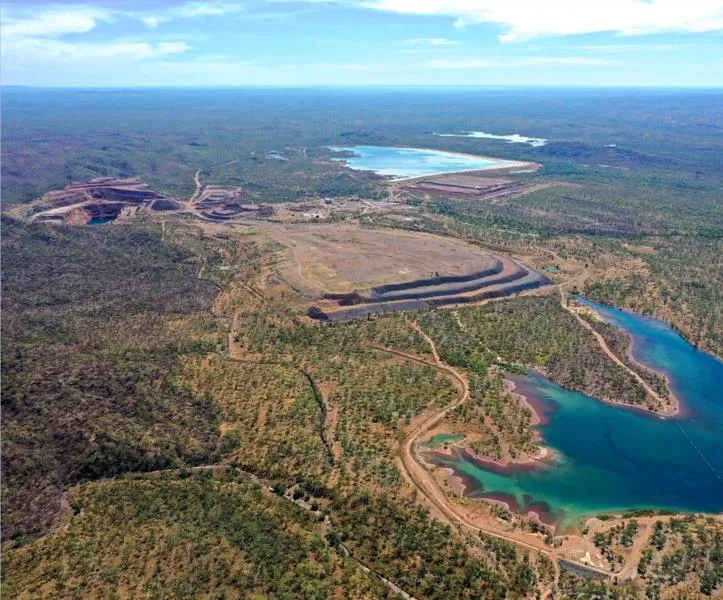
Vista Gold advances Mt Todd (5Moz Au, NPV $2.2B at $3,300 gold) via active permitting, team buildout, and engineering optimisation targeting $200M in potential savings.
- Vista Gold CEO Frederick Earnest outlined a three-pillar strategy: permitting, people, and engineering to advance the Mt Todd Gold project in Australia's Northern Territory toward a definitive investment decision.
- The company is resizing operations to 15,000 tons per day and is progressing multiple permit modifications, with the key federal EPBC authorisation application expected to be submitted in late October or November 2026.
- Vista Gold has made key hires since the start of 2026 and is actively searching for an Australian-based Managing Director to lead in-country project development and capital markets engagement, including a potential ASX secondary listing.
- Engineering optimisation work including metallurgical test work and geotechnical studies on the west pit wall could reduce waste movement by up to 70 million tons, potentially saving close to $200 million in mining costs or unlocking additional ore reserves.
- At a $3,300 gold price the project's NPV5 is $2.2 billion with an IRR approaching 45%; at today's spot price of roughly $4,500 gold, the economics are substantially more compelling, yet the company trades at a significant discount to asset value.
Vista Gold Corp (NYSE:VGZ) is methodically assembling the team, permits, and engineering data required to advance its Mt Todd Gold project in Australia's Northern Territory from a well-defined feasibility study toward a definitive investment decision. In a recent interview, President and CEO Frederick Earnest outlined the company's strategic priorities and the catalysts investors should monitor.
Project Overview and Strategy
Mt Todd is one of the largest undeveloped gold projects in Australia, carrying a stated reserve of 5 million ounces and a total resource of 10 million ounces. The project has undergone a meaningful resizing over the past year, moving from a previously permitted 50,000-ton-per-day operation to a more capital-efficient 15,000-ton-per-day design. That resizing has driven the current permitting work program, as existing approvals - which were substantial - now require modification to reflect the updated project configuration.
The company raised fresh capital in March 2026 and is deploying it across permitting, team building, and engineering optimisation studies, all of which are designed to lay the groundwork for a front-end engineering and design (FEED) program and, ultimately, a definitive investment decision.
Permitting: Progress on Multiple Fronts
Permitting remains the longest lead-time item and the most consequential near-term milestone. Vista Gold already holds the major permits that were previously granted for the larger project configuration. The current effort is one of modification rather than greenfield approval - a meaningful distinction in terms of risk profile.
Active workstreams include modifications to the mine plan and operating permit, an additional Aboriginal Areas Protection Authority (AAPA) certificate application, and preparation for a federal Environmental Protection and Biodiversity Conservation (EPBC) authorisation. A wet-season fauna study required under the EPBC has already been completed, and a dry-season study is scheduled for the end of August. The EPBC application itself is expected to be submitted in late October or November, with an approval timeline of six to nine months thereafter.
Team Building: Hiring for Execution
Vista Gold has been deliberate about the calibre and function of its recent hires. Since the start of 2026, the company has added Approvals Manager Dr. Francis Atta Kuranchie, Executive General Manager of Projects and Technical Services Jeff Dang, Executive General Manager of External Relations and Social Performance Sharon Goddard, and General Counsel and Company Secretary Julie Jones.
The most consequential open position is a Managing Director based in Australia. Earnest made clear that the company will not manage a major construction project from its Denver head office. Candidate interviews are underway, and an announcement is expected within one to two months. The incoming MD will have a significant hand in the next wave of hires: a project director, a construction manager, a finance-side executive, and additional technical personnel.
Earnest framed the significance of that hire explicitly:
"When we get the right MD on board and people realise that we've got a mine builder, someone with a reputation for being able to deliver the project - that's one huge step."
Interview with Frederick H. Earnest, President & CEO of Vista Gold
Engineering Optimisation: Geotechnics and Metallurgy
Two primary engineering workstreams are currently active, both expected to conclude by end of September and feed directly into the FEED program.
The first involves metallurgical test work. The 2025 feasibility study was designed around a 40-micron grind size. Current test work is evaluating whether optimisation at 35 or 50 microns delivers better gold recoveries or more favourable capital and operating cost outcomes. The samples are in the laboratory, initial grind work is complete, and leach and grind-size optimisation is ongoing.
The second - and potentially higher-impact - workstream is a geotechnical program focused on the west wall of the Batman Pit. The feasibility study conservatively laid back the west wall angle from 52 degrees to 42 degrees, adding approximately 70 million tons of waste to the mine plan. Vista Gold believes that figure is overstated and that the wall can be steepened, possibly toward 50 degrees.
Earnest quantified the potential upside:
"We estimate that there's 70 million tons at play here - at $250 a ton for mining costs - we're talking almost $200 million potential savings with a $400,000 study."
Alternatively, a steeper wall could allow the pit to mine additional benches deeper, potentially adding 8 to 15 million tons of ore and a further one million ounces to the reserve.
Reserve and Resource Gap
The current stated reserve is 5 million ounces (where previously it was 7 million ounces) and there is a total resource of 10 million ounces. Earnest addressed that change in the modelling directly, framing it as optionality rather than lost value. Approximately half the reduction in reserve reflects a deliberate increase in cutoff grade from 0.35 g/t to 0.50 g/t designed to improve the average grade of ore processed and increase economic margins per tonne milled. Material in the 0.35–0.50 gram range, roughly one million ounces, is being stockpiled on the waste rock dump in a manner that allows for future processing. The remaining reduction is tied to the conservative pit slope assumption on the west wall which the current geotechnical program is designed to resolve.
Financing Strategy: Debt, Equity, and a Potential ASX Listing
Vista Gold has begun engaging banks through an expression-of-interest process on the debt side. Earnest described the early signals as encouraging, noting in particular that larger banks are not requiring gold hedging as a precondition for financing, a structurally favourable development for shareholders who want leverage to the gold price.
On the equity side, the company is evaluating a secondary listing on the Australian Securities Exchange (ASX), a logical step given the project's location and the depth of Australian capital markets for resource development. The selection of the incoming Managing Director is expected to inform that decision, with a candidate who holds name recognition in Australian capital markets being a stated priority.
Economics at Spot Gold Prices
The 2025 feasibility study was published at a $2,500 gold price assumption. At that level, Mt Todd carried an NPV5 of $1 billion and an IRR of 27.8%. The company has publicly disclosed that at $3,300 gold, those figures improve to an NPV5 of $2.2 billion and an IRR approaching 45%. With gold currently trading above $4,500 per ounce, the project economics are materially stronger, and the cutoff grade sensitivity means that lower-grade material previously excluded from the reserve becomes increasingly economic.
The company's current market capitalisation represents a substantial discount to even the base-case NPV, a gap Earnest believes will close in stages as key catalysts are delivered.
The Investment Thesis for Vista Gold
- Deep discount to asset value: The project's NPV5 was $2.2 billion at $3,300 gold; at $4,500+ gold today, intrinsic value is materially higher, while the market capitalisation remains a fraction of that.
- Existing permits de-risk the path: Major permits already in hand; current work is modification, not greenfield approval - a lower-risk permitting profile than typical development-stage projects.
- High-leverage gold exposure: No hedging requirement signaled by banks; investors retain full upside to gold price appreciation.
- Geotechnical optionality: A relatively modest $400,000 study could unlock ~$200 million in potential waste cost savings or additional reserve ounces - asymmetric return on study spend.
- Reserve-to-resource conversion runway: 10 million ounces of resource against a 5 million ounce reserve, with clear identified pathways to close the gap via slope steepening and cutoff grade sensitivity at higher gold prices.
- Australian capital markets access: A potential ASX listing could broaden the investor base, improve liquidity, and bring in domestically oriented project finance lenders.
- Engineering studies feeding directly into FEED: The current workstreams are specifically designed to streamline and de-risk the front-end engineering process, compressing the timeline to a construction decision.
Macro Thematic Analysis
Gold's ascent above $4,500 per ounce in 2025–2026 reflects a structural shift in the commodity cycle, driven by persistent inflation, central bank reserve diversification away from the US dollar, and geopolitical uncertainty. Against this backdrop, large-scale undeveloped gold projects with defined feasibility studies and existing permit frameworks have become strategically valuable both to sovereign wealth funds and major mining companies seeking reserve replacement. Mt Todd sits squarely in this category: a multi-million-ounce asset in a stable, mining-friendly jurisdiction with infrastructure access and established community consultation processes. As Earnest summarised the opportunity:
"At today's gold price of $4,500, there's tremendous leverage and opportunity with the project, and that's what we're trying to deliver on."
TL;DR
Vista Gold's Mt Todd is a 5-million-ounce reserve gold project in Australia with a published NPV5 of $2.2 billion at $3,300 gold and value could go materially higher at today's $4,500+ spot price. The company is executing a disciplined build strategy anchored by active permitting, targeted engineering optimisation, and the imminent appointment of an in-country Managing Director. A geotechnical study with ~$200 million in potential cost savings and a clear sequence of de-risking catalysts make this a high-leverage exposure to the gold cycle at a significant discount to stated asset value.
FAQs (AI Generated)
Analyst's Notes





Subscribe to Our Channel




.jpg)




Stay Informed