




The Project the Hawks Are Circling: What the Market Is Missing About CK Gold


CK Gold feasibility study shows 632M NPV versus 263M market cap with 80% debt, 20% equity financing and unpriced aggregate and resource upside.
- US Gold Corp's Feasibility Study (FS) returns an after-tax net present value at a 5% discount rate (NPV5%) of $632 million at $3,250 per ounce gold against a $263.6 million market capitalisation, rising to $1.39 billion at spot prices of $4,500 per ounce.
- Executive Chairman Luke Norman attributes the muted market reaction to a macro liquidity rush that has caused larger institutions to pause portfolio rebalancing, not a reassessment of project fundamentals.
- The FS is built around a "gig mining" contract model using Cheyenne's local workforce, removing man-camp and fleet costs from a $394 million initial capital expenditure (capex) that includes contingency in the mid to high $40 million range.
- Approximately 40 million tonnes of granodiorite waste rock sits on the surface outside the FS economics, with a non-binding letter of intent (LOI) with a major railway already in place - none of which is captured in the $632 million NPV5%.
- Indicative term sheets include structures as favourable as 80% debt with 20% equity, and 900,000 gold equivalent ounces within the mineral resource pit but outside the current production schedule represent expansion potential without additional capex.
A $632 Million NPV the Market Has Yet to Price
When US Gold Corp (NASDAQ: USAU) published its Feasibility Study (FS) for the CK Gold Project in March 2026, the headline numbers were hard to dismiss. The FS returned an after-tax net present value at a 5% discount rate (NPV5%) of $632 million at a base-case gold price of $3,250 per ounce, against a market capitalisation of $263.6 million. At spot prices of $4,500 per ounce gold, $5.50 per pound copper, and $70 per ounce silver, that NPV rises to $1.39 billion, with an internal rate of return (IRR) of 42% and a payback period of 1.6 years.
Two weeks after the FS release, Executive Chairman of US Gold Corp Luke Norman addressed one pointed question: Why hasn't the market responded? His answer points toward a set of project dynamics that the published FS numbers alone do not fully capture.
A Timing Problem, Not a Fundamental One
Norman's explanation for the subdued market reaction is structural rather than company-specific. Geopolitical events have triggered what he describes as a "liquidity rush" in the gold trade, causing larger institutions to put portfolio rebalancing on hold. His read is that capital, which might otherwise have rotated into a newly de-risked development asset, is sitting idle, not because the project has been reviewed and discounted, but because the review hasn't happened yet at scale.
That interpretation is plausible, and Norman acknowledges the market simply needs more time to digest a two-week-old document. The gap between a $632 million NPV5% and a $263.6 million market capitalisation may also reflect the reality that project financing has not yet been secured, a variable that will remain the central open question until a construction decision is made in 2026.
Norman addressed the valuation gap directly:
"I certainly don't think that we're reflective of a rather impressive definitive feasibility study - certainly not."
The project's leverage to gold prices is steep. At $4,500 per ounce gold, the after-tax NPV reaches $1,155 million, and the IRR hits 42%. At $5,000 per ounce, those figures extend to $1,363 million and 47.4%.
Building It Differently: The "Gig Mining" Model
Norman offers a ground-level account of how CK Gold is being constructed that has received little attention relative to the headline economics and that carries direct implications for capital expenditure (capex) execution risk. The FS assumes contract mining rather than an owner-operated fleet.
Norman's explanation for why is specific to CK Gold's location:
"There's so much heavy iron in this part of the world, referring to earth-moving machinery. 90% of this operation is just earth moving, we're just moving rock."
Situated 20 miles outside Cheyenne, the project draws from an established local workforce rather than relying on fly-in labour or remote accommodation. Norman contrasts directly with Nevada operations:
"Unlike Elco and Nevada, where the majority of people come in there as a lifestyle choice to work in the mines, we're selecting from people who are going home at night, not living in man camps."
Norman describes the resulting model as "gig mining or gig employment" - subcontracting on demand across every discipline, from earthmoving fleets to diesel mechanics and electrical engineers, without adding headcount to the company's own payroll. This is not a cost-cutting measure applied after the fact - it is the project's structural design. The consequence is that CK Gold sidesteps the complexities that pushed their own capex from $277 million in earlier prefeasibility estimates to over $400 million as line items were refined. The initial capex of $394 million, including contingency in the mid to high $40 million range, reflects a project built around what already exists in the surrounding region rather than what needs to be built from scratch.
There is a further layer that the published capex figure does not fully capture. Under SK-1300 requirements, the FS assumes all brand-new equipment, which absorbed tariff impacts not previously estimated. Since the FS was finalised, the company has identified viable second-hand equipment available on the market, creating the possibility that certain capital line items come in below the FS figure. For a project with a tight 16.5 million share structure, the indicative financing terms that have emerged are notable: term sheets received over the prior 18 months include structures as favourable as 80% debt with 20% equity, with equity offered at premiums to market. The connection to the valuation gap is direct - a controllable capex base built around existing regional infrastructure is what has allowed lenders to engage on those terms, while the public market has yet to reflect them. These are indicative terms, not signed commitments - but the direction of travel suggests lenders are treating the project's execution risk as manageable rather than speculative.
The Unpriced Asset on the Surface
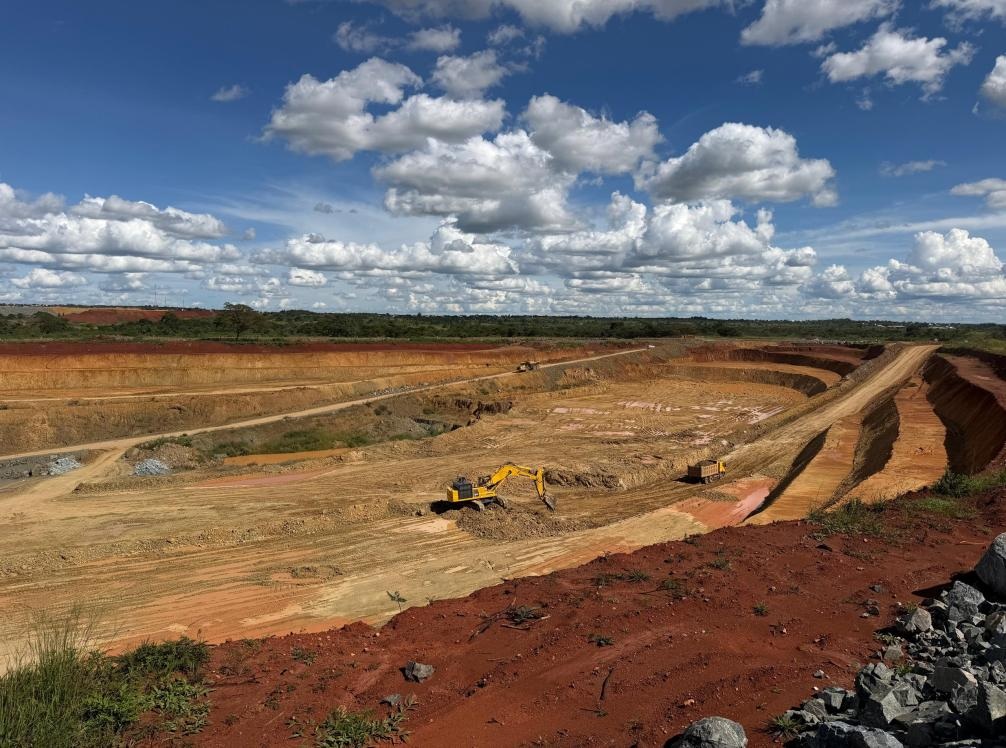
The $632 million base-case NPV5% is calculated on the mine plan alone. It does not include what Norman calls "the big elephant in the room", approximately 40 million tonnes of granodiorite waste rock sitting on the surface at zero additional extraction cost, with a non-binding letter of intent already in place with a major railway. This is a potential revenue stream that the market currently appears to assign little to no value to, despite concrete interest already being on the table.
Norman's estimate of its in-situ value is direct:
"Just under the reserve alone, there's between 800 million and a billion dollars in situ that rock sitting on the surface for free."
In-situ value reflects the theoretical worth of material in place - realisable value will depend on transport economics, contracted off-take volumes, and pricing durability over the mine life. The strategic point stands independent of the precise realisable figure. A market distracted by macro liquidity dynamics appears to be ascribing close to zero value to an asset that lenders, contractors, and a major railway have already expressed concrete interest in, and that the company intends to monetise through partnership rather than direct market competition. That is a gap the FS base case does not attempt to capture.
What Sophisticated Capital Has Already Priced In
While the public market has been slow to engage, the financing environment tells a different story. If the FS defines the economics, the indicative term sheets test whether those economics are credible to external capital, and the answer, so far, appears to be yes. Over the 18 months before the FS release, the company received indicative term sheets from offtakers, streamers, and project finance parties, and the terms reflect a project that lenders have assessed as genuinely executable rather than aspirationally priced.
That credibility has a specific basis. Full permitting on Wyoming state land removes the regulatory timing risk that lenders would otherwise price into the cost of capital. The $394 million initial capex sits in what Norman describes as "a sweet spot", well below the billion-dollar threshold that can limit financing flexibility, and the gig mining model underpinning that figure is precisely what lenders are validating when they engage on 80% debt terms. Power is secured at 7.6 cents per kilowatt hour, while equipment supply hubs in Gillette, Denver, and Salt Lake City are all within a six-hour drive, reducing the need for extensive warehousing and critical spares. These are the inputs that shape lender credit models. In Norman's view, the FS has not closed the financing conversation; it has widened it, expanding the pool of interested parties rather than narrowing it.
The Hawks & What Comes Next
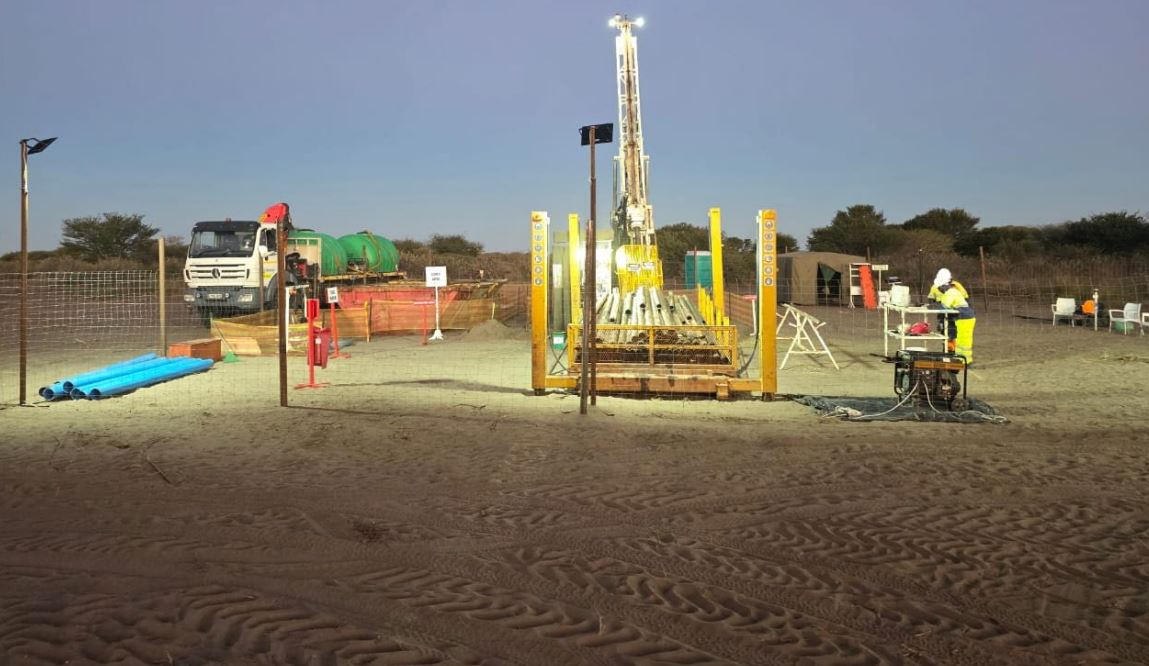
The FS may be the floor rather than the ceiling. The mineral resource pit holds approximately 900,000 gold equivalent ounces, not included in the current production schedule, accessible through a future drill programme without changing the existing capex base. Resource expansion, metallurgical optimisation, and aggregate monetisation all represent value levers that sit outside the $632 million base-case NPV5%, and Norman is clear that pursuing them is the active work of 2026 alongside project financing. Each of those levers appears to be already in motion, with identified partners, indicative term sheets, and LOI in place, though none has yet converted to contracted revenue.
Those levers, however, are contingent on execution. The $394 million capex remains indicative until financing is secured. Contract mining shifts cost risk to counterparties but does not remove it. Gold recovery improvements from 71.5% toward 95% are supported by test work, but not yet demonstrated at the production scale. The $3,250 per ounce base-case gold price, while below current spot, remains a key sensitivity, with the NPV moving materially in either direction. The strategic consequence of that gap between market price and valuation scenarios is already visible. Even so, a shovel-ready, fully permitted project with a $1.39 billion spot-price NPV against a $263.6 million market capitalisation is likely to attract interest beyond public markets.
Norman is direct about the mergers and acquisitions (M&A) dynamic:
"When you do go to project financing at this juncture, when you've got a positive definitive feasibility study out, clearly the hawks start circling, they're looking. There are companies interested in M&A activity or pure takeouts on the project."
Managing that pressure while simultaneously advancing financing and unlocking value levers that the market has not yet priced is the defining challenge of what Norman frames as US Gold Corp's year of execution.
FAQs (AI-Generated)
Geopolitical events triggered a liquidity rush in gold markets, causing larger institutions to pause portfolio rebalancing. Norman's read is that the market hasn't yet engaged with a two-week-old document, not that it has reviewed and discounted it.
The FS uses on-demand subcontractors drawn from Cheyenne's local industrial base rather than an owner-operated fleet or remote man-camps. Every role, from earthmoving to diesel mechanics, is contracted rather than employed, removing standing labour and fleet procurement costs from the capex structure.
The FS was prepared on a standalone mine plan basis. The approximately 40 million tons of waste rock available as aggregate and rail ballast, with in-situ value estimated at $800 million to $1 billion, represents incremental upside that management is pursuing through partnership rather than direct market competition.
Over 18 months before the FS release, the company received indicative term sheets including structures as favourable as 80% debt with 20% equity at premiums to market. The $394 million initial capex sits in what Norman calls "a sweet spot", and the published FS is expected to draw additional parties to the table.
Approximately 900,000 gold equivalent ounces not included in the FS production schedule but within the mineral resource pit are accessible through a future drill programme without changing the capex base. Gold recovery could also improve from 71.5% toward 95% through metallurgical test work currently underway.
Analyst's Notes





Subscribe to Our Channel





Stay Informed






















