




The Free Metal Thesis & The Economics of Byproduct Monetisation


Silver miners unlock hidden value by monetising byproducts like antimony and copper, boosting margins without added mining costs as markets lag pricing gains.
- Underground silver operators are renegotiating decades-old smelter contracts that previously penalised antimony & excluded copper payments, unlocking immediate revenue gains without additional capital investment.
- Onsite processing facilities allow operators to extract high-value byproducts, such as antimony, before concentrate sales, bypassing smelter deductions & capturing direct market pricing for metals already present in the mined ore.
- The "free metal thesis" frames byproduct optimisation as margin expansion without incremental mining cost: as silver production scales, copper & antimony volumes increase proportionally from the same tonnage.
- Critical minerals financing mechanisms, including US government partnerships, are reducing capital requirements for byproduct processing infrastructure as jurisdictions prioritise domestic supply chain security.
- Equity markets have not yet priced in byproduct value, with investors waiting for execution milestones while awareness of current antimony production volumes & payability improvements remains limited.
Reframing Byproduct Economics
Underground silver mining has long been defined by the economics of the primary metal. But as operators revisit decades-old smelter agreements & critical mineral supply chains face geopolitical disruption, a fundamental question is emerging: how much value is being left on the table in byproduct metals already present in the ore?
The answer, for several North American silver producers, has prompted a strategic rethinking of concentrate sales contracts, processing arrangements, & capital allocation. Where previous management teams may have accepted unfavourable byproduct terms as fixed constraints, today's operators are challenging those assumptions through contract renegotiations, joint ventures (JV), & investments in onsite processing infrastructure.
The shift reflects a recognition that byproduct monetisation is not merely a marginal benefit but a structural opportunity to expand margins without incremental mining cost. When a tonne of ore contains silver, copper, antimony, lead, & gold, maximising revenue from all five metals fundamentally changes project economics.
The Historical Problem: Penalties, Low Payability, & Foregone Revenue
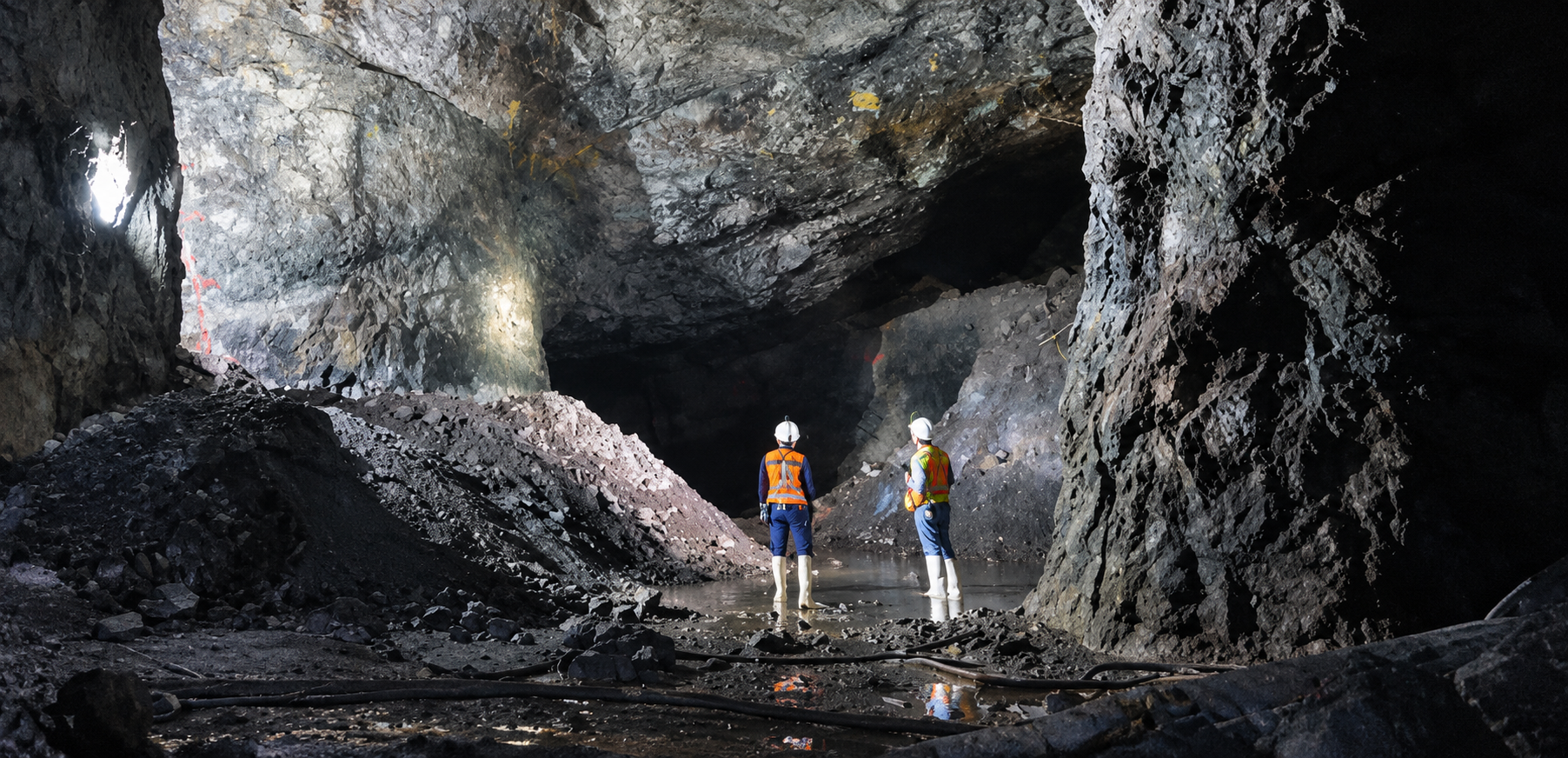
For decades, many underground silver operations operated under smelter contracts that penalised the presence of certain metals or offered minimal payability for byproducts. The arrangements reflected historical metallurgical constraints, commodity price environments, & the limited negotiating leverage of smaller producers selling into concentrated smelter markets. Americas Gold & Silver (TSX: USA | NYSE American: USAS), which operates the Galena Complex in Idaho, exemplifies this pattern.
The economic consequence was straightforward: operators mined ore containing multiple metals but captured revenue from only a fraction of the contained value. In some cases, metals like antimony were treated as deleterious elements, triggering penalties that reduced overall concentrate payments. In others, copper & other byproducts were simply not paid for at all.
Oliver Turner, Executive Vice President of Corporate Development at Americas Gold & Silver, described the historical arrangement:
"Previously, under the prior agreement with Teck, this company was being penalised for antimony, not paid for copper and other metals."
The situation persisted for years, not because operators were unaware of the foregone revenue, but because renegotiating smelter contracts requires leverage. That leverage typically comes from three sources: improved commodity prices that make byproducts more economically significant, alternative processing options that reduce dependence on a single smelter, or changes in ownership that bring fresh commercial relationships & technical capabilities.
Contract Renegotiation as a Value Unlock
The first step toward improved byproduct economics often involves renegotiating existing concentrate sales agreements. At Galena, Turner noted that the company successfully modified its contract midway through the prior year:
"We changed that contract midway through last year, and as of Jan 1, 2026, we are now receiving payments for those metals.”
The change eliminated penalties for antimony & established payment terms for copper & other metals previously excluded from the contract. While initial payability for antimony remained low, the shift from penalty to payment represented a fundamental improvement in project economics. For operators, the strategic implication is clear: legacy contracts negotiated under different market conditions or by previous management teams may contain terms that no longer reflect current metallurgical capabilities, commodity prices, or supply-demand dynamics. Where renegotiation is possible, the revenue impact can be immediate & sustained.
The challenge is that not all operators possess the leverage to force renegotiation, but for operators with improved operational performance, diversified concentrate sources, or strategic partnerships, contract renegotiation can unlock value without additional capital investment.
Onsite Processing: Capturing Value Before Concentrate Sales
Where contract renegotiation improves terms but does not fully capture byproduct value, onsite processing offers an alternative. By extracting high-value metals before shipping concentrate to a smelter, operators can sell those metals directly into end markets, bypassing smelter deductions & improving overall payability.
Turner described the JV with US Antimony to build an antimony leaching facility at the Galena Complex.
"We partnered with a group that has obviously been in the space for a very long period of time. We are going to be building a new antimony leaching facility on our property under our permits.”
The facility design is relatively straightforward compared to conventional processing plants. The company visited an operating antimony plant in Bolivia to review the design & confirm technical feasibility. Construction is expected to take approximately 18 months from announcement, with capital costs estimated at around $50 million for the joint venture. The company holds a 51% interest, placing its share at approximately half that amount.
Once operational, the facility will allow the company to maximise antimony payability while maintaining existing arrangements for silver & copper. Turner described the target ore:
"The silver, copper, and antimony ore, which is the tetrahedrite. That's the high-grade 700-gram-plus material; that's the prize at Galena. That ore will go through our facility and be turned into a concentrate. That concentrate then goes through the antimony facility. We leach out the antimony."
The extracted antimony flake will be shipped to US Antimony's other facility for further processing into trioxide, trisulfide, antimonate, or ingots, depending on customer requirements. The company is limiting its involvement to flake production rather than entering the downstream antimony products business, focusing on maximising payability at that stage of the value chain. The remaining silver-copper concentrate will continue to be shipped to the existing smelter under the renegotiated contract terms.
The Free Metal Concept: Revenue Without Incremental Mining Cost
The economic logic underpinning byproduct monetisation is straightforward but powerful: if a tonne of ore is already being mined for its silver content, & that same ton contains copper, antimony, lead, & gold, then maximising revenue from all five metals increases margin without increasing mining cost.
Turner articulated this principle directly:
"The best way to look at this is we're mining 1 tonne of rock for the high-grade silver. Inside, you have three metals. Before, we were not getting the correct payables for those two metals. Now, we're maximising revenues for something we're already putting the cost into mining. So, you could say that this almost, quote unquote, comes for free for investors because we're now maximising the revenue potential of what we already have."
The concept has particular relevance for operations increasing throughput. As production ramps up, byproduct volumes scale proportionally. Turner explained the multiplier effect:
"Remember, as we ramp up production at Galena, increasing silver ounces, we get more copper with that silver because it's in the same tonne of rock, and we get more antimony with that silver, because it's in the same tonne of rock."
At Galena, where the company is targeting 5 million ounces of annual silver production, the associated copper & antimony volumes become economically significant. The implication is that byproduct optimisation has a multiplier effect on margin expansion. Operational improvements that increase throughput also increase byproduct revenue, creating a compounding economic benefit.
Critical Minerals Policy & Supply Chain Disruption
Byproduct monetisation has gained additional urgency due to critical minerals policy & geopolitical supply chain disruptions. Antimony, in particular, has experienced significant price volatility & supply concerns as governments reassess domestic production capacity & supply chain dependencies.
Turner noted recent price movements:
"We saw that huge spike last year. So, roll back down again. We've actually seen it pop back up again here over the last several weeks with all the global tensions that we're experiencing."
For operators with antimony production, the volatility creates both opportunity & risk. The opportunity lies in capturing higher prices during supply disruptions. The risk is that smelter contracts negotiated during periods of low prices may not adequately reflect current market dynamics. The strategic response has been to build processing capacity that allows direct sales into antimony markets rather than relying solely on smelter payability.
Turner noted that Galena is already producing antimony at scale:
"If you want exposure to antimony in your portfolio, Galena is the largest producing antimony mine today. This isn't the future products. This isn't a future project. This is something that's coming out of the ground today."
The company is evaluating potential financing partnerships with the US government & other entities to support the antimony facility. While the project could be funded from operating cash flow, strategic partnerships may enhance shareholder value. Critical minerals financing mechanisms, including government-backed loans, are becoming more common as jurisdictions seek to secure domestic supply chains, offering operators a pathway to reduce project risk & improve economics on byproduct exposure to critical minerals.
Valuation Implications: Market Recognition of Byproduct Value
Despite the economic significance of byproduct monetisation, equity markets have not fully recognised the value. The antimony component of the business remains undervalued in the share price for two primary reasons. First, investors aware of the opportunity are waiting to see execution progress before attributing value to the antimony revenue stream. Second, awareness of the antimony exposure remains limited, particularly among US investors who may not fully appreciate the scale of current production or the revenue implications of the planned processing facility.
The valuation gap is expected to narrow as execution progresses & awareness increases. As the antimony facility advances through construction & commissioning, & as investors better understand the production profile & payability improvements, equity markets are likely to begin reflecting the byproduct value more accurately in the share price.
Outlook: Byproduct Optimisation as Competitive Differentiation
As silver producers face margin pressure from inflation, labour costs, & energy prices, byproduct monetisation is emerging as a competitive differentiator. Operators that successfully renegotiate smelter contracts, build onsite processing facilities, & capture value from metals previously penalised or undervalued will have structurally lower costs & higher margins than peers.
The free metal thesis is compelling precisely because it does not require higher commodity prices, discoveries, or transformational capital projects. It requires commercial discipline, technical execution, & a willingness to challenge legacy arrangements that no longer serve shareholder interests.
For the broader mining sector, the implication is that byproduct optimisation deserves strategic attention comparable to mine planning, exploration, & cost reduction. Where byproduct metals represent a material portion of total revenue, optimising those revenue streams can have a material impact on project economics & equity valuations. As critical minerals policies evolve & supply chains face continued disruption, operators with byproduct exposure to metals like antimony, copper, & cobalt may find themselves in a unique position: mining for silver, but capturing value from an increasingly diverse basket of metals that the market is only beginning to price in.
FAQs (AI-Generated)
The free metal thesis refers to the idea that byproduct metals, such as copper and antimony, can generate additional revenue without increasing mining costs, as they are already present in the same ore being mined for the primary metal.
Historically, smelter contracts often penalised or underpaid for byproducts, limiting revenue. Renegotiated agreements now allow miners to receive payments for metals like copper and antimony, improving overall project economics.
Onsite processing allows miners to extract and sell byproducts before sending concentrate to smelters, avoiding deductions and capturing higher market-based pricing for those metals.
Since mining costs are already incurred for the primary metal, additional revenue from byproducts increases revenue per tonne, directly expanding margins without additional mining costs.
Investors are waiting for execution milestones, such as processing facility completion and consistent byproduct revenue, while awareness of current production and payability improvements remains limited.
Analyst's Notes





Subscribe to Our Channel




Stay Informed






















