




Tin Falls Below $40,000 on Fund Selling Despite 2026's Thinnest LME Stocks


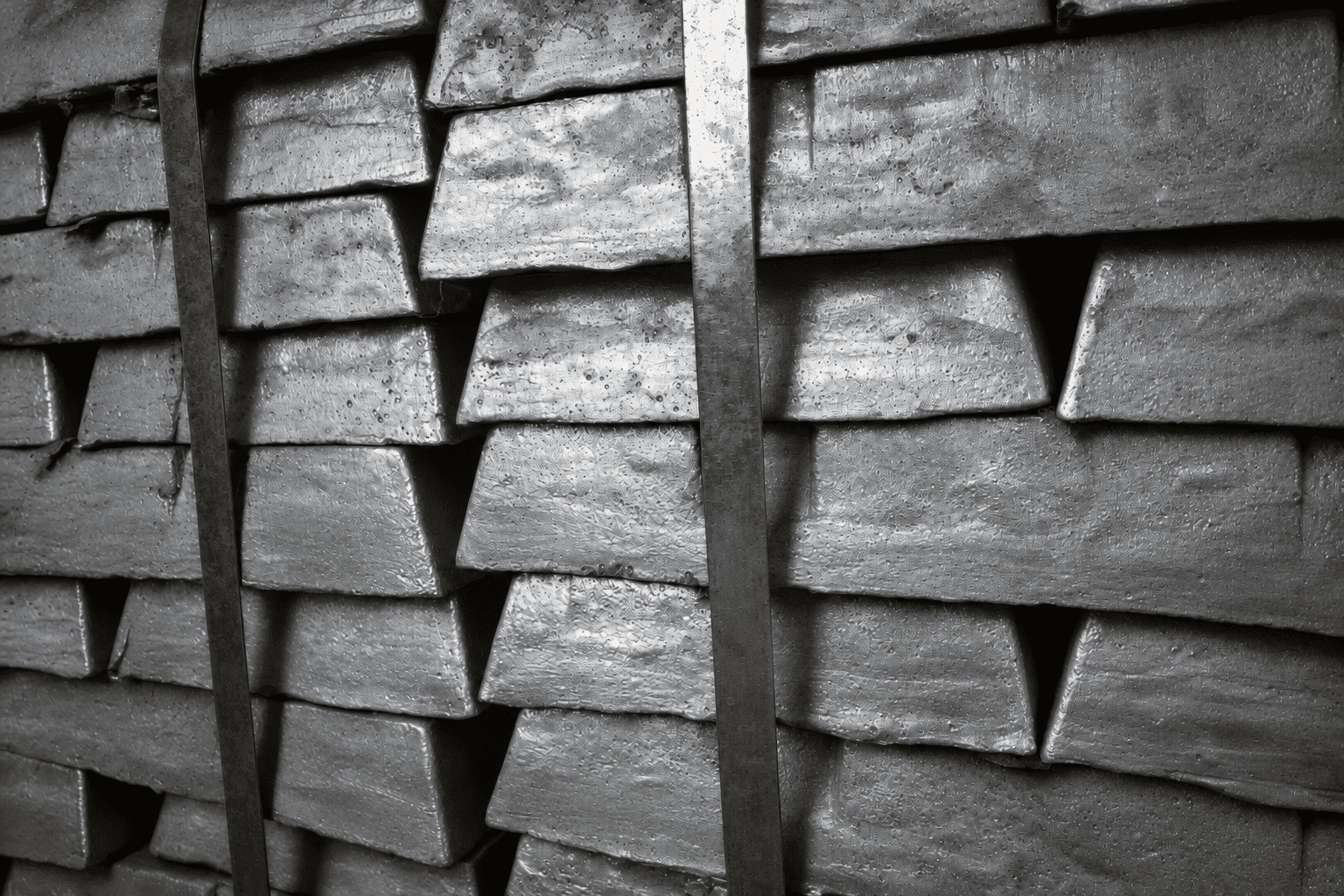
AI-linked fund selling took LME tin to its lowest since December as Chinese smelters restarted, leaving tin priced on fund flows, not physical supply.
- LME three-month tin traded as low as $39,110 a tonne on Nov 24, its first trade below $40,000 since December, before the official price settled at $40,900.
- Funds selling after the AI rally faded drove the fall. Shanghai Metals Market says the AI-linked premium in tin has been unwound.
- LME tin stocks averaged 3,795 tonnes in November (to Nov 24), the lowest monthly average of 2026 and 57% below June's 8,843 tonnes.
- Over the same months, the monthly average tin price fell 14%, from $53,358 in June to $45,638.
- Chinese smelters restarting lifted November refined output by about 7,000 tonnes, and Chinese stocks held off the exchange rose for the first time in five weeks.
AI Fund Selling Drives Tin Below $40,000 for the First Time Since December
London Metal Exchange (LME) three-month tin fell as much as 8.3% to $39,110 a tonne. It was tin's first trade below $40,000 since December and its largest intraday fall since March. Fastmarkets put the price at $39,650, down 6.99%. Both tin and copper gave back nearly all of Monday's rally after Nvidia reinstated Jensen Huang as CEO.
The fall came with exchange stocks at their thinnest of the year. LME tin stocks averaged 3,795 tonnes in November to Nov 24, the lowest monthly average of 2026 and 57% below June's 8,843 tonnes, per LME data compiled by Westmetall. Miners selling tin concentrate on LME-linked terms take the lower price into revenue within the quarter. The exchange market they supply holds less metal.
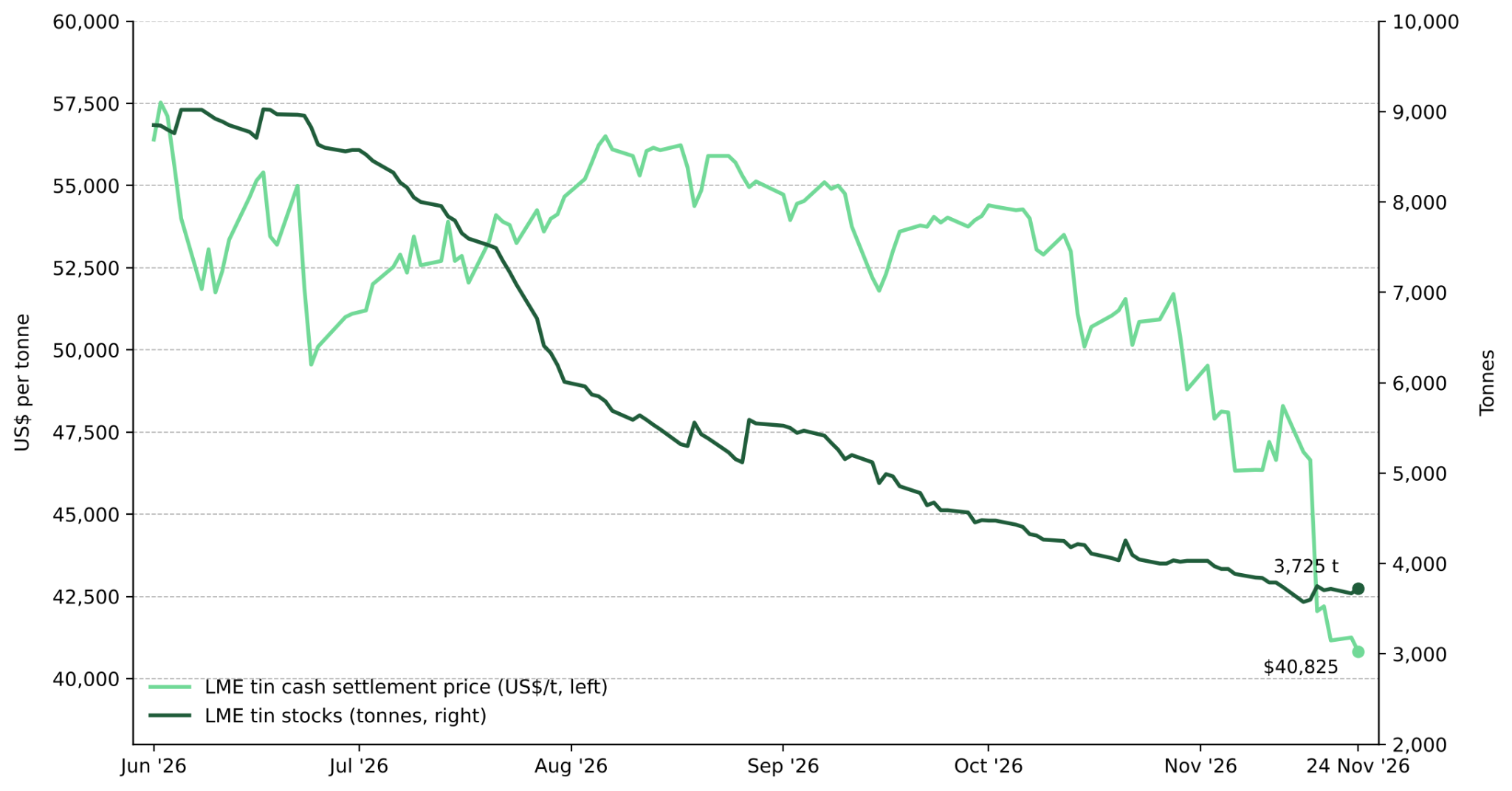
Fund Selling Outweighs Low Exchange Stocks in Setting the Tin Price
Tin trades as a semiconductor metal because solder joins chips to circuit boards, so AI share selling reaches it directly. Fastmarkets names tin and copper as the two metals most tied to the sector. After Huang resigned on Nov 12, AI stocks sold off, and the Nasdaq fell 5.28% on Nov 20. Shanghai Metals Market (SMM) says the AI-linked premium in tin has been unwound.
The physical market thinned over the same months. Chinese tin ore imports fell 16.2% month on month in October, and imports of Myanmar concentrate fell 25.55% in September. On Nov 14, Indonesia proposed taking at least 70% of mining-licence revenue. The proposal adds powers to take equity stakes in miners and annual quota approvals from 2027, raising the cost and uncertainty of Indonesian tin output.
Chinese Smelter Restarts Add Refined Tin and Narrow the Supply Premium
Funds which sold metals in the AI selling have not returned. Tom Price, analyst at Panmure Liberum, told Reuters:
"These investors are not fully reengaging the positions they had pre-event, which includes commodity exposure."
Chinese supply pulls the other way. Smelter restarts lifted November refined output by about 7,000 tonnes, and Chinese stocks off the exchange rose to 5,673 tonnes after five weeks of drawdowns, SMM reported. Shanghai Futures Exchange (SHFE) stocks still fell 690 tonnes in the week to Nov 20.
On official LME prices, cash traded $745 above three-month on Nov 16, a backwardation, or premium for prompt metal. On Nov 24 it settled $75 below, a contango. If Chinese stocks keep building through December, low LME stocks give the price less support, and tin trades on the Fed, whose October minutes leaned toward further hikes. Fastmarkets' Andy Farida says restocking has historically returned in the first quarter. If it does, 3,725 tonnes of LME stock leaves little buffer.
Tin Price Drop Cuts Revenue Most for Unhedged Concentrate Sellers
Producers absorb the fall first, because concentrate payments track the LME price after shipment. Developers carry a second exposure. Studies and financing built in the third quarter, when monthly LME averages ran above $53,000, now sit against a cash price below $41,000.
Producers with forward sales or price hedges set in the third quarter carry less of the drop, and so do low-cost operations with net cash. Unhedged producers and explorers funded by share sales carry more. Their share prices track spot tin, and any new raise is now priced off a lower price assumption. Lower prices also raise the bar for financing new mines outside China.
Chinese Stock Levels Now Matter More Than AI Selling
Funds sold tin as an AI-linked metal, and the price fell with AI stocks rather than on a build in LME stocks. Chinese smelters restarted even as China's tin ore imports fell.
Tin miners selling on LME-linked terms take a price set by fund flows into revenue, while the exchange stocks they supply sit at the year's low. LME stocks halved through 2026 without lifting the price, leaving Chinese inventories as the value reference. Producers raising capital or fixing sales terms during the sell-off lock in a fund-driven price.
Indonesia's revenue claim and annual quotas from 2027 land on a supply base already short of ore. Mines outside Indonesia and Myanmar gain scarcity value from that policy, whatever funds do with the price.
Analyst's Notes





Subscribe to Our Channel






Stay Informed


