Ur-Energy Starts Second Wyoming Mine, Targets 2 Million Pounds of Annual Uranium Output



Ur-Energy commences Shirley Basin operations, advancing toward 2M lb/yr production at $45-50/lb costs vs ~$90 term prices, with 4.2M lb licensed capacity and Lost Soldier optionality.
- Ur-Energy commenced operations at Shirley Basin, its second uranium production facility in Wyoming, marking a major milestone in the company's growth strategy after two years of development from initial approvals to commissioning.
- The company is licensed for 4.2 million pounds of annual uranium production capacity (2.2 million at Lost Creek, 2 million at Shirley Basin), with current constructed capacity of 2.2 million pounds and near-term production targets of 2 million pounds annually.
- Ur-Energy operates a hub-and-spoke model, with Shirley Basin serving as a satellite operation shipping uranium-bearing resin to Lost Creek for processing, enabling capital-efficient expansion and operational flexibility.
- Production economics are highly favourable with operating costs of $45-50 per pound against term contract prices of approximately $90 per pound, delivering substantial margins as production scales up.
- The company is actively evaluating Lost Soldier (technical report due end of 2026) and other expansion opportunities to significantly exceed its 2 million pound production target and become the largest uranium producer in the United States.
Ur-Energy has achieved a significant operational milestone with the commencement of uranium recovery operations at its Shirley Basin facility in Wyoming. This development represents the company's second producing asset and positions Ur-Energy as a key player in rebuilding America's domestic uranium production capacity. With the United States currently producing only 2-3 million pounds of uranium annually against domestic demand of 50 million pounds, and bipartisan political support for nuclear energy at historic highs, Ur-Energy's operational achievements and growth trajectory carry substantial strategic importance for investors evaluating the uranium sector.
Operational Achievement: Shirley Basin Comes Online
Matthew Gili, who joined Ur-Energy as President in June 2025 and was appointed CEO in December, announced that the company has successfully commenced capturing uranium on resin at the Shirley Basin complex. The facility represents the first new mine built by the company in several decades and reached this milestone approximately two years after initiating the development process. When Gili joined the company, site clearing had just begun; since then, the operation has installed wells, constructed header houses, and built processing infrastructure.
Shirley Basin is licensed for 2 million pounds per year of production capacity and operates as a satellite facility within Ur-Energy's hub-and-spoke model. Uranium-bearing resin captured at Shirley Basin is transported via specially designed trailers - approximately one truck per day - to the Lost Creek facility for processing into yellowcake drums for customer shipment. This integrated approach enables capital-efficient expansion by leveraging existing processing infrastructure at Lost Creek.
In-Situ Recovery Expertise: The Technical Foundation
Ur-Energy specialises in in-situ recovery (ISR) mining, a method that extracts uranium without conventional open-pit or underground mining. The company's technical advantage lies in its high-quality assets that allow uranium to dissolve readily into solution using simple lixiviants: oxygen and carbon dioxide, with occasional additions of bicarbonate.
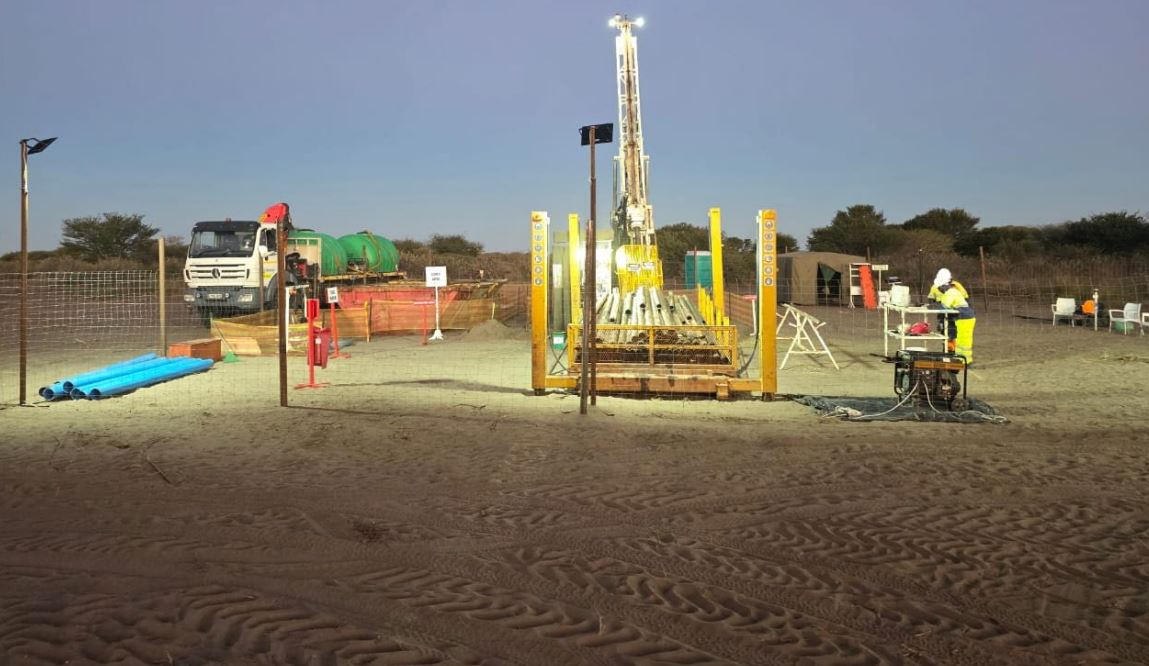
The ISR process involves drilling injection and production wells - typically two injection wells for every production well on 100-foot spacings - and circulating oxygenated solution through the uranium-bearing aquifer. The company currently operates 16 drill rigs at Lost Creek and six at Shirley Basin. Production performance depends on two critical variables: grade (uranium concentration in the extracted solution) and flow rate. At Shirley Basin, flow rates are currently several hundred gallons per minute during the conditioning phase, with a target of 6,000 gallons per minute at full operation.
The conditioning process involves preparing the aquifer through approximately five pore volumes of circulation to establish the chemical conditions necessary for efficient uranium dissolution. Production follows a predictable curve similar to heap leach gold mining, with a steep initial ramp-up followed by a gradual decline over 40-50 pore volumes per wellfield area. The company plans conservative 80% recovery rates from its resources and adds one header house per month at Shirley Basin, with each header house containing 40 injectors and 20 producers.
Production Capacity and Licensing Framework
Ur-Energy's current licensing structure provides significant operational flexibility. Lost Creek is licensed to process 2.2 million pounds annually, while Shirley Basin holds licenses for 2 million pounds of production. However, since Shirley Basin material will be processed at Lost Creek, the company's practical constructed capacity is 2.2 million pounds annually based on existing infrastructure.
Importantly, the company has secured permits to expand capacity at Shirley Basin by building out the precipitator system, which would enable processing at the facility and bring total company capacity to 4.2 million pounds annually. This permitted but not-yet-constructed capacity represents a valuable option for future expansion dependent on market conditions and the economics of additional projects like Lost Soldier.
Interview with Matthew D. Gili, President & CEO of Ur-Energy
Economics: Margin Expansion Through Scale
The financial proposition for Ur-Energy centers on favourable production economics and margin expansion through scale. The company projects production costs of $45-50 per pound against current term contract prices of approximately $90 per pound. Term pricing - the baseline for utility contract negotiations - has increased steadily over the past two years, reflecting tightening supply-demand fundamentals in the uranium market.
With near-term production targets of 2 million pounds annually and licensed capacity of 4.2 million pounds, Ur-Energy has a clear pathway to significant margin expansion.
The company's sustaining capital requirements are modest at approximately $2 million annually once plants are constructed. Notably, Ur-Energy treats well drilling and wellfield development as opex rather than capitalising these costs. This accounting approach means that once the current Shirley Basin construction is completed through summer 2026 - including wastewater treatment facilities - the company's major capital commitments are largely behind it, absent a decision to expand Lost Soldier or add processing capacity at Shirley Basin.
Strategic Growth: Lost Soldier and Beyond
Ur-Energy's growth strategy extends beyond its current producing assets. The company is completing a technical report on its Lost Soldier project, expected by the end of 2026, which will provide detailed economics including net present value and internal rate of return calculations. This analysis will inform investment decisions about constructing Lost Soldier as a third producing operation.
The Lost Soldier evaluation will also address strategic questions about optimal development approaches: whether to add processing capacity at Shirley Basin to handle Lost Soldier production, or to use Lost Soldier to feed into Lost Creek and extend facility life at current production rates. The company has owned Lost Soldier since 2006 and is familiar with the resource, but has not previously published a current technical report with formal resource estimates.
Gili emphasised the company's ambitions extend well beyond current targets:
"We are not content to be a two million pound producer. Two million pounds is where our near-term production targets are. But we are absolutely dedicated to expanding that and building scale and building Ur-Energy."
Market Context: U.S. Uranium Supply Security
Ur-Energy's operational progress occurs against a backdrop of unprecedented support for nuclear energy in the United States and growing concern about domestic uranium supply security. Current U.S. production of 2-3 million pounds annually represents only 4-6% of the country's 50 million pound annual requirement. The gap between domestic production and consumption, combined with bipartisan political support for nuclear power and energy security concerns, creates an amenable policy environment for U.S. uranium producers.
"The mood has never been stronger for uranium in the United States. The appetite... for nuclear has never been stronger than it currently is in the United States. And we are absolutely part of that solution."
Spot uranium prices have ramped steadily over recent years, with term contract prices - more relevant for producer economics - now trading around $90 per pound, up significantly from historical levels.
Competitive Position and Industry Consolidation
Ur-Energy positions itself as "the fastest growing uranium producer in the United States" with stated ambitions to become the largest. The company emphasises that it is actively building and operating mines today, distinguishing itself from competitors that are contemplating, analysing, or discussing projects without operational assets.
The company maintains an open posture toward strategic opportunities including joint ventures, acquisitions, or other combinations that could accelerate growth. However, management articulated a conservative, disciplined approach focused on projects capable of near-term production rather than accumulating large resource bases of economically marginal projects. The focus remains on growing production capacity through projects that can deliver pounds in the current market environment rather than speculative future scenarios.
Regulatory and Technical Barriers to Entry
Gili identified two critical success factors for uranium producers: asset quality and regulatory expertise. Ur-Energy's assets at both Lost Creek and Shirley Basin benefit from favourable geology that enables efficient uranium dissolution with simple, benign lixiviants. Historical production from Shirley Basin during the open-pit era demonstrates the proven nature of the mineralisation.
Equally important is navigating the complex permitting requirements for nuclear operations in the United States. As Gili explained:
"Our secret sauce is that we understand intricately those processes. We understand the requirements to do this. We live it every day and we're able to maximise our efficiency in getting the permits and approvals necessary to be able to implement our ISR strategy."
This regulatory expertise represents a significant competitive advantage and barrier to entry for new competitors seeking to develop uranium projects.
The Investment Thesis for Ur-Energy
- Operational execution demonstrated with Shirley Basin commissioning on schedule after two-year development timeline, validating management's technical and project delivery capabilities
- Favorable production economics delivering substantial margins with $45-50/lb production costs versus ~$90/lb term contract prices in a structurally improving price environment
- Near-term production visibility with 2 million pounds annual target and clear pathway to licensed capacity of 4.2 million pounds through existing permits and infrastructure options
- Capital-efficient hub-and-spoke model enabling incremental production growth without proportional processing plant capital requirements
- Strategic optionality through Lost Soldier technical report (end-2026) and potential expansion paths, with management allocating 50% of time to growth opportunities beyond current assets
- Modest sustaining capital requirements (~$2 million annually) once construction complete, with well drilling expensed as development costs rather than capitalised
- Regulatory moat built on deep permitting expertise and established relationships in Wyoming's uranium mining framework, creating barriers to new competitive entry
- Scale trajectory toward becoming largest U.S. uranium producer with management team explicitly not content with 2 million pound production ceiling
- Strategic relevance as one of few operating U.S. uranium producers (countable on one hand) at time of bipartisan policy support for domestic supply security
- Portfolio approach to risk management across multiple deposits (Lost Creek, Shirley Basin, Lost Soldier) within proven Wyoming uranium district
Macro Thematic Analysis
The United States confronts a critical uranium supply deficit that Ur-Energy is positioned to address. American nuclear reactors require approximately 50 million pounds of U308 equivalent annually, yet domestic production currently delivers only 2-3 million pounds - a mere 4-6% of consumption. This 94-96% import dependency presents significant energy security vulnerabilities that have catalyzed bipartisan political support for rebuilding domestic uranium production capacity.
The structural supply-demand imbalance has driven spot prices steadily higher over recent years, with term contract prices - the baseline for utility negotiations - now trading around $90 per pound. Ur-Energy's operational ISR mining expertise, permitted capacity expansion pathways, and disciplined growth strategy position the company to capture value as one of the few U.S. producers actively scaling production in response to this widening supply gap and favorable policy environment.
TL;DR: Executive Summary
Ur-Energy has successfully commenced uranium recovery operations at Shirley Basin, its second producing facility in Wyoming, advancing toward near-term production targets of 2 million pounds annually with favorable economics ($45-50/lb costs versus ~$90/lb term prices). The company holds licensed capacity for 4.2 million pounds annually and maintains disciplined expansion optionality through the Lost Soldier technical report (due end-2026) and permitted but unconstructed processing capacity, positioning it to capture value from the structural U.S. uranium supply deficit while generating substantial margins through capital-efficient, hub-and-spoke operations leveraging deep ISR mining and regulatory expertise.
FAQs (AI Generated)
Shirley Basin captures uranium on resin which is transported via one truck daily to Lost Creek for processing into yellowcake drums. This leverages existing Lost Creek processing infrastructure, avoiding duplicative capital investment.
A technical report with detailed economics is expected by end of 2026. Investment decision timing depends on those results and evaluation of optimal development approach (feed Lost Creek versus expand Shirley Basin processing).
The company projects production costs of $45-50 per pound at planned production levels, with modest sustaining capital requirements of approximately $2 million annually once construction is complete.
High-quality ISR deposits where uranium readily dissolves using simple lixiviants (oxygen, carbon dioxide), enabling 80% recovery rates with benign chemistry. Proven geology in historically productive Wyoming uranium district.
Yes, management is evaluating all growth opportunities including joint ventures and strategic combinations, but maintains conservative, disciplined focus on projects capable of near-term production rather than speculative resource accumulation.
Analyst's Notes





Subscribe to Our Channel








Stay Informed