




U.S. Gold Corp Positions for Production as Feasibility Study Nears Completion


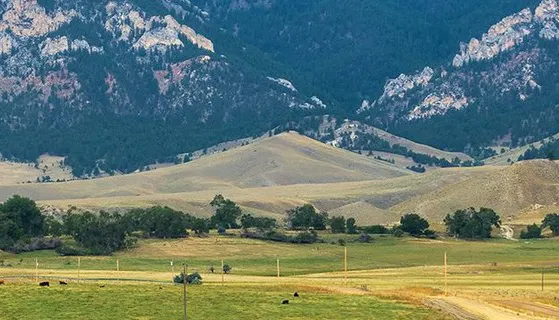
US Gold's CK Gold Project nears feasibility (Jan 2026) targeting 110K oz/yr from 2028. Fully permitted Wyoming asset with superior infrastructure. Nevada upside awaits.
- U.S. Gold Corp's CK Gold Project in Wyoming is fully permitted with feasibility study expected January 2026, incorporating advanced Jameson cell flotation technology for improved recovery and lower costs
- Project timeline shows access road construction beginning December 2025, financing in H1 2026, heavy construction through 2027, and commercial production starting 2028
- Production target of approximately 110,000 gold equivalent ounces annually over initial 10-year mine life, with expansion potential below current resource boundaries
- Strategic location just 90 minutes from Denver with existing infrastructure, competitive labor market, and proximity to mining services eliminates typical greenfield capital costs
- Nevada Keystone project offers significant exploration upside 11 miles from Barrick's Cortez complex, positioned for development once CK generates cash flow
U.S. Gold Corp stands at an inflection point as the company prepares to release its feasibility study for the CK Gold Project in Wyoming while positioning itself as one of the few fully permitted development projects in the United States. President and CEO George Bee outlined the company's near-term catalysts and long-term strategy for building a multi-asset gold and copper producer. With gold, silver, and copper prices at elevated levels, the timing appears favourable for U.S. Gold to transition from developer to operator while maintaining optionality on high-potential exploration assets in Nevada and Idaho.
Feasibility Study: Technology Upgrades Drive Economics
The upcoming feasibility study represents a significant milestone for US Gold Corp, with public release anticipated in January 2026. The study incorporates meaningful technological improvements over previous economic assessments that should enhance both capital efficiency and operating margins. Bee explained the decision to adopt Glencore's Jameson cell flotation technology:
"We looked at the Jameson cells - the Glencore technology - and that has demonstrated itself to give us a little bit more recovery. It's a smaller footprint in the plant, so we save a little bit on the capital costs, and then also the power costs are a little lower."
The company has also optimised its tailings management approach by switching from conventional plate and frame filtration to a continuous belt filter system for thickened tails. While Bee acknowledged that current inflation will impact some capital and operating cost estimates, he emphasised that rising metal prices more than offset these increases. The silver component, though small, provides additional leverage to the current precious metals rally.
Infrastructure Advantage: Location as Strategic Asset
The CK Gold Project benefits from exceptional infrastructure that distinguishes it from typical greenfield developments. Located approximately 90 minutes from Denver International Airport via the interstate highway system, the site sits just two miles from paved roads. This proximity to population centers creates meaningful competitive advantages in labor recruitment and retention.
"With our location, people can go home at night, live in Cheyenne, go home at night. There's professional sports just an hour and a half way down in Denver, so we're very competitive on the labor side."
The location within an established mining hub eliminates the need for extensive warehousing and critical spare parts inventory typically required at remote operations. Original equipment manufacturer suppliers operate in the vicinity, reducing logistical complexity and associated costs. Power infrastructure will be provided by the local utility through a substation connection, with the utility footing the infrastructure bill in exchange for demand charges - a stark contrast to many development projects that must capitalise power line construction.
Development Timeline: Breaking Ground to Production
U.S. Gold Corp has commenced initial development activities, with access road construction beginning in December 2025 using existing treasury funds. The four-mile access road will prepare the site for heavy earth-moving equipment scheduled to arrive following financing completion in the first half of 2026. Bee outlined a methodical construction sequence: topsoil stripping and gross earthworks through 2026 and early 2027, followed by heavy civil works. Major processing equipment deliveries are scheduled for 2027, with installation on completed civil foundations occurring through year-end 2027. Commissioning activities will begin in late 2027, positioning the project for commercial production in 2028.
The development approach reflects careful sequencing to manage capital deployment and construction risk. By maintaining a 10-year initial mine plan, US Gold avoided triggering federal permitting requirements from the Army Corps of Engineers, significantly streamlining the approval process. This strategic decision accelerated permitting while maintaining the optionality to expand operations once initial production establishes cash flow.
Interview with George Bee, CEO, US Gold Corp
Production Profile and Market Positioning
The CK Gold Project will produce approximately 110,000 gold equivalent ounces annually over an initial 10-year mine life. The operation will generate a copper-gold concentrate characterised by its cleanliness and lack of penalty-bearing impurities.
"Our concentrate is very clean, no impurities which really draw penalties from the smelters, and so from that perspective, we've got offtakers who are very keen to grab our production."
While North American smelter options exist at Kennecott, Utah, and Horne in Quebec, the high precious metal content of the concentrate may command premium pricing from Asian smelters. The current deficit in clean concentrate supply strengthens US Gold's negotiating position with potential offtakers, creating multiple avenues for concentrate marketing and potentially streaming or forward sale arrangements to facilitate project financing.
Importantly, mineralization continues below the current resource boundaries, providing clear expansion potential once initial operations validate the mining and processing approach. This optionality allows US Gold to defer capital expenditure on deeper drilling while maintaining the ability to extend mine life and potentially increase annual production rates.
Management Capability and Execution Risk
With over 40 years of industry experience and a track record of mine construction, Bee brings credibility to execution plans. He acknowledged the need to build the permanent management team while leveraging experienced contractors and consultants during the construction phase.
"With the contractors that we have, with the consultants that we're using, we've got a lot of experience and bench strength, and we've selected some really super folks at the moment to carry us into construction.”
The permanent mine management group will transition to the project over the course of 2026 and 2027 as construction advances. The company's measured approach to team building balances the need for long-term personnel with the flexibility that contractors provide during construction. This strategy is common among development-stage companies and reduces fixed overhead during the pre-production period.
Nevada Exploration: The Longer-Term Prize
While CK Gold represents the near-term value driver, US Gold's Keystone project in Nevada offers significant exploration upside in one of the world's premier gold districts. Located just 11 miles from Barrick's Cortez complex, Keystone sits in the same geological environment that hosts world-class Carlin-type gold deposits. Bee's historical perspective adds credibility to the opportunity:
"I started out with American Barrick in those days when Gold Strike was a hill, not a hole, and I look at our Keystone asset just 11 miles away from the Cortez complex... we've got all the same kind of parameters, the same geology."
The company has deliberately deferred aggressive exploration at Keystone, redirecting capital toward CK development when exploration funding dried up in 2020. This pivot reflects pragmatic capital allocation, prioritising near-term value creation through development over speculative exploration spending. Once CK generates cash flow, U.S. Gold intends to self-fund exploration programs targeting large, deep sulfide deposits without diluting shareholders. "That's where the huge prize really is," Bee acknowledged, while emphasising that CK must come online first to enable this strategy.
Capital Strategy: Multiple Pathways to Financing
U.S. Gold Corp approaches project financing with several options under consideration. Traditional project finance, concentrate streaming arrangements, forward sales agreements, and strategic partnerships all remain on the table. Bee indicated that long-term followers of the company's development journey appear ready to commit capital:
"We're here actually talking and we've had a lot of folks following us along the journey. I think they're ready to put money into the project."
The company's position as one of few fully permitted projects in the United States enhances its strategic value, particularly as major and mid-tier producers face inventory challenges stemming from years of underinvestment in exploration. "You can count on one hand the number of fully permitted projects in a safe jurisdiction like the United States," Bee noted, acknowledging takeover risk while emphasising management's focus on executing the build rather than positioning for sale.
The Investment Thesis for US Gold Corp
- Near-term catalyst: Feasibility study release in January 2026 should provide updated economics reflecting technology improvements, current metal prices, and detailed construction plans, potentially driving re-rating
- De-risked development asset: Full permitting, proven geology, and exceptional infrastructure eliminate typical greenfield risks while 10-year mine life meets institutional investment criteria
- Leverage to precious metals: 110,000 gold equivalent ounces annually provides meaningful gold price leverage while copper and silver exposure offers diversification during energy transition
- Self-funding growth pathway: CK cash flow will finance Nevada exploration without shareholder dilution, creating option value on district-scale Carlin-type discovery potential
- Strategic scarcity value: As one of few fully permitted US projects, US Gold represents potential acquisition target for majors and mid-tiers facing reserve replacement challenges
- Experienced management: CEO's 40-year track record building mines provides credibility on execution while conservative development approach reduces construction risk
- Capital efficiency: Strategic technology selections (Jameson cells, continuous belt filtration) improve recoveries and reduce both capital intensity and operating costs relative to conventional flowsheet
- Market timing: Project development aligns with elevated metal prices and growing appetite for North American mining investments amid geopolitical supply concerns
Macro Thematic Analysis
The convergence of elevated precious metals prices, copper supply deficits, and geopolitical pressure to secure domestic mineral production creates a favourable backdrop for US-based development projects. Gold's sustained rally above $4,000 per ounce reflects monetary policy uncertainty and safe-haven demand, while copper's structural deficit driven by electrification and underinvestment in new supply supports long-term price strength. Clean concentrate scarcity further enhances project economics as smelters compete for penalty-free feed.
US Gold's strategic positioning in Wyoming places it squarely within the reshoring narrative, as policymakers increasingly prioritise domestic resource development. The current environment rewards execution-ready projects with permits in hand, as the traditional 10-15 year development timeline from discovery to production creates acute near-term supply constraints. As Bee observed regarding the industry's vulnerability: "The time frame to get a project from explored into production is so long... people need additional resources for inventory."
TL;DR: Executive Summary
US Gold Corp's fully permitted CK Gold Project in Wyoming approaches feasibility study completion (January 2026) with production targeted for 2028, generating approximately 110,000 gold equivalent ounces annually over an initial 10-year mine life. Superior infrastructure 90 minutes from Denver, advanced flotation technology, and clean concentrate characteristics position the project for low-risk development execution. Strategic Nevada exploration assets offer significant upside once CK cash flow enables self-funded drilling programs targeting Carlin-type deposits near Barrick's Cortez complex. As one of few fully permitted US development projects, US Gold provides de-risked exposure to precious metals rally with potential strategic value to acquirers facing reserve replacement challenges.
FAQs (AI Generated)
Jameson cells deliver higher recoveries than conventional flotation while requiring a smaller plant footprint and lower power consumption, reducing both capital and operating costs while improving overall project economics.
The site sits 90 minutes from Denver via interstate highways, enabling daily commuting workforce, eliminating remote camp costs, and providing access to established mining services and OEM suppliers without building dedicated infrastructure.
Multiple pathways exist including traditional project finance, concentrate streaming, forward sales agreements, and strategic partnerships, with existing long-term followers appearing ready to commit capital according to management.
Located 11 miles from Barrick's Cortez complex in the same geological environment as world-class Carlin deposits, Keystone offers district-scale discovery potential that will be explored using CK cash flow without shareholder dilution.
A 10-year plan avoided triggering Army Corps of Engineers federal permitting requirements, accelerating approval timelines while mineralization continues below current resources, enabling future expansion once operations commence.
Analyst's Notes





Subscribe to Our Channel






Stay Informed






















