




US Midterm Result Weighs on Brent as Iran Escalation Risk Could Lift Prices



US crude inventories stood 4% below their five-year average, raising supply risks while continued drilling could offer upside if shortages emerge.
- Democrats won both chambers of Congress on November 3, 2026, while Brent fell 1.44% to $102.11 a barrel on November 4, leaving potential upside if the Iran conflict escalates.
- US forces struck Qeshm Island in the Strait of Hormuz on November 2, 2026, in what a US official described as a limited operation, keeping Gulf oil supply disruptions a potential risk.
- Deutsche Bank projected lower oil prices without further escalation, while Capital Economics placed Brent above $120 a barrel if large-scale strikes resume.
- Gulf oil exports averaged 17.1 million barrels per day in October, down from 18.9 million in September and near 75% of pre-war levels.
- Qatari mediators anticipated responses from the US and Iran within 36 hours, while an agreement meeting Iran's conditions could reduce the likelihood of Brent exceeding $120 a barrel.
US Midterm Result Weighs on Brent Near Four-Week Low
Democrats won control of both chambers of Congress, and President Donald Trump acknowledged that the Iran war contributed to the defeat. Brent futures fell $1.49, or 1.44%, to $102.11 a barrel, while West Texas Intermediate (WTI) declined 0.93% to $95.20, following Brent's previous settlement at its lowest level in nearly four weeks.
Brent has gained more than 70% in 2026 as the nine-month war disrupted Persian Gulf oil flows, yet prices have fallen as traders price in a lower likelihood of further US escalation. With the political cost of higher fuel prices already reflected in the midterm outcome, renewed strikes could restore oil's risk premium.
Gulf Export Shortfall Keeps Oil Prices Exposed to New Strikes
Gulf exports of crude, condensate, and refined products, excluding liquefied petroleum gas, fell from 18.9 million barrels per day in September to 17.1 million in October, about 75% of pre-war levels. Amin Nasser, Chief Executive Officer of Saudi Aramco, said the company is targeting maximum output this quarter after October shipments approached pre-war levels.
US forces struck Qeshm Island in the Strait of Hormuz ahead of the midterms, an operation a US official described as limited rather than renewed major combat. Iran conditioned reopening the strait on lifting oil sanctions and the naval blockade and releasing frozen funds, while Mohsen Rezaei, Secretary of Iran's Supreme National Security Council, said the US response was unconvincing.
US Iran Policy Flexibility Leaves Brent Exposed to Price Spikes
Neil Shearing, Group Chief Economist at Capital Economics, said congressional opposition could constrain Trump's domestic agenda while leaving him greater control over foreign policy. Pavel Molchanov, Analyst at Raymond James, described the midterm vote as a milestone that could influence US strategy toward Iran.
Low US Crude Inventories Could Boost Producer Revenue
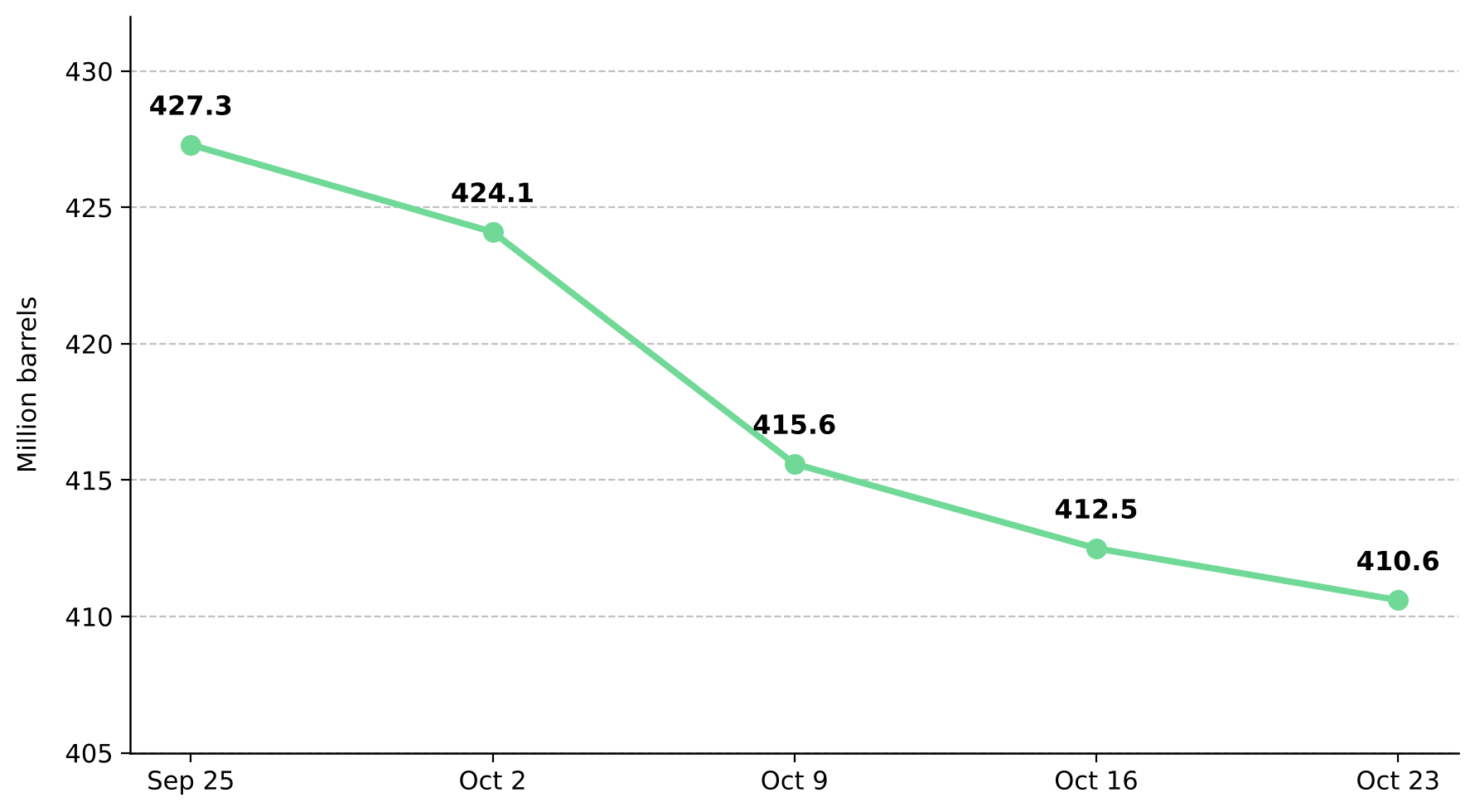
Oil producers that have not locked in selling prices for their 2027 production could earn more if Brent rises, but less if prices fall. US commercial crude inventories fell 16.7 million barrels over five weekly readings to 410.6 million barrels, 4% below the five-year average. Lower inventories could amplify price increases if supply disruptions resume.
Saudi Aramco has increased exports from Ras Tanura on the Persian Gulf coast alongside shipments from Yanbu on the Red Sea, helping maintain oil flows amid regional disruptions.
Without a fixed timetable for further US strikes, producers face a trade-off between protecting revenue from falling prices through hedging and retaining potential gains if Brent rises.
Who Gains if War Uncertainty Delays Drilling
The November 3 midterms removed immediate electoral pressure on Trump's Iran policy, leaving Brent's war premium dependent on decisions about further US military action rather than a fixed political timetable.
For oil producers that have not locked in selling prices for their 2027 production, changes in Brent's war premium directly affect projected revenue. US crude inventories below their five-year average leave less oil available to offset renewed supply disruptions, helping support prices.
Producers that continue drilling despite price uncertainty could have more oil to sell if future shortages push Brent higher, creating potential long-term gains from continued production.
Analyst's Notes





Subscribe to Our Channel



Stay Informed


