




22 TPAO Well Filings Mark Ongoing Gabar Development at Dune Oil’s M47 Boundary


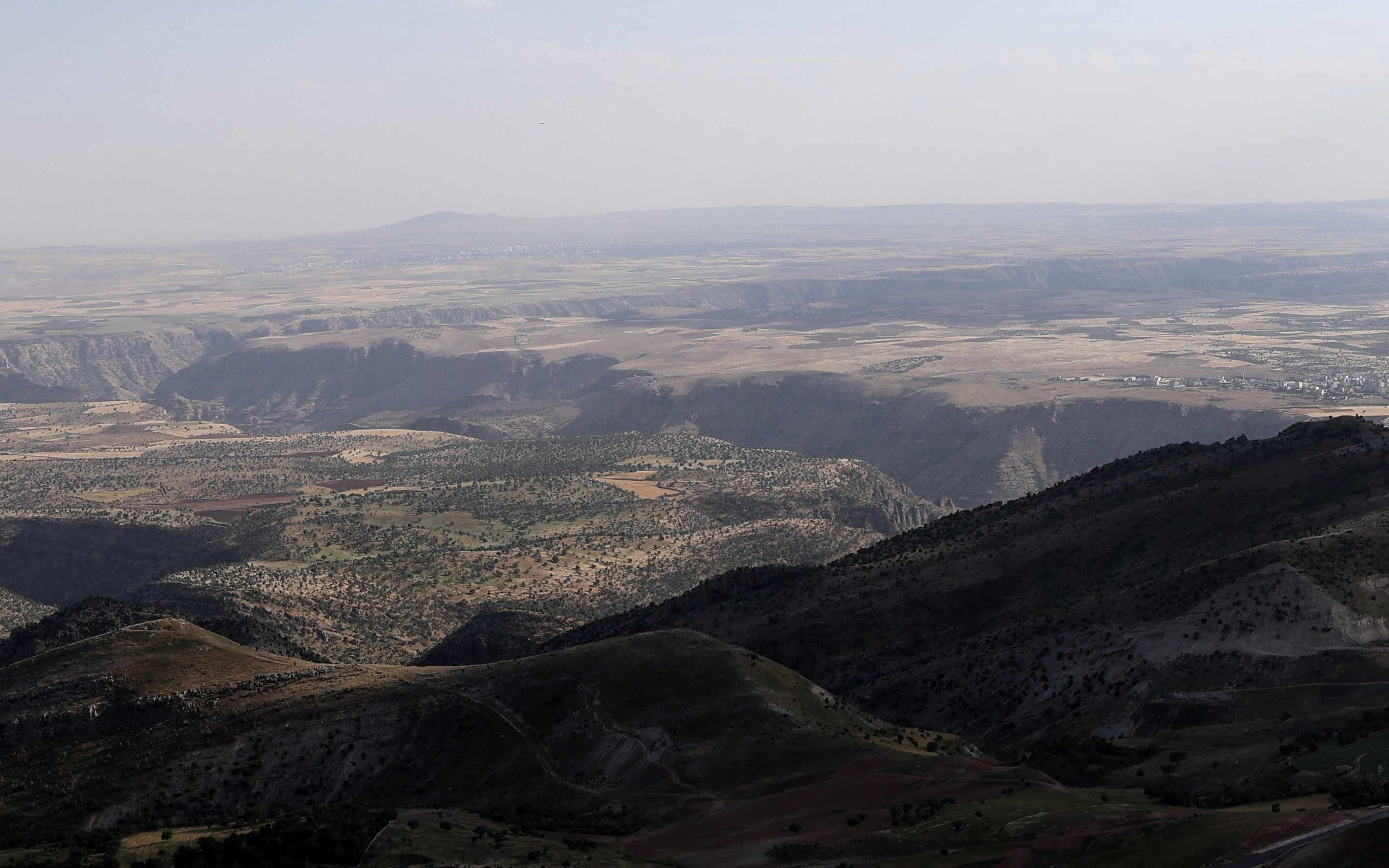
TPAO has filed 22 well locations on licenses just north of Dune Oil's M47 block, as Dune readies seismic and re-entries of its C-1 and C-2 wells.
- Turkish Petroleum Corporation (TPAO) has filed drilling projects covering 22 well locations at the MIG Oil Field, immediately north of M47.
- Gabar production reached a record 83,300 barrels per day in August 2026.
- Türkiye's energy minister announced that TPAO expects to announce new oil discoveries west of Gabar.
- Logs from Dune Oil's Çetinkaya-1 (C-1) and Çetinkaya-2 (C-2) wells indicate oil in Beloka and Mardin Group carbonates.
- Dune Oil is looking at late December 2026 for its first well re-entry operation, after seismic starts.
Turkish Petroleum Corporation (TPAO) has filed drilling projects covering 22 individual well locations at its Mehmet İrfan Güler oil field (MIG Oil Field), on the M47-C1/C2 exploration licenses. Those licenses lie immediately north of the block where Dune Oil (CSE: DUNE | OTCQB: DUNXF) is earning its position. Dune Oil may earn a 29% working interest in the M47-C3/C4 exploration licenses, subject to the satisfaction of outstanding funding, contractual, and regulatory requirements. Its own work on the block centers on seismic planning and the technical evaluation of re-entry and testing programs for the Çetinkaya-1 (C-1) and Çetinkaya-2 (C-2) wells.
TPAO's Filings on the Licenses North of M47
Six TPAO drilling project groups, reported from August 25 to 28, 2026, identify 22 well locations. The projects are located in the MIG Oil Field, which began production in 2024, and reflect ongoing development and field delineation on acreage bordering M47.
MIG was producing an estimated 13,000 barrels of oil equivalent per day as of January 2026, from ground northwest of the M47 boundary. The field outlines and production rates for TPAO's neighboring fields are approximate and drawn from TPAO's public disclosures and third-party reports.
Dune Oil has not independently verified the underlying technical data for these fields. The properties sit outside its licenses, and their figures are regional, analogous context only, from which no reserves, resources, production rates, or commercial outcomes for M47 can be inferred.
Gabar Output & the Ministry's Outlook
Gabar production has grown from zero to a record 83,300 barrels per day in August 2026, driven by 7 oil fields developed since 2021. TPAO is targeting over 100,000 barrels per day from the region in the future. Gabar has produced over 50 million barrels since 2021.
On October 18, 2026, Türkiye's Minister of Energy and Natural Resources, Alparslan Bayraktar, announced that TPAO expects to announce new oil discoveries west of Gabar, with further information once technical confirmation of the quantities is complete. The location, discovery well, geological structure, and estimated quantities have not yet been publicly identified, and the discoveries remain unconfirmed. In an October 20, 2026 address, the minister put the economic contribution from Gabar oil production at approximately US$3.5 billion, supporting approximately 3,600 local jobs, and pointed to the benefits of replacing imported oil with domestic production.
President and Chief Executive Officer of Dune Oil, Scott Lower, ties the block's prospects to the production ringing it:
"Converting from a pre-proven commercial to a proven commercial oil block, when you have 80,000 barrels or more of production within 2 to 11 kilometers around the block, will be very transformative for the block."
That conversion depends on results from M47's own wells.
What the Neighbors Do Not Settle for M47
The C-1 and C-2 wells, drilled in 2025 on the North structure of the M47 Block, encountered the Beloka and Mardin Group carbonates, and log analysis of both wells indicates the presence of oil in those reservoirs. M47 targets Cretaceous carbonate reservoirs similar to those producing in the Gabar region. The North Field carries a best-estimate contingent resource of 27.6 million barrels, company gross to Dune Oil's 29% working interest before royalty, effective December 31, 2025, an estimate classed as contingent, not as reserves.
Across the province, hydrocarbon accumulations are structurally controlled in folded and faulted carbonate reservoirs, including the Mardin Group. Differences in fault compartments, fracture connectivity, reservoir quality, and fluid contacts can materially affect results between neighboring structures. C-1 was drilled on the structural flank and encountered only part of the interpreted oil column, and no sustained production test has been run on the North Field.
Lower counts the fields around the block against the single discovery on it:
"There are multiple fields to the east, 6 fields on the east side of the block line, 1 on the north. So there’s the potential to have multiple fields here. We've only discovered 1 so far."
Dune Oil intends to integrate seismic, historical drilling, and petrophysical information with regional geological observations to refine its exploration priorities, subject to available funding and necessary approvals.
Seismic First, Then the Re-Entries
Dune Oil advanced US$200,000 for seismic in October 2026, to improve subsurface structural interpretation and future drilling selection. On October 28, 2026, it appointed petroleum engineering advisors Allan Albertson, P.Eng., and Dean Casorso, MBA, CET, to support evaluation of potential C-1 and C-2 re-entry, deepening, testing, and completion options.
The brokered offering announced October 30, 2026 directs its seismic and drilling proceeds to 4 pieces of work. They are a re-entry of C-2 for deepening and testing, a C-1 sidetrack, about 40 kilometers of seismic over the North discovery area and the South exploration lead, and an exploration well tentatively planned on the South Lead, subject to seismic results.
On both steps of the sequence, Lower puts dates:
"We're looking at our first operation for a well re-entry to be starting in late December. Our seismic program, we're looking at kicking it off next week because the deposit's already paid."
A further 2 or 3 well operations are planned for the first 6 months of 2027, and the new seismic is designed to delineate an exploration well for a potential second discovery.
What Comes Next on M47
On the licenses next door, TPAO has filed the 22 MIG well locations, and the western Gabar discoveries the minister announced await confirmed quantities. On M47, the schedule runs from 2D seismic in fall 2026 to C-1 and C-2 production and testing in early 2027. That stage covers a C-1 sidetrack, a C-2 re-entry, and new development wells to first production, and Mid or South Lead prospect drilling follows in 2027.
FAQs (AI-Generated)
Analyst's Notes





Subscribe to Our Channel


Stay Informed


