




US PCE Inflation & Fed Repricing Pressure Gold Below $4,000 as Real Yields Drive Positioning


US PCE at 4.1% and Fed repricing push gold below $4,000 as real yields cap upside; positioning shifts across ETFs, miners, and silver exposure.
- Spot gold traded around $4,000 an ounce, down about 8% in 2026 and 24% from its record high after giving back part of 2025's 66% rally.
- US PCE inflation rose 4.1% in May, the first reading above 4.0% since April 2023, reinforcing expectations of a hawkish Fed under Chair Kevin Warsh and weakening the trade that had supported gold.
- Macquarie cut its year-end gold target to $4,300 from $4,400 and forecasts a $4,200 average price by 2027, while nearly 90% of central banks plan to increase their gold reserves.
- Markets assign a 40% chance of a rate hike next month and an 80% chance by December, making short-term positioning in gold difficult.
- Gold is likely to remain below $4,000 unless real yields fall, ETF selling slows, or the Fed adopts a less hawkish stance.
Inflation Data Drives Gold Below $4,000 as Fed Rate Expectations Reset
Gold traded around the $4,000 level. Spot gold briefly gained before falling as European trading began, while New York futures also traded lower near $4,000. Gold rebounded after the US PCE inflation report, lifting spot prices 0.7% above $4,000 and August futures 0.9%.
The rebound does not change gold's broader downtrend. Gold has fallen 24% from its record high and about 8% in 2026, giving back part of its 66% gain in 2025. Gold prices are now driven more by inflation data and Fed rate expectations than by geopolitical safe-haven demand.
Inflation & Fed Hawkish Repricing Break Gold’s Debasement Trade
Persistently higher inflation, marked by May’s 4.1% PCE reading, forced a re-rating of Fed policy expectations even as energy prices fell, which resulted in a more hawkish Fed stance under new Chair Kevin Warsh and weakened the debasement trade that drove gold’s 2025 rally.
Geopolitical risk no longer supports gold’s safe-haven demand. Gold’s safe-haven demand weakened after the US-Iran conflict began in February, and a subsequent accord that restored Strait of Hormuz shipping and returned oil prices to pre-war levels removed its geopolitical premium. With both supports removed, gold is now more sensitive to real yields, meaning inflation-adjusted bond returns are setting the opportunity cost of holding a non-yielding asset.
Why Institutions See a Two-Sided Trade, Not a One-Way Exit
Downside pressure in gold is balanced by sustained institutional demand. Central bank buying provides a price floor, with a recent survey showing nearly 90% of central banks plan to increase gold reserves over the next year as a geopolitical hedge. Inflation at 4.1% continues to support gold demand over the long term by keeping Fed rate expectations elevated while sustaining investment demand for inflation protection.
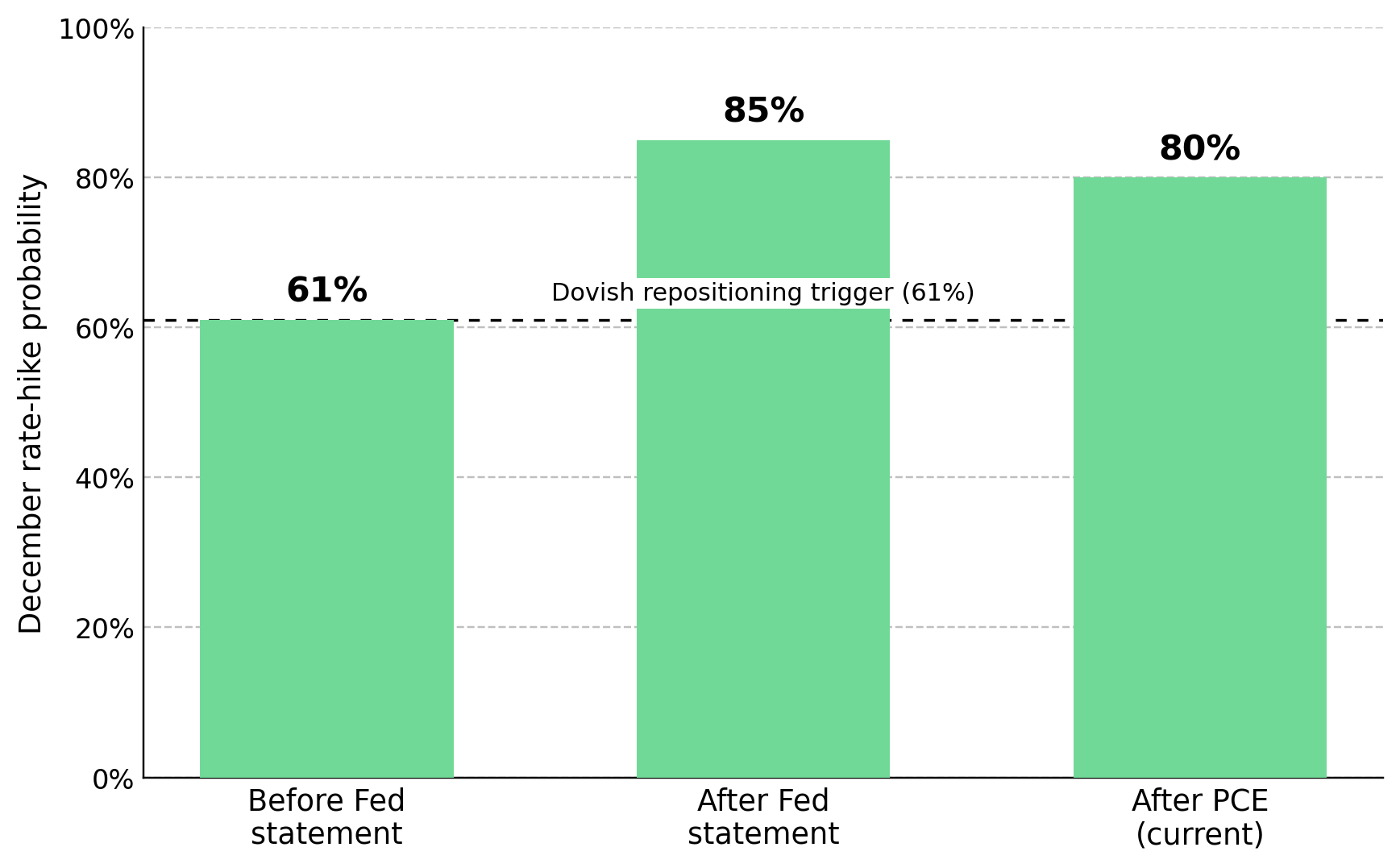
The key signal is whether CME FedWatch December hike odds move away from 80% in response to monthly US PCE inflation data.
Gold ETF, Miner & Silver Exposure Amplify Gold Price Moves in Portfolios
Retail portfolios feel the impact through three main asset channels. Gold-backed ETFs track spot prices directly, so a break below $4,000 immediately reduces their net asset value. Gold miners carry operating leverage, meaning a percentage drop in gold prices reduces revenue while costs remain fixed, amplifying earnings declines. Silver, which rallied with gold in 2025, typically declines more sharply when precious-metals demand weakens.
Positioning gold around near-term Fed timing should be avoided because rate-hike probabilities are split at 40% for next month and 80% for December, and macro shocks cannot be predicted in advance. Gold exposure should be sized to risk tolerance rather than Fed meeting timing, accounting for ETF fees and bid-ask spreads, with downside risk extending toward $4,200 into 2027 under Macquarie’s projection and potential for further declines before stabilisation.
US PCE Inflation & Fed Rate Expectations Define Gold’s $4,000 Regime Boundary
The key driver is US PCE inflation at 4.1% through May, the first reading above 4.0% since April 2023, which keeps real yields elevated and supports a hawkish Fed stance under Chair Warsh. If that inflation backdrop persists, portfolios favor underweight or short gold exposure, defensive cash positions, short-duration bonds, and a stronger US dollar, keeping gold capped below $4,000.
The downside regime in gold would shift if real yields fall, ETF selling slows, or the Fed adopts less hawkish communication, with a broader macro shock also capable of restarting demand. A softer US PCE print that moves December hike odds back toward 61%, combined with a sustained reclaim of $4,000 in gold, would restore demand across miners, ETFs, and silver.
Positioning can be guided by two indicators: CME FedWatch December hike probability at 80%, down from 85% after PCE but up from 61% before the Fed statement, and the US BEA monthly PCE release. A move in December to hike odds back toward 61% or a PCE print below 4.0% would signal a shift in the rate backdrop and require repositioning in gold exposure.
Analyst's Notes





Subscribe to Our Channel

.jpg)



Stay Informed






















