‘Undervalued?’ Article Series 1/5: Why Do Contrarian Investors Outperform



Contrarian mining investing differs by commodity and development stage; each needs its own evidence, catalyst and valuation test to prove the market wrong.
- Contrarian investing requires a specific, evidence-based disagreement with the market, not simply a preference for an unpopular stock.
- Mining companies can be mispriced for geological, financial, operational or commodity-specific reasons, and the correct diagnosis changes the required evidence.
- Precious metals, critical metals and industrial mineral projects respond to different demand drivers and cannot be evaluated through a single market framework.
- A credible catalyst, such as a resource update, a final investment decision, or a production milestone, must explain how improvements in fundamentals could become visible to investors.
Contrarian Investing Starts With a Specific Market Error
A falling or neglected mining equity can represent several distinct outcomes: a genuine valuation disconnect, a project without sufficient scale, an unfunded development plan, an operational problem, a commodity facing weak demand, or a value trap with no credible catalyst for re-rating. Treating all of these as equivalent is the most common error in contrarian analysis.
The relevant question is not whether the market dislikes a company. It is about whether the market has priced an outcome that the technical, financial, and operating evidence does not support. That distinction determines whether a discount is compensation for real risk or a mispricing that a specific catalyst can correct.
Commodity Structure Changes the Source of Mispricing
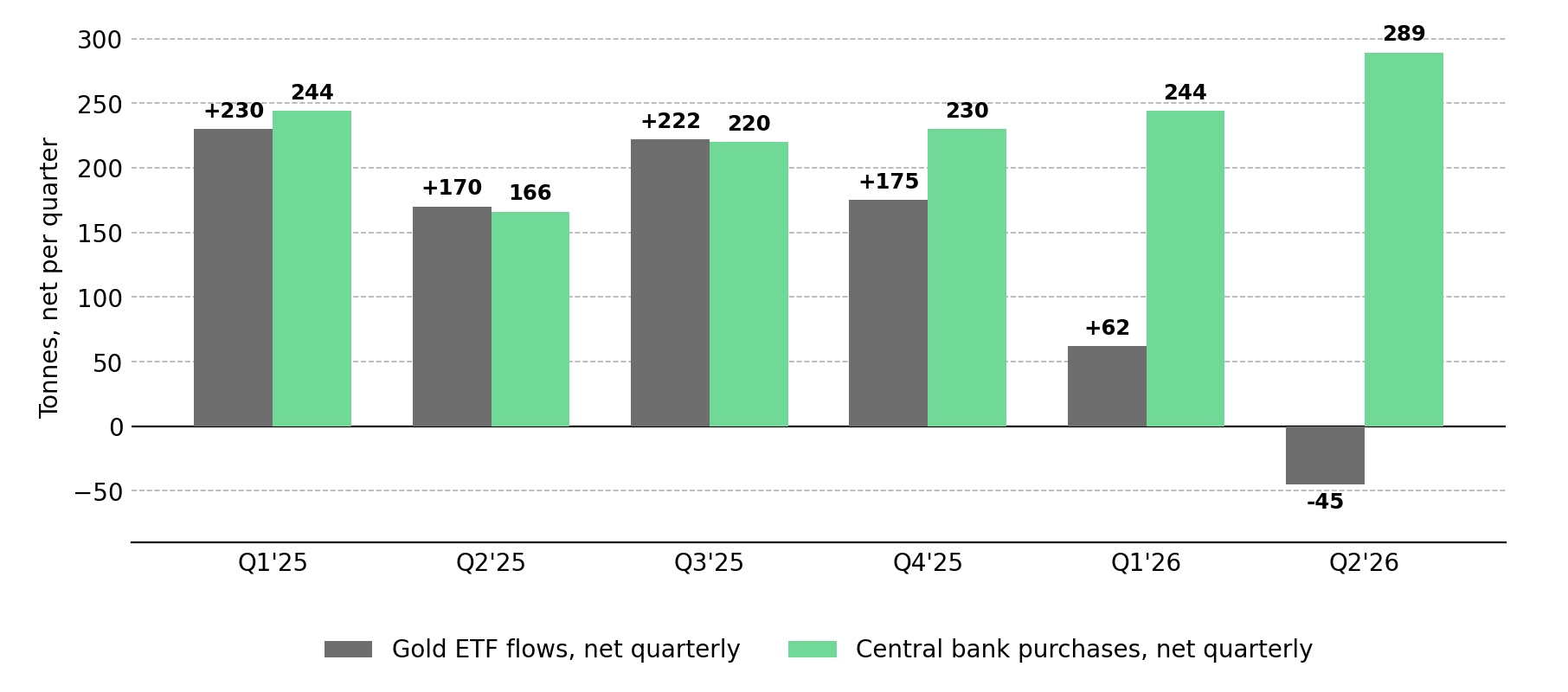
World Gold Council data show total gold demand, including over-the-counter activity, reached 2,522 tonnes in the first half of 2026, while second-quarter central-bank purchases totaled 289 tonnes. At the same time, exchange-traded fund flows remain sensitive to interest rates, monetary policy and the US dollar.
For an explorer, a supportive gold market can improve the value of future production, but the more immediate variables remain resource confidence, metallurgical recovery, capital intensity and the economics generated by each additional tonne drilled.
Copper and nickel present a different problem. The International Energy Agency projects copper demand to add approximately 7 million tonnes through 2040 under its Stated Policies Scenario, driven substantially by electricity networks and technology demand, while nickel demand rises by roughly 50% to 90% depending on the scenario. Supply concentration also matters: Indonesia has accounted for a dominant share of recent nickel supply growth, which means a nickel-labeled equity can remain discounted even when a particular deposit contains copper, platinum, palladium, gold or silver.
Silver and industrial minerals further widen the distinction. The Silver Institute is forecasting a sixth consecutive silver market deficit in 2026, with industrial fabrication near 650 million ounces, although photovoltaic demand is being moderated by thrifting and substitution. An industrial mineral project’s economics, such as lime, depend principally on construction demand, import replacement, customer contracts, plant utilization and delivered cost, because transport expenses can determine whether a locally manufactured tonne is competitive with an imported tonne.
Geological Upside Only Matters When It Changes Project Economics
Exploration-stage mispricing is often discussed in ounces or tonnes, but resource growth creates shareholder value only when additional mineralization improves recoverable production, mine life or unit economics. P2 Gold's June 2026 update outlined feasibility work at Gabbs for a nominal 12 million tonnes per year development concept and an updated mineral resource targeted for the third quarter. The existing October 7, 2025 preliminary economic assessment, using base-case prices of US$2,350 per ounce gold, US$29 per ounce silver and US$4.50 per pound copper, reported a net present value discounted at 5%, of US$942.9 million and a 33.8% after-tax internal rate of return. Those figures provide a reference point, but the contrarian case requires the next resource and feasibility work to demonstrate that additional mineralization improves economics rather than merely enlarging the geological inventory.
Power Metallic presents a different exploration-stage valuation problem because the metal label itself can affect how investors interpret the discovery. Terry Lynch, Chief Executive Officer, explains changes in the company’s geological classification:
"We went from having a simple nickel sulfide project to what's called an orthomagmatic nickel-copper platinum group element system. These are rare; there are maybe about 20 of them in the world, and this will be the 21st."
The company's July 15, 2026 update reported that the completed winter drill results would be incorporated into the initial mineral resource estimate for the Lion Zone, which is intended to form the basis of a subsequent preliminary economic assessment. The company's copper-equivalent calculations also incorporate recent SGS locked-cycle metallurgical testing, which Power Metallic has characterized in prior disclosures as delivering exceptional recoveries. The contrarian question is whether those metallurgical results, together with the project's associated minerals content, ultimately translate into sufficient resource scale, continuity and mineable value rather than simply strong individual drill intersections.
Development Assets Must Convert NPV Into Financeable Projects
A feasibility-stage project can already demonstrate positive NPV and IRR while remaining materially discounted because investors still have to fund the capital expenditure between study completion and commercial production. Marimaca Copper’s 2025 Definitive Feasibility Study used a long-term copper price of US$4.30 per pound and reported initial capital expenditure of US$587 million, an after-tax NPV8% of US$709 million and an after-tax IRR of 31%. The next valuation question is therefore less about whether the feasibility model works and more about whether financing terms, final investment decision, procurement and construction preserve those returns.
Infrastructure can directly alter financing risk because roads, power, water, and ports reduce the amount of capital required before first production. Hayden Locke, Chief Executive Officer of Marimaca Copper, identifies proximity to existing infrastructure as a specific component of execution risk:
"We're 25 kilometers from a port, and that port significantly reduces your execution risk; it also means that all the infrastructure that we need to build and operate this mine is literally on our doorstep."
Copper’s development framework cannot simply be transferred to industrial minerals. Pacific Lime and Cement's June-quarter report stated that Papua New Guinea's government had agreed to acquire 13% of the Central Lime Project vehicle for US$16.3 million, that a 27.6-kilometer all-weather access road was complete, and that first lime production remained targeted for the end of the first quarter of 2027. The report also identified higher global shipping costs as a project pressure. For investors, that combination makes delivered-cost advantage, contracted demand, construction funding and plant utilization more relevant than any global lime price benchmark.
Demand Strength Only Matters If Production Follows
For a producer, the contrarian question differs from that of an explorer or developer because commodity exposure is already being converted into revenue. According to the Silver Institute’s World Silver Survey, industrial demand now accounts for roughly half of total silver consumption, with photovoltaics representing one of the fastest-growing end uses. The International Energy Agency (IEA) similarly highlights that solar PV and broader electrification trends are key drivers of rising silver intensity in energy systems. This industrial exposure is becoming increasingly relevant as the IEA projects rapid growth in data-center electricity demand, which in turn supports higher requirements for conductive materials across power systems, circuit boards and computing equipment.
Oliver Turner of Americas Gold and Silver describes why management views technology investment as an additional source of silver demand rather than relying solely on the precious-metals cycle:
"The AI rollout means data centers going in all over the place, and the old adage is that copper is the highway but silver is the glue. You need silver in circuit boards and across this technology rollout… And then layering on top of that, Toyota's rolling out a solid-state battery next year in their electric vehicles that's going to use up to 1 kilogram of silver per battery."
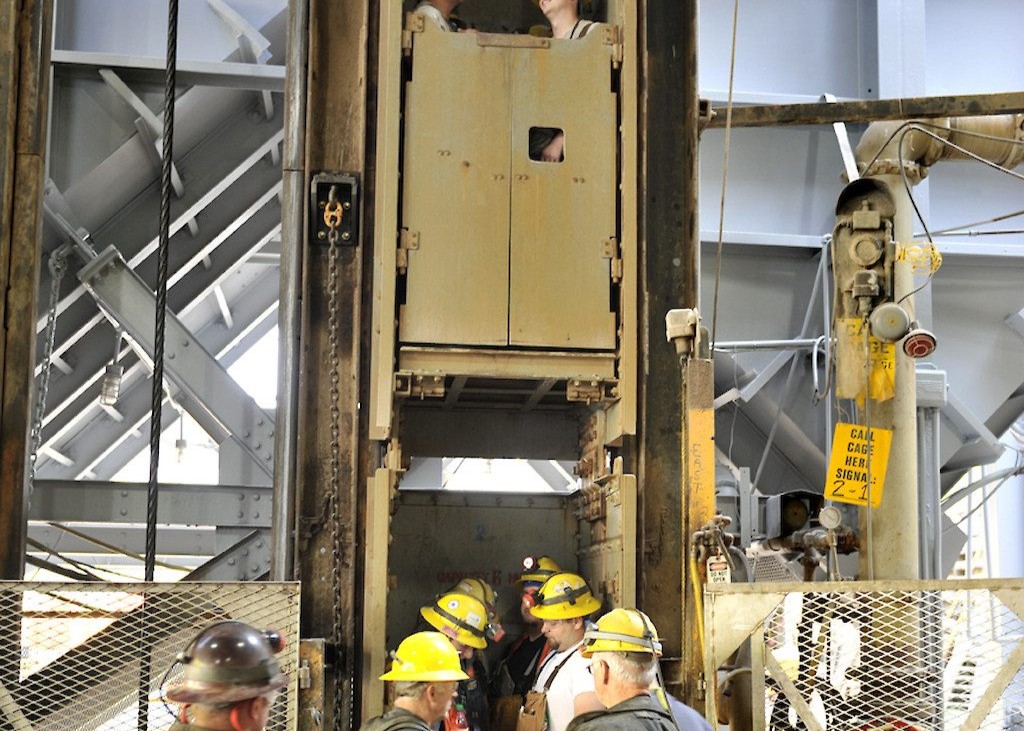
Americas Gold and Silver produced 665 ounces of silver in the second quarter of 2026, 15% below the first quarter, with the company attributing part of the decline to an electrical fire that delayed access to a high-grade stope. At the same time, Phase 1 and Phase 2 upgrades to the Galena No. 3 shaft were reported to increase hoisting capacity by approximately 150% and skipping payloads by approximately 40%. The potential contrarian case is therefore measurable: if historical infrastructure constraints have been removed, sustained throughput, grade reconciliation, all-in sustaining cost, EBITDA and free cash flow should progressively demonstrate the improvement.
6-Pillar Contrarian Framework
A common framework remains useful across commodities, but the weighting of each variable must change with the asset's development stage, revenue model and principal unresolved risk. The purpose is not to produce a single score; it is to identify which assumption the current valuation appears to discount most heavily and what evidence could prove that assumption wrong.
Asset Quality: Is the deposit technically capable of generating economic production at realistic grades, recoveries and cut-off assumptions?
Jurisdiction: Can the project obtain permits, infrastructure, financing and operating approvals within the stated development schedule?
Commodity Demand: Which end markets determine price formation, and how responsive is supply to higher prices?
Management: Does the team have the technical, financial, and operational capabilities required for the company's next stage?
Catalysts: Which measurable milestone can remove a specific uncertainty from the valuation?
Valuation: Does the current enterprise value compensate investors for the remaining geological, financial and execution risks?
One Framework, Different Commodity Questions
Contrarian mining analysis becomes more rigorous when the starting point is the market's specific assumption rather than the share-price chart. Gold exploration requires evidence that additional geology improves economic ounces; copper development requires financing that protects feasibility returns; polymetallic exploration requires recovered-value analysis across the full metal basket; silver production requires sustained cost and throughput performance; and industrial minerals require local delivered-cost and demand analysis.
The six pillars remain constant, but their weighting shifts as a project moves from exploration through development to production. Article 2 will examine why EV/resource metrics can be useful for explorers, why feasibility-stage developers trade against risk-adjusted NPV, and why operating companies increasingly have to justify valuation through margins, AISC, EBITDA and free cash flow rather than geological optionality alone.
TL;DR
Contrarian mining investing is not about buying an unpopular stock; it requires a specific, evidence-based disagreement with the market that a catalyst can eventually prove right or wrong. Because gold, copper, nickel, silver and industrial minerals respond to different demand drivers, from central bank buying and ETF flows to electrification-linked demand growth and local delivered-cost economics, the evidence needed to identify mispricing changes by commodity and by development stage. Exploration-stage value depends on whether new geology improves project economics, development-stage value depends on whether financing preserves feasibility-study returns, and production-stage value depends on whether operating results confirm the thesis.
FAQs (AI-Generated)
Analyst's Notes





Subscribe to Our Channel












.jpg)





Stay Informed