




West Red Lake Gold: A High-Grade Producer Emerging in Gold's Bull Market



West Red Lake Gold is ramping high-grade Madsen Mine production with strong reconciliation, infrastructure upgrades, and growth via Rowan deposit and near-mine exploration targets.
- The Madsen Mine restarted in May 2025 and has produced 12,800 oz through Q3, with daily ore tonnage ramping and key infrastructure projects (underground waste storage and shaft skipping) now operational or imminent.
- Bulk sample reconciliation of 96.1% on tonnage and 100.7% on grade confirms the company's geology-engineering workflow, reducing execution risk ahead of commercial production.
- The deposit averages 8.2 g/t Au in reserves and hosts multiple high-grade zones, with definition drilling consistently returning intercepts exceeding 20 g/t Au, supporting a disciplined mining approach.
- The Rowan deposit (196,747 oz indicated at 12.78 g/t) offers toll-milling economics with a 42% IRR and $125M NPV, while Upper 8 and North Shore targets present exploration upside within trucking distance of existing infrastructure.
- New and growing gold producers have outperformed indices by 154% over 12 months, and West Red Lake Gold represents a rare entry point into a sector experiencing structural demand tailwinds from central bank reserve diversification and safe-haven positioning.
Why Investors Should Consider West Red Lake Gold
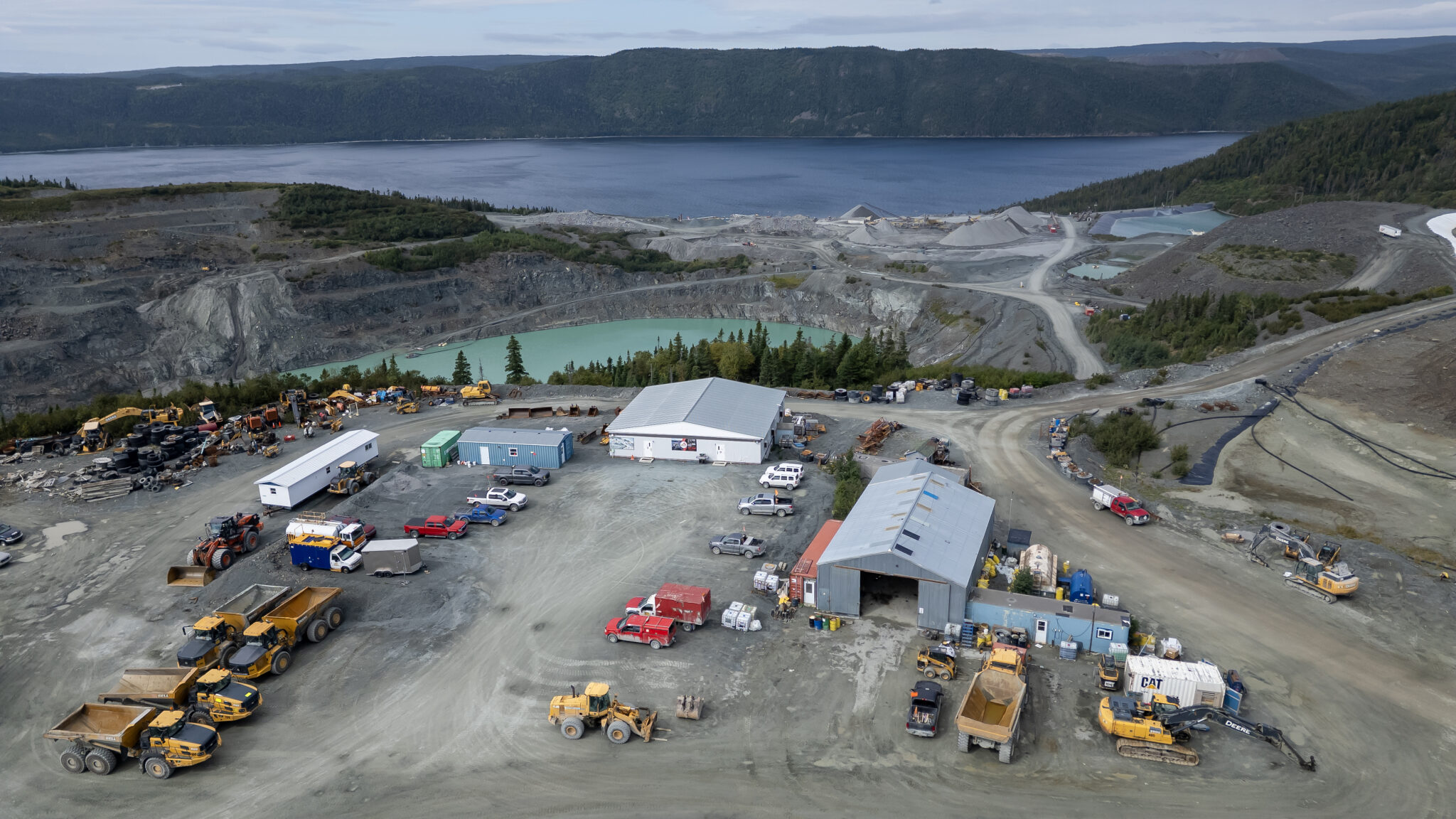
West Red Lake Gold Mines Ltd. (TSX-V: WRLG, OTCQB: WRLGF) is advancing the Madsen Mine, a high-grade underground gold operation located in the prolific Red Lake mining camp of northwestern Ontario. The company acquired the asset in June 2023 for approximately $35 million, a distressed purchase that included a permitted mine, mill, and tailings facility with 2 million ounces of historical production between 1936 and 1972. West Red Lake Gold executed a two-year restart strategy focused on definition drilling, infrastructure optimization, and operational readiness, which followed approximately $350 million invested by previous operators. The mine resumed production in May 2025 at 500 tonnes per day (tpd) and is now ramping toward commercial production, expected once shaft skipping and underground waste storage are fully operational and the 2026 mine plan is finalized.
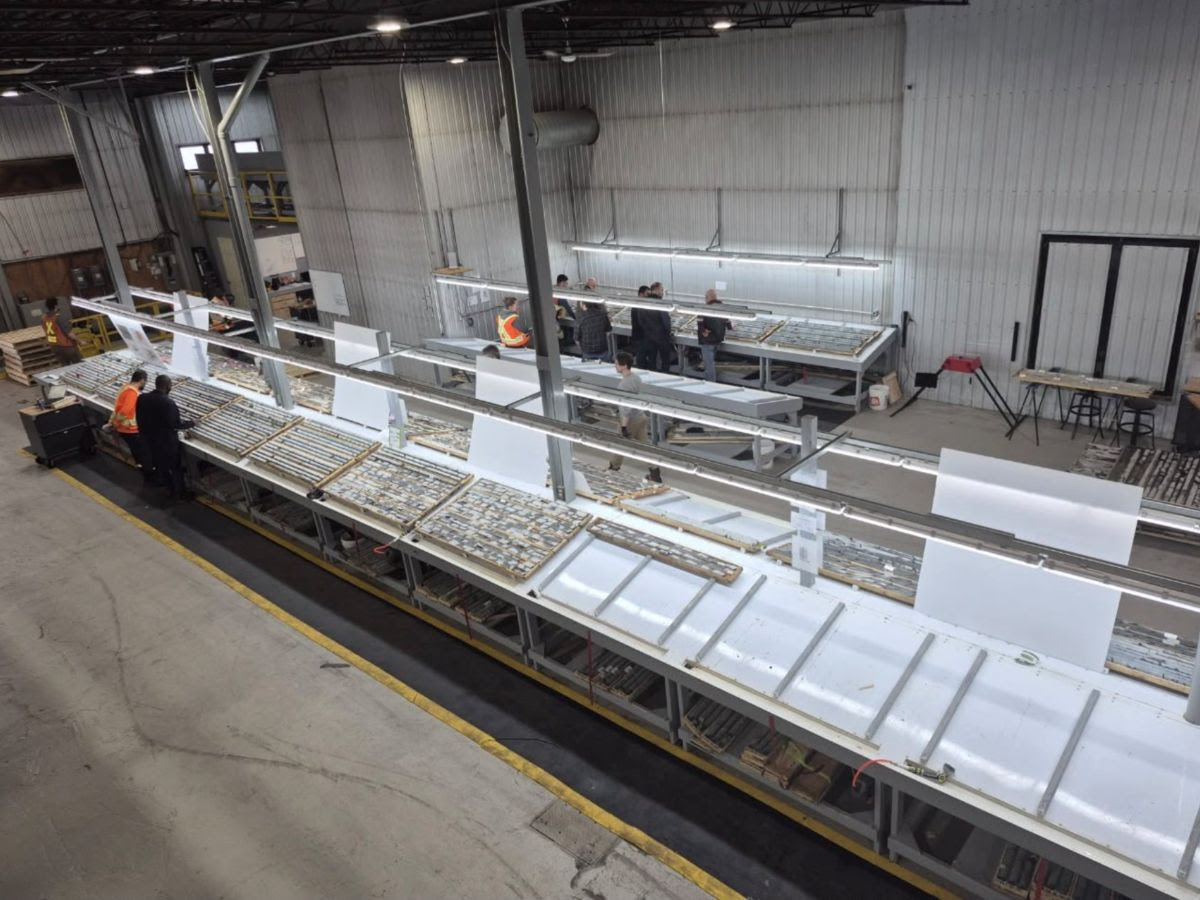
The company's leadership team, advised by industry veterans including Frank Giustra and Tony Makuch, pursued a deliberate de-risking approach: a focus on tight definition drilling, with 150,000 metres completed to date, a 15,170-tonne bulk sample, and staged infrastructure deployment. The Madsen Mine's Prefeasibility Study (PFS), completed in January 2025, outlined a C$496 million NPV at a US$2,640/oz gold price and an 800 tpd operation producing 67,600 oz/year at an all-in sustaining cost (AISC) of US$1,681/oz. However, the company's current engineering work is revealing larger, more continuous stopes than the conservative PFS design assumed, suggesting potential for higher throughput, lower costs, and extended mine life.
West Red Lake Gold's market capitalization of approximately C$340 million reflects a valuation below typical producer multiples of 0.7 to 1.0x NAV or 6 to 8x free cash flow. With 392 million shares outstanding and C$24 million in cash as of June 2025, the company is advancing toward operational stability at a time when gold equity valuations are re-rating in response to record gold prices and sustained central bank accumulation.
Key Development: Ramp-Up Progress & Infrastructure Completion
As of Q3 2025, West Red Lake Gold has produced 12,800 ounces of gold from the Madsen Mine. Daily ore tonnage has steadily increased, with reconciliation between modeled and actual grades remaining strong. West Red Lake tested the reconciliation of its workflow before starting up the mine via a bulk sample, wherein the company has mined ore from six stopes across three resource areas (Austin, South Austin, and McVeigh) with actual grades averaging 5.72 g/t Au against a predicted 5.68 g/t. Through operations to date, the mill has achieved 95% gold recovery, consistent with historical performance and PFS assumptions.
Two critical infrastructure milestones are now complete or near completion. Underground waste rock storage commenced in mid-September 2025, allowing up to 2,000 tpd of waste material to be deposited into historic voids rather than trucked to surface. This frees haul trucks to move ore, improving mine logistics and reducing operating costs. The shaft skipping project, which will hoist 350 tpd of ore from depth at approximately 10% of the cost of trucking, is expected to be operational by the end of 2025 following the delivery of skips and scrolls. Combined, these systems should materially improve mine efficiency and support higher production rates.
Definition drilling continues to expand and refine stope inventory. 2025 results from the South Austin high-grade panel returned intercepts including 10.6m at 114.26 g/t Au and 0.7m at 1,609.26 g/t Au.
Finding new high-grade lenses through definition drilling is one of the reasons West Red Lake is mining larger stopes at Madsen than the PFS predicted. The other reason is that the PFS used a low gold price of US$1,680 per oz. in its mine design, which meant only the highest-grade ounces were included in the mine plan. A higher gold price pulls lower grade tonnes into contention, in particaulr lower grade tonnes proximal to high-grade tonnes, and as a result stopes are often ending up larger and clustered relative to that PFS plan. For example, the Austin 1099/1100 complex realized a 204% increase in tonnage and 222% increase in contained ounces after definition drilling and final mine design.
The company also completed a 1.4-kilometre underground connection drift, enabling efficient truck access across the mine, and installed a 114-person on-site camp to reduce commute times and improve workforce productivity. All major rolling stock, including haul trucks and scoops, is now on site. A new primary crusher, mine dry facility, and operations team centre have been commissioned. These capital investments, totaling more than $140 million since acquisition, position the mine for sustained, stable production.
Strategic Significance: Entering Commercial Production in a Strengthening Gold Market
West Red Lake Gold's timing aligns with a period of sustained strength in gold fundamentals. Central banks have maintained steady gold purchases throughout 2025, driven by reserve diversification away from fiat currency exposure and geopolitical hedging. Official-sector demand has reinforced private investment flows, with gold-focused institutions and retail investors increasing allocations amid macroeconomic uncertainty. This structural demand has supported gold prices above US$2,800/oz, creating a favorable backdrop for new producers to establish operating platforms and scale production.
The company's operational model is designed to capitalize on high-grade zones. The Madsen deposit hosts 1,653,000 ounces of indicated resources at 7.4 g/t Au and 366,200 ounces of inferred resources at 6.3 g/t. Proven and probable reserves total 478,000 ounces at 8.16 g/t. Importantly, the PFS used a conservative US$1,680/oz gold price for reserve definition. At current gold prices, additional resource tonnes become economic, which is leading to larger stopes and exclusive use of lower-cost longhole mining methods. Overall, these shifts should lead to a longer-lived mine with higher overall production., though the company has not completed an updated PFS demonstrating such outcomes.
West Red Lake Gold's PFS outlined a base case using small, high-grade stopes designed for US$1,680/oz gold. However, the company's actual mining approach is generating larger stope complexes in clusters, reducing development cost per ounce and enabling more efficient extraction. For example, the 1155 complex, which represents 40% of planned ounces in the current mine book, comprises only 10% of total stopes but required priority development in Q3 2025 due to its scale and grade continuity. This trend (fewer, larger stopes with lower dilution) has positive implications for operating costs and production guidance.
The company has also confirmed exploration upside. The Upper 8 discovery, a shallower analog to the high-grade 8 Zone, returned initial intercepts including 1.3m at 44.17 g/t Au. The North Shore target, identified through till sampling and structural interpretation, exhibits Madsen-style alteration and geochemistry. A 36,000 to 40,000-metre drill program is planned for the second half of 2025, targeting Austin 10 to 14 Levels, North Austin, and the East Drive corridor. These programs aim to solidify 2026 and 2027 mine plans while testing for new high-grade lenses near existing infrastructure.
Current Activities: Advancing Rowan and Expanding Optionality
Beyond Madsen, West Red Lake Gold is advancing the Rowan deposit, located 80 kilometres by road from the Madsen mill. Rowan hosts 196,747 ounces of indicated resources at 12.78 g/t Au and 118,155 ounces of inferred resources at 8.73 g/t. A Preliminary Economic Assessment (PEA) completed in August 2025 outlined a toll-milling scenario requiring US$70 million in capital and producing 35,200 oz/year for five years at a 42% IRR and US$125 million NPV. The company is now completing 5,000 metres of infill drilling to upgrade inferred resources and moderinize historic parts of the resource to out them into mining contention. The company plans to complete a joint Madsen-Rowan Prefeasibility Study in 2026. If permitted and financed, Rowan could begin production in 2028, adding 35,000 oz/year to the company's profile and positioning West Red Lake Gold as a 100,000+ oz/year producer by the end of the decade.
Shane Williams, President and CEO of West Red Lake Gold, emphasized the company's strategic positioning:
"West Red Lake Gold's goal is to create value through new gold production. Madsen was a perfect first asset. The bulk sample was first piece of evidence. Successful ramp up is next."
Williams highlighted the operational advantages emerging from the company's technical work, noting that definition drilling and mine design are delivering larger stope complexes than originally modeled, which improves both capital efficiency and operating margins.
The company is now also drilling at the Fork deposit, a near-surface, high-grade target within 250 metres of existing workings. Preliminary estimates suggest 130,000 to 150,000 tonnes at 8 to 9 g/t Au for 33,000 to 43,000 ounces. A 3,000-metre surface drill program is designed to upgrade the resource, with potential for low-cost, near-term optionality given proximity to infrastructure.
Operationally, West Red Lake Gold is focused on achieving commercial production milestones: shaft operation, underground waste storage, and finalization of the 2026 mine plan. The company expects to declare commercial production once these systems are fully operational and grade guidance can be confidently provided. Near-term catalysts include monthly production updates, drill results from high-grade expansion zones, and progress on Rowan permitting. The company's goal is to produce approximately 50,000 oz/year from Madsen alone, with potential to increase throughput from 800 tpd to 1,120 tpd once permitting for mill expansion is secured.
Investor Takeaway: A Rare New Producer in a Favourable Gold Cycle
West Red Lake Gold represents an unusual opportunity in the gold sector: a new, high-grade producer entering commercial production during a sustained bull market. The company's technical work (150,000 metres of definition drilling, bulk sample reconciliation, and staged infrastructure deployment) has de-risked the restart and validated the geology-engineering workflow. The mine is ramping toward stable production, with key infrastructure projects now operational or imminent.
The Madsen deposit's high-grade profile, combined with expansion potential at Rowan, Fork, and exploration targets, positions the company for multi-year production growth. The PFS provides a conservative base case, but actual mining is revealing larger, more continuous stopes, suggesting upside to production, costs, and mine life. At current gold prices above US$2,800/oz, the economics of the operation improve significantly, and the company's access to capital, experienced management, and supportive shareholder base provide a platform for execution.
For investors seeking exposure to the gold sector, West Red Lake Gold offers a differentiated profile: a high-grade, Canadian-domiciled producer with near-term production growth, exploration upside, and optionality through toll-milling at Rowan. The company's valuation of approximately C$300 million compares favorably to mid-tier producers trading at 0.7 to 1.0x NAV or 6 to 8x free cash flow, particularly given the potential for resource expansion and production increases as definition drilling continues to unlock larger stope complexes.
In a market environment characterized by central bank gold buying, safe-haven demand, and record gold prices, West Red Lake Gold's disciplined approach to restarting a high-grade mine positions the company as a compelling growth story in the precious metals sector.
The Investment Thesis for West Red Lake Gold
- Consider accumulation in advance of commercial production declaration, which could re-rate the stock as operational risk declines and production guidance is formalized.
- Monitor monthly production updates and drill results from high-grade expansion zones, as these provide near-term catalysts and evidence of resource growth.
- Evaluate Rowan permitting and Prefeasibility Study progress, as successful advancement would establish a pathway to 100,000+ oz/year production by 2028.
- Assess peer valuations relative to WRLG's market cap, particularly as the company transitions from developer to producer and mid-tier miners trade at 0.7 to 1.0x NAV multiples.
- Diversify into mid-cap miners if gold prices sustain above US$2,800/oz, as new producers with high-grade assets benefit disproportionately from operating leverage and margin expansion.
- Track central bank gold-buying trends and safe-haven flows, as structural demand from official-sector diversification reinforces long-term price support and investor interest in gold equities.
West Red Lake Gold is executing a disciplined restart of the Madsen Mine, a high-grade gold asset in Ontario's Red Lake district. The company has completed 150,000 metres of definition drilling, validated its technical approach through a 96.1% bulk sample reconciliation, and deployed critical infrastructure including underground waste storage and shaft skipping. Production is ramping toward commercial declaration, with monthly tonnage increasing and reconciliation remaining strong. The PFS outlined a C$496 million NPV at conservative assumptions, but actual mining is revealing larger stopes and lower dilution, suggesting upside to production and economics.
The Rowan deposit offers a toll-milling pathway to 35,000 oz/year by 2028, while exploration targets including Upper 8, North Shore, and Fork provide near-mine growth optionality. The company's market capitalization of approximately C$300 million positions it below typical producer multiples, and its entry into production during a period of sustained central bank gold buying and record prices aligns with favourable sector dynamics. For investors seeking exposure to a new, high-grade gold producer with disciplined management, strong technical validation, and multi-year growth potential, West Red Lake Gold merits close evaluation as a differentiated opportunity in the precious metals sector.
TL;DR
West Red Lake Gold is ramping production at its high-grade Madsen Mine in Ontario's Red Lake district, targeting approximately 50,000 oz/year with strong reconciliation results, infrastructure upgrades nearing completion, and expansion optionality through the Rowan deposit and near-mine targets, positioning the company as a rare new gold producer entering commercial production during a period of sustained central bank buying and record gold prices.
FAQs (AI-Generated)
The company restarted the Madsen Mine in May 2025, produced 12,800 oz through Q3, and is ramping toward commercial production once shaft skipping and underground waste storage are fully operational.
The 96.1% tonnage and 100.7% grade reconciliation validates the company's geology-engineering workflow, reducing execution risk and confirming the accuracy of its resource model.
Rowan offers a toll-milling scenario with 35,200 oz/year production, 42% IRR, and US$125M NPV, enabling West Red Lake Gold to scale to 100,000+ oz/year by 2028 without building a second mill.
Underground waste storage is operational as of September 2025, shaft skipping is expected by November 2025, and the 2026 mine plan is being finalized to provide grade guidance.
West Red Lake Gold is in ramp-up phase and has not yet declared commercial production, but as operational risk declines and production stabilizes, the valuation gap may narrow toward 0.7 to 1.0x NAV or 6 to 8x FCF.
Analyst's Notes





Subscribe to Our Channel





.jpg)

Stay Informed






















