




West Red Lake Gold Completes Fork Infill Drilling & Initiates Mine Design for Satellite Deposit


West Red Lake Gold advances the Fork deposit with infill drilling, supporting mine design and a potential near-term production decision at Madsen.
- West Red Lake Gold completed a 3,204 metre infill drill program at the Fork deposit, located approximately 250 metres from the Madsen Mine in the Red Lake Gold District of Northwestern Ontario.
- Drill results confirm grade and vein continuity across a 400 metre by 250 metre zone, and the engineering team at Madsen has initiated initial mine design for the deposit.
- Fork sits within 250 metres of existing underground infrastructure and approximately 350 metres from the West Ramp, reducing the development distance required to bring the deposit into production.
- The deposit provides additional mill feed within a multi-zone mining strategy that targets consistent throughput and grade blending across the Madsen operation.
- A construction decision at Fork remains pending, with the deposit not included in the pre-feasibility study (PFS) and economic viability not yet demonstrated through a formal study.
Fork Deposit Location & Drill Program Scope
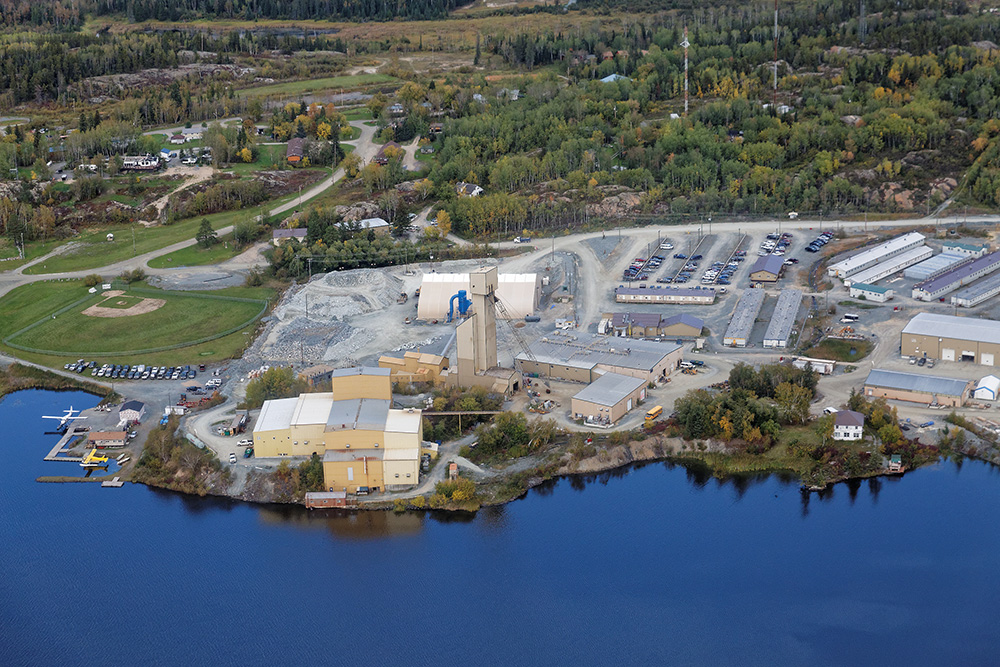
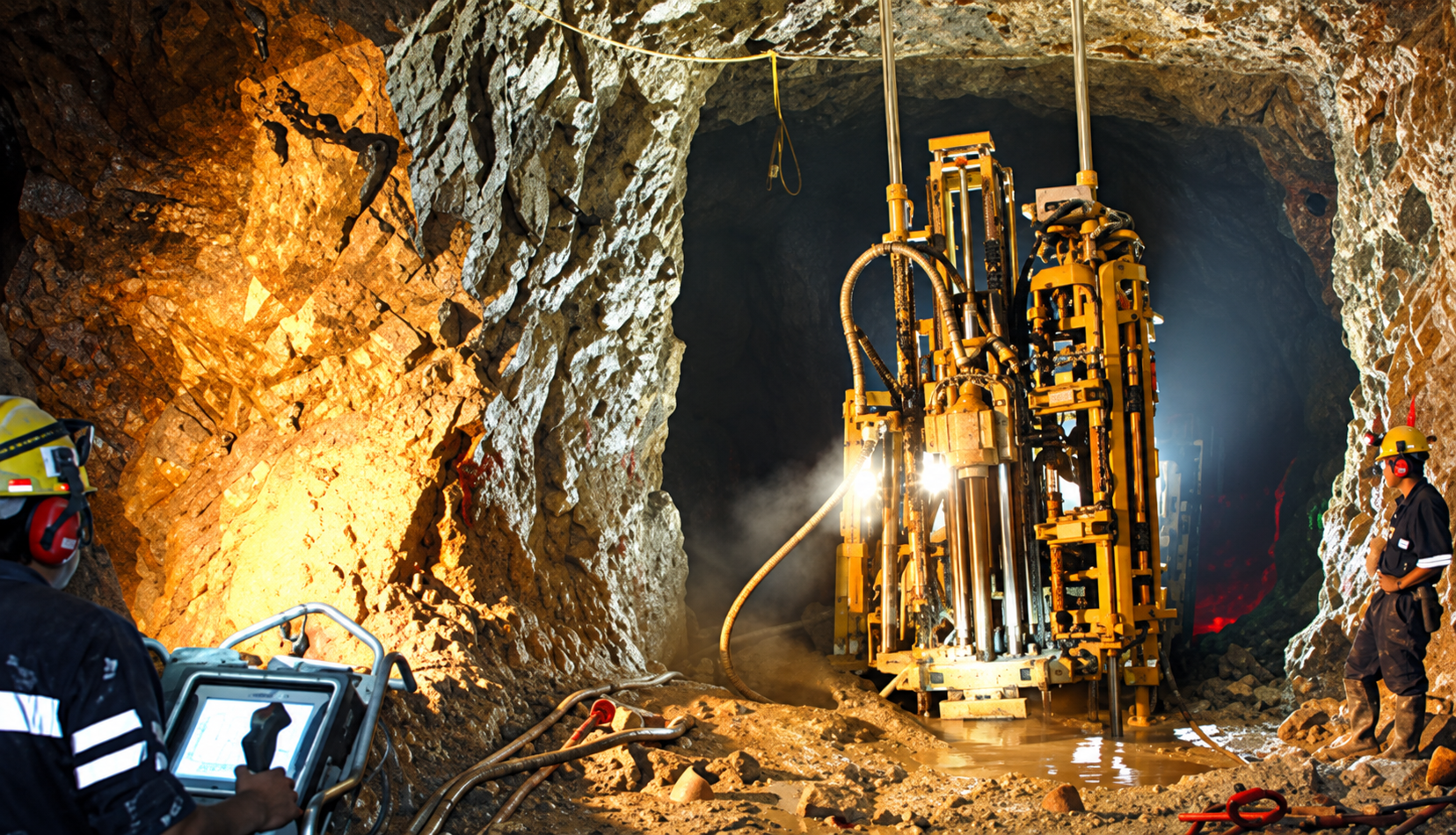
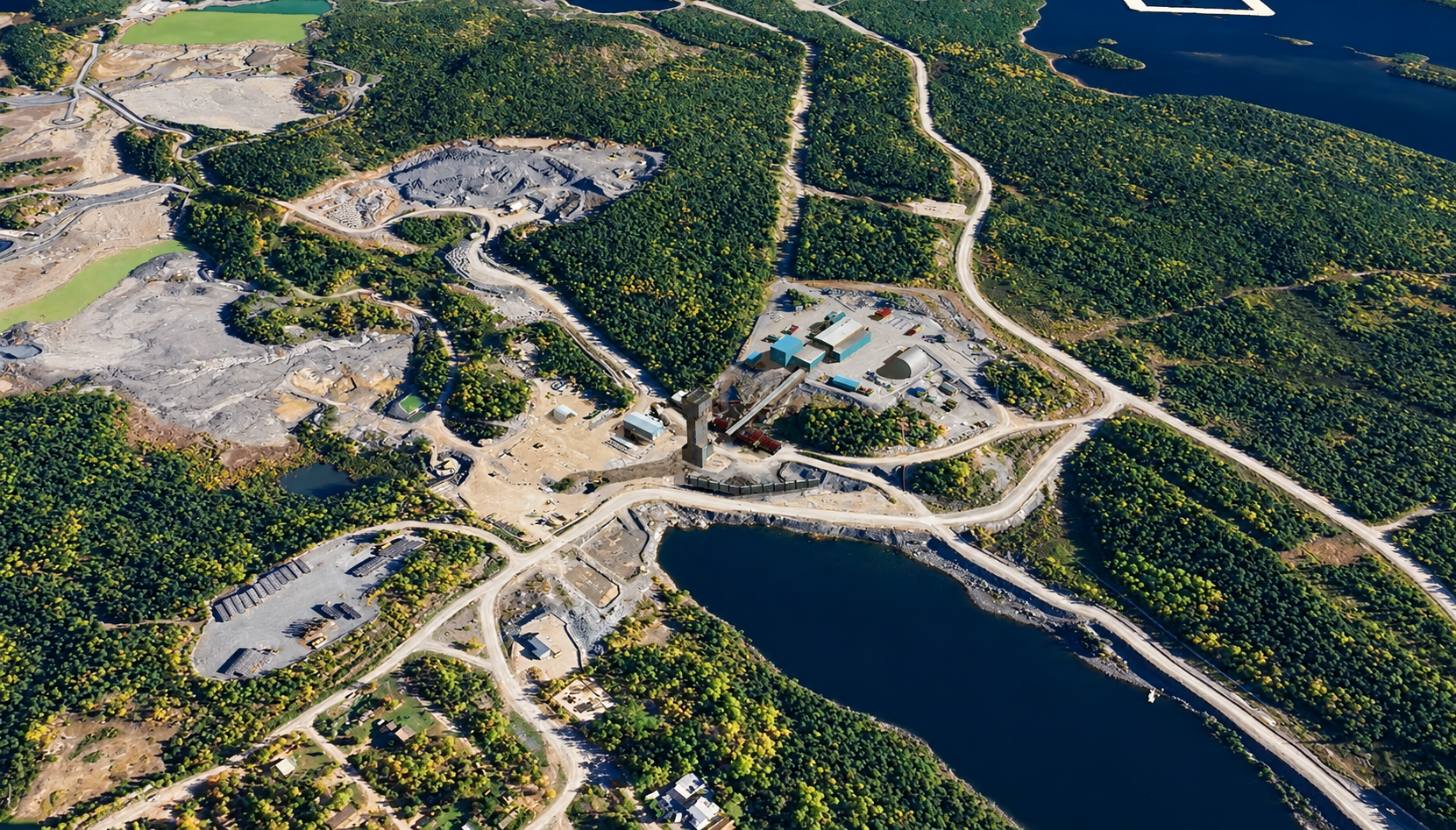
West Red Lake Gold Mines announced results from a completed surface drill program at the Fork deposit, a satellite gold resource located approximately 250 metres southwest of the Madsen Mine and approximately 350 metres from the West Ramp in Northwestern Ontario. The program totalled 3,204 metres of NQ-size (nominal 47.6 mm core diameter) diamond drilling across 17 holes.
Fork is non-remnant and near-surface, sitting outside the previously mined areas that characterize much of the Madsen underground. That geometry matters for mine design. Development from existing Madsen workings, specifically via Level 3 of the McVeigh area, is the conceptual access path. The proximity to established underground infrastructure limits both the capital required to reach the deposit and the time needed to connect it to the existing processing system.
The drill program was designed to inform a construction decision, not to expand the resource footprint. Infill holes averaged approximately 170 metres in depth, reflecting the shallow profile of the target zone.
Infill Drilling & Transition Toward Mine Design
The program focused on a shallow, low-plunging, high-grade gold mineralized zone identified during a 2024 re-evaluation of the Fork deposit. That zone trends north-south, spans approximately 400 metres by 250 metres, and has an average estimated thickness of approximately 2 metres based on existing core length intercepts. Drilling spacing was tightened to approximately 7 metres, consistent with West Red Lake Gold's definition drilling methodology across the main Madsen deposit.
With the program complete, the engineering team has begun initial mine design work at Fork. That sequence, from completed drilling to mine plan inclusion, follows an established internal timeline.
President and Chief Executive Officer of West Red Lake Gold, Shane Williams, is direct about the process:
"It usually takes five to six months by the time you drill an area. You do the design in that area, and you put it into the mine plan."
The practical implication is that a positive construction decision, if reached, could position Fork for integration into the mine plan in the second half of 2026.
Drill Results & Continuity Indicators
The headline intercept from the current program was returned 1.0 metre at grams per tonne gold (g/t Au), including 0.5 metres at 77.8 g/t gold, with visible gold associated with quartz veining and pyrite-pyrrhotite mineralization.
Additional meaningful intercepts included 4.5 metres at 5.8 g/t gold, including 1.0 metre at 7.68 g/t gold and 2.5 metres at 6.97 g/t gold, and 3.3 metres at 4.22 g/t gold from hole WRL25-036, with visible gold identified in quartz-diopside veining. These results sit within a grade range consistent with the deposit's existing resource estimate and confirm continuity across the defined target zone.
The program also returned a secondary intersection of 1.0 metre at 6.13 g/t gold from a deeper interval, indicating grade potential across multiple intervals within a single hole. Not all holes returned assays above 1 g/t gold, as expected given the narrow vein geometry and the program's infill purpose. The aim was geometric and continuity-focused, not grade discovery.
West Red Lake Gold identified a high-grade core target within the deposit in December 2024. Historic drilling at Fork has returned intervals including 13.05 metres at 13.97 g/t gold and 9.3 metres at 8.14 g/t gold, supporting the existence of that core within the broader resource footprint.
Infrastructure Proximity & Access Concept
Fork's location relative to the Madsen Mine is central to the argument for near-term development. At approximately 250 metres from the existing underground development and 350 metres from the West Ramp, the deposit requires relatively limited new lateral development to access.
The conceptual access path, driven from Level 3 of the McVeigh area, would connect Madsen's existing underground workings to Fork via a lateral drift. This non-remnant, near-surface geometry avoids the complications associated with mining previously disturbed ground and provides a cleaner development corridor. Capital requirements for access are lower than for a deposit requiring a new ramp or shaft, and the connection to the existing haulage and processing system is direct.
The structural trend extending from Madsen toward Fork also passes through the Starratt-Olson Mine, a past-producing operation that historically yielded approximately 164,000 ounces of gold between 1948 and 1956. Underground development toward Fork would open additional exploration potential along that corridor as a secondary benefit.
Role Within the Madsen Mine Plan & Feed Strategy
Fork is being evaluated as a source of additional mill feed within a multi-zone operating approach, not as a standalone mine. Within that framework, satellite deposits contribute incremental tonnes that support consistent throughput and enable grade management across the processing cycle.
Williams describes how multiple mining areas are meant to work together:
"You want three or four different mine complexes working together, and you're blending those with some higher-grade pockets."
Fork's resource grade of approximately 5.2 to 5.3 g/t gold, combined with the higher-grade core identified within the deposit, positions it as both a volume contributor and a potential grade-support zone, depending on stope sequencing. The Madsen mill has a permitted capacity of up to 1,000 tonnes per day, and Fork's contribution would operate within that existing envelope, requiring no new processing infrastructure.
Operating Context & 2026 Production Targets
West Red Lake Gold declared commercial production at the Madsen Mine in January 2026, following a ramp-up period in 2025 that included bulk sampling, the mine restart, and steadily increasing production. The fourth quarter of 2025 saw the operation reach 86% of permitted daily mill capacity in December, maintaining throughput consistently above the commercial production threshold across the quarter.
The operational target for steady-state performance in 2026 is 800 tonnes per day at a head grade of 6 to 6.5 g/t gold. Williams is direct about what that looks like:
"So 800 tons a day through that mill consistently, at that average grade of 6 to 6 and a half, maybe more, to bring the overall average up to that higher grade."
The company held approximately CAD$46 million in cash as of January 2026 and is generating free cash flow from current production. Any Fork development, if approved, would be funded from operations. Full-year 2026 production guidance is still anticipated and has not yet been issued as of the date of this article.
Resource Base & Development Constraints
Fork's current mineral resource stands at 20,900 indicated ounces at a grade of 5.3 g/t gold, within 123,800 tonnes, and 49,500 inferred ounces at 5.2 g/t gold, within 298,200 tonnes. These figures reflect the wider deposit and predate the identification of the high-grade core, which targets 130,000 to 150,000 tonnes at 8 to 9 g/t gold within that resource footprint.
Fork is not included in the Madsen Mine pre-feasibility study (PFS), and mining at Fork has not been proven economically through a Preliminary Economic Assessment (PEA), PFS, or Feasibility Study. The mine design work now underway represents the next required step, with an economic viability determination, if positive, to follow the completion of engineering and a formal construction decision. Until that sequence is complete, Fork remains an indicated and inferred resource in proximity to an operating mine rather than a confirmed addition to production inventory.
Decision Path & Near-Term Milestones
The sequence from here is defined by engineering completion and a construction decision. Initial mine design is underway. If economics support development, West Red Lake Gold's corporate roadmap targets a Fork development start in mid-2026, implying a construction decision is expected in the first half of 2026.
Given the approximately five to six months' drill-to-design interval described by management, the window to reach that decision aligns with the current stage of mine design work. Drilling on the adjacent Fork Footwall target, a 300-metre southwestern extension of the Fork zone, remains active and could contribute additional resource definition beyond the current footprint.
The Investment Thesis for West Red Lake Gold
- The Fork deposit sits approximately 250 metres from the existing Madsen underground development, allowing access via a lateral drive from the McVeigh area with limited new capital expenditure.
- Completed infill drilling at approximately 7-metre spacing reduces geological uncertainty and supports the progression from resource definition to design-stage mine planning.
- A multi-zone mining approach, built around blending ore from several complexes, including higher-grade pockets, underpins consistent mill feed and reduces dependence on any single production area.
- Existing mill capacity of up to 1,000 tonnes per day and fully permitted infrastructure provide the framework to process Fork ore without new surface infrastructure.
- West Red Lake Gold is generating free cash flow and holds approximately CAD$46 million in cash, with the Fork development intended to be funded from operations if a construction decision is made following completion of mine design, targeted for 2026.
Fork is a bounded, incremental opportunity. The resource is modest relative to the Madsen Mine's total inventory, economic viability has not been established, and the deposit is not part of the current mine plan. What the infill program has done is reduce geological uncertainty to a level that supports design-stage work. Whether that work yields a development decision, and on what timeline, depends on the economics that emerge from engineering. The proximity to existing infrastructure compresses the capital and time requirements typically associated with satellite mine development. That proximity is the central operational argument for Fork's potential inclusion in the near-term plan.
TL;DR
West Red Lake Gold completed 3,204 metres of infill drilling at Fork, a satellite gold deposit approximately 250 metres from the Madsen Mine, with results confirming grade and vein continuity across the target zone and visible gold in multiple holes. The engineering team has initiated initial mine design, following the company's established drill-to-design process. Fork holds 20,900 indicated ounces at 5.3 g/t gold and 49,500 inferred ounces at 5.2 g/t gold, sits outside the current PFS, and has not been proven economic through a formal study. A construction decision, targeted for 2026, is the next defined milestone for this near-mine resource.
FAQs (AI-Generated)
Fork is a near-surface, non-remnant gold deposit located approximately 250 metres from the Madsen Mine in the Red Lake Gold District of Northwestern Ontario. The deposit is being evaluated as a potential satellite source of ore to supplement mill feed at Madsen, with a construction decision pending completion of mine design.
Infill drilling at close spacing, approximately 7 metres in the case of Fork, is required to confirm grade and vein continuity and refine the geological model to a level that supports detailed mine design. Without that confidence, mine planning cannot reliably define stope geometry, development requirements, or extraction sequencing.
No. Fork is not part of the Madsen PFS, and mining at Fork has not been proven economic through a PEA, PFS, or Feasibility Study. The mine design work now underway is a prerequisite to any formal economic determination.
Fork ore would be processed through the existing Madsen mill, which has a permitted capacity of up to 1,000 tonnes per day. It would function as an incremental feed within a multi-zone blending strategy, contributing volume and grade support alongside ore from the main Madsen zones and requiring no new processing infrastructure.
The next step is completion of the initial mine design, which will inform an economic evaluation and a construction decision. West Red Lake Gold's corporate roadmap targets mid-2026 as the development start window, subject to a positive construction decision.
Analyst's Notes





Subscribe to Our Channel



Stay Informed






















