




White House Supply Chain Executive Order Expands Copper's Defense Role, Supporting Domestic Project Financing



Trump's supply chain policy reinforces an existing copper deficit by expanding domestic financing and sourcing support as physical supply tightens.
- Executive Order 14415 (EO 14415), signed July 20 and published in the Federal Register on July 23, 2026, directs the Department of War (DoW) to map critical supply chains from raw materials to end-use products across all national security-related acquisitions.
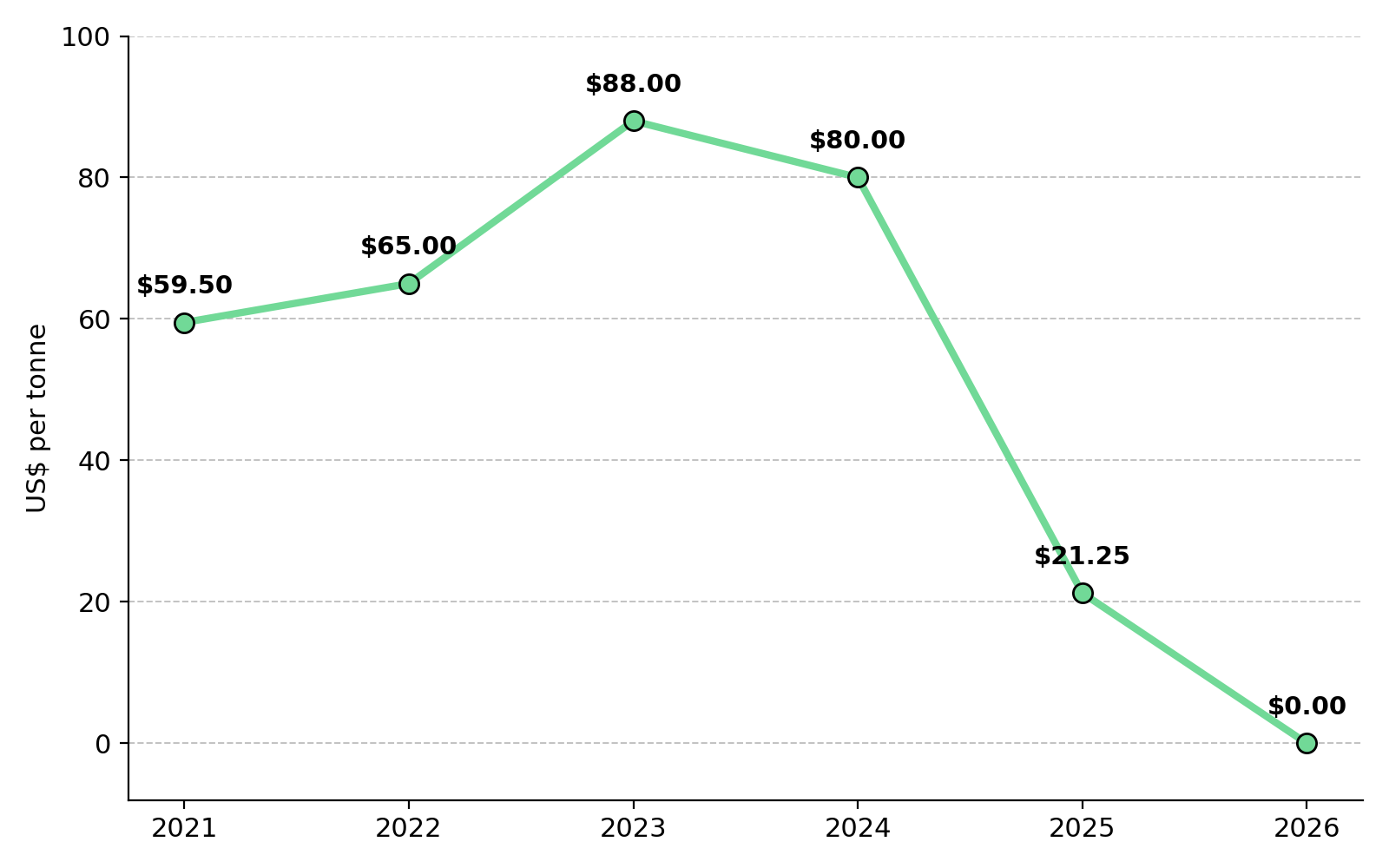
- The International Energy Agency's (IEA) Global Critical Minerals Outlook 2026 identifies a tightening physical copper market, reporting a 2026 benchmark treatment charge of $0 per tonne and sulfuric acid shortages that put more than 15% of global leach-based mine output at risk.
- Chile's July storms suspended an estimated 1.6 million tonnes of annual copper production capacity, while China's value-added tax enforcement crackdown pushed the Yangshan import premium to $100 per tonne, tightening copper availability outside the US even as inventory shifted into record COMEX warehouses rather than reflecting new mine supply.
- Federal capital programs, including the Department of Energy's (DoE) Energy Dominance Financing Program with more than $250 billion in loan authority and the DoW's Office of Strategic Capital with more than $100 billion, are expanding financing access for permitted US copper developers.
- The unresolved Section 232 refined copper cathode tariff decision and the July 30 country-of-origin reporting mandate from US Customs and Border Protection (CBP) are the two near-term catalysts that will show whether US-produced copper can command a larger domestic price premium.
EO 14415 Expands Defense Supply Chain Oversight, Supporting Domestic Copper Development
President Trump signed EO 14415, titled "Securing America's Defense Supply Chains and Ensuring Domestic Acquisition of Critical Materials," on July 20, 2026, with the order published in the Federal Register on July 23. The order combines a broad supply chain mapping requirement that could encompass copper with narrower waiver restrictions that apply only to covered materials under 10 USC 4872. Together, these provisions explain why domestic copper projects are gaining support through both procurement policy and federal financing programs.
Defense Supply Chain Mapping Expands to Raw Materials, Broadening Copper's Policy Support
Section 3 of EO 14415 directs the DoW, within 180 days, to require prime contractors and subcontractors at every tier to map critical supply chains for national security-related acquisitions from raw materials to end-use products. The order gives the Secretary of War authority to define the covered raw materials as part of that process, extending the review beyond the specific materials listed under 10 USC 4872. Copper is used across defense manufacturing, including wiring harnesses, munitions components, electronics, and communications systems. That broad defense footprint positions copper as a natural beneficiary of the Administration's expanded supply chain mapping initiative, supporting the policy case for domestic copper developers regardless of how the waiver provisions are implemented.
Waiver Restrictions Prioritize Molybdenum & Magnet Metals, Benefiting Copper-Molybdenum Projects
The order's second provision, effective January 1, 2027, limits the Defense Secretary's authority to issue waivers under 10 USC. 4872 for covered materials sourced from covered nations unless a contractor submits a formal mitigation plan. Covered materials under 10 USC. 4872 include inputs used in magnets, armor, and munitions, including tungsten and neodymium, while the Fiscal Year 2026 National Defense Authorization Act, signed in December 2025, added molybdenum, gallium, and germanium to the list. Copper-molybdenum porphyry projects align more directly with these waiver restrictions than copper-only assets, creating an additional policy advantage for developers with molybdenum exposure. Together, the mapping requirement broadens the policy focus to domestic copper supply chains, while the waiver restrictions provide an additional procurement advantage for projects with molybdenum exposure.
IEA-Confirmed Supply Deficit Strengthens Domestic Sourcing Policy, Supporting US Copper
EO 14415 was introduced as the IEA identified a tightening physical copper market, reinforcing an existing supply deficit rather than responding to balanced market conditions. The combination of tighter physical supply and domestic sourcing policy increases the likelihood that any premium for US-produced copper will be supported by market conditions rather than policy alone.
Sulfuric Acid Shortages Reduce Leach-Based Copper Supply, Reinforcing the IEA's Deficit Outlook
The IEA's Global Critical Minerals Outlook 2026 identifies a worsening short- and medium-term copper supply outlook, citing sulfuric acid shortages as a risk to solvent extraction and electrowinning (SX-EW) production. The February closure of Gulf shipping routes through the Strait of Hormuz disrupted roughly half of global seaborne sulfur trade, while China's sulfuric acid export ban from May through year-end compounded the shortage. The IEA estimates that sulfuric acid shortages put more than 15% of global leach-based copper mine output at risk, specifically identifying the Democratic Republic of Congo (DRC), where roughly 45% of copper production depends on acid leaching, and Chile's oxide operations. The annual benchmark treatment charge for copper concentrates settled at $0 per tonne for 2026, the lowest level on record, reflecting intense competition among smelters for limited concentrate supply. Chile's atmospheric river storm during the week of July 14 to 20 suspended an estimated 1.6 million tonnes of annual copper production capacity, while Codelco estimated El Teniente faced roughly $7.5 million per day in lost production during the shutdown.
China's Scrap Crackdown Tightens Refined Copper Supply, Shifting Inventories to US Warehouses
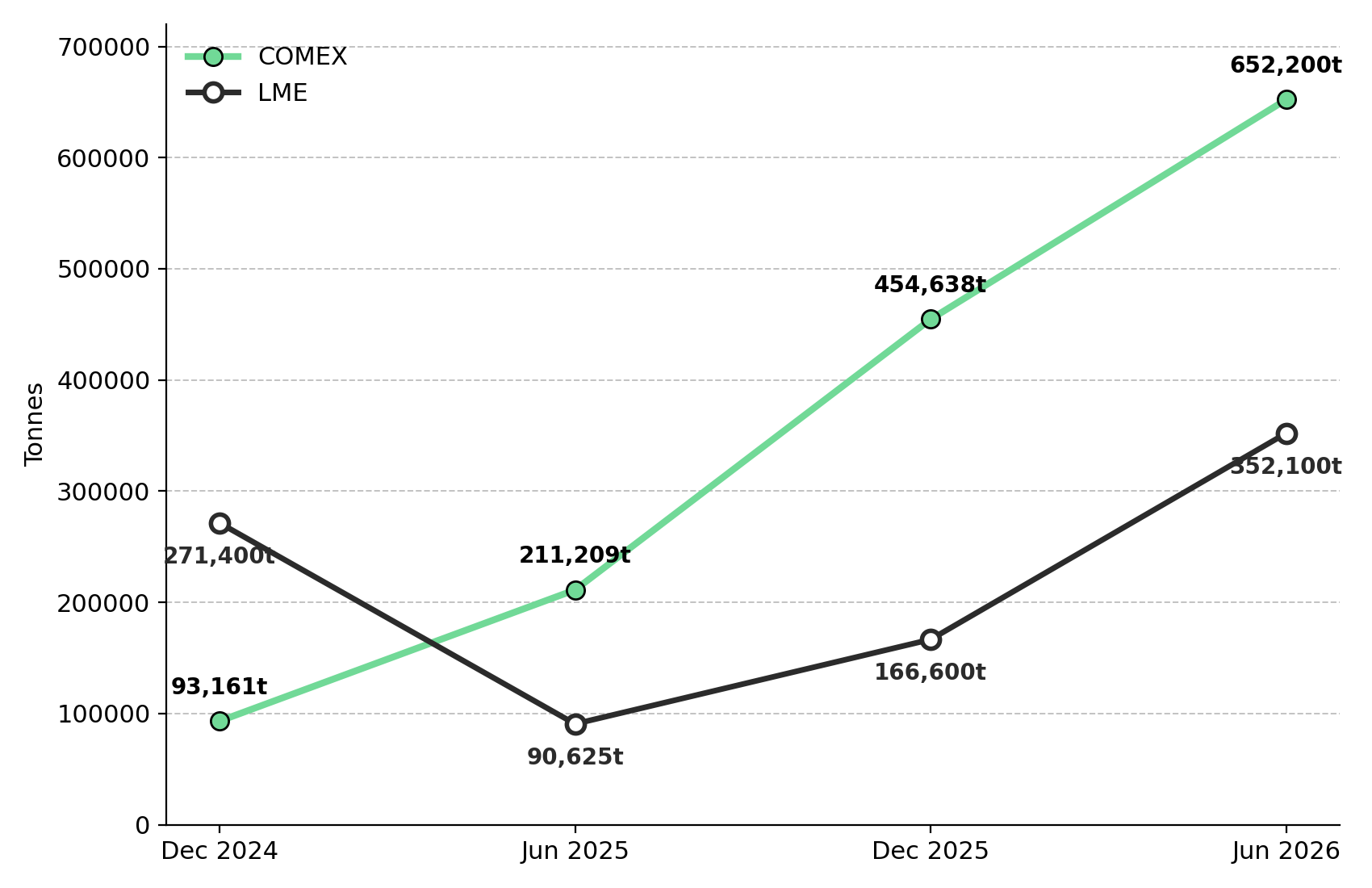
Beijing's crackdown on invoice fraud in the scrap trade has constrained domestic scrap supply, forcing Chinese buyers to substitute refined copper cathode. The Yangshan copper import premium reached $100 per tonne on July 17, its first triple-digit reading since May 2025, up from $20 per tonne in late January. Shanghai Futures Exchange (SHE) copper stocks fell 20% in a single week over the same period, while London Metal Exchange (LME) on-warrant inventories fell to their lowest level since March. In contrast, COMEX-tracked copper inventories have expanded for eight consecutive quarters to a record high, reflecting inventories shifting to US warehouses rather than new mine supply entering the market. The inventory shift toward US warehouses began before EO 14415, reinforcing that federal financing programs are supporting an existing domestic sourcing trend.
Federal Capital Programs Expand Financing Access for Permitted US Copper Projects
Beyond procurement policy, the Administration is backing its domestic sourcing strategy with expanded federal financing programs. The DoE's Energy Dominance Financing Program provides more than $250 billion in loan authority through direct loans and loan guarantees, lowering financing costs for large-scale copper projects. The DoW's Office of Strategic Capital provides more than $100 billion in additional financing capacity for qualifying projects. The DoE's Section 48C tax credit program and state incentives, including those offered by the Arizona Commerce Authority, expand financing options for copper projects regardless of whether they qualify under 10 USC 4872. Together, these programs expand access to non-dilutive capital for permitted US copper projects while reinforcing the Administration's domestic sourcing strategy.
For pre-production copper developers, access to non-dilutive federal capital changes project financing. Projects with high upfront capital expenditure typically rely on a mix of equity and project debt to reach construction, with NPV and IRR helping determine financing terms. Low-cost federal debt facilities reduce reliance on equity financing, lowering potential shareholder dilution during the capital-intensive construction phase. Federal financing lowers project funding costs but does not replace strong project economics. Capital intensity, NPV, IRR, and projected operating costs still determine whether a project can attract institutional capital.
Gunnison Copper has disclosed its acceptance into the Defense Industrial Base Consortium and its eligibility for the DoE's Energy Dominance Financing Program and the DoW's Office of Strategic Capital, positioning the company for potential access to non-dilutive federal funding. The company was also the only copper project to receive a DoE Section 48C tax credit allocation in 2025, valued at $13.9 million, and has since submitted its certification requirements to the department, with monetization still pending. Arizona state incentives have also been confirmed, although the funding amount has not yet been disclosed and remains under audit. Johnson Camp Mine has been producing copper cathode since August 2025 and sells directly to Amazon Web Services for US data center use, demonstrating that domestic copper production is already supplying commercial end users. The company's Arizona permits were largely issued under a prior operating plan, meaning its path forward runs through amendments rather than new approvals. Craig Hallworth, President & Chief Executive Officer of Gunnison Copper, explains what attracted retail investors to Johnson Camp:
""Retail investors saw that we were building a new mine, the first one in the US in many, many years, that would produce finished copper, and everyone got extremely excited... We added 500 million pounds of copper. We went from 2.7 billion to 3.2 billion pounds in the project and that was on a 5 million USD budget. With 15 to 20 million USD budget, we should be able to add 2 billion pounds of copper to this project with our new drill program."
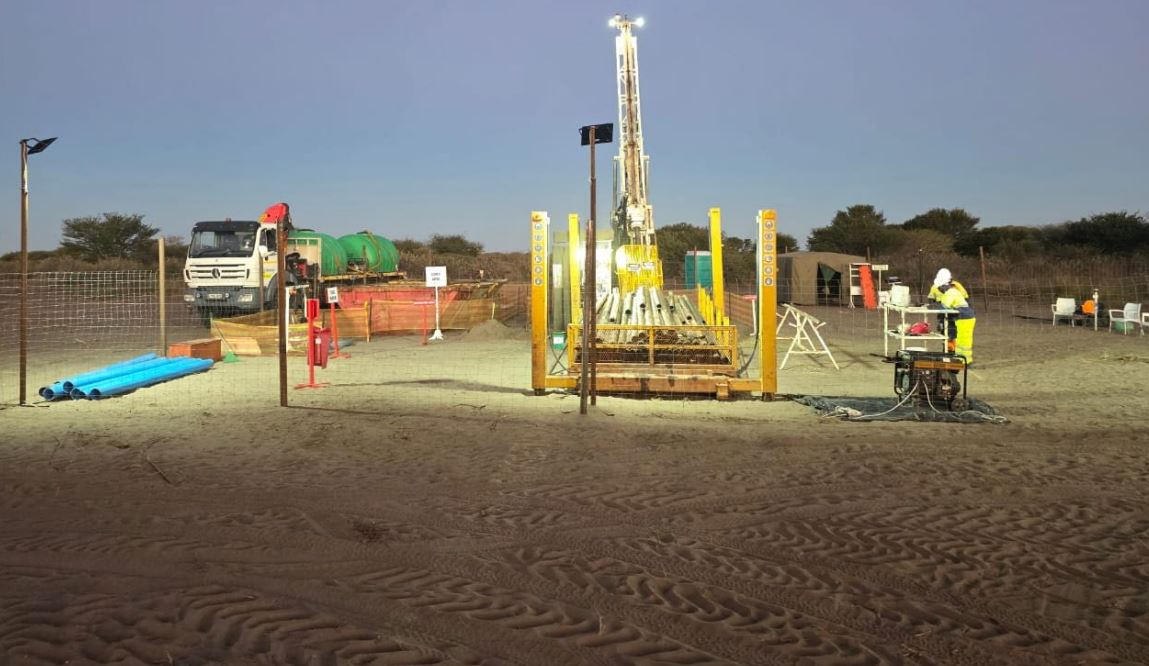
Johnson Camp Mine's solvent extraction and electrowinning plant was built with 25 million pounds per annum of processing capacity, following $143 million in construction capital and creating more than 250 jobs during the build. Production began from run-of-mine oxide material in August 2025, with output from Rio Tinto's Nuton sulfide leach technology added in December 2025, extending the mine's processing base beyond oxide ore alone.
Delayed Cathode Tariff Shifts Focus to Country-of-Origin Reporting, Providing the First Market Signal
The Commerce Secretary was required to submit a recommendation to the President by June 30, 2026, on whether to proceed with a phased tariff on refined copper cathode imports of 15% from January 2027, rising to 30% from January 2028. No public decision had been announced after the June 30 deadline, leaving the proposed tariff unresolved. The COMEX-LME spread has remained near $400 per tonne, indicating that the market continues to price in tariff risk despite the absence of a formal decision. US refined copper imports averaged roughly 140,000 tonnes per month from January 2025 through May 2026, nearly double the 2024 monthly average, underscoring the importance of any future tariff decision.
Before any tariff decision, the market will receive its first operational signal of the Administration's domestic sourcing strategy. Mandatory reporting of copper smelt and cast country of origin under the April 2 Section 232 proclamation becomes mandatory in CBP's Automated Commercial Environment (ACE) production environment on July 30, 2026, after becoming available for testing in the certification environment on July 16. Although this requirement and EO 14415 arise from different statutory authorities, both strengthen traceability by establishing verified origin for copper entering US supply chains.
For the copper market, the ACE reporting requirement is the more immediate catalyst than the unresolved Section 232 cathode tariff decision. The volume of import entries flagged as non-compliant or adversary-sourced after the requirement takes effect will provide an early measure of how much copper entering US supply chains meets verified domestic or allied sourcing standards before any Section 232 tariff decision.
Physical Copper Deficit, Not Policy Alone, Continues to Support Copper Prices
The physical copper deficit remains the foundation of the policy case presented in EO 14415. The DoW's 180-day mapping guidance will determine how the order is implemented across defense supply chains, including the treatment of raw materials used in those systems. The scope of the mapping guidance remains the key policy milestone to monitor as EO 14415 moves from directive to implementation.
Fed policy remains the principal macroeconomic risk to the copper outlook. The Fed held its target range at 3.50% to 3.75% on June 17 alongside a hawkish dot plot and 4.2% inflation, maintaining a headwind for dollar-priced copper that domestic sourcing policy cannot offset. The physical copper deficit, IEA evidence of acid-constrained mine supply, federal financing programs, and EO 14415 are all established elements of the current market, while the DoW's mapping guidance and the Section 232 cathode tariff decision remain the principal policy uncertainties. US policy reinforces an existing physical copper deficit rather than creating one. Future developments should therefore be assessed by whether policy accelerates domestic copper supply into an already constrained market.
The Investment Thesis for Copper
- Copper developers with permitted US projects and a credible path to production have a financing advantage over pure exploration companies because federal loan and tax credit programs prioritize projects nearing construction.
- State-level permitting frameworks increasingly differentiate US copper projects, with developers amending existing permits generally positioned to reach construction sooner than projects requiring entirely new approvals.
- Electrification, grid infrastructure, and defense manufacturing continue to support copper demand beyond any single policy action, while the IEA's projected supply deficit indicates the market is already undersupplied.
- Non-dilutive government financing lowers funding costs, but capital intensity per tonne of production capacity and all-in sustaining cost still determine which copper projects can secure institutional capital on favorable terms.
- Non-dilutive government funding lowers financing costs, but projects still require strong NPV and IRR to secure long-term institutional capital.
- Developers with domestic offtake agreements are better positioned to navigate commodity price cycles because committed customers provide greater revenue visibility than projected future demand alone.
The US government is pursuing two complementary strategies: tracing the origin of critical materials and financing domestic production. Copper aligns with both initiatives, even as the Department of War continues defining which raw materials fall under EO 14415. The IEA identified a physical copper deficit before EO 14415, indicating that the investment case does not depend on any single regulatory decision. The key question is how quickly permitted, financeable US copper projects can enter production to reduce a supply shortfall that is already measurable today. The next phase will be defined by how the Department of War applies EO 14415 and whether subsequent policy accelerates domestic copper supply into an already undersupplied market.
TL;DR
President Trump's EO 14415 expands defense supply chain oversight to include raw materials, strengthening the policy case for domestic copper production through procurement initiatives and expanded federal financing programs. However, the investment thesis extends beyond policy. The IEA identifies an existing physical copper deficit driven by sulfuric acid shortages, constrained mine supply, weather disruptions in Chile, and tighter refined copper availability in China. Together, these factors support US copper developers with permitted projects and access to non-dilutive capital. Investors should monitor the Department of War's implementation of EO 14415, mandatory country-of-origin reporting, and the unresolved Section 232 copper tariff decision as the next catalysts for the domestic copper market.
FAQs (AI-Generated)
Analyst's Notes





Subscribe to Our Channel








Stay Informed


