With Funding & Permits in Place, GR Silver's Drilling Shapes 2027 Resource Update


GR Silver reports C$26 million in cash and a 5-year drill permit, while drilling pace and infill results shape the first half 2027 resource update.
- GR Silver Mining Ltd. reported C$26 million in cash as at September 10, 2026, and management describes the company as fully funded.
- A 5-year drill permit is granted at San Marcial, and the company lists Plomosas as a past producer with all major permits, with SEMARNAT confirming that no new Environmental Impact Authorization is required.
- Management says the drill program has continued under its current exploration team, and a San Marcial step-out hole returned 45.1 meters true width at 1,623 grams per tonne silver, which management says validated the geological model.
- As of September 8, 21 holes were drilled, with assays pending from 7, and management attributes the slower pace to the distance from its new base in Durango, intermittent security issues in Sinaloa, and the wet season.
- Drilling pace and converting infill drilling into ounces remain open items ahead of the resource update and preliminary economic assessment targeted for the first half of 2027.
What Has Happened
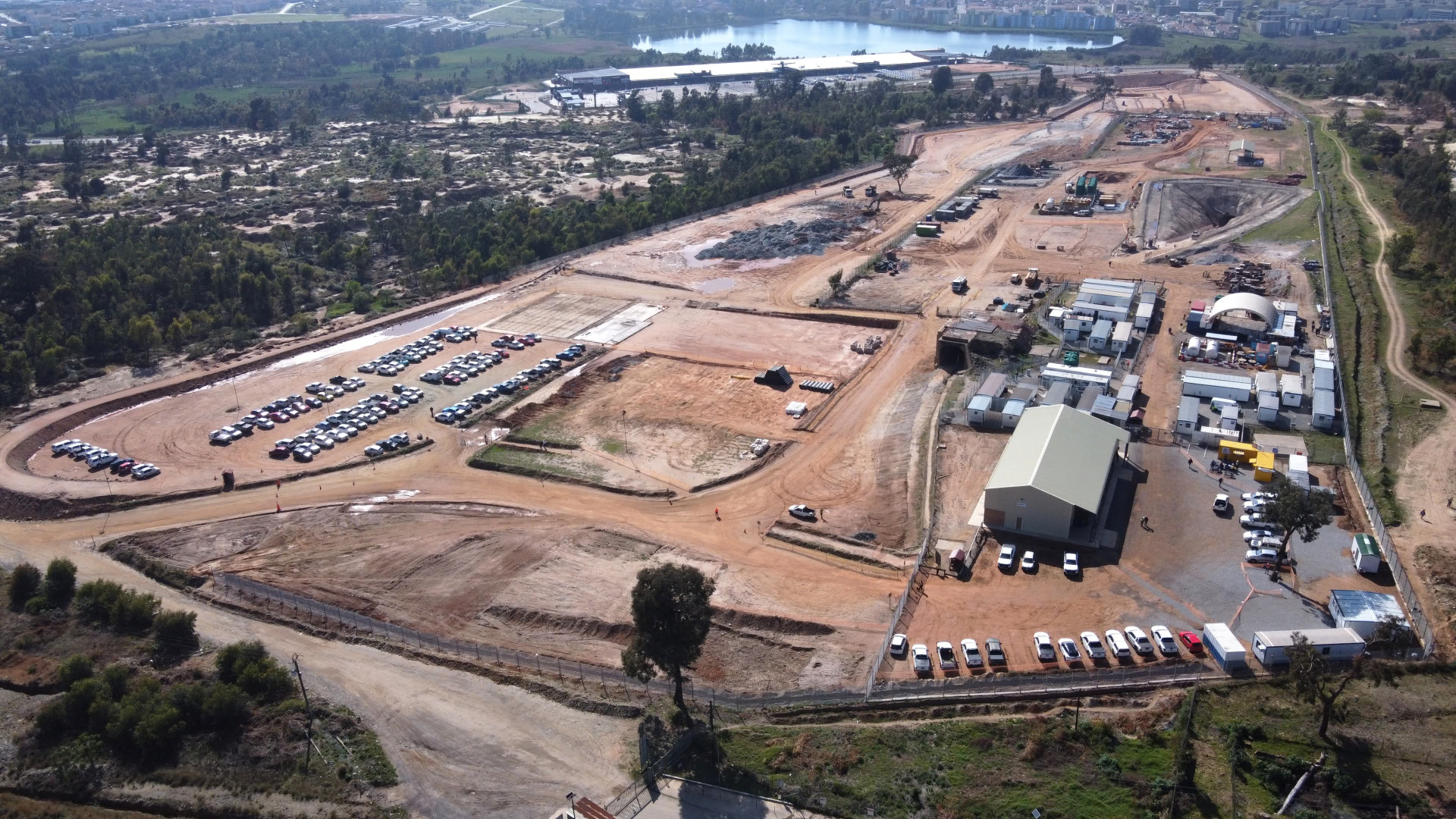
GR Silver Mining Ltd. (TSXV: GRSL | OTCQX: GRSLF | FRA: GPE) is advancing a 20,000-meter drilling program at San Marcial in Sinaloa, Mexico, during a period of slower drilling. Management's disclosures document 4 risks as addressed: funding, drilling permits, team continuity, and the geological model. The 2 open items are drilling pace and whether infill drilling converts into resource ounces, with a resource update targeted for the first half of 2027.
Funding & Permits Are Documented
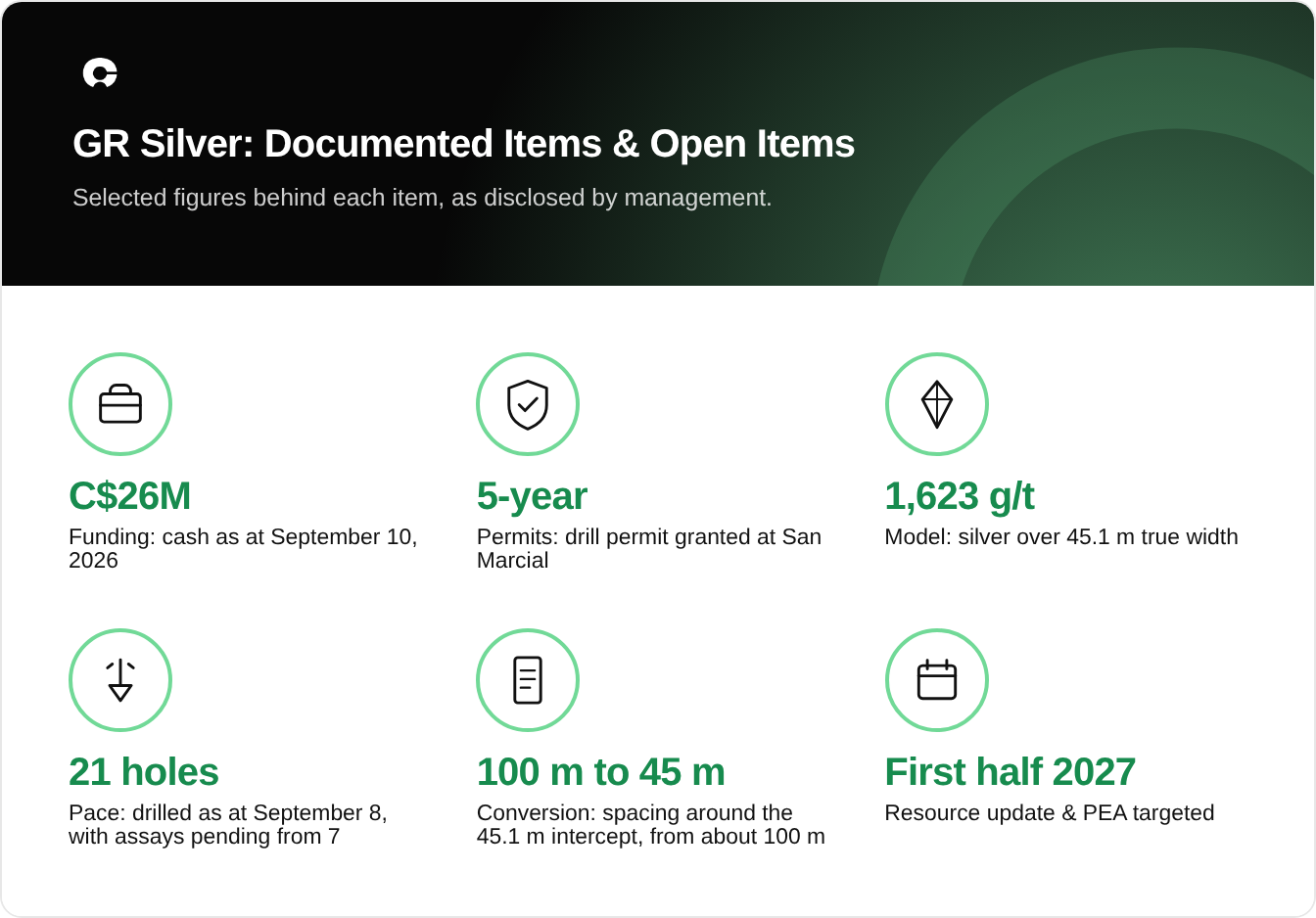
Cash stood at C$26 million as at September 10, 2026, and management describes the company as fully funded. The capital structure lists 516 million shares outstanding and 114 million warrants with an average price of C$0.26. The 20,000-meter drilling program at San Marcial runs under a 5-year drill permit, which the company lists as granted.
At Plomosas, the former mine, the company lists the property as a past-producer with all major permits and says SEMARNAT confirmed that no new Environmental Impact Authorization (EIA) is required. President & Chief Executive Officer of GR Silver Mining, Eric Zaunscherb, used narrower wording, describing the mine as largely permitted, and said management would like to put a pilot plant on site or enter a toll milling arrangement.
The company also lists 21 underground areas at Plomosas that are accessible for bulk sample test mining (BSTM). IMMSA, a Grupo Mexico subsidiary, mined more than 2.5 million tons of ore from the property between 1986 and 2000.
Team Continuity & a Model Validated at San Marcial
The drill program has continued under the company's current exploration team, which is led by Vice President of Exploration Luis Coto. Zaunscherb described the message he took to the teams in Mexico:
"I went down to Mexico, met with the teams, and made sure that they knew that we were continuing with our drill program and continuing to advance the Plomosas project."
The geological model that team applies produced a step-out hole with 45.1 meters true width at 1,623 grams per tonne (g/t) silver, including 8.25 meters at 8,579 g/t silver with 1.6% lead and 5.5% zinc. The company says the hole was designed to test a structural inflection zone and validated the structural intersection model. Zaunscherb describes that model as an intrusive body draped in hydrothermal breccia that formed 4 or 5 times, cut by faults that open the breccia where pressure drops and metals fall out.
Drilling Pace & Resource Conversion Are the Open Items
The company attributes the slower drilling pace to the added distance to the project from its new base in Durango, intermittent security issues in Sinaloa and surrounding areas, and the ongoing wet season. It has launched several initiatives to reaccelerate drilling and is targeting the fourth quarter for results. As it completes the 20,000-meter drilling program, the company targets delivering drill results in batches every 5 to 6 weeks. On security, the company works with risk management advisers.
Zaunscherb sees 1 offsetting benefit to the slower pace:
"The silver lining to a slower pace is that it allows us to respond to drill results as our program progresses."
Pace feeds timing because management says the resource update follows completion of the drill program. The company is targeting that update, together with a preliminary economic assessment (PEA), for the first half of 2027. Ahead of that update, the company lists 55 million ounces of silver indicated and 22 million ounces inferred.
Conversion depends on infill. Zaunscherb said the company was moving its drill rig back to the platform that drilled the 45.1-meter intercept, tightening spacing around it from about 100 meters to 45 meters, which will allow the update to have indicated and inferred resources there.
What to Watch Next
The company lists 5 catalysts: the 20,000-meter resource expansion drilling program, a resource update, a PEA, a BSTM program, and pilot plant engineering. The 3 events below show how drilling pace, conversion, and Plomosas activity develop:
- Assays from the 7 pending holes and the effect of the initiatives aimed at reaccelerating pace in the fourth quarter.
- Drill results in batches every 5 to 6 weeks as the 20,000-meter drilling program is completed, followed by the resource update and PEA the company is targeting for the first half of 2027.
- Plomosas activity, with management naming a pilot plant on site or a toll milling arrangement as the options.
Funding and permits are documented, so each assay batch adds evidence on pace and each infill hole adds evidence on conversion.
FAQs (AI-Generated)
Analyst's Notes





Subscribe to Our Channel



Stay Informed