Eagle Plains Eyes District Scale with Partner-Funded Uranium and Self-Funded Zinc Drilling



Eagle Plains (TSXV:EPL) advances partner-funded uranium drilling at Uranium City and zinc at George Lake, backed by TerraLogic cash flow and no dilution.
- Eagle Plains Resources partners with Xcite Uranium Xcite Uranium to fund drilling across six Uranium City projects, with three drilled so far and Don Lake assays still pending.
- Eagle Plains retains a 20% interest carried to a bankable feasibility study on a deal worth just over $19 million in exploration commitments.
- Self-funded drilling at George Lake extended zinc mineralisation up to 260 metres down dip, with only about 400 metres of a roughly 20-kilometre horizon tested.
- TerraLogic Exploration estimated around $12.5 million in first-half 2026 revenue and typically returns $1-2 million a year to Eagle Plains.
- With about $7.5 million in cash and over $4 million in securities, Eagle Plains can keep exploring without issuing new shares.
Junior exploration has a familiar problem. Discovery takes years, and most explorers fund that wait by selling new shares at whatever price the market offers. Eagle Plains Resources (TSXV:EPL) has spent more than 30 years avoiding that cycle. The Cranbrook, British Columbia-based project generator stakes ground, completes early work with its own cash and then options projects to partners who fund the expensive drilling.
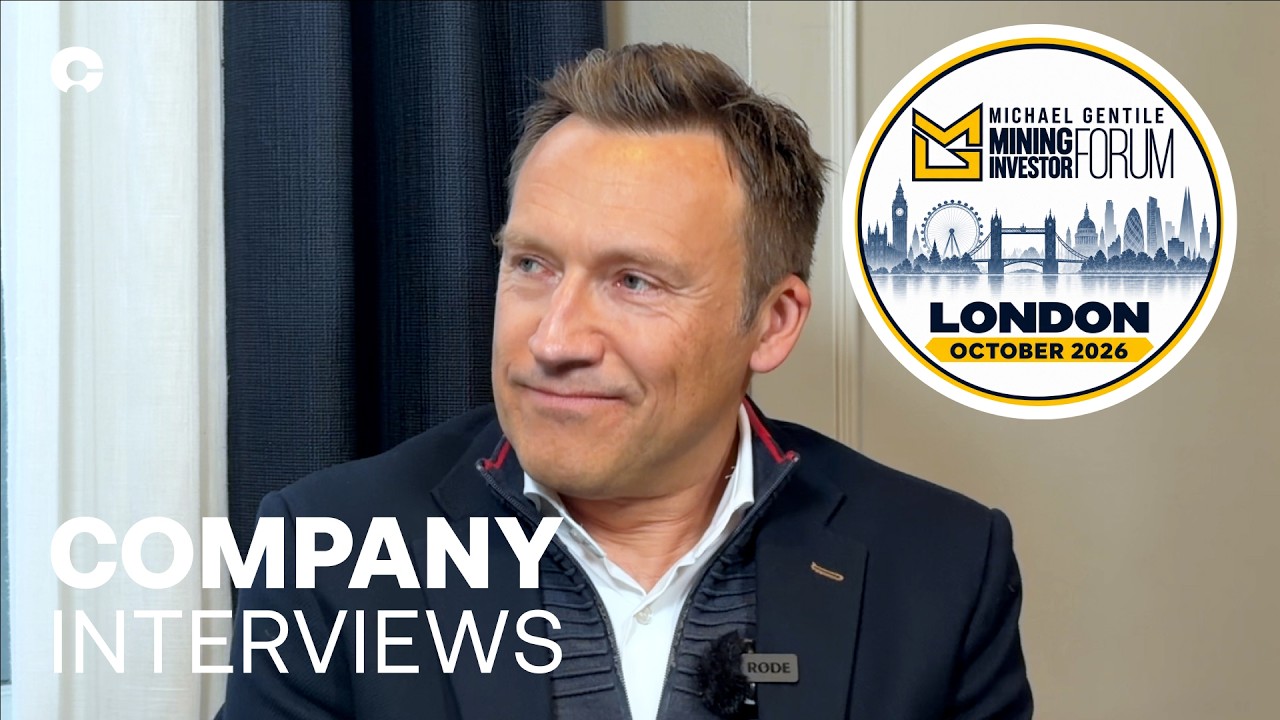
President and CEO Chuck Downie gave an update on the 2026 field season, from partner-funded uranium drilling at Uranium City to self-funded zinc drilling at George Lake. Behind it sits a wholly owned contracting subsidiary that Downie expects to post one of its best revenue years on record.
A Project Generator with Its Own Revenue
Eagle Plains describes itself as a company of geologists and technical people. It acquires projects mainly through staking, occasionally through purchase agreements, and looks for partners once a project has enough early data to attract one. Under a typical option deal, the partner funds exploration and makes milestone payments to earn an 80% interest. Eagle Plains keeps 20%.
The difference from many peers is cash flow. Some revenue comes from option payments. More of it comes from TerraLogic Exploration, a wholly owned geological contractor that runs field programmes for third parties as well as for Eagle Plains projects. Downie said Eagle Plains worked on around 25 projects in 2026, including five or six drill programmes and more than 20 grassroots programmes.
George Lake: Testing the 20-Kilometre Scale
George Lake in Saskatchewan is one of the projects Eagle Plains is funding itself, and it holds a 100% interest. The zinc deposit carries a historical resource of about 7 million tonnes at around 4% zinc and had seen no work since the 1980s. Eagle Plains drilled three holes there earlier in 2026.
According to Downie, the holes intersected mineralisation up to 260 metres down dip of the historical results and showed it to be highly consistent. Only about 400 metres of strike has been tested. The projected host horizon runs for about 20 kilometres. The company also has an agreement in place with local First Nations.
Downie was clear that a partner will come once the deposit is shown to be much larger.
"I think that the way to get a partner on this project is to make it giant. Like right now the historical resource is around 7 million tons of 4%. If we could make it 60 million tons or 80 million tons of 4% that would be very attractive."
He pointed to a Swedish deposit of similar grade that he said operated for almost 70 years. A return to George Lake for further drilling is likely in the next 12 months.
Uranium City: $19 Million Partner Programme
The largest partner-funded programme sits around Uranium City in northern Saskatchewan. Eagle Plains began staking there about three years ago. It assembled six projects that cover five past-producing mines and about 50 mineral occurrences. Xcite Uranium (CSE:XRI) optioned the package roughly two years ago.
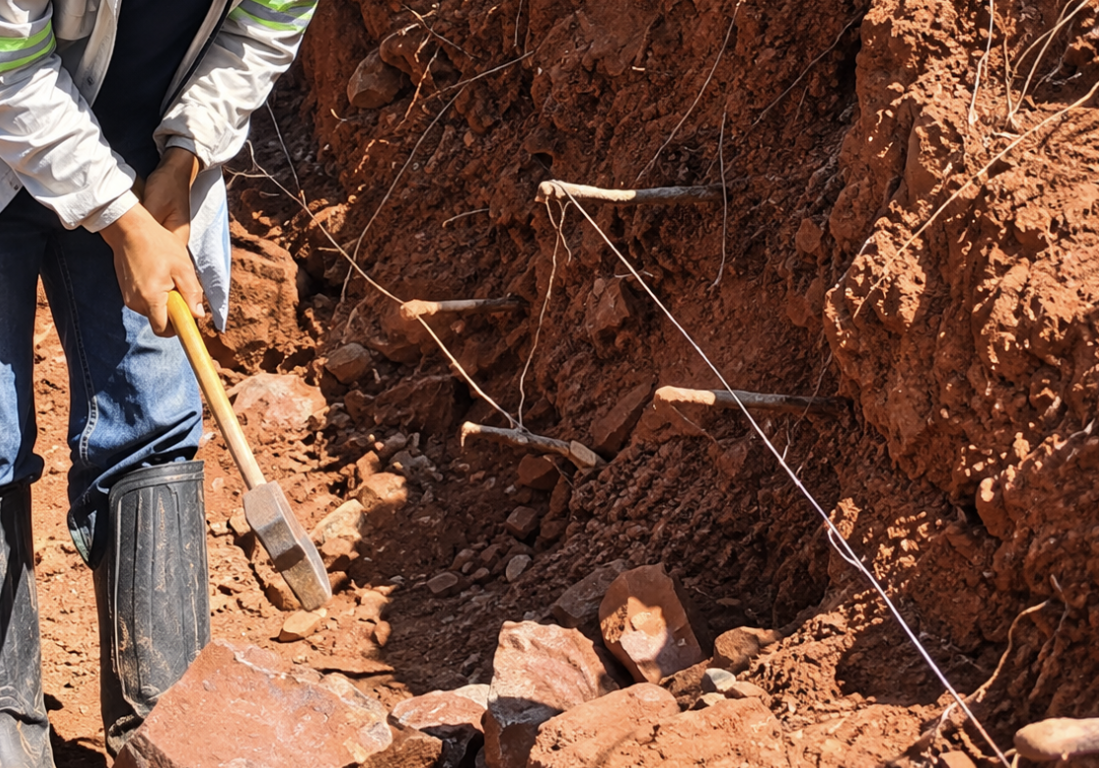
Work stepped up sharply in 2026. An airborne survey and field programmes were followed by a drill campaign that began in late August. Three projects have been drilled, a fourth was under way at the time of the interview, and the weather window may push the rest into 2027. Targets include Beaverlodge-style, basement-hosted and unconformity-hosted uranium. Most projects have not been worked for around 30 years, and Eagle Plains is applying LiDAR, detailed magnetics and soil geochemistry where earlier explorers relied on handheld scintillometers.
At Don Lake, the first project drilled, downhole probes returned strong radiometric results from all three zones tested. Holes were drilled beneath short historical holes from the 1960s or early 1970s. Downie said there appears to be potential to link the zones and extend mineralisation to depth. Assays are still pending, and these will determine the actual grades.
Downie also highlighted a practical advantage. Mineralisation at Uranium City starts at or near surface, so holes of 80 to 100 metres are reaching target. Many projects elsewhere in the basin require drilling through 200 to 400 metres of sandstone first. The agreements also sit within a formal agreement with local First Nations, who Downie said are supportive and involved.
Interview with Charles C. Downie, President & CEO of Eagle Plains Resources
Deal Terms, What Eagle Plains Keeps
The Xcite option runs over three to four years. Downie put total exploration commitments at just over $19 million, plus $330,000 in cash and roughly 4.5 million Xcite shares. About $6 million was spent in 2026. To complete its earn-in by the end of 2027, Xcite would need to spend about $12 million next year on a mix of drilling and fieldwork.
Eagle Plains operates the programme and charges a management fee. TerraLogic performs the fieldwork. A technical committee meets weekly during drilling, and Downie said the two companies have so far been aligned on priorities.
Once Xcite earns in, Eagle Plains retains a 20% interest carried to a bankable feasibility study. Only then does an 80:20 joint venture begin, with Eagle Plains funding its share. If Xcite cannot raise the money to advance the projects, Downie said Eagle Plains could recover them at 100% without payment.
Early-Stage Pipeline: Theory, Orbit and Iron Range
Earlier-stage deals are structured differently. Theory, a copper-gold porphyry project in the Toodoggone district of British Columbia, is optioned to Sun Summit Minerals (TSXV:SMN). After new discoveries in 2025, a second field season in 2026 found more mineralisation of a similar style. Assays are pending and a news release is being prepared. If Sun Summit stays in the deal, it must complete at least 1,000 metres of drilling next year. Downie described the earn-in as reaching 75%, with a one-time cash payment of $1 million for the remainder, and Eagle Plains retaining a net smelter return (NSR) royalty.
Remote sensing over the wider area led Eagle Plains to stake the adjacent Orbit project, now held as a 51:49 joint venture with Sun Summit. Half a day of work in 2025 returned grab samples of up to 3 g/t gold and 0.5% copper. More copper mineralisation was found in 2026, with assays pending. Further fieldwork and an induced polarisation (IP) survey are planned, with drilling possible in 2027 or 2028. Eagle Plains has also staked two more 100%-owned projects in the same area.
At Iron Range in south-eastern British Columbia, partner Earthwise Minerals drilled three holes in 2026. The project hosts a historical intercept of 14 metres at 5 g/t gold within a structurally controlled breccia system along the 70-kilometre Iron Range fault. This year's drilling returned 50 metres at 0.7 g/t around the known body. It also cut an upper mineralised horizon that lines up with a geochemical anomaly and an IP chargeability anomaly. Eagle Plains is preparing a proposal for more IP work to generate drill targets.
Downie said Eagle Plains keeps a royalty on all of its projects as a hedge against eventual production. The company announced an agreement to sell five non-core claim blocks to Apogee Minerals (TSXV:APMI) for $20,000 in cash, 1 million shares and a 2.5% NSR. The sale remains subject to TSXV acceptance. Eagle Plains also confirmed that the Brownell Lake option with Pacific Imperial Mines has been terminated.
TerraLogic, Treasury & the Spin-Out Record
TerraLogic employs about 18 to 20 full-time staff and hires another 60 to 80 seasonally. Downie said it typically returns $1-2 million a year to Eagle Plains. First-half 2026 revenue was around $12.5 million, compared with about $3.6 million a year earlier.
Eagle Plains holds about $7 million to $7.5 million in cash, just over $4 million in securities, much of it received as share payments from partners, and about $2.2 million in hard assets. Because of its cash flow, it can go years without raising money, and in 30 years it has never consolidated its shares.
Spin-outs are the other route to shareholder returns. Eagle Plains moves projects or royalties into a new company and distributes shares to its own shareholders, usually on a one-for-two or one-for-three basis. Taiga Gold was financed separately and later sold to SSR Mining for cash. Eagle Royalties was acquired through a transaction with Summit Royalties. "So when they get sold it's like a dividend to the shareholders. It's also a dividend back to Eagle Plains," Downie said, noting the company always retains shares in its spin-outs. The company states that spin-outs have delivered more than $115 million in value to shareholders.
Investment Thesis for Eagle Plains Resources
- Eagle Plains offers exploration exposure across around 25 active projects without the dilution typical of junior explorers, supported by TerraLogic cash flow.
- The Xcite option could fund up to about $12 million of Uranium City exploration in 2027, with Eagle Plains carried to a bankable feasibility study on its 20%.
- George Lake gives 100%-owned exposure to scale, with only about 400 metres of a roughly 20-kilometre horizon tested so far.
- Investors should monitor Don Lake assays, which will show whether the strong radiometric readings translate into grade.
- Theory assays and Sun Summit's decision on its minimum 1,000-metre drill commitment are a near-term watch item.
- Year-end financials should show whether TerraLogic's record first half carries through the full year.
Macro Thematic Analysis
The Eagle Plains model is built for a sector where capital is scarce and patience is expensive. Many juniors fund exploration by issuing equity into weak markets, which dilutes holders before discovery value arrives. A project generator spreads risk across many projects and passes most drilling costs to partners. Eagle Plains adds a contracting business that earns money from the same field activity, whether it is working on its own projects or for others.
Uranium is where the partner model is most visible this year. Saskatchewan's Athabasca Basin remains the centre of Canadian uranium exploration. Many basin targets lie beneath hundreds of metres of sandstone, which raises drilling costs and slows discovery. The Uranium City district on the northern edge offers a different proposition. Downie framed it plainly: "We're hitting mineralization that's basically starting right from surface." If assays confirm grade, shallow mineralisation could support lower-cost development. Downie also noted that what the uranium market rewards in the end is good assay results.
Base metals provide a second theme. Zinc draws less retail attention than gold or uranium, though Downie noted its price has risen steadily over three to four years. Porphyry copper-gold exploration in the Toodoggone and Babine districts of British Columbia adds copper exposure. Royalties tie these themes together, and the Eagle Royalties spin-out showed those holdings can be packaged and monetised.
TL;DR
Eagle Plains Resources is a 30-year-old project generator that funds early exploration from its own cash and TerraLogic contracting revenue, then options projects to partners. Xcite Uranium is funding a programme of just over $19 million across six Uranium City projects, with about $6 million spent in 2026, three projects drilled and Don Lake assays pending. Eagle Plains keeps 20% carried to a bankable feasibility study. Self-funded drilling at George Lake extended zinc mineralisation 260 metres down dip, with only 400 metres of a 20-kilometre horizon tested. The company holds about $7 million to $7.5 million in cash plus over $4 million in securities, and has never consolidated its shares.
FAQ (AI-generated)
Analyst's Notes





Subscribe to Our Channel







Stay Informed