New Found Gold's Queensway PEA Doubles NPV


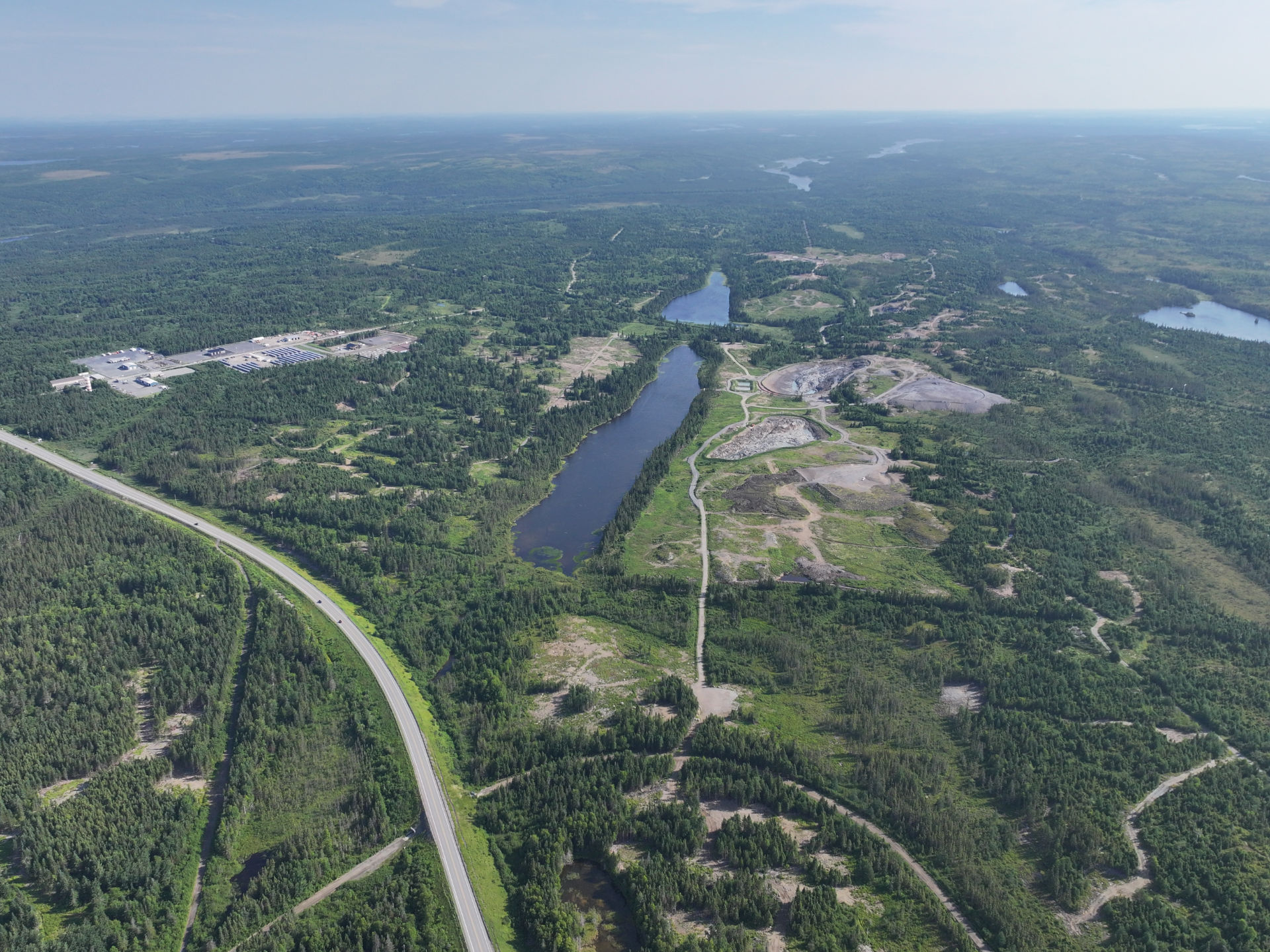
New Found Gold’s revised Queensway PEA raises after-tax NPV to C$1.7B with 126% IRR, as a 13.41 g/t Phase 1 targets first gold at the Pine Cove mill in Q4 2027.
- New Found Gold’s revised Preliminary Economic Assessment for the Queensway Gold Project gives an after-tax NPV5% of C$1.728 billion and an IRR of 126% at a base case gold price of US$3,600/oz, with payback in under one year.
- The updated mineral resource estimate raises Measured and Indicated ounces by 38% to 1.920 million ounces, adds a Measured category for the first time, and keeps Inferred ounces flat at 606,000 ounces.
- Phase 1 feeds an average head grade of 13.41 g/t gold to the company’s own Pine Cove mill from Q4 2027, and 97% of Phase 1 ounces sit in the Measured and Indicated categories.
- Phases 2 and 3 were redesigned around dual processing circuits and an 86% increase in underground ounces, which improves payability but raises growth and sustaining capital.
- The company reports it is fully funded for Phase 1 capital of C$149.8 million, and its Environmental Preview Report submission is targeted for Q4 2026.
Introduction & PEA Highlights: New Found Gold’s Revised Queensway PEA
New Found Gold Corp. (TSX / NYSE-A: NFGC) released a revised Preliminary Economic Assessment (PEA) and updated Mineral Resource Estimate (MRE) for its 100%-owned Queensway Gold Project in central Newfoundland on October 22, 2026. At a base case gold price of US$3,600/oz, the study gives an after-tax NPV5% of C$1.728 billion, an after-tax IRR of 126%, and a payback period of under one year. At an upside price of US$4,100/oz, the after-tax NPV5% rises to C$2.225 billion and the IRR to 164%. The company says the revision more than doubles the project’s NPV compared with the 2025 PEA.
The mine plan outlines 1.744 million ounces of gold over a 15-year phased open pit and underground operation. Average annual production is 116,000 ounces, with a peak of 190,000 ounces in 2032. Life-of-mine cash costs are estimated at US$985/oz and all-in sustaining costs (AISC) at US$1,375/oz. Initial capital of C$149.8 million is in line with the previous estimate. CEO Keith Boyle began by describing how the company’s three Newfoundland assets fit together.
“Our Hammerdown Gold mine is in production. Our Queensway Gold project is in development. And our Pine Cove Mill is being converted, soon to be expanded to accept Queensway.”
The PEA is preliminary in nature and includes Inferred Mineral Resources that are too speculative geologically to be classified as reserves. No Mineral Reserves have been defined for Queensway. A National Instrument 43-101 technical report is due to be filed within 45 days of the release.
Interview with Chief Executive Officer, Keith Boyle
Resource Upgrade: Infill Drilling & High-Grade Core Confidence at Queensway
The updated MRE increases Measured and Indicated (M&I) resources by 38%, or 528,000 ounces, to 1.920 million ounces contained in 27.3 million tonnes at 2.19 g/t gold. Inferred resources are unchanged at 606,000 ounces in 12.5 million tonnes at 1.51 g/t gold. Most of the growth came from updated pit optimizations and the addition of the Dropkick Zone. The estimate also includes Measured resources for the first time: 259,000 tonnes at 7.28 g/t gold for 61,000 ounces.
The Measured category comes from grade control drilling completed in 2025 at the Keats and Iceberg deposits. At a 3.0 g/t cut-off, the comparable volume in the Initial MRE held 52,300 ounces at 17.25 g/t gold, and the new Measured estimate holds 53,200 ounces at 17.64 g/t gold. The close reconciliation supports confidence in the high-grade core that underpins early production. Boyle linked the infill work directly to how risky the first phase is.
“So our phase one production... 97% of that phase one production in the measured and indicated category.”
Over the full mine life, the production targets are based on about 82% M&I and 18% to 19% Inferred resources, with the Inferred ounces scheduled mainly in the later years. The company has developed a conversion drilling program aimed at upgrading those Inferred ounces before the next technical report.
Integrating Hammerdown, Pine Cove & Queensway: The Owned Mill Advantage
The commercial logic of the phased plan rests on the company’s acquisition of Maritime Resources, which brought the Hammerdown Gold Mine and the operating Pine Cove mill. Boyle said Hammerdown processes roughly 700 tonnes per day at grades of about 2.5 to 3 g/t gold. The main attraction of the deal, however, was the permitted processing and tailings infrastructure.
“We didn’t buy it for the mine, we bought it for the permitted mill and tailings.”
The 2025 PEA had assumed Phase 1 processing at the idle third-party Nugget Pond mill. The revised plan uses New Found Gold’s own Pine Cove facility instead, which Boyle estimates brought Queensway production forward by about three years once permitting, development and production timelines are taken into account. High-grade Queensway material will be crushed on site and trucked 275 km to Pine Cove, which is being converted to a gravity-carbon-in-leach (gravity-CIL) circuit and expanded to 1,400 tonnes per day by Q4 2027. Queensway material will be processed at 700 tonnes per day from Q4 2027 through the end of 2030.
From 2031, Phase 2 moves processing to a new 4,900 tonne-per-day Queensway Mill on site, and deliveries to Pine Cove stop. Phase 3 lifts total Queensway Mill capacity to 7,000 tonnes per day so that stockpiled lower-grade material can be processed more quickly. Pine Cove also includes the Port Rousse deep-water port, which can berth Panamax-class vessels.
Grades, Mine Plan & Production Profile
The Phase 1 average head grade of 13.41 g/t gold compares with a life-of-mine average of 2.09 g/t gold. The mine plan schedule shows annual feed grades of between 10.9 and 15.2 g/t gold from 2027 to 2030. The obvious question for investors is whether those grades will reach the mill after dilution and mining losses. Boyle pointed to tight 5 m by 5 m grade control drilling and to the visual contrast between Queensway’s high-grade veins and the surrounding lower-grade stockwork.
“By drilling at five by five meter centers, we’ll have really clear demarcation of what it is we’re going to mine to send that higher grade material.”
The open pit operation comprises 21 pits and is expected to deliver 26.4 million tonnes at a diluted grade of 1.74 g/t gold for 1.479 million ounces, at an overall strip ratio of 6.5:1. The Phase 1 pits were optimized on a smaller 2.5 m block model to reflect selective mining. Underground mining is expected to deliver 1.9 million tonnes at a diluted grade of 6.85 g/t gold for 427,000 ounces. Average production is 104,000 ounces a year from 2028 to 2030 and 169,000 ounces a year from 2031 to 2035.
Boyle said the larger resource base allowed the company to increase early production and smooth the profile from Phase 2 onward, describing the result as “a flatter smoother production profile as opposed to a very jagged one.”
Hammerdown Lessons & Dual-Circuit Processing
Operating Hammerdown has shaped the mining approach planned for Queensway. Boyle highlighted three lessons: the importance of 5 m by 5 m grade control drilling, mining each bench in two half-height flitches, and sizing equipment to suit selective mining. The plan uses contractor mining for the first two years and then moves to an owner-operated fleet of 64-tonne-class haul trucks and 12 m³ shovels.
“70% of the gold is in 30% of the tons. So we want to first focus on that small amount with smaller equipment.”
Processing has also changed. The 2025 PEA assumed a single combined circuit. Metallurgical test work supported treating high-grade and low-grade material separately, so the Queensway Mill will run two parallel circuits: a 2,000 tonne-per-day gravity-CIL circuit for high-grade and mid-grade material, and a 2,900 tonne-per-day gravity-flotation circuit for low-grade and refractory material. The flotation circuit expands to 5,000 tonnes per day in Phase 3. Estimated recoveries are 92% in the gravity-CIL circuit and 88% in the gravity-flotation circuit, 94% at Pine Cove during Phase 1, and 91.5% over the life of mine.
Boyle said converting Pine Cove should also lift recoveries of Hammerdown ore from around 85% to 87% up to about 92%. The dual-circuit design needs more grinding, gravity and CIL capacity, and this contributes to growth capital of C$832.1 million across Phases 2 and 3.
Underground Expansion & Open Pit Trade-Offs
Payability explains much of the processing redesign. Gold poured as doré is estimated at 99.949% payable, compared with 87% for gold sold in concentrate. Over the life of mine, 85% of the gold is expected to report to doré.
“We get paid over 99% of the gold that’s in the bar from the mint... we only end up getting paid 87-88% of the gold that’s recovered there.”
The revised plan increases underground ounces by 86% and moves underground mining from Phase 3 into Phase 2, starting in 2030. Five underground zones will be accessed from five surface portals, four of them collared within open pits, and mined by mechanized cut and fill using 3 m by 3 m stopes. The change was driven by a need to cut excessive stripping and by a high-grade shoot defined at Dropkick. Geotechnical work also flattened the pit walls, raising the strip ratio from 6.0 to 6.5. Boyle explained that the trade-off compares the cost of the deepest slice of a pit with the cost of extracting the same ounces from a ramp that is already being built.
“The ramp’s going past it. We’re paying for that ramp anyway.”
Boyle estimated that the trade-off, particularly at Dropkick, added well over C$300 million to project profit. The cost appears in sustaining capital of C$970.8 million over the life of mine, which rose mainly because of the additional underground development.
Project Development Milestones & Phase 1 Capital
Phase 1 initial capital of C$149.8 million includes C$75 million for off-site processing at Pine Cove and an 18.4 million contingency. Boyle said spending began in May on retooling Pine Cove, and detailed engineering, contractor quotes and hiring are already in place, which supports confidence in the estimate. He described the strategy as sequential, committing capital to a small, well-defined first phase while work on the larger later phases continues.
“You don’t have to de-risk the whole to commit and build the small. De-risk the small, get it going, get cash flow.”
Infill, geotechnical and metallurgical work is under way this year to support a full feasibility study next year covering Phases 2 and 3. Phase 2 growth capital of C$645.8 million is scheduled for 2028 to 2029 and Phase 3 capital of C$186.3 million for 2030 to 2031, both intended to be funded from earlier-phase cash flow. Phase 1 average annual after-tax operating cash flow is estimated at C$279 million, and cumulative after-tax cash flow over the life of mine at C$2.551 billion.
The project’s effective tax rate is estimated at about 40%. The company’s preliminary assessment of Canada’s proposed productivity mega deduction suggests a possible NAV increase of C$60 to 70 million over the life of mine. The company does not consider the measure material to the project’s strategy.
Funding, Permits & Timeline to First Gold
As of September 30, 2026, New Found Gold held approximately C$167 million in cash and cash equivalents. It also has a C$35 million debt facility available until May 15, 2027, subject to conditions, potential proceeds from warrants expiring in 2027, and cash flow from Hammerdown. Boyle put the in-the-money warrants at about C$17 million. He acknowledged the share price has weakened alongside the broader market since the C$220 million April financing, and said there is no need to return to equity markets.
“We’re fully funded to build Queensway and get to the end and get to cash flow. So no need to go out to market.”
On permitting, the Phase 1 Environmental Registration was submitted on April 30, 2026. On July 3, the Minister required an Environmental Preview Report (EPR), and guidelines were received on September 2. Submission is targeted for Q4 2026. A 35-day public and committee review follows, and a decision is due within 45 days of submission, with a possible 14-day extension. Boyle expects a decision early in the new year.
“After that, we’ll get our early works permit, shovel in the ground, if you will, at Queensway in the second quarter.”
Subject to permits, contractors mobilize in Q1 2027, early works begin in Q2 2027, mining starts in Q3 2027 to build a stockpile, and first Queensway material is delivered to the expanded Pine Cove mill in Q4 2027. The current environmental assessment covers the Keats, Iceberg, Dome and Jackpot pits. Later pits, underground works and processing expansions will need their own approvals.
The Investment Thesis for New Found Gold
- The revised Queensway PEA gives an after-tax NPV5% of C$1.728 billion and a 126% IRR at US$3,600/oz gold, with payback in under one year.
- Phase 1 averages 13.41 g/t gold with 97% of ounces in the Measured and Indicated categories, and grade control drilling reconciled closely with the earlier resource model.
- Owning the Pine Cove mill and its permitted tailings facility removes reliance on a third-party mill and, by management’s estimate, brings first Queensway production forward by about three years.
- Phase 1 initial capital of C$149.8 million is backed by about C$167 million in cash plus a C$35 million debt facility and expected warrant proceeds.
- The dual-circuit processing design increases the share of gold sold as doré, which is almost fully payable, rather than as concentrate, which is about 87% payable.
- Measured and Indicated resources grew 38% to 1.920 million ounces, and exploration has so far concentrated on a 5 km section of a 110 km land package.
- Hammerdown production gives the company operating experience and cash flow while Queensway moves through permitting.
- Key risks include environmental assessment timing, C$832.1 million of growth capital that depends on Phase 1 cash flow, Inferred resources in the later mine plan, and gold price sensitivity.
New Found Gold’s revised PEA presents Queensway as a phased development built on a small, high-grade starter operation. Phase 1 relies largely on Measured and Indicated material averaging more than 13 g/t gold, processed at a mill the company already owns, with initial capital of C$149.8 million that it reports is fully funded. Phases 2 and 3 are larger and more capital intensive. The changes to processing and underground mining raised growth and sustaining capital, and the company’s stated aim is to improve payability and recoveries over the long term. The headline economics are strong at current gold price assumptions, and sensitivity analysis shows positive returns down to US$3,100/oz. The plan still has several conditions attached. The EPR decision, subsequent permits and the Surface and Mining Lease all have to arrive on schedule for Q4 2027 deliveries to happen. Later phases depend on Phase 1 cash flow and on converting Inferred ounces. The PEA does not establish reserves, and a feasibility study for Phases 2 and 3 is planned for next year. For investors, the next 12 months bring a series of measurable milestones: the EPR submission and decision, the Pine Cove expansion and early works at Queensway.
Macro Thematic Analysis
Gold developers at US$3,600/oz face a familiar question: how to turn a strong commodity price into production without the capital overruns and dilution that have hurt many mine builds over the past decade. Large single-stage builds expose shareholders to construction and commissioning risk before any revenue arrives, and capital markets have grown more selective about funding them. That has favored strategies that cut upfront capital and shorten the time to first cash flow.
Queensway is one example of that trend. The plan pairs a small, high-grade open pit start with existing permitted processing infrastructure. Early cash flow is then meant to fund larger expansions, so investors do not have to finance the whole project upfront. The approach depends on grade. At 13.41 g/t gold, Phase 1 can absorb a 275 km truck haul and a 700 tonne-per-day throughput and still produce a reported AISC of US$1,129/oz for 2027 to 2030.
Jurisdiction is also a factor. Newfoundland and Labrador offers established mining legislation, provincial power and port access, and a workforce with mining experience. The provincial environmental assessment process, however, has already added an EPR stage to the Queensway timeline, which shows that permitting remains the main schedule risk even in stable jurisdictions.
The redesign also highlights how much payability matters. Recovering gold as doré rather than concentrate removes smelter deductions of around 12% to 13%, which at current prices is a significant margin gain on each ounce. Across the developer pipeline, companies are increasingly prepared to spend more capital to sell a cleaner product.
Boyle summed up the sequencing logic:
“You don’t have to de-risk the whole to commit and build the small. De-risk the small, get it going, get cash flow.”
For investors weighing gold developers, the question is shifting from the size of a deposit to how quickly, and with how little external capital, it can produce cash flow.
TL;DR
New Found Gold’s revised Queensway PEA gives an after-tax NPV5% of C$1.728 billion and a 126% IRR at US$3,600/oz gold, with payback in under a year. Measured and Indicated resources rose 38% to 1.920 million ounces. Phase 1 will truck 13.41 g/t material to the company’s own Pine Cove mill from Q4 2027, with 97% of ounces in higher-confidence categories and initial capital of C$149.8 million that the company says is fully funded. Later phases add dual processing circuits and 86% more underground ounces, which improves payability but raises growth and sustaining capital. The near-term milestones are the EPR submission targeted for Q4 2026, a permitting decision and early works in Q2 2027.
Analyst's Notes





Subscribe to Our Channel







Stay Informed