5 Parts of TRX Gold's Capital Strategy, From Funding Growth to Possible Buybacks


TRX Gold ranks its mill expansion first for cash, funds drilling alongside, and puts any buyback after the build. 5 parts show how the order has worked.
The Order of Spending
TRX Gold (TSX: TRX | NYSE American: TRX) is building a larger mill at the Buckreef Gold Project in Tanzania with cash from the operating plant. The company is prioritizing the mill expansion for cash, funding drilling alongside it, and holding off on any buyback until after the build, according to Chief Executive Officer Stephen Mullowney. Fiscal 2026, which ended August 31, 2026, produced 29,650 ounces of gold, at the top of the 25,000- to 30,000-ounce guidance range.
1. The Mill Expansion Gets First Call on Cash Flow
The mill expansion takes most of this year's free cash flow because management sees it as the best return, and the arithmetic explains why.
Mullowney puts run-rate earnings before interest, taxes, depreciation and amortization (EBITDA) at about US$80 million, built from the third quarter result of about US$20 million multiplied by 4. Management is targeting more than US$200 million of EBITDA in 3 to 4 years at current gold prices. The company plans to spend about US$45 million to US$50 million over the next year on the expansion and exploration combined.
Mullowney frames the trade as a simple comparison of spend against earnings uplift.
"If I can increase EBITDA from the run rate, which is around 80 million today, to over 200 million for less than 50 million bucks, that's a no-brainer."
That comparison explains why the build comes first. Management is targeting an operational expansion by about the end of calendar 2027, with 12 to 18 months of construction. The figure to follow is the spend against the US$50 million mark Mullowney cited.
Management is also updating the 2025 preliminary economic assessment, which contemplated 3,000 tons per day, to a nameplate capacity of 5,500 tons per day. It is targeting the update for the end of calendar 2026 or early 2027.
2. The Funding Record
Since 2021, operating cash flow has funded most of the build, and net new capital has been the smaller share.
The corporate presentation from September 2026 sets out the ledger from 2021 to the present. TRX Gold raised US$19.1 million of original net capital, excluding warrant proceeds, and invested US$90.5 million. Operating cash flow over the same period was US$65.9 million. Mullowney describes the pattern as the standing business model: after an original US$20 million raise and the first couple of plant expansions, free cash flow has funded further expansion.
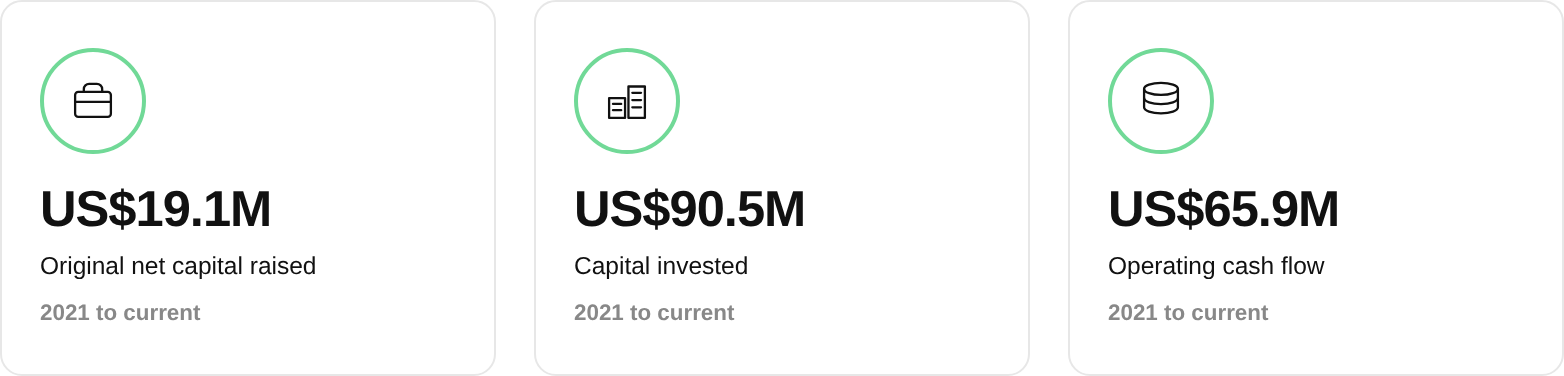
Net capital raised is the smallest of the three lines. The comparison to track in each update is net capital raised against capital invested.
3. Overhead Stays Visible
Cash overhead has stayed between US$5.0 million and US$6.1 million while revenue grew from US$2.5 million to US$92.0 million.
The cash general and administrative (G&A) figures cover the six reporting periods from fiscal 2021 to the year-to-date of fiscal 2026 and exclude share-based compensation and depreciation. Revenue rose from US$2.5 million in the first period to US$92.0 million in the latest.
Mullowney says the line is meant to be read at face value.
"We're not hiding any of our G&A in exploration or in capital assets. What you see is what you get on the income statement."
Against rising revenue, a cash overhead line inside that range leaves more of each dollar earned for the plant, which supports per-share discipline. The next test is whether cash G&A holds inside the range as revenue rises.
4. Buyback After the Build
A buyback comes last in the sequence, and only on a condition.
A buyback depends first on cash flow, Mullowney said. A weaker share price might put a buyback up for consideration, but as long as TRX Gold doesn't need to go to market to raise capital for the expansion, he said he thinks the company will get through the other side of the expansion before making that decision.
Mullowney placed the buyback after the build and tied it to the market's reaction.
"If the market doesn't reward it at that point in time, that's something that would come onto the table after the expansion is done."
TRX Gold has not announced a buyback program or a size. The company's cash use is therefore set by the mill build until the expansion is complete.
5. Drilling Continues, and Financing Backstops Remain
The order sets priorities without ruling out exploration spending or the supplemental liquidity TRX Gold holds.
Mullowney said management will keep drilling alongside the build because exploration adds long-term value, can provide cheaper ounces, and can fill the mill from the expansion. Fiscal 2026 drilling reached about 175 holes and 14,500 meters, and the company bought 3 more rigs. The presentation shows an exploration budget of US$3 million to US$5 million in fiscal 2026.
Mullowney also contrasted TRX Gold with other small and midsize miners, which, in his view, must go to the market for expansion capital because they lack the cash flow. TRX Gold still holds backstops. Supplemental liquidity of US$40 million consists of a US$25 million at-the-market (ATM) facility, plus a US$15 million credit facility and gold pre-payment facility. Cash was US$26.8 million, and borrowings were US$2.9 million as of May 31, 2026. The ATM means the order is a stated preference and not a commitment against issuing shares.
Catalysts to Watch
3 items will show whether the order holds.
- The fiscal 2026 financial statements and management's discussion and analysis are due in November 2026. They will update cash, borrowings, and the funding ledger beyond the May 31, 2026 figures.
- The updated preliminary economic assessment is the next study, targeted for the end of calendar 2026 or early 2027.
- The 12- to 18-month construction window sets the pace of cash use toward the end of calendar 2027.
Analyst's Notes





Subscribe to Our Channel




Stay Informed