




37% of US Salt Goes to De-Icing: Why Buyer Deals Could Re-Rate Salt Developers



Public contracts, binding offtake, long mine lives, and permits improve de-icing salt financeability despite variable winters and higher borrowing costs.
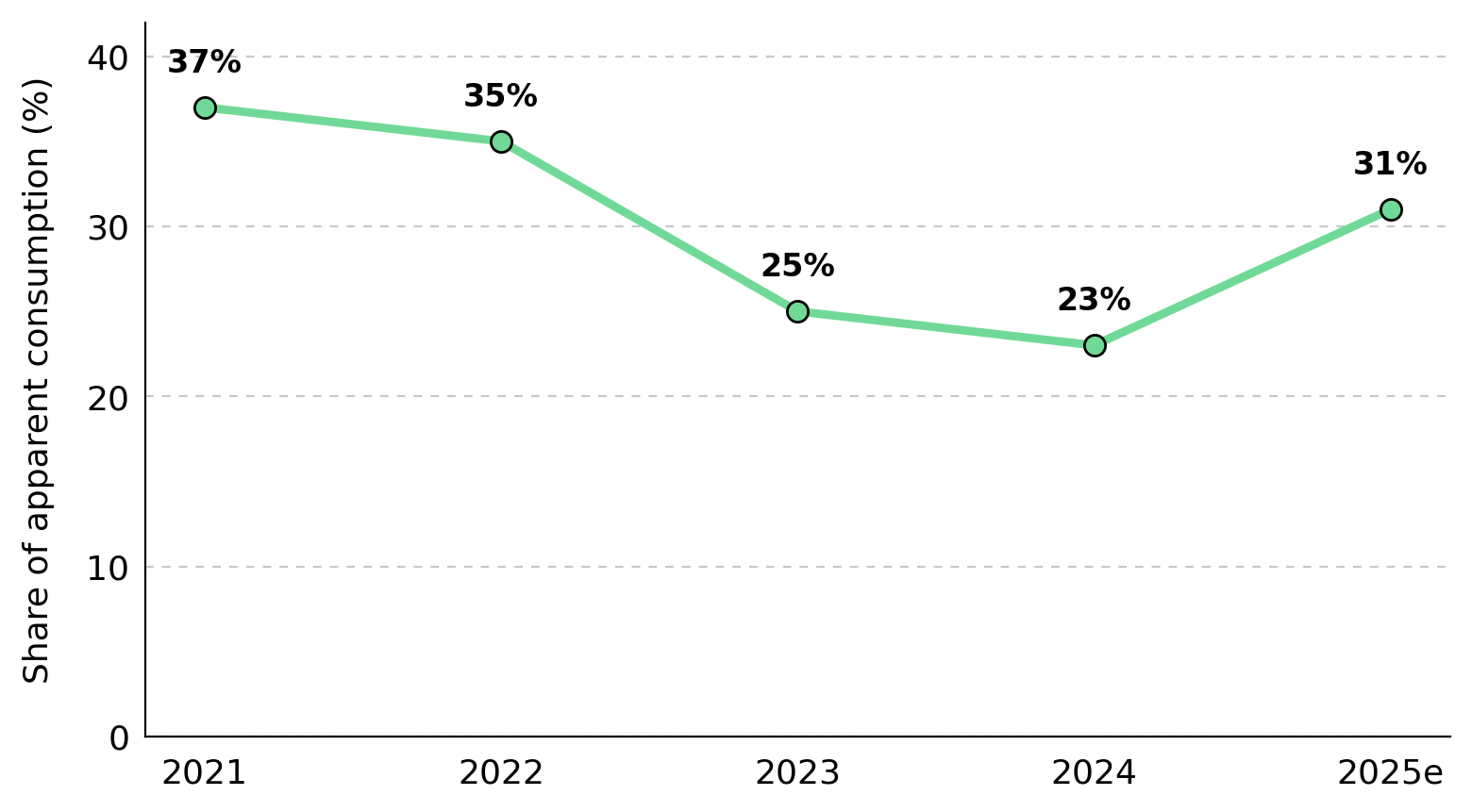
- Highway de-icing accounted for approximately 37% of US salt use in 2025, according to the United States Geological Survey (USGS), tying more than one-third of demand to recurring public road-safety requirements.
- Public agencies procure salt through recurring tenders and emergency standby contracts, giving suppliers observable demand channels even as winter severity changes annual order volumes.
- A severe winter can expose inventory and delivery constraints, but the stronger investment signal is whether developers can convert recurring demand into offtake support and financing progress.
- Long reserve lives, wide operating margins, advanced permits, and nearby infrastructure make projects easier to underwrite when long-term borrowing costs remain elevated.
- Development-stage salt equities can revalue as offtake, permitting, and financing milestones reduce execution risk, without relying on a single-season snowfall forecast.
Essential Demand & Offtake Evidence Strengthen De-Icing Salt Financing
De-icing accounted for approximately 37% of US salt use in 2025, tying more than one-third of consumption to road treatment. Because de-icing salt has no transparent futures curve or daily exchange price, lenders must assess regional contracts, delivered costs, and customer commitments when underwriting new supply.
Annual de-icing salt orders vary with snowfall, ice-event frequency, and inventory carried into the season, changing sales volumes and working capital requirements. For projects with mine lives measured in decades, lenders assess whether output can be placed across repeated procurement cycles and whether cash flow can service debt under lower price and volume assumptions. Binding offtake reduces placement risk, while permits, cost control, and construction execution determine whether recurring demand can support committed financing.
Road-Safety Obligations & Recurring Procurement Support Long-Term Demand
Public agencies keep roads, airports, and emergency routes usable during freezing conditions by maintaining salt contracts, storage, and emergency supply options. New York’s Office of General Services, for example, lists road salt, treated salt, and emergency standby road salt among its centralized emergency contracts, demonstrating demand for both routine and contingency supply.
Diverse Buyers Sustain Salt Demand & Severe Winters Constrain Supply
States, provinces, municipalities, airports, contractors, and commercial property operators purchase road salt to maintain safe transport networks, creating recurring replacement demand across multiple seasons. Mild winters leave excess inventory and lower subsequent orders, while severe winters exhaust stockpiles and force emergency deliveries.
During the 2025-2026 winter, municipalities across the US Northeast and Great Lakes depleted salt supplies normally expected to last through spring, while a major underground mine producing three million to four million short tons annually operated overtime. The episode shows that production and delivery capacity can constrain regional supply during severe winters without supporting an assumption that every winter will produce the same demand.
Efficient Salt Use & Environmental Rules Favor Reliable Suppliers
Environment and Climate Change Canada (ECCC) promotes salt-management plans, calibrated application, protected storage, drainage controls, and monitoring, changing how road salt is handled without eliminating its safety function. Brining and pre-wetting can reduce waste, while public agencies still require secure salt inventories.
Long-term demand models should reflect reduced waste from better application without assuming that road-salt demand disappears. Suppliers that combine consistent quality, documented handling, dependable volumes, controlled logistics, and credible environmental, social, and governance (ESG) practices are better positioned to compete for public contracts.
Public Contracts & Offtake Support Improve Revenue Visibility
De-icing salt prices are negotiated regionally because freight, storage, and delivery timing determine delivered cost. Public tenders often specify destinations, quantity bands, delivery windows, and emergency availability, helping developers assess whether planned output has sales channels beyond the spot market.
Recurring Tenders & Emergency Contracts Document Salt Demand
Because de-icing salt is sold through public procurement rather than an exchange, mine financing depends on addressable regional demand, delivered-cost competitiveness, customer concentration, and evidence that distributors or end users can absorb planned tonnage. Annual tenders identify recurring sales channels, while emergency standby contracts show whether governments procure backup supply when inventories tighten.
Tender awards do not ensure that buyers will order maximum quantities because customers can carry inventory between seasons. Evaluating procurement behavior across multiple customers and seasons provides a stronger demand test than assuming stable annual volumes. Combining that evidence with offtake support reduces the risk of commissioning new capacity before sales channels are secured.
Offtake Commitments & Distribution Partners Reduce Market-Placement Risk
Offtake agreements convert broad demand estimates into project-specific revenue evidence used in financing reviews. A memorandum of understanding can document commercial interest, target volumes, and a negotiation framework, but it does not create the obligations of a definitive purchase agreement. Lenders assess pricing formulas, buyer credit quality, termination rights, delivery obligations, and the share of planned output covered by committed tonnage to determine whether projected revenue can service debt.
Progressing from customer discussions to a memorandum and then binding terms reduces market-placement risk by giving lenders stronger evidence that planned output has buyers. Distributors, public tenders, and direct accounts can limit customer concentration by spreading sales across multiple channels. Because de-icing salt must be positioned before winter and delivered within narrow windows, storage and distribution planning must be integrated into project design.
Long-Life Economics & Permitting Progress Strengthen Construction Financing
Essential demand supports project finance only when developers pair reserve-backed economics with customer validation, equipment planning, permitting progress, and a credible funding pathway. Long mine lives can support longer debt tenors, while low unit costs preserve debt-service capacity under lower prices, reduced volumes, higher freight costs, or slower ramp-up.
Atlas Salt is advancing its financing pathway with a 1.25 million to 1.5 million tonnes-per-year Scotwood Industries memorandum of understanding, an Export Development Canada letter of interest for up to C$150 million of senior debt, a C$132 million Sandvik equipment memorandum, and approved early works. These conditional milestones provide evidence of customer demand, lender engagement, and execution progress, which are the core requirements for securing construction capital.
Nolan Peterson, President and Chief Executive Officer of Atlas Salt, explains how approved work advances the construction timeline:
“The provincial permits we received encompass over $150 million worth of capital activities that are part of the project development. It means we have over a year of work already approved to advance, and that lines up nicely with our next phase of permits. During this period, we’re going to be doing detailed design and engineering that will support the main capital development permit required to do the drift development.”
Higher Borrowing Costs Favor Finance-Ready Salt Developers
The 10-year US Treasury yield was approaching 5% during a global bond selloff. Salt developers do not borrow at sovereign yields, but the higher benchmark raises the alternative return available to lenders and the spread required to compensate them for construction risk.
A finance-ready developer combines treasury liquidity, projected reserve-backed cash flow, customer engagement, equipment planning, interest from government-linked lenders, and a credible equity contribution, reducing reliance on a single letter of interest or common-equity issuance. Debt can lower dilution but adds repayment obligations before production generates cash flow, so capacity should be tested against cost overruns, commissioning delays, covenant headroom, construction interest, and lower realized prices rather than headline net present value (NPV) alone. These financing terms determine how much project value accrues to existing shareholders.
Recurring road-safety procurement across multiple seasons supports de-icing salt financing without requiring a severe-winter forecast because weather changes inventories, spot availability, and annual volumes rather than the recurring public-safety requirement. Financeability instead depends on binding commercial agreements, secured permits, detailed engineering, and committed construction funding, which improve revenue visibility, define the funding mix, and reduce schedule and capital uncertainty. No milestone guarantees execution alone, but together they show whether a developer can convert an undeveloped reserve into a cash-generating mine.
The Investment Thesis for De-Icing Salt
- Essential road-safety demand gives de-icing salt a defensive long-term use case even though annual purchasing remains sensitive to winter severity and inventory carryover.
- Recurring public procurement provides developers with identifiable customers and observable demand channels that can support commercial due diligence.
- Developers with meaningful offtake progress can reduce market-placement risk before commissioning and improve the quality of their financing case.
- Long reserve lives can support longer debt tenors, while operating margins tested under lower prices, reduced volumes, and higher costs strengthen debt-service capacity.
- Projects in stable jurisdictions with coordinated permitting, established infrastructure, and clear environmental obligations should face lower schedule uncertainty.
- Strong treasuries and multiple prospective funding channels can preserve negotiating flexibility, reduce dependence on common-equity issuance, and leave more project value for existing shareholders.
De-icing salt offers a long-duration investment case built on recurring public-safety demand rather than a one-winter weather trade. Developers that pair recurring procurement with binding offtake, downside-tested economics, coordinated approvals, and committed capital face lower financing and execution risk. As borrowing costs make construction funding more selective, evidence of financeability should separate commercially viable salt reserves from projects that still depend on unsecured sales or financing assumptions.
TL;DR
Highway de-icing represented approximately 37% of US salt use in 2025, anchoring demand to public safety. Annual volumes still vary with winter severity and inventory carryover, while freight, storage, and delivery windows shape regional pricing. Public tenders identify recurring buyers, but definitive offtake, reserve-backed economics, permits, engineering, and committed capital determine whether a developer can turn demand into production. Long mine lives and low unit costs can support debt service under downside scenarios. With borrowing costs elevated, finance-ready developers with diversified funding and advanced execution milestones are better positioned to limit dilution and convert salt reserves into long-duration cash flow.
FAQs (AI-Generated)
Analyst's Notes





Subscribe to Our Channel

.jpg)



Stay Informed


