




Atlas Salt & CN: 7 Signals Inside the Great Atlantic Logistics MOU


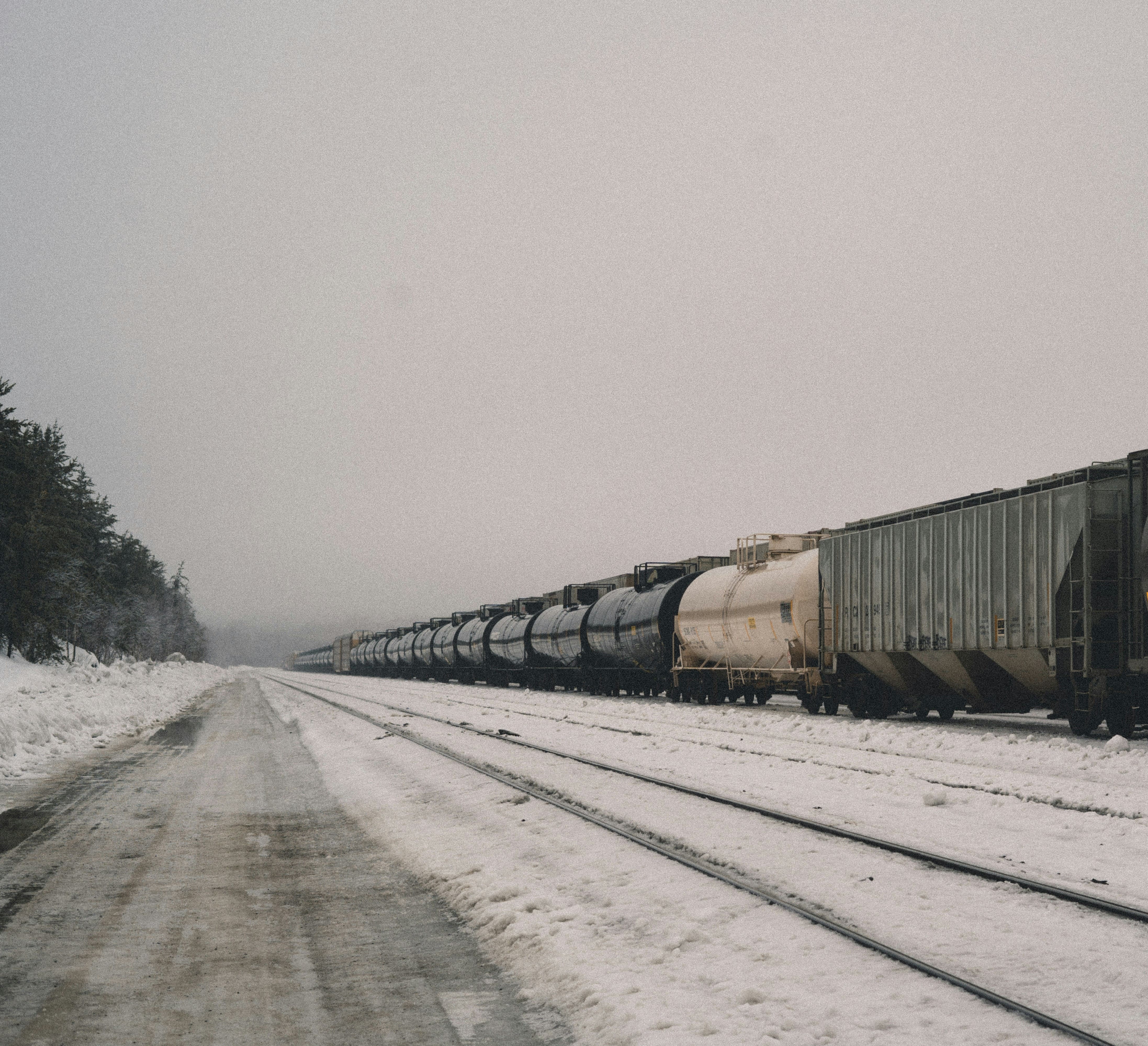
Atlas Salt’s CN MOU explores rail logistics for Great Atlantic, adding optionality for inland market access beyond its trucking-based feasibility study.
A Framework Agreement That Fits a Larger Pattern
Read in isolation, a non-binding Memorandum of Understanding (MOU) is a modest disclosure item. Read against Atlas Salt's (TSXV: SALT | OTCQX: SALQF | FSE: 9D00) recent dealmaking, it is the latest in a sequence of framework-level agreements the Company has signed with counterparties capable of operating at the scale Great Atlantic Salt will eventually require. Atlas Salt Inc. entered into a non-binding MOU with Canadian National Railway Company (CN) on August 20, 2026, to explore multimodal rail solutions for distributing de-icing salt from the Great Atlantic Salt Project in Newfoundland and Labrador, building on prior arrangements covering equipment, engineering delivery, offtake, and project financing. The 7 points below unpack what the CN MOU actually commits the parties to, where it sits in that broader pattern, and what would need to happen for it to move from exploratory to material.
1. The MOU Commits CN & Atlas Salt to Explore, Not to Ship
The agreement is explicitly non-binding and does not obligate either party to a definitive agreement. It establishes a framework for Atlas Salt and CN to jointly evaluate three specific areas: rail movement of de-icing salt on lanes served by CN's network, railcar supply and equipment solutions, and transload arrangements linking Atlas Salt's marine distribution to CN's inland rail network. No lanes, volumes, rates, or timeline for a follow-on agreement have been disclosed. This is a scoping exercise, not a signed logistics contract.
2. CN Brings a Network Scale the Marine-Only Model Cannot Reach Alone
CN is one of the few counterparties that could plausibly extend Great Atlantic Salt's reach inland without Atlas Salt building out its own trucking fleet or a network of regional terminals. CN describes itself as one of North America's leading Class I railroads, operating a rail network of nearly 20,000 miles that has moved freight since 1919. The company transports more than 300 million tons of natural resources, manufactured goods, and finished products annually, connecting Canada's Eastern and Western coasts with the US Midwest and the US Gulf Coast. Atlas Salt's current distribution plan is marine-centric: product ships by vessel from the Port of Turf Point, roughly 2 kilometers from the mine portal, to discharge ports along the eastern seaboard.
3. The Underlying Feasibility Study Assumed Trucking, Not Rail
Atlas Salt's 2025 updated feasibility study (UFS) contemplated that distribution from a discharge port to the final customer would be handled almost entirely by trucking. That assumption sits within a project already underpinned by an after-tax net present value at an 8% discount rate (NPV8%) of $920 million and an after-tax internal rate of return (IRR) of 21.3%, based on planned production of 4.0 million tons per year. The current economics do not capture rail.
4. The CN MOU Extends a Pattern of Framework Agreements Signed With Scaled Counterparties
Atlas Salt's investor materials list four other framework-level agreements, each with a counterparty selected for scale. Scotwood Industries, described by the Company as the largest distributor of packaged retail de-icing salt in the US, entered an offtake MOU on August 20, 2024, targeting volumes of 1.25 to 1.5 million tons per year. Hatch was named Lead Engineering Partner and Integrated Project Delivery Partner on November 12, 2025, bringing experience delivering some of the world's largest soft-rock mines and an existing presence in Newfoundland and Labrador. Sandvik, a global engineering group serving the mining, manufacturing, and infrastructure sectors, signed an MOU on February 13, 2026, for mining equipment and engineering support valued at $132 million. Export Development Canada (EDC) issued a letter of intent for up to $150 million of senior debt financing on July 23, 2026. The CN MOU is the logistics-side counterpart to that same approach.
5. Rail Is Positioned as a Complement, Not a Replacement
Nothing in the MOU or the Company's disclosures suggests the marine-centric model is being reconsidered. Atlas Salt continues to frame vessel shipment from Turf Point, roughly a 3-day transit to Boston against more than 14 days for salt imported from Egypt or Chile, as its core cost and speed advantage on the coastal leg. Rail and transload arrangements are being scoped to extend that advantage inland, not to displace the port-to-vessel logistics chain the UFS is built around.
6. Import Dependence & Recent Shortages Give the Inland Question Commercial Urgency
Atlas Salt's own market materials put North American de-icing salt imports at 8 to 10 million tons annually. Within that flow, 67.5 million tons were imported into the US from Egypt, Chile, the Caribbean, and Mexico between 2020 and 2023 alone, against a North American de-icing salt market the Company sizes at 28.5 to 36 million tons annually. That backdrop has produced tangible strain: Ontario municipalities reported running short of road salt in January and February 2026, with one report noting more than 100 empty trucks and wholesale prices climbing from roughly $65 to $70 per ton to nearly $190 per ton. New York's decision not to enforce a "Buy American" salt preference in its most recent contract was attributed in part to shortages the prior winter. None of that guarantees rail lanes materialize on any particular timeline, but it establishes why inland market access, the specific gap the CN MOU targets, carries commercial weight beyond a routine partnership announcement.
7. What Would Turn This From a Framework Into a Catalyst
The markers that would matter are a transition to a definitive agreement, disclosure of specific lanes or committed rail volumes, and confirmation of railcar or transload terms that investors can model against the UFS's trucking-based assumptions. Until then, the appropriate treatment is the same one applied to Atlas Salt's other pending framework agreements: real optionality, not yet reflected in the $920 million NPV8% figure or the Company's disclosed cost metrics.
Key Takeaways for Investors
- The CN Memorandum of Understanding is non-binding, with no committed lanes, volumes, or timeline disclosed, and covers three exploratory areas: rail movement, railcar supply, and transload arrangements.
- Canadian National Railway Company's nearly 20,000-mile network and 300-million-ton annual freight volume make it one of the few counterparties capable of meaningfully extending Great Atlantic Salt's reach beyond its marine-centric distribution model.
- The 2025 updated feasibility study assumed trucking for the discharge-port-to-customer leg, meaning any rail-driven efficiency would be upside to the current $920 million after-tax net present value at an 8% discount rate rather than something already priced in.
- The Memorandum of Understanding extends a repeatable pattern: Atlas Salt has now signed framework-level agreements with Hatch, Sandvik, and Scotwood, received a letter of intent from Export Development Canada, and now added Canadian National Railway Company, each a scaled counterparty engaged ahead of a full construction financing decision.
- Persistent North American road salt shortages, including price spikes in Ontario and a sourcing policy reversal in New York, underscore why inland market access is not merely aspirational but carries real commercial relevance.
Bottom Line
The CN MOU isn't a re-rating event on its own. It's non-binding, unpriced, and undated. Its real significance is pattern recognition: this is the fifth scaled-counterparty engagement Atlas Salt has lined up, following signed framework agreements with Scotwood, Hatch, and Sandvik, plus a letter of intent from EDC, and it targets the one distribution leg the 2025 UFS never priced. Against 8 to 10 million tons of annual North American salt imports and recent mid-winter shortages, inland rail access is a plausible lever on the addressable market, not a cosmetic add-on to the marine-first model. The MOU discloses no economics yet, but it does confirm Atlas Salt is still executing the same pre-financing playbook, and that consistency is the more useful signal here than the logistics details themselves.
Analyst's Notes





Subscribe to Our Channel








Stay Informed


