




483M-Barrel Oil Inventory Gap Outlasts Midterm Selloff, Backing 2027 Brent



Recovering Gulf exports signal surplus, but Hormuz shipping risks preserve potential upside while contango could raise front-month fund costs.
- Brent fell 8% on November 4 as US midterm results raised expectations of US-Iran de-escalation, but rebounded to $99.58 on November 6 amid Iran's reports of three more tanker attacks in the Strait of Hormuz.
- J.P. Morgan estimates a 1.4 million barrels per day (bpd) oil surplus in October as Gulf crude exports recovered to 86% of pre-war levels, while Goldman Sachs assesses the market as broadly balanced.
- Goldman Sachs estimates global visible oil inventories remain 483 million barrels below March 1 levels, a gap that would take about 345 days to close if J.P. Morgan's estimated October surplus rate holds.
- Rapidan Energy Group estimates an 80% chance of renewed US-Iran fighting despite Iran's reported nuclear proposal via Qatar, raising the risk of further oil supply disruptions.
- January Brent futures settling below February on the Intercontinental Exchange (ICE) before their November 30 expiry would signal reduced near-term oil scarcity and greater downside risk for prices.
Hormuz Tanker Attacks Lift Brent After Midterm Selloff
Brent crude futures for January delivery rose 1.31% to $99.58 a barrel after briefly exceeding $100, while West Texas Intermediate (WTI) gained 0.95% to $91.38. The rebound followed Brent's 8% decline to a two-month low as Democrats won both chambers of Congress, raising expectations of US-Iran de-escalation.
Brent remained on track for a 12% weekly loss, although the comparison spans the October 30 expiry of the December contract. Iran reported three more tanker attacks in the Strait of Hormuz, while UK Maritime Trade Operations data show vessel attacks nearing record levels, supporting oil prices despite the reduced war premium.
Gulf Export Recovery Fuels Oil Surplus Estimates
Brent swaps for this week's cargoes trade at their steepest discount to next week's since July, signaling ample near-term supply. Gulf crude and condensate exports averaged 14 million bpd in October, reaching 86% of pre-war levels, while J.P. Morgan estimates a global oil surplus of 1.4 million bpd.
Goldman Sachs estimates global visible oil inventories remained unchanged in September and October, standing 483 million barrels below March 1 levels, and assesses the market as broadly balanced rather than in surplus. Gulf refined product exports remain just above half of normal levels, while US commercial crude inventories are 4% below their five-year average.
483M-Barrel Inventory Gap Supports Brent Futures Backwardation
At J.P. Morgan's estimated October surplus of 1.4 million bpd, closing the inventory gap would take about 345 days, extending into October 2027 if the surplus holds. Brent futures from January 2027 remain in backwardation, with nearer contracts priced above later deliveries. Tim Waterer, Chief Analyst at KCM, says oil prices are likely to remain supported on dips until Gulf shipping becomes safer and cheaper.
Contango Risk Threatens Higher Costs for Front-Month Oil Funds
Portfolios that reduced long crude positions during the November 4 selloff risk missing a price recovery, while holders of oil exchange-traded funds (ETFs) and futures funds retain exposure to potential gains. When physical cargoes last traded at comparable discounts in July, Brent spot prices averaged $83.76 a barrel, compared with $123.93 in October, according to the US Energy Information Administration (EIA).
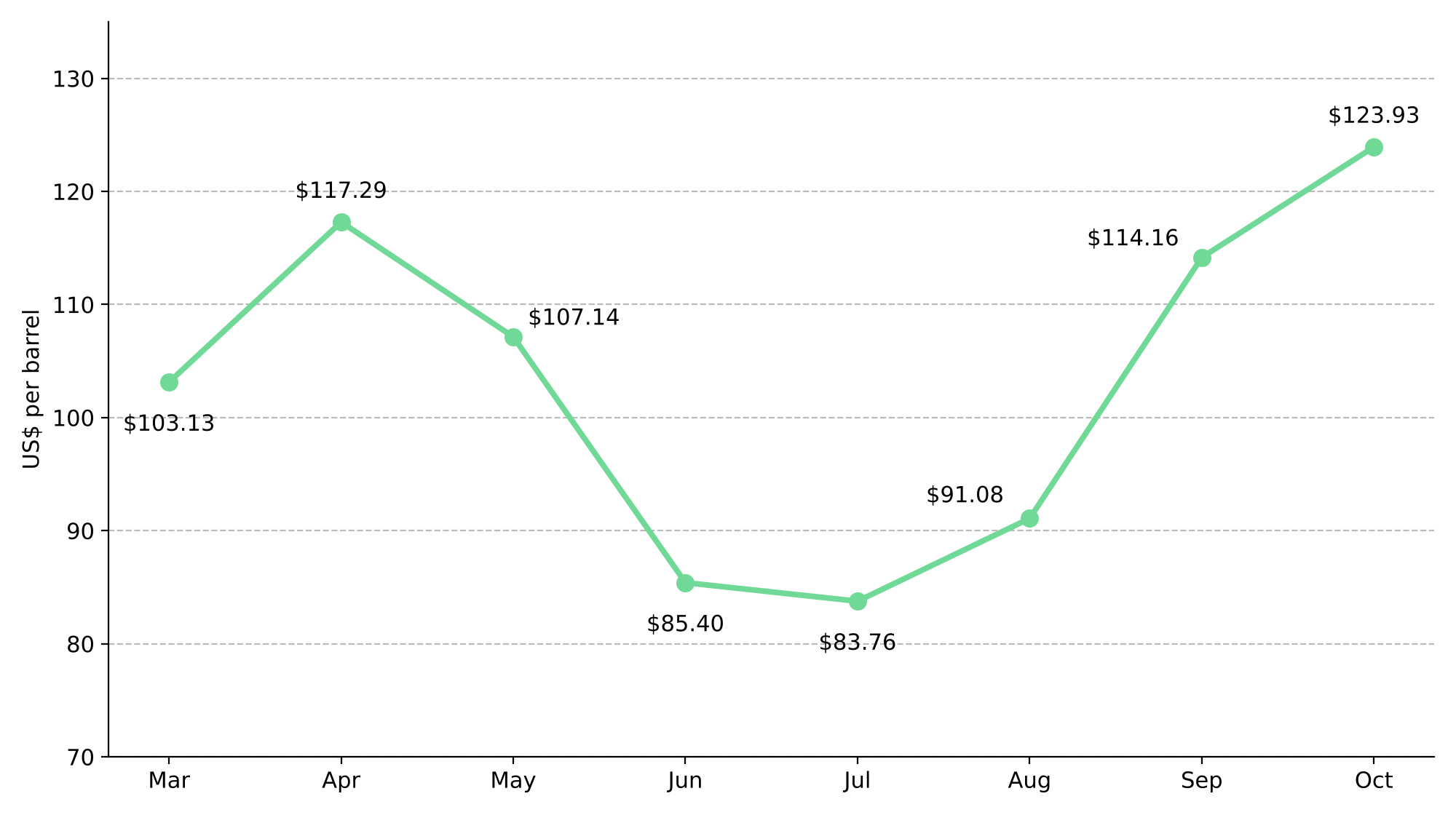
Adi Imsirovic, a veteran oil trader, says Brent futures could follow oil swaps into contango as pricing shifts typically begin in physical markets. If later contracts trade above nearer ones, funds rolling front-month positions would face monthly costs, while 2027 Brent futures would require fewer rolls and could reduce those costs.
Rapidan Energy Group estimates an 80% chance of renewed US-Iran fighting, while Iran reportedly sent a nuclear proposal to Washington through Qatar. De-escalation expectations could trigger another crude selloff, making position sizing essential to limit potential losses.
Where the Inventory Shortfall Pays Off
The midterm selloff reduced oil's war premium, but depleted inventories and continued Strait of Hormuz attacks could support prices. This creates an opportunity for 2027 Brent exposure while the inventory shortfall leaves oil prices sensitive to further supply disruptions.
However, sustained oil surpluses could rebuild inventories and reduce the price impact of future tanker attacks, weakening the case for long crude positions. Tracking inventory recovery and Brent futures pricing would help determine whether maintaining longer-dated exposure remains justified.
Analyst's Notes





Subscribe to Our Channel






Stay Informed


