Global Atomic's US$414M DFC Approval Leads Mine Development Towards Shipment by 2028


Global Atomic’s US$414M DFC loan approval, its closing conditions, a higher capex and the path to second-half 2028 uranium shipments from Dasa in Niger.
- The DFC board approved a debt facility of up to US$414.2M for Dasa on September 2026. Global Atomic is targeting completion of legal documentation in the first quarter of 2027 and first drawdowns in the second quarter.
- CEO Stephen Roman calls an export route the most important condition with US embassies in Benin, Nigeria and Algeria working on options.
- Total project costs are US$777.6M, and Global Atomic shows an indicative US$112.7M left to fund after the term loan and October offering.
- Underground development is progressing before stope mining begins and management reports better ground and less water than expected.
- Roman reports at least half a dozen utilities calling for supply with contracts being written around US$100/lb.
Global Atomic Corporation (TSX:GLO) has an underground mine and process plant under construction in Niger, and a US government development lender’s board approval for the bulk of the money needed to finish them. On September 16, 2026, the board of the US International Development Finance Corporation (DFC) approved a debt facility of up to US$414.2 million for the Dasa Project, which the company describes as the highest-grade uranium mine in Africa. Loan closing and drawdown remain subject to conditions.
The approval arrives with long-term uranium contracts being written around US$100 per pound (lb), according to management, against the US$75/lb base price in the 2024 Feasibility Study. Global Atomic is targeting first uranium shipments in the second half of 2028.
Construction Progress at Dasa
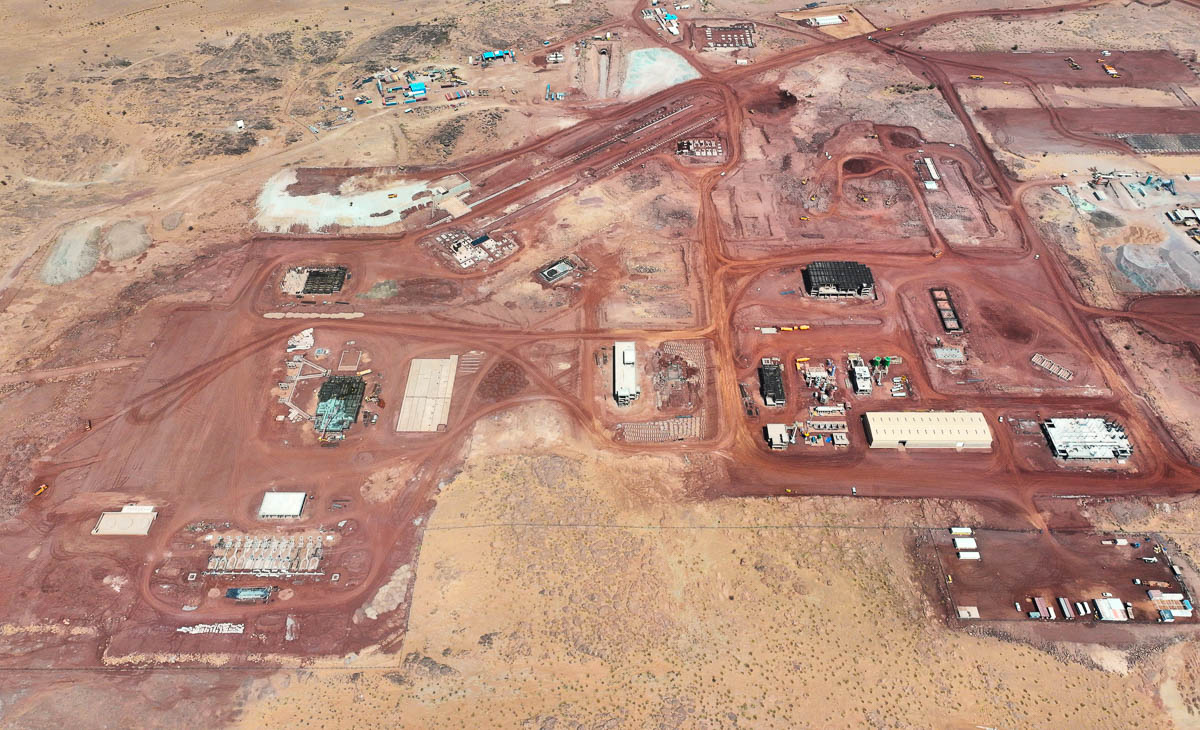
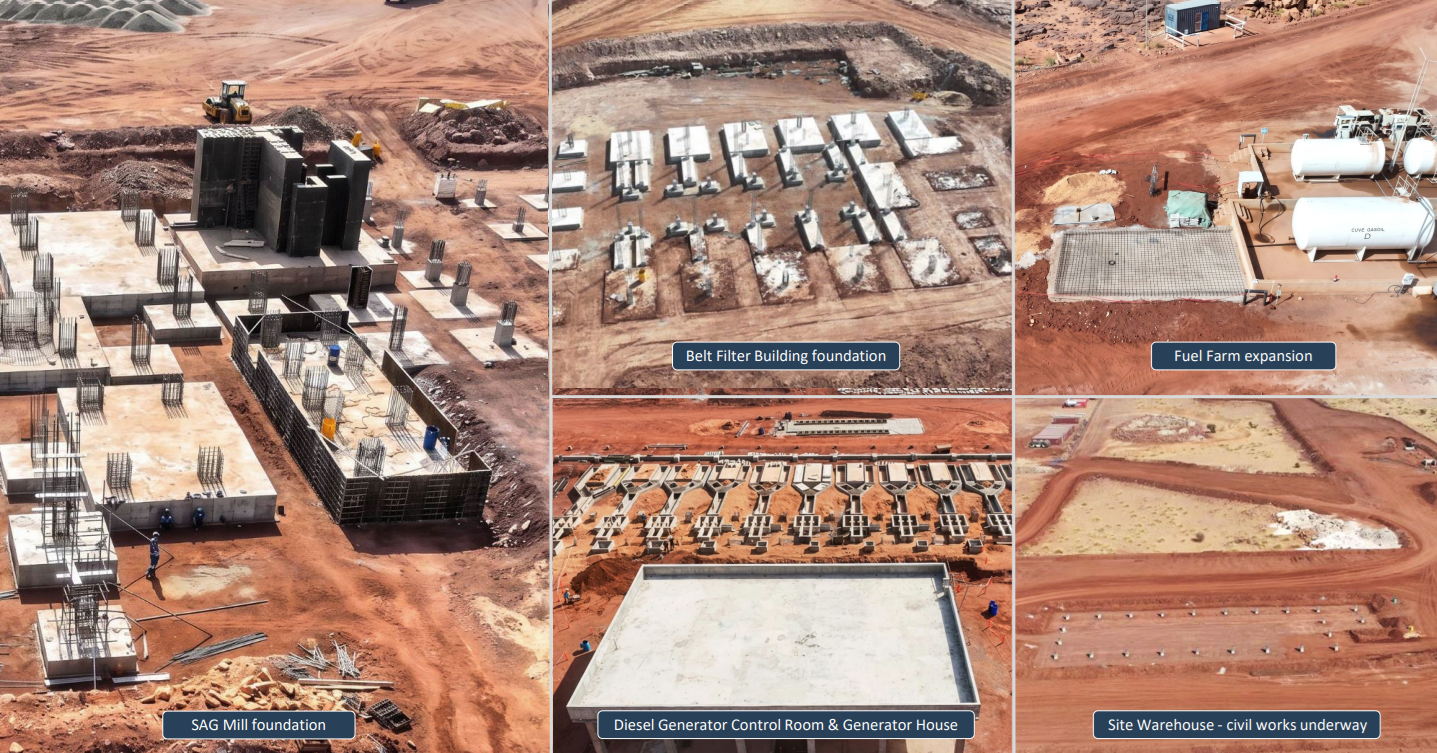
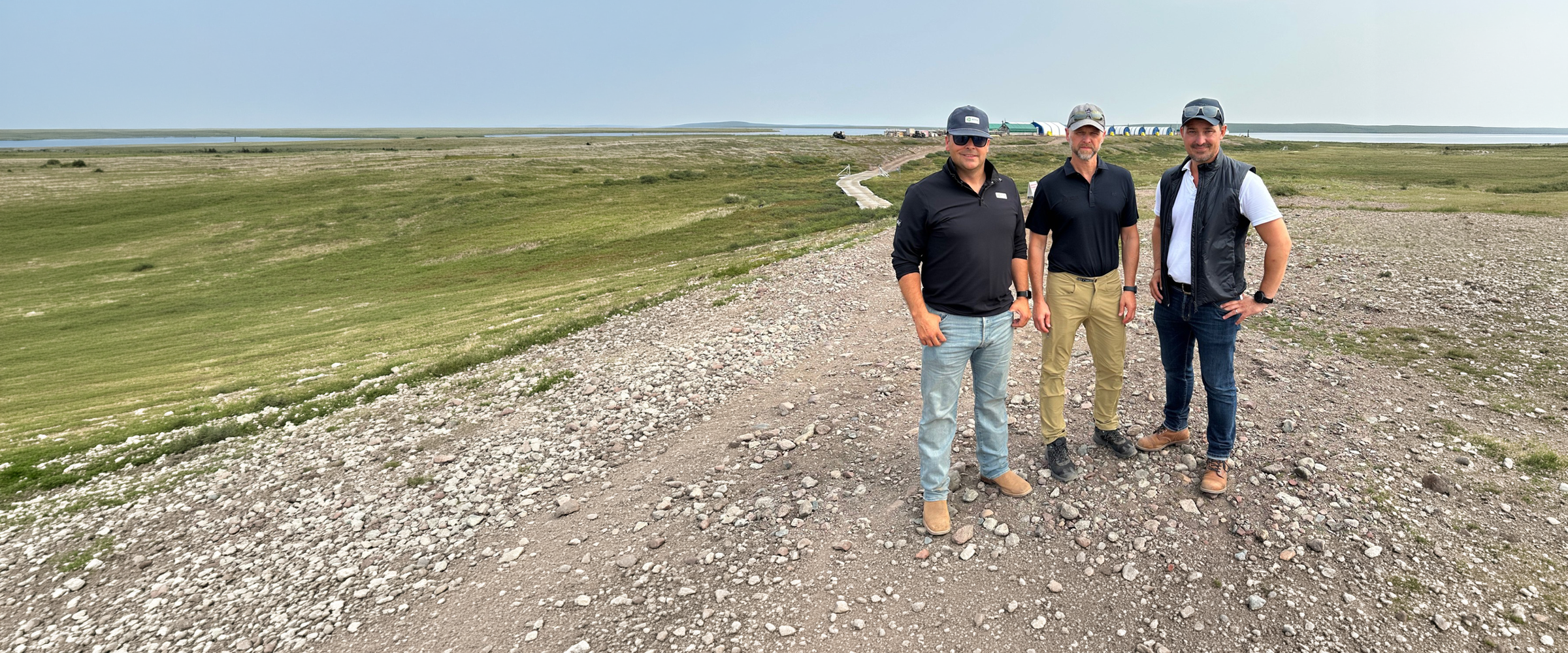
Global Atomic owns 80% of Dasa through SOMIDA, with the Niger Government holding 20%. About 830 people are working on site, most of them from Niger, across earthworks, civil works and the acid plant, with another contractor group arriving for steel erection. A 260-person camp is complete and the site has recorded 1 million hours free of lost-time injuries.
Underground, development is down 4 levels with 1 more to complete in the first phase before stope mining begins. Management reports better ground than it planned for, with very little water inflow and competent rock. An underground operation about 100 kilometers to the north mined the same geological units for almost 50 years. Dasa’s stopes are large enough for one to feed the plant for an entire month, and the company is targeting about 50,000 tons of ore on surface when feed starts.
A smaller-scale pilot plant, already built and tested, is being shipped to site. Global Atomic will use it to train new mill operators across the full flowsheet and tune the process before the main mill starts. That work repeats pilot testing already completed in Canada.
Higher Costs Reshape the Funding Stack
Global Atomic now estimates total project costs at $777.6 million, including working capital, corporate and financing costs. US$227.5 million was spent by June 2026, management reports no change in project scope.
Chairman, President and Chief Executive Officer of Global Atomic, Stephen G. Roman, traces most of the increase to time lost after the 2023 coup in Niger, and how the company compares with capital costs of 2 to 3 times estimates that he sees on most mining projects.
"As a whole, we are much better than the norm out there. We've had to continue to raise equity, which me as a big shareholder and every other shareholder doesn't like. But there's no way to stop the project now."
The company is reviewing those numbers ahead of its third-quarter report. An offering closed on October 2026 for gross proceeds of C$57 million through 113,931,000 units at C$0.50, each with one-half of a warrant exercisable at C$0.70. Roman said the raise drew both existing and new shareholders.
Global Atomic is also working on offtake agreements that would carry a monetary amount and could replace further equity for its share of the funding. None has been announced, and Roman hopes for good line of sight on this funding before the end of 2026.
Interview with Stephen G. Roman, President & CEO of Global Atomic Corp.
DFC Conditions Shape the Path to Drawdown
Roman names 3 main conditions and calls an export port probably the most important. He said US embassies in Benin, Nigeria and Algeria are working on a route, and he expects to have something to announce shortly.
The second is permit tenor. DFC extended its loan from 7 years to 10 years, while Niger’s mining permits typically renew every 5 years. Roman said Niger has agreed to a 10-year rollover, and Global Atomic lists the harmonization as in progress. The third is a government-to-government agreement between the US and Niger. While the terms are not yet known, Roman said Niger’s government would welcome an agreement on reasonable conditions. The completion of Global Atomic’s own funding portion, also in progress.
Global Atomic is targeting completion of legal documentation in the first quarter of 2027 and first drawdowns in the second quarter of 2027. Roman described US-Niger relations as very good, citing the US embassy in Niamey, Niger’s ambassador in Washington and a visit to DFC by Niger’s prime minister.
Schedule Supports First Uranium Shipments in 2028
Roman is targeting plant completion by the end of 2027, two quarters of cold and hot commissioning, and shipments in the second half of 2028. Global Atomic estimates about 20 months of plant construction once project financing is available, with commissioning and initial shipments within 3 months after that.
Under the 2024 Feasibility Study, Dasa produces 68.1 million pounds (Mlb) of uranium oxide over 23 years at a reserve grade of 4,113 parts per million (ppm), rising to 5,100 ppm in the first 12 years. Global Atomic is targeting about 4 Mlb a year at 1,000 tons per day (tpd). The mine is designed for 2,000 tpd and the plant for more than 1,000 tpd, which Roman states could lift output toward 5 Mlb a year.
The Flank Zone supplies the first 10 years, and Roman describes it as fully drilled off. Infill drilling would target a further 51.4 Mlb of Inferred resources at 5,349 ppm, which Roman plans to fund from cash flow while mining continues.
Margins & Valuation
At US$75/lb, the 2024 study’s after-tax net present value at an 8% discount rate (NPV8%) is US$917 million, with a 57.0% after-tax internal rate of return. At US$105/lb, the after-tax NPV8% is US$1,621 million and the return is 92.9%. Both figures are on a 100% basis and come from the 2024 study, not the current cost estimate.
Global Atomic’s market capitalization was C$199 million at a C$0.33 share price on October 31, 2026, below the C$0.50 offering price. Shares issued were 604.2 million, or 958.7 million fully diluted. Roman attributes part of the discount to a West Africa and Niger factor and expects a re-rating once shipments and cash flow begin.
The Investment Thesis for Global Atomic
- Global Atomic has a permitted underground mine and process plant under construction at Dasa, with about 830 people working on site.
- The board of the US International Development Finance Corporation has approved up to US$414.2 million of debt, although closing and drawdown still depend on conditions.
- The export route is the condition to monitor first, because the chief executive officer calls it probably the most important and expects to have news on it shortly.
- Total project costs of US$777.6 million leave an indicative balance of US$112.7 million to fund, and any offtake agreement carrying a monetary amount could reduce the new equity required.
- The company is targeting about 4 million pounds a year at 1,000 tons per day, with the mine designed for 2,000 tons per day.
- A market capitalization of C$199 million at October 31, 2026 reflects dilution, schedule and jurisdiction risk that shipments and cash flow would need to resolve.
Macro Thematic Analysis
Roman’s market argument starts with buyers. He reports at least half a dozen utilities calling Global Atomic for supply since the DFC announcement, and he reads the tone at the World Nuclear Association (WNA) event in September as a change:
“There’s a shortage in the market, big time. This is the first WNA I was at in September where utilities were admitting that they don’t think the prices are going to go down. I don’t think they’ve ever said that before.”
On Global Atomic’s supply and demand chart, sourced to WNA and Fuel Link, demand climbs above total supply from the late 2020s through 2040. The demand curve excludes small modular reactors and US Government military procurement of 4 Mlb a year of US-origin uranium oxide. Roman ties the shortfall to the absence of uranium development of any consequence over the 10 to 15 years since Fukushima.
Pricing supports that account in contracts more than in the spot market. Global Atomic describes spot price volatility in 2024 and 2025 as offset by stable to higher term prices. Uranium equities have lagged that account, with Roman reporting 4 to 6 months of pressure across the sector. Roman argues that higher uranium prices more than offset the capital increase and expects Dasa to sit in the lowest cost quartile. His operating cost concerns are sulfur, which has risen sharply, and electricity, which is up modestly. He wants to connect to Niger’s grid, since the power line crosses the site.
That gap frames the Dasa debate. A new greenfield mine reaching production would add supply outside the existing producer base at a moment when utilities are seeking it.
"We're going to be the first new greenfields uranium development story that's going to come on stream. We'll have the plant and everything really completed by the end of 2027," Roman states.
A US government lender’s approval for a project in Niger also brings energy security into the financing case, although that approval still has to reach closing.
TL;DR
Global Atomic’s Dasa uranium project in Niger has a US International Development Finance Corporation board approval for up to US$414.2 million, with closing and drawdown still subject to conditions, led by an export route. Total project costs are now US$777.6 million, which Chief Executive Officer Stephen G. Roman attributes mainly to delay. After a C$57 million October offering, an indicative US$112.7 million remains to fund, and offtake-linked money could replace further equity. The company is targeting first drawdowns in the second quarter of 2027 and shipments in the second half of 2028.
FAQs (AI-Generated)
Analyst's Notes





Subscribe to Our Channel



Stay Informed