




70% Fed Rate-Hike Odds Pressure Gold as Higher Oil Prices Put $4,000 Support at Risk


Oil-driven inflation pushed Fed rate-hike odds above 70% as gold held above $4,000 ahead of key PPI data.
- Spot gold fell to $4,022.09 on June 11, its lowest level since November 2025, before rebounding 0.7% to $4,103.74 ahead of the May Producer Price Index (PPI) release. The rebound suggests investors were reluctant to extend bearish positions before an inflation report that could influence Fed rate expectations.
- UOB's Quek Ser Leang identified $3,974 per ounce, the top of the weekly Ichimoku cloud, as gold's next key support level. Weekly stochastics remain above oversold territory, indicating that technical buying signals have not yet emerged.
- Markets are pricing in a greater than 70% probability of a Fed rate hike by December. May CPI rose at its fastest pace in three years, increasing the risk that inflation remains above the Fed's target. The May Producer Price Index (PPI) release was the next key data point for investors assessing whether gold could hold its rebound above $4,000.
- US gold imports for consumption rose 68% to 320 tons in 2025, while reported domestic consumption fell to 150 tons. The 170-ton difference suggests gold inflows exceeded reported end-use demand, indicating substantial inventory accumulation at prices above the June 11 spot price.
- US gold mine production fell slightly to 160 tons in 2025 from 163 tons in 2024. Despite lower output, production value rose 32% to $17 billion as higher gold prices more than offset the decline in volume. Nevada and Alaska accounted for 86% of US production, concentrating the country's gold supply in two states.
Higher Oil Prices Increase Rate-Hike Risks as Gold Holds Above $4,000
Spot gold fell to $4,022.09 per ounce on June 11, its lowest level since November 2025, before rebounding 0.7% to $4,103.74 ahead of the May PPI release. Iran announced the closure of the Strait of Hormuz after US strikes, raising concerns about disruptions to global oil supplies. Higher oil prices increased concerns that energy costs could add to inflation pressures.
Gold's intraday low remained $22 above $4,000, indicating that buyers were willing to enter the market near a widely watched support level. May US consumer inflation rose at its fastest pace in three years as higher oil prices increased energy costs. Higher energy costs can support gold's appeal as an inflation hedge, but they can also increase expectations of Fed rate hikes. Higher interest-rate expectations raise the opportunity cost of holding gold, creating opposing forces for the metal.
Inflation Keeps Fed Rate-Hike Odds Above 70% as Gold Lacks Technical Support
May US consumer inflation rose at its fastest pace in three years as higher oil prices increased energy costs. Markets are pricing in a greater than 70% probability of a Fed rate hike by December. Higher rate expectations reduce the appeal of gold because it does not generate income. The US dollar index failed to build on its post-CPI gains, reducing pressure on gold and helping support the June 11 rebound. However, the move does not yet signal a sustained recovery in gold prices.
Expectations for a Fed rate hike remained elevated even after CPI matched forecasts, limiting support for gold prices. Weekly stochastics remain above oversold territory, indicating that technical buying signals have not yet emerged. As a result, gold remains vulnerable to a stronger-than-expected PPI reading.
PPI Release May Determine Whether Gold Holds $4,000 or Falls Toward $3,974
UOB's Quek Ser Leang identified $3,974 per ounce, the top of the weekly Ichimoku cloud, as gold's next key support level. A move toward that level could slow the recent decline. Weekly stochastics remain above oversold territory, indicating that technical buying signals have not yet emerged. Markets continue to price a high probability of Fed rate hikes, the same factor that contributed to gold's decline from above $4,300 to $4,022.09.
If May PPI matches forecasts and the US dollar index remains below its post-CPI level, gold could consolidate above $4,000. In that scenario, $3,974 remains the next key support level. If PPI exceeds forecasts, investors may increase expectations for Fed rate hikes. That could extend the decline from above $4,300 to $4,022.09 and push gold toward the $3,974 support level. The May PPI release is the next key test for whether gold stabilizes above $4,000 or moves toward $3,974.
US Gold Producers Face Margin Pressure as Prices Fall and Costs Rise
US gold mine production fell slightly to 160 tons in 2025 from 163 tons in 2024. Despite lower output, production value rose 32% to $17 billion as higher gold prices more than offset the decline in volume. A further decline in gold prices would reduce producer revenue, while higher oil prices could increase operating costs for fuel, transport, and mining inputs. That combination would put pressure on margins across the sector.
Nevada and Alaska account for 86% of US gold production, concentrating domestic supply in two states. About 7% of US gold production comes as a byproduct of copper mining, giving those producers revenue from both metals and reducing their dependence on gold prices alone.
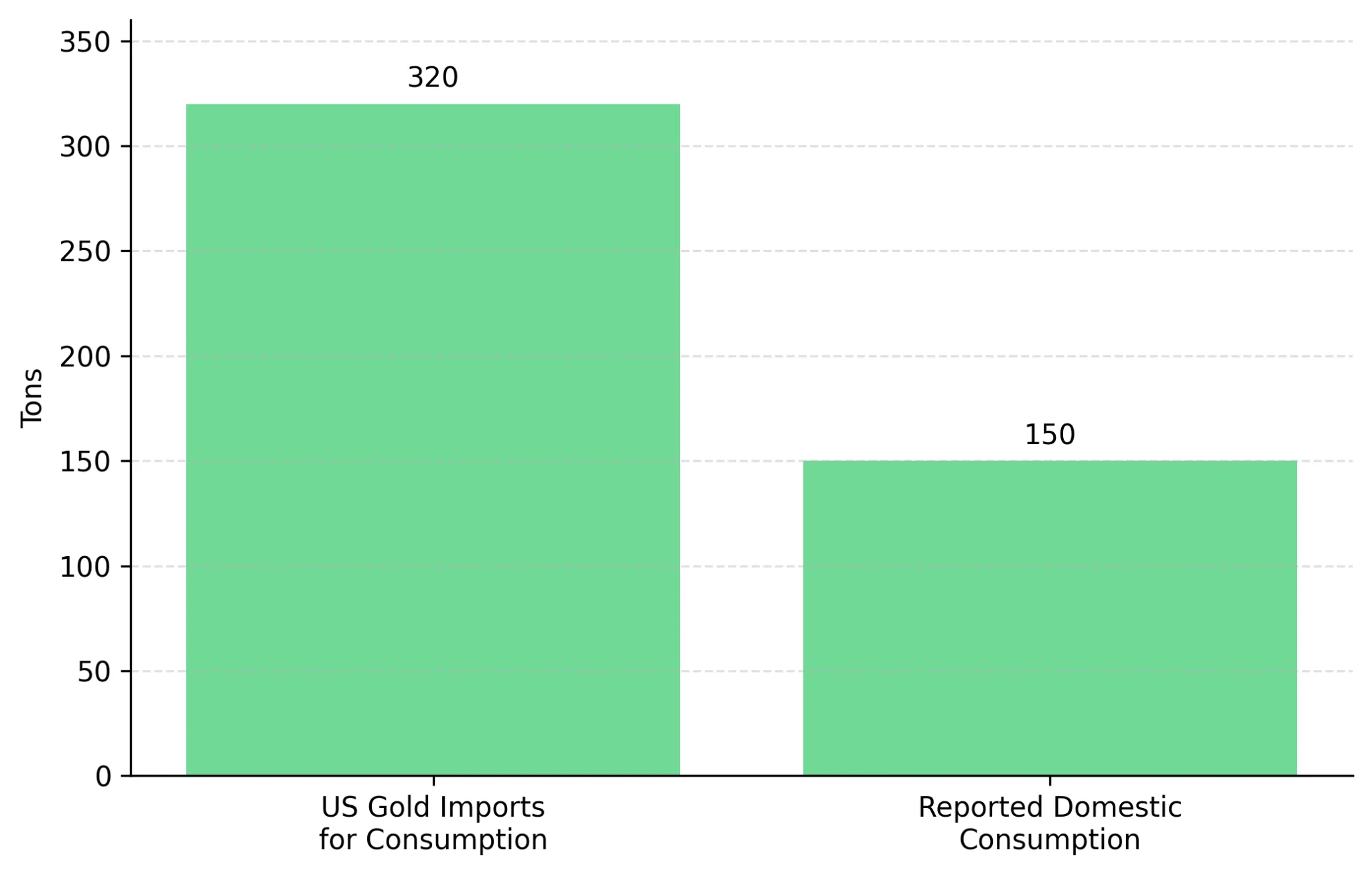
US gold imports for consumption reached 320 tons in 2025, while reported domestic consumption totaled 150 tons. The 170-ton difference indicates that gold inflows exceeded reported end-use demand. Gold's next key support level is $3,974 per ounce, which could become an important test if selling pressure continues.
Fed Rate-Hike Expectations and $3,974 Support Define Gold's Next Move
Markets are pricing in a greater than 70% probability of a Fed rate hike by December, while higher oil prices continue to add to inflation pressures. Together, these factors are weighing on gold prices. Gold rebounded from $4,022.09 to $4,103.74 on June 11 after finding support near $4,000. However, neither inflation pressures nor Fed rate expectations have changed, suggesting the rebound does not yet signal a shift in the broader trend.
UOB's Quek Ser Leang identified $3,974 per ounce as gold's next key support level. A weaker US dollar could support further stabilization in gold prices. If the US dollar remains below its post-CPI level, gold could consolidate above $4,000. Renewed dollar strength would increase pressure on gold prices.
The May PPI release is the next key test for gold prices. A higher-than-expected PPI reading could increase expectations for Fed rate hikes and push gold toward its next support level at $3,974. A PPI result that matches or falls below forecasts could help gold hold above $4,000.
Analyst's Notes





Subscribe to Our Channel






Stay Informed






















