




Abitibi Metals Raising Capital Into Momentum: 7 Things You Need to Know


Abitibi Metals raises C$30.75M after B26 drill success, securing strategic backing from Discovery Silver and funding 40,000m of exploration with reduced dilution risk.
Project Overview
Abitibi Metals Corp. (CSE: AMQ | OTCQB: AMQFF | FSE: FW0) recently closed a C$30.75 million non-brokered private placement with Discovery Silver Corp., acquiring a 9.9% strategic stake. The financing followed a 150 metre step out at the B26 Deposit's Western Down-Plunge Zone that intersected 2.71% copper equivalent over 7 metres within 1.81% copper equivalent over 15 metres. The sequencing delivers a rare capital markets outcome: validation before dilution. Discovery's entry establishes a valuation floor after expansion drilling confirmed geological continuity in a high-grade copper stringer system, reducing execution risk for shareholders who absorbed earlier exploration uncertainty without the pricing power that technical success provides.
1. Raising After Technical Validation Delivers Pricing Power
Abitibi priced hard dollar shares at C$0.58 per share after releasing intercepts that extended the Western Down-Plunge Zone by 150 metres from previous drilling. The step-out drilling delivered 1.81% copper equivalent over 15 metres starting at 1,346 metres depth, with a higher-grade core of 2.71% copper equivalent over 7 metres. Two intercepts expanded the deposit's block model boundary by 300 metres to the west. The copper stringer zone remains open laterally, creating a technical foundation for future resource expansion rather than a bounded drilling target.
The financing consisted of 11,764,706 charity flow-through shares at C$0.85 per share and 35,779,704 hard dollar shares at C$0.58, for total aggregate gross proceeds of up to C$30,752,228. Flow-through pricing reflects the premium buyers pay for tax deductibility on Canadian exploration expenses, not project valuation. The hard dollar price establishes the market-clearing level at which a strategic investor commits capital after reviewing drill data that reduces geological risk. Discovery paid for exposure to a deposit with demonstrated continuity in a high-grade zone, not for exposure to an untested concept.
2. Strategic Investor Entry at Technical Inflexion Confirms Commercial Interest
Discovery Silver allocated capital to acquire 35,779,704 hard dollar shares, reaching the threshold that triggers participation rights without requiring a regulatory filing as a control investor. The 9.9% stake positions Discovery as Abitibi's largest institutional holder with contractual mechanisms to maintain its percentage ownership in future financings, subject to conditions detailed in the participation agreement. This structure separates passive fund flows from strategic capital: Discovery negotiated governance provisions that protect its investment against dilution while Abitibi retained financing flexibility.
A strategic investor entering at this stage signals that external technical review supports continued capital allocation to B26 expansion drilling, reducing the probability that Abitibi exhausts its treasury without achieving resource growth.
3. Participation Rights Reduce Future Dilution Risk for Strategic Holder
Standard participation rights allow an investor to purchase additional shares in subsequent financings proportional to its existing stake, subject to conditions including minimum financing size thresholds, pricing floors relative to market, and board approval discretion. Discovery's participation agreement provides these mechanisms to maintain its 9.9% position in future financings while balancing anti-dilution protection against Abitibi's need to raise capital opportunistically without requiring unanimous strategic investor consent.
The structure creates a two-tier dilution outcome: Discovery exercises participation rights to maintain its percentage, while shareholders without contractual protections absorb proportionally higher dilution when Abitibi prices future raises below current levels. For existing shareholders, Discovery's participation commitment reduces the risk that capital raises price shares at distressed levels without anchor demand, but increases their dilution rate if Discovery exercises its rights in full while the broader market declines participation.
4. Dual-Tranche Structure Separates Exploration Funding from Balance Sheet Flexibility
Abitibi allocated flow-through proceeds exclusively to Canadian exploration expenses that qualify as flow-through mining expenditures under subsection 127(9) of the Income Tax Act (Canada) on Quebec-based projects, meeting the statutory requirement that flow-through share buyers receive tax deductions for capital deployed to eligible drilling. Hard dollar proceeds target exploration and development activities plus general corporate purposes, providing unrestricted capital for overhead, permitting work, metallurgical testing, engineering studies, and strategic transactions that flow-through rules prohibit.
The allocation separates funded meters from funded flexibility. Flow-through capital guarantees 2026 drilling meterage without requiring Abitibi to reserve hard dollar cash for drill contracts, while hard dollar capital addresses the non-drilling expenditures that advance B26 toward development decisions without triggering flow-through disqualification. Companies raising exclusively through flow-through shares fund exploration at the expense of balance sheet strength; companies raising exclusively through hard dollar shares preserve flexibility at the expense of tax-advantaged drilling capital. Abitibi's structure accesses both.
5. 40,000 Metre 2026 Program Targets Resource Growth, Not Resource Definition
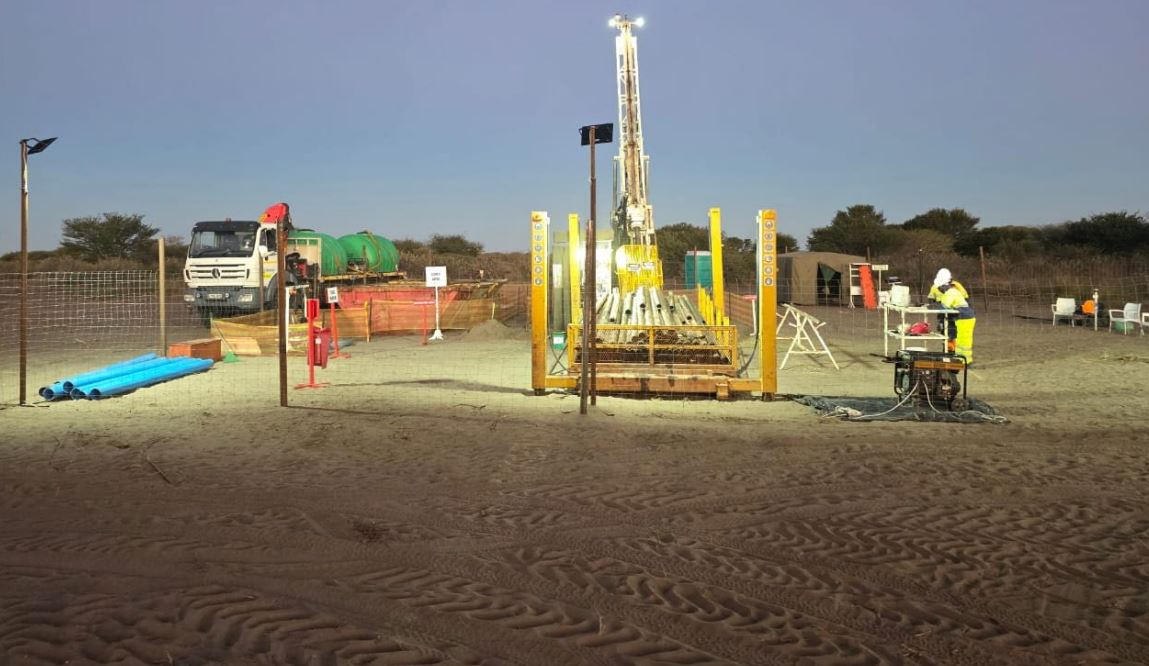
The company announced a planned 40,000 metres of drilling in 2026, with 8,232 metres completed as of April 7, 2026, and a third drill rig scheduled for deployment over the coming weeks. The drilling targets resource envelope expansion beyond the current block model limits at B26, focusing on step-out holes that test geological continuity at 150 to 350 metre spacings rather than infill holes at 70 metre spacings designed to convert inferred resources to indicated category.
President and Chief Executive Officer of Abitibi Metals, Jonathon Deluce, framed the aggressive step-out strategy as deliberately targeting scale over near-term grade confidence:
“These results are already contributing to the expansion of the overall mineralised envelope, which we believe will translate into meaningful resource growth in the next update.”
The B26 Deposit currently hosts 12.96 million tonnes at 2.08% copper equivalent in the indicated category and 12.34 million tonnes at 2.20% copper equivalent in the inferred category, as per the February 26, 2025 technical report effective November 1, 2024. Abitibi's strategy prioritises tonnage growth before grade confidence: expansion drilling increases the resource base that future infill programs can upgrade to higher-confidence categories, while immediate infill drilling would improve resource quality without expanding the economic envelope. Companies pursuing near-term development decisions infill first; companies pursuing resource scale as a strategic positioning tool expand first. Abitibi chose the latter, consistent with attracting a strategic investor focused on exploration upside rather than development readiness.
6. Geological Continuity in Step-Out Holes Reduces Expansion Risk
Step-out holes drilled approximately 200 metres and over 350 metres from the nearest previous intercepts intersected dark chlorite alteration halos measuring 22 metres and 13 metres respectively. Core observations confirmed that the B26 mineralised horizon with its characteristic alteration signature remains intact across these large step-outs, indicating strong geological continuity. While both holes returned lower-grade intercepts relative to the Western Down-Plunge Zone core, one step-out cut 2.31% copper equivalent over 1.0 metre within a broader lower-grade envelope, demonstrating that copper mineralisation persists at exploration spacing.
The alteration signature matters more than the intercept grade at this stage. Dark chlorite halos define the footprint of the hydrothermal system that concentrated copper, gold, silver, and zinc in the B26 stringer zone, establishing where higher-grade lenses may occur within a broader mineralised envelope. Companies drilling into unmineralised host rock abandon expansion drilling; companies intersecting alteration signatures without economic grades target infill holes and geophysical surveys to vector toward higher-grade cores. Abitibi stated that the observations support the case for additional follow-up work, including in-hole Pulse electromagnetic (EM) surveys, indicating the company interprets the alteration continuity as justification for continued capital deployment rather than a signal to retreat.
7. Timing Compression Between Results & Financing Minimises Market Volatility Exposure
The Western Down-Plunge Zone results were released on April 7, 2026, establishing technical validation; the C$30.75 million financing closed on April 23, 2026. The compressed timeline locks in valuation at C$0.58 per hard dollar share before external factors unrelated to B26 geology degrade market appetite for junior copper explorers. Copper prices fluctuate on macro supply-demand signals disconnected from individual project success; broader equity market corrections pressure risk asset valuations independent of drilling outcomes. Companies that release positive results and delay financings expose themselves to valuation deterioration between technical success and capital deployment.
Discovery's rapid commitment indicates pre-negotiated terms finalised concurrent with or shortly after Abitibi's drill result review, suggesting the strategic investor conducted technical due diligence during the drilling program rather than initiating review after public release. This sequencing matters: Discovery locked pricing before broader market participants digested the data, before competing strategic investors submitted competing term sheets, and before commodity price movements altered copper explorer sentiment. Abitibi converted technical success into committed capital before market conditions shifted, delivering the core benefit of raising into momentum rather than raising into uncertainty.
Key Takeaway for Investors
- Funded 40,000 Metre Expansion Program: C$30.75 million financing provides capital for the 40,000 metre 2026 drilling program, following expansion drilling that extended the block model boundary by 300 metres to the west.
- Strategic Validation Reduces Execution Risk: Discovery Silver's 9.9% stake signals external technical confidence in B26 expansion potential after reviewing drill data confirming high-grade continuity in the copper stringer system.
- Pricing Power from Technical Success: Raising C$0.58 per hard dollar share after intersecting 2.71% copper equivalent over 7 metres delivered better valuation than pre-drill uncertainty, reducing dilution per dollar raised.
- Future Financing Anchor: Discovery's participation rights establish committed demand for subsequent raises, reducing the probability of distressed pricing through development-stage capital requirements.
Bottom Line
Abitibi Metals’ C$30.75 million raise reduces execution risk by securing funded drilling meters and strategic investor validation after technical success confirmed resource expansion potential, not before. Discovery's participation rights create future financing optionality while transferring dilution exposure to unprotected shareholders, a trade-off that benefits Abitibi's capital flexibility at the cost of higher pro-rata dilution for existing holders in subsequent raises. The company now holds sufficient capital to complete its 40,000 metre 2026 program targeting tonnage growth through expansion drilling, with a strategic investor positioned to maintain its stake through participation in future financings. Whether this structure improves shareholder outcomes depends on whether resource growth from funded drilling justifies the dilution absorbed to finance it, and whether Discovery's continued participation signals conviction or contractual obligation when Abitibi returns to capital markets.
Analyst's Notes





Subscribe to Our Channel








Stay Informed






















