




Chile's Partial Supply Recovery Keeps Copper Miners' Pricing Power



BloombergNEF projects a copper deficit from 2028, with $332 billion needed for new mines and 17-year average build times limiting the supply response.
- China resumed sulfuric acid exports to Chile in September after a three-month halt, shipping 31,666 metric tons, or 93.5% of its total September exports.
- Shipments to Chile had fallen below 1,000 tons in June and July after the Iran war disrupted sulfur supply, removing leaching feed from the world's largest copper producer.
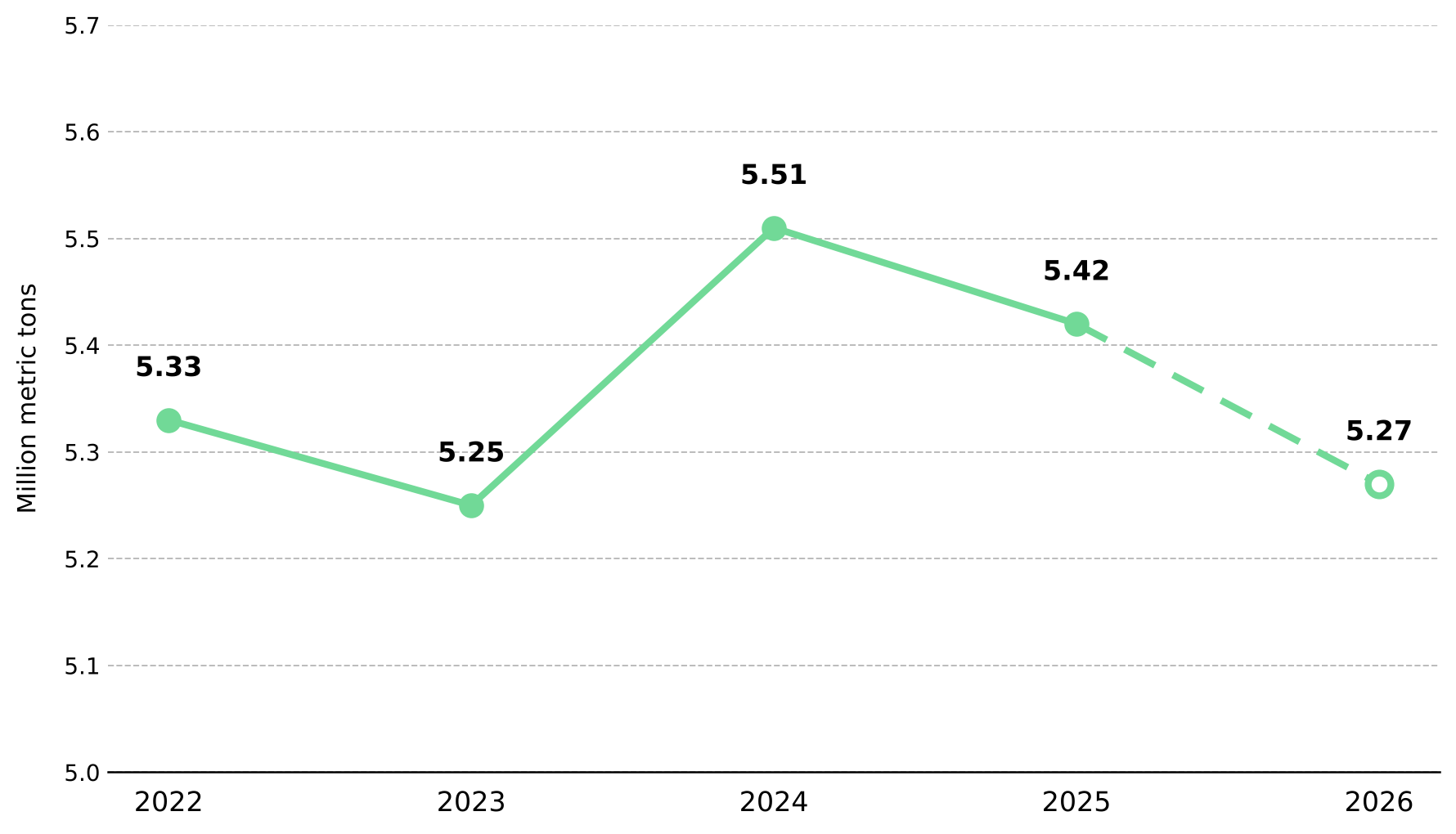
- Chile’s Finance Minister Jorge Quiroz estimates copper output will fall about 7% to 5 million metric tons in 2026, its lowest since 2003, while Chilean open-pit mines face an estimated 2% annual natural decline, limiting production recovery.
- Copper had gained 15.8% year to date and over 30% in 12 months, while gold futures fell 4.11% year to date, highlighting copper’s relative strength despite supply disruptions.
- A 2027 benchmark treatment charge above $40 per metric ton at London Metal Exchange (LME) Week would signal recovering copper concentrate supply and shift processing margins back toward smelters.
Renewed Acid Exports Support Chilean Copper Output
China resumed sulfuric acid exports to Chile after a three-month halt, shipping 31,666 metric tons in September, or 93.5% of its exports, compared with 24,195 metric tons in May. December COMEX copper futures remained up 15.8% year to date despite falling 0.94% to $6.5415 per pound.
After the Iran war disrupted sulfur supplies, exports to Chile fell below 1,000 metric tons in June and July. Because Chile relies on imported sulfuric acid for copper leaching, renewed shipments remove one constraint on production.
Falling Ore Grades Delay Chile's Return to 6M Tons
Chile’s Finance Minister Jorge Quiroz estimates copper output will fall about 7% to 5 million metric tons in 2026, its lowest since 2003. Declining ore grades and an estimated 2% annual natural decline at open-pit mines limit recovery. Storms have also reduced operating days, prompting authorities to urge mines to consider further shutdowns ahead of another weather system.
Chile accounts for over 20% of global mined copper, making its production losses significant to global supply. Codelco Chairman Bernardo Fontaine is prioritizing profitability over output, while Commodities Research Unit (CRU) estimates annual production will not return to 6 million metric tons until 2030.
17-Year Mine Lead Times Favor Producers
BloombergNEF's Transition Metals Outlook 2026 projects a copper deficit from 2028, requiring $332 billion in new mine investment, with average mine construction taking 17 years. Martin Tengler, Head of Metals and Mining at BloombergNEF, questioned whether the required materials would be available when and where needed.
These long timelines mean development-stage projects may face losses before reaching production, even if the projected deficit emerges. Iain Pyle, Senior Investment Director at Aberdeen Investments, argued that sustained higher copper prices are needed to encourage new supply.
Negative Treatment Charges Shift Margins to Concentrate Sellers
Custom smelters without their own concentrate supply face shrinking margins as copper processing fees remain below zero. Chinese smelters have relied on by-product sulfuric acid sales to offset these costs, but the export halt reduced that support.
Competition for concentrate among smelters in Indonesia, India, and the EU pushed the Asia-Pacific treatment charge index to -$272.20 per metric ton, against a 2026 benchmark of zero, favoring concentrate sellers.
Why Do Producers Hold an Advantage
Operating copper mines generate revenue from current sales, while concentrate sellers with spot-linked contracts can also benefit from negative treatment charges.
Permitted developers offer potential exposure to future copper shortages but still face financing and construction risks. For copper equities, existing production and a credible path to first sales provide clearer investment opportunities than relying on the projected 2028 supply deficit alone.
Analyst's Notes





Subscribe to Our Channel







Stay Informed


