




Marimaca Sizes Its Chile Copper Build for Feed Beyond the 50,000-Tonne Plan


Marimaca oversized water and crushing at its MOD copper build, but the 50,000-tonne SX-EW plant sets the limit for Pampa Medina oxide feed.
- Marimaca Copper's Pampa Medina drilling is scheduled to finish at the end of October 2026 and targets a maiden resource for a subset of the deposit.
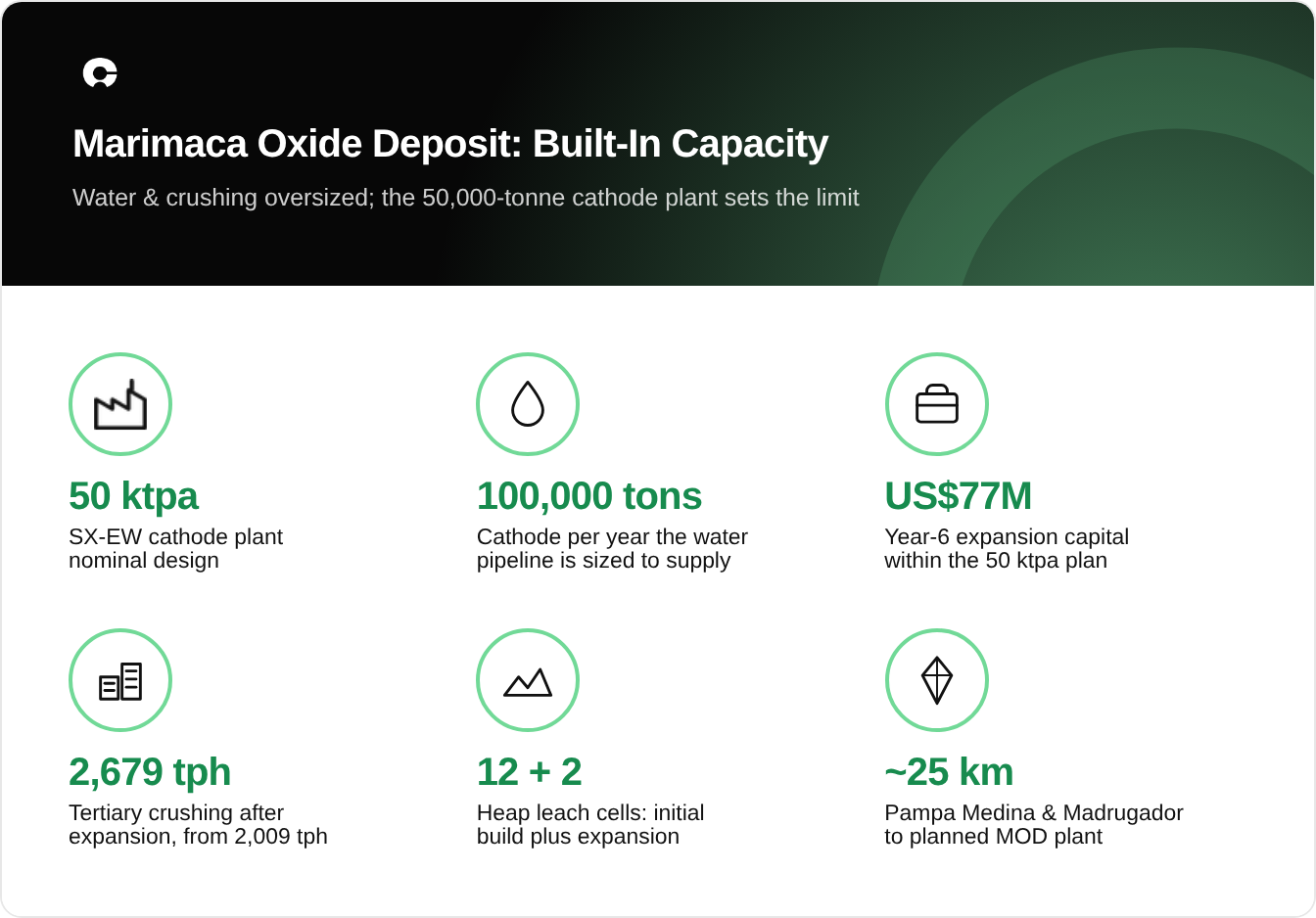
- The Marimaca Oxide Deposit (MOD) build includes primary and secondary crushers oversized for a year-6 expansion funded by US$77 million of expansion capital.
- Marimaca's recycled seawater pipeline is sized to deliver water for 100,000 tons of cathode per year, against a 50,000-tonne steady-state plan.
- The cathode plant is designed for a nominal 50,000 tonnes per year, and management has said a standalone solvent extraction plant becomes more likely as any Pampa Medina oxide resource grows.
- Near-mine oxide exploration targets at Cindy, Mercedes, Sierra, Roble and Tarso remain conceptual and are not part of any resource.
What Has Happened
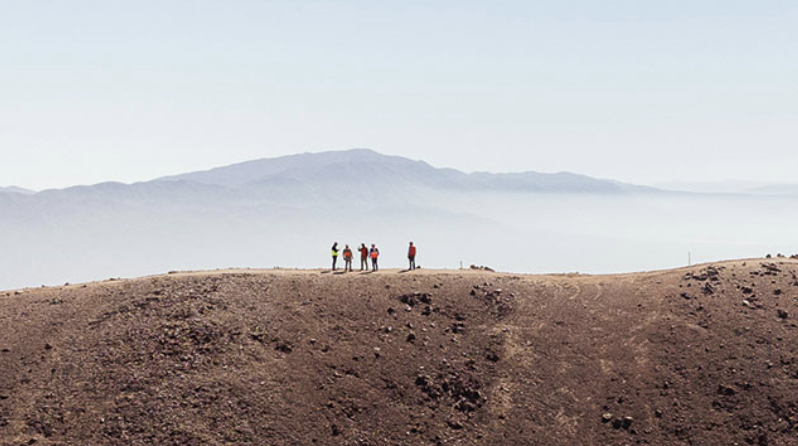
Marimaca Copper Corp. (TSX: MARI | ASX: MC2 | OTCQX: MARIF) is nearing the end of its 2026 drill program at Pampa Medina, a sediment-hosted copper system about 25 kilometers from the planned processing plant for its Marimaca Oxide Deposit (MOD). Drilling is scheduled to finish at the end of October 2026 and is targeting a maiden resource on a subset of the deposit. No resource has yet been defined.
The MOD has a completed 2025 Definitive Feasibility Study (DFS) environmental approval received in November 2025, detailed engineering underway, and project financing in progress, with full construction targeted for 2027. The plan is a conventional open-pit, heap leach and solvent extraction-electrowinning (SX-EW) operation producing 50,000 tonnes per annum of copper cathode at steady state over a 13-year mine life, for initial capital of US$587 million.
A Pampa Medina resource would test a design choice Marimaca has already made: how much additional oxide feed the MOD can take before it needs new capacity. The company says it oversized key equipment and infrastructure for cost-effective future production expansions, and its engineering identifies which parts of the plant have that room and which do not.
What the Build Is Sized to Absorb
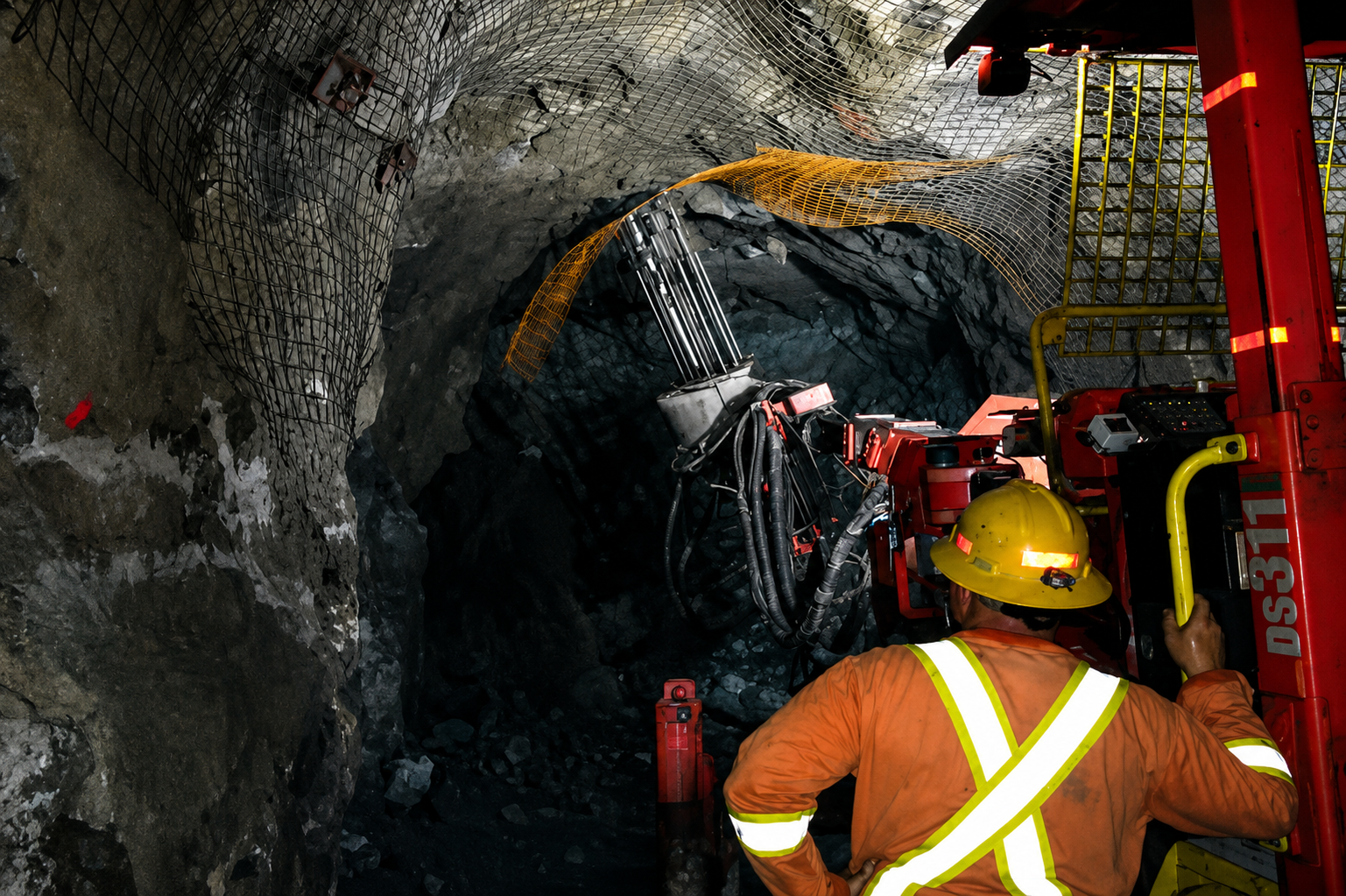
The feasibility study (FS) builds expansion into the crushing circuit from day one. The primary and secondary crushers are oversized for a year 6 expansion in the mine plan, funded by US$77 million in expansion capital. That phase increases the tertiary crushing rate from 2,009 to 2,679 tonnes per hour and adds 2 heap leach cells to the 12 built initially.
That expansion sits inside the existing 50,000-tonne plan; it is not growth beyond it. Average processing rises from 12.4 million tonnes per annum over the first 5 years of steady state to 14.1 million tonnes per annum over the life of mine, while head grade falls from 0.52% to 0.42% copper and average annual copper recovered falls from 50,000 to 43,000 tonnes. The added throughput offsets part of the grade decline without lifting the plant above its nameplate.
The waste side also has room. Marimaca reports ripios dump capacity sufficient for mine-life extensions, and the mine plan treats the deposit's 21.2 million tonnes of Inferred resource at 0.29% copper as waste.
Water & Power: The Constraints Management Designed Around
Before fixing the MOD's final scope, management tested which constraints would cap a larger operation built on the same infrastructure. Chief Executive Officer of Marimaca, Hayden Locke, described the review:
"Before we went into the final scope of our project that we want to build, we did a review and said: 'Okay, well, what are the things that, if we make a significant oxide discovery, will be our limiting factor in terms of delivering a project up there if we were to piggyback on that infrastructure?' And really it was narrowed down to power consumption, power availability, and water availability."
Water came out of that review with the most headroom. The MOD will draw recycled seawater from the Bay of Mejillones under a signed water option, through a pipeline about 32 kilometers long with 208 liters per second of capacity and 1 pumping station; the intake is already permitted. Locke has said the pipeline will be big enough to deliver 100,000 tons of cathode per annum, against the MOD's 50,000-tonne steady-state target.
Power is less defined. Marimaca reports that a certified renewable electricity supply is available, but has not disclosed whether that supply is sized beyond the MOD's own requirements. For a larger district operation, management's own review identifies power as the open item.
Where the Plant Sets the Limit
The SX-EW facility is designed for nominal production of 50,000 tonnes per annum of copper cathode, with a 3-stage solvent extraction (SX) configuration and a 142-cell electrowinning plant. The year-6 expansion described in the study adds tertiary crushing and 2 heap leach cells; it does not describe added SX-EW capacity. Heap leach and SX-EW are also the largest line in the capital estimate, at US$ 223 million or 38% of initial capital, ahead of crushing at US$ 141 million or 24%.
Locke linked the size of any Pampa Medina oxide resource to that plant limit:
"The Pampa Medina deposit complements the Marimaca oxide deposit, so those oxides logically are going to piggyback on the infrastructure regardless of the size that they end up being. And the bigger they get, the more likely it is they have a standalone SX plant, but they will logically piggyback on the infrastructure that we will develop at the MOD."
The division is between shared and incremental capacity. Marimaca cites significant synergy potential between Pampa Medina and MOD infrastructure, with the oversized water supply the clearest example, while cathode output beyond the 50,000-tonne nameplate would need SX capacity sized to the new feed. The size of the maiden resource will start to show which of those 2 paths applies.
Where New Feed Could Come From
Pampa Medina and Madrugador, both about 25 kilometers from the planned MOD plant, host what Marimaca describes as high-grade, shallow mineralization that appears to be open-pitable and that the company believes is complementary to the MOD. Marimaca is targeting development of oxides at both to grow cathode production and increase mine life under a hub-and-spoke district plan, and the 14,500-hectare Sierra de Medina land package is under a single operator for the first time.
Closer to the plant, Marimaca has identified near-mine oxide exploration targets: Cindy and Mercedes at 30 to 40 million tonnes grading 0.3% to 0.4% total copper each, Sierra at 20 to 30 million tonnes at 0.3% to 0.4%, and Roble and Tarso at 20 to 30 million tonnes at 0.2% to 0.3%. These targets come from a January 20, 2022 announcement and are conceptual; insufficient exploration exists to estimate a Mineral Resource, and it is uncertain whether further exploration will produce one.
The MOD's own sulfide target remains largely untested, and Marimaca plans to explore oxide extensions at depth and along strike as well as sulfide potential below the oxides. Feed of that kind would be a longer-dated option than Pampa Medina oxides, which management has tied directly to MOD infrastructure.
Broader Context & What to Watch Next
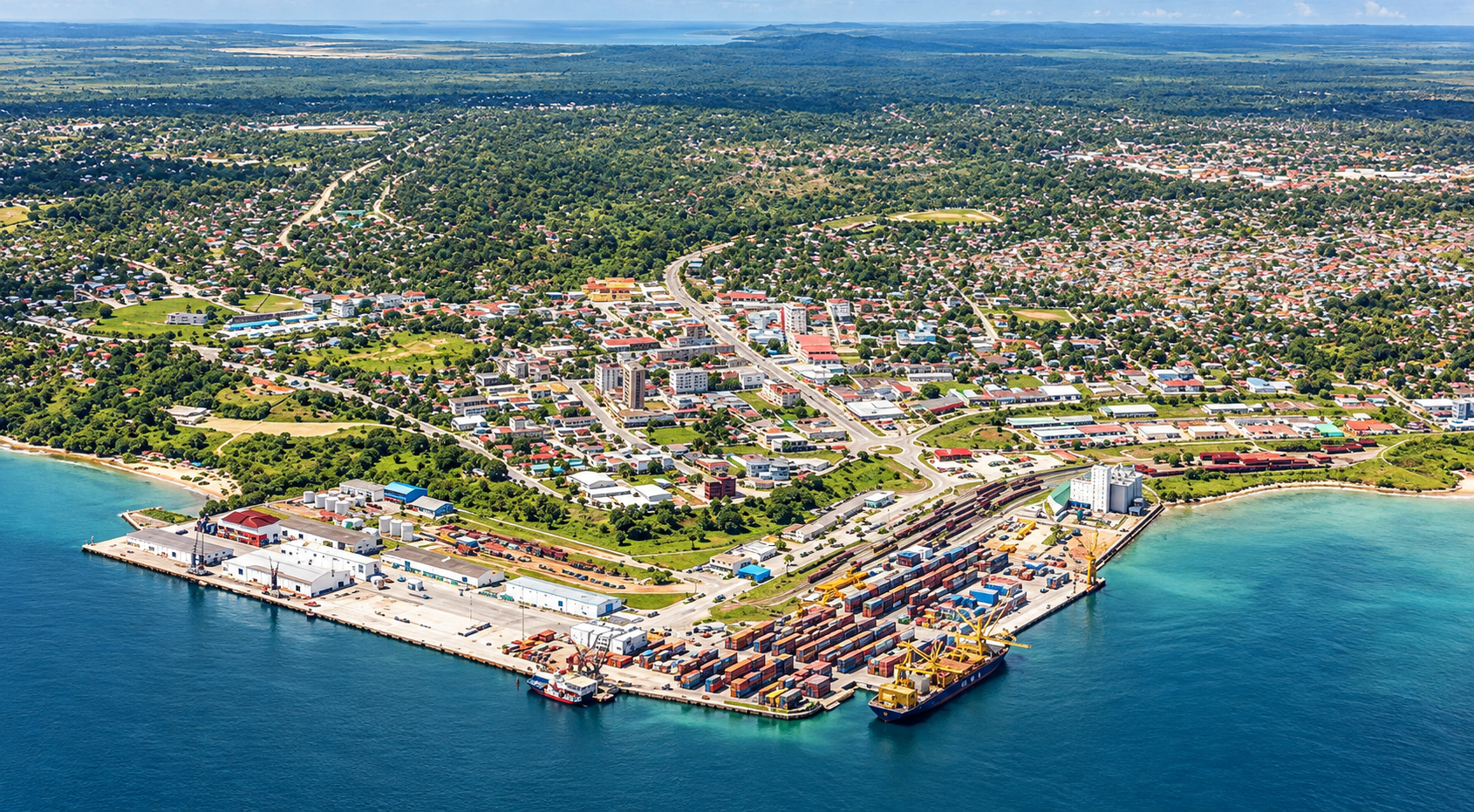
The surrounding region already hosts large copper deposits, including Mantos Blancos at 230 million tonnes grading 0.6% copper and Antofagasta Minerals' Cachorro at 300 million tonnes grading 1% copper, and Marimaca describes itself as a leading landholder in that emerging discovery belt. The MOD's location, about 25 kilometers from the Port of Mejillones and 40 kilometers from Antofagasta at 1,100 meters above sea level, means a district hub there would draw on existing port, highway, and regional labor access.
The next marker is the Pampa Medina maiden resource: how much is oxide, and whether its scale points to the shared MOD plant or a standalone SX plant. After that, track any disclosure of power capacity beyond the MOD's own needs, drilling that tests near-mine targets, and the MOD's progress through financing and a final investment decision toward full construction targeted for 2027, since the built-in capacity becomes usable only once the plant exists.
FAQs (AI-Generated)
Analyst's Notes





Subscribe to Our Channel






Stay Informed


