




Amex Exploration's Feasibility Study Reveals Exceptional Economics from High-Grade Quebec Gold Project



Amex Exploration's Quebec gold project: $1.1B NPV, 0.5yr payback, 147K oz/yr at $910/oz AISC. Phased development accelerates 2027-28 production timeline. High-grade Abitibi asset.
- Amex Exploration released a feasibility study showing exceptional economics with post-tax NPV of C$1.1 billion at $3,500 gold and C$1.7 billion at current spot prices, with a 0.5-year payback period and 114% IRR
- The phased development approach starts with a bulk sample in mid-2027 followed by Phase 1 production in 2028, mining 774,000 ounces over five years from a 2.3 million ounce resource at an average grade of 12.1 g/t
- The project generates C$2.49 billion in pre-tax cash flow over the first five years (C$3.7 billion at spot gold prices) with all-in sustaining costs of $910 per ounce and average production of 147,000 ounces annually
- Initial capex of C$193.9 million is significantly de-risked through contract mining and toll milling arrangements, eliminating the need to permit and build processing infrastructure while bulk sample generates pre-production revenue
- The project benefits from its location in Quebec's prolific Abitibi greenstone belt with strong community support, minimal permitting hurdles, and existing infrastructure access
Amex Exploration has released a feasibility study for its Quebec gold project that demonstrates some of the most compelling economics in the junior mining sector. Using gold at $3,500 base case in the study, the company has positioned itself to generate substantial cash flows through a phased development approach that minimises capital requirements and accelerates production timelines. President and CEO Victor Cantore outlined the project's financial merits and strategic execution plan in a detailed discussion of the feasibility study results.
Exceptional Financial Metrics Drive Investment Case
The feasibility study presents financial returns that stand out even in a strong gold price environment. At a conservative $3,500 per ounce gold price, the project delivers a post-tax NPV (5%) of C$1.1 billion. Using spot prices of $4,750 per ounce, this figure increases to C$1.7 billion. The pre-tax cash flow generation over the initial five-year period totals C$2.492 billion at base case pricing, expanding to $3.7 billion at current market prices.
The project's rapid payback period represents a critical de-risking element for potential investors and financing partners. The post-tax payback period of 0.5 years indicates that initial capital investments will be recovered within months of commercial production. The internal rate of return (IRR) further validates the project economics, with a post-tax IRR of 114% at $3,500 gold and 78% even if gold prices decline to $2,500 per ounce.
High-Grade Resource Underpins Production Profile
The project targets 774,000 ounces from a total resource base of 2.3 million ounces over the initial five-year period. The diluted grade of 12.1 grams per tonne (g/t) represents a significant improvement from the preliminary economic assessment, which had estimated 10 g/t. This increase resulted from focusing exclusively on measured and indicated resources, which carry higher grades than the inferred material that was included in earlier studies.
Production will average 147,000 ounces annually at a processing rate of 1,100 tonnes per day, up from 1,000 tonnes per day contemplated in previous assessments. The all-in sustaining cost of $910 per ounce provides substantial margin at current gold prices, even accounting for contract mining and toll milling arrangements that typically carry premium costs compared to owner-operated facilities.
Phased Development Strategy Accelerates Timeline
The company has structured the project development in distinct phases designed to minimise upfront capital requirements, reduce technical risk, and accelerate the timeline to first production. This approach represents a departure from conventional mine development that would see the entire operation constructed simultaneously. Cantore explains the phase development approach:
"The way we're doing it is we've got a bulk sample [where] your underground development is going to be the same thing that you'll be doing for your Phase 1. So, this will be built out by the middle of 2027 and be extracting gold in the middle of 2027. The minute you get permitted for Phase 1, you don't have to wait and start getting into into construction again and waiting another 15 months. You just continue ramping down."
The bulk sample phase requires approximately $50 million in capital, with 65% of this amount representing infrastructure costs that apply directly to the Phase 1 development. The bulk sample is expected to produce at least 23,000 ounces, generating over $100 million in revenue at conservative gold price assumptions. This self-funding mechanism substantially reduces the equity dilution typically required for mine construction. Phase 2 will transition to owner-operated mining rather than contract mining, further improving project economics over the longer term.
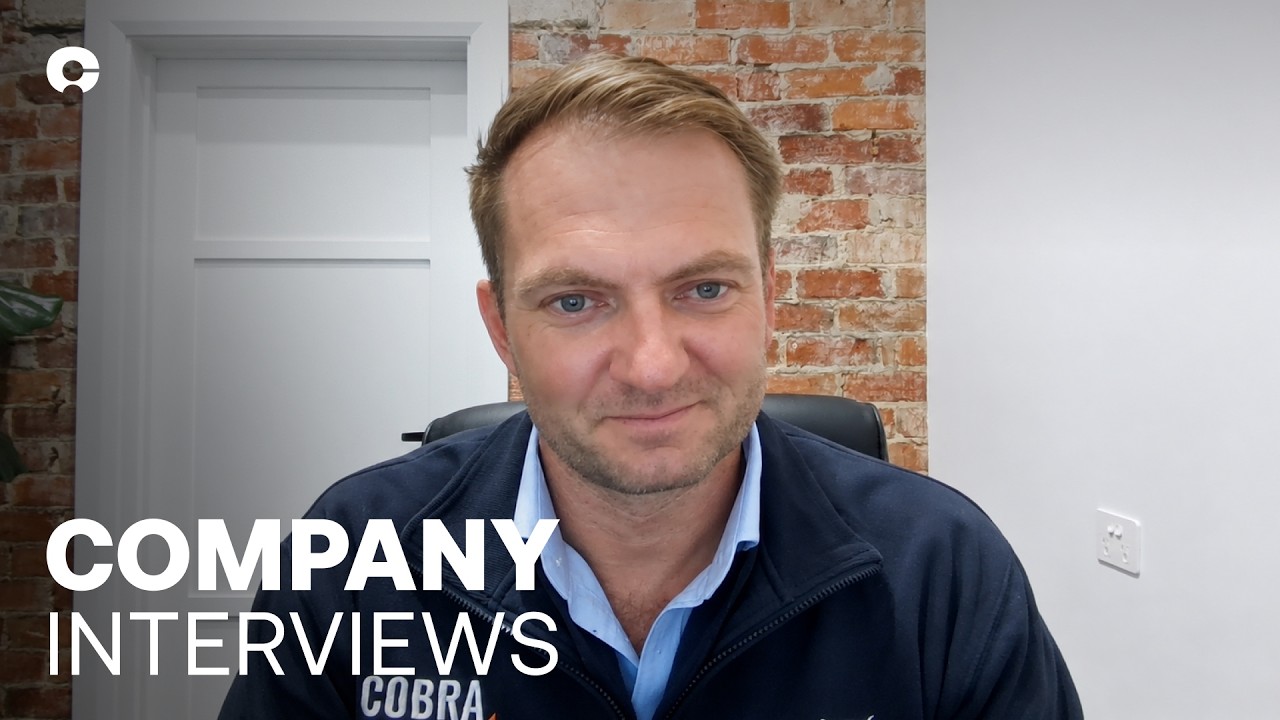
Interview with Victor Cantore, President & CEO of Amex Exploration
Capital Efficiency
The initial capex of $193.9 million represents a 32.8% increase from the $146 million estimated in the preliminary economic assessment. However, this 32.8% capital increase funded a 44% improvement in production, demonstrating strong capital efficiency. The decision to utilise contract mining for the bulk sample and Phase 1 periods, combined with toll milling arrangements, eliminates the need to construct and permit processing facilities, tailings management infrastructure, and related surface infrastructure.
Contract mining partnerships will leverage experienced operators already working in the Abitibi region. The toll milling agreements are being negotiated with multiple facilities, with a signed letter of intent already in place as required for the bulk sample permit. The feasibility study incorporates blended costs based on distances to various potential mills, with sensitivity analyses provided for each option to allow investors to assess the impact of final mill selection.
Permitting Progress Built on Community Trust
The phased approach provides significant advantages from a permitting perspective. Unlike conventional mine developments that require permits for open pits, processing facilities, and tailings management facilities, the initial phases require only underground mining permits. The company received its bulk sample permit within the estimated six-month timeframe, and the Phase 1 permit follows similar requirements with the primary difference being increased extraction volumes.
First Nations and the community support has been secured through ongoing engagement and collaboration agreements currently being finalised. The proximity to existing operations, including Casa Berardi, has established precedents for community partnerships and provides confidence in the permitting process. Cantore noted that the company hopes regulatory authorities will allow continuous operations from the bulk sample directly into phase one given the identical mining processes involved.
Metallurgical Confidence Backed by Tight-Spaced Drilling
The feasibility study incorporated conservative metallurgical assumptions that nonetheless represent improvements over earlier estimates. Gold recovery rates increased from 95% in the Preliminary Economic Assessment to 97.5% in the Feasibility Study, with laboratory results consistently achieving 99% recovery. The decision by independent processing engineers to raise recovery estimates indicates strong confidence in the metallurgical performance.
"In the feasibility study, you're basically going from gravity. You're skipping flotation and going straight to cyanidation. You don't need to do flotation and that also helps a lot on the Capex and also on the Opex," Cantore simplified.
This simplified flowsheet reduces both capital and operating costs while maintaining high recovery rates. Grade control drilling from surface directly into planned stope locations has validated and in some cases exceeded the resource model grades, providing additional technical confidence. The close-spaced drilling program, with some areas drilled to 7.5-meter spacing, resulted from the high-grade nature of the Champagne zone requiring increasingly tight drill patterns to satisfy resource modelers.
Market Reception Validates the Investment Case
The feasibility study release drove a 25-30% increase in the company's share price as investors recognised the project's economics and near-term development timeline. Investor feedback at the Swiss conference where Cantore presented the results focused primarily on understanding the rationale for the phased approach, with strong positive reception once the risk mitigation and timeline acceleration benefits were explained.
"You need the right deposit at the right place, at the right grade, and at right near infrastructure. You need electricity, you need a workforce, that's really when it's just they wanted to understand why the phased approach." Cantore noted.
The combination of high grade, favourable location, and existing infrastructure creates the conditions for this development strategy to succeed.
The financing pathway appears straightforward given the self-funding nature of the bulk sample and the strong project economics. Management expects minimal additional equity financing requirements following the bulk sample funding, as production revenues will fund subsequent development phases. The 0.5-year payback period and billion-dollar NPV provide strong credentials for debt financing discussions.
The Investment Thesis for Amex Exploration
- Exceptional project economics: Post-tax NPV of C$1.1 billion (C$1.7 billion at spot gold) with 114% IRR and 0.5-year payback period provide compelling returns significantly above sector averages
- High-grade, low-cost production: 12.1 g/t diluted grade supports 147,000 oz annual production at $910/oz AISC, generating substantial margins at current gold prices
- De-risked development pathway: Phased approach with self-funding bulk sample minimises equity dilution and accelerates timeline to 2027-2028 production versus conventional development
- Minimal permitting risk: No open pit, processing facility, or tailings infrastructure required for initial phases; bulk sample permit already secured within expected timeframe; strong community and First Nations support
- Near-term catalyst timeline: Bulk sample mid-2027, Phase 1 production 2028, toll milling and contract mining contracts in coming weeks/months
- Exploration upside: 2.3M oz resource with only 774,000 oz in initial mine plan; 600 km2 property in tier-1 Abitibi jurisdiction
- Proven metallurgy: 97.5% recovery with simplified flowsheet (gravity to cyanidation, no flotation) reduces capex/opex; independent engineers confirming performance
- Strategic location: Abitibi greenstone belt proximity to infrastructure, power, workforce, and multiple toll milling options creates operational advantages
- Strong cash generation: C$2.5B pre-tax cash flow (C$3.7B at spot) over five years funds expansion to full 2.3M oz resource and potential exploration discoveries
Macro Thematic Analysis
Amex Exploration feasibility study arrives at an inflection point for gold markets, with prices trading above $4,800 per ounce driven by central bank accumulation, geopolitical uncertainty, and monetary policy concerns. High-grade underground deposits in tier-1 jurisdictions command premium valuations as major producers seek to replace depleting reserves. Quebec's Abitibi greenstone belt combines mining-friendly regulations, established infrastructure, and geological prospectivity, creating an ideal environment for near-term development.
The phased approach addresses a critical industry challenge: minimising the capital intensity and lengthy timelines that have deterred investment in new gold projects. Projects capable of generating positive cash flow within 12-18 months while maintaining production costs below $1,000 per ounce position themselves advantageously for debt and strategic financing. As Cantore emphasised of having the right deposit, at the right place, and at the right grade, Amex appears to have secured all three elements during a favourable market cycle for precious metals development.
TL;DR: Executive Summary
Amex Exploration's feasibility study demonstrates exceptional economics with C$1.1 billion post-tax NPV (C$1.7 billion at spot gold prices), 0.5-year payback, and 114% IRR on a high-grade Quebec gold project. The phased development approach accelerates production to 2027-2028 through a self-funding bulk sample while minimising capital requirements and permitting risk. With 147,000 oz annual production at $910/oz AISC from a 2.3 million oz resource base in the tier-1 Abitibi belt, the project offers near-term cash generation and significant expansion potential.
FAQ's (AI Generated)
The phased approach accelerates production by 3-5 years (2027-2028 vs 2030-2032), minimises upfront capital through self-funding bulk sample, and reduces technical/financial risk while allowing the same underground infrastructure to serve both phases.
Despite toll milling and transportation costs, AISC remains attractive at $910/oz. The approach eliminates major capex for mill construction, tailings facilities, and associated permitting, accelerating timeline and reducing initial capital from potential $400M+ to $194M.
The feasibility study used only measured and indicated resources (higher grade) versus the PEA which included lower-grade inferred material. Tight-spaced drilling to 7.5m spacing in high-grade zones validated and improved the resource model.
Bulk sample permit secured in six months as expected. Phase one requires similar permit for increased extraction with no open pit, mill, or tailings facility. Company targets 2028 production and hopes for continuous operation approval from bulk sample.
Approximately $50M for bulk sample (generating $68M pre-production revenue, with 65% infrastructure costs creditable to phase one). Management expects minimal additional equity after bulk sample as production funds subsequent development phases.
Analyst's Notes





Subscribe to Our Channel






Stay Informed






















