




Deglobalisation Catalyst-Driven Rerate as Drill Season Kicks Off Amid Reduced Market Volatility


.webp)
Olive Resource Capital trims Asia-Pacific exposure, adds Yukon and Alaska explorers, and flags deglobalisation as the key long-term driver for western critical minerals assets.
- Commodity markets have entered a seasonal consolidation phase, with metals and mining indices largely flat after a strong start to the year; managers in the market view this as a healthy and anticipated reset.
- The market materially reduced exposure to Australia and Asia-Pacific over Strait of Hormuz supply risks, reallocating to cash or jurisdictions with greater supply-chain confidence.
- Portfolio additions include White Gold Corp, Prospector Metals, Goldsky, Valhalla Metals, and ValOre Metals which are selected for near-term, company-specific catalysts rather than macro momentum.
- Seasonal trading patterns favor accumulating junior explorer positions in spring and trimming into fall conference season results, when most drill data and financing events cluster.
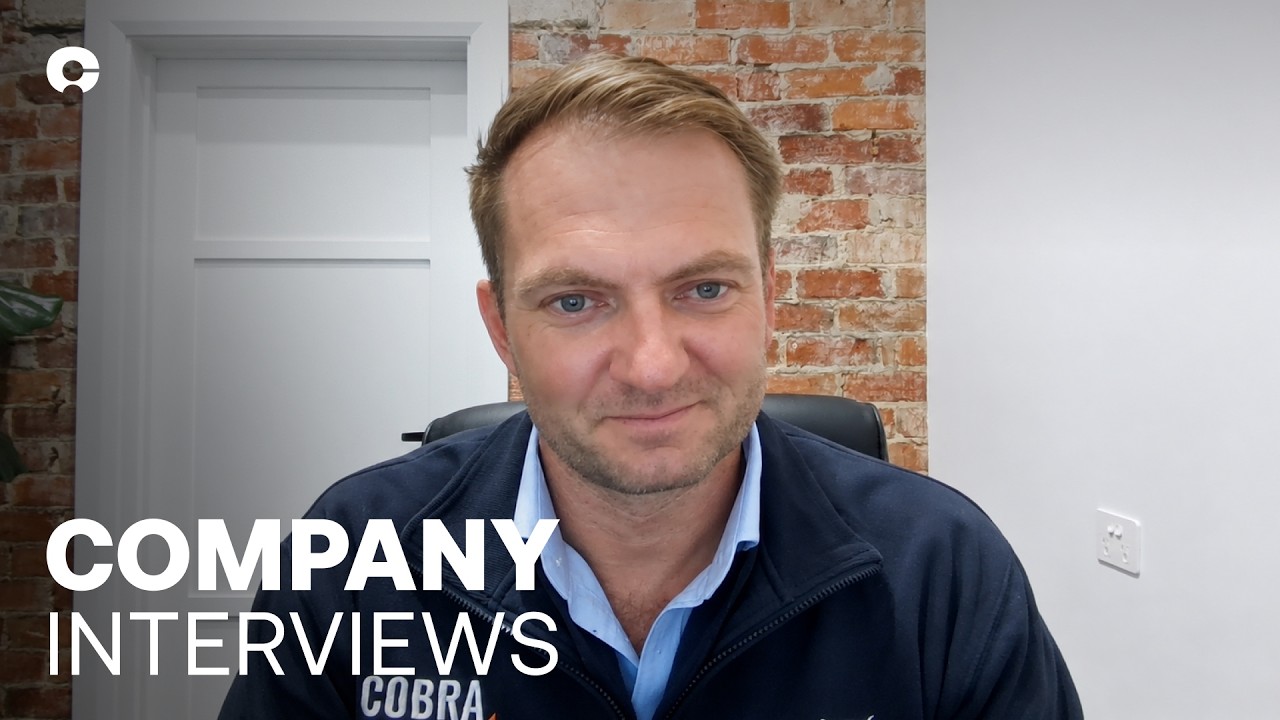
Samuel Pelaez, President & CEO, and Derek Macpherson, Executive Chair, at Olive Resource Capital, reviewed the current state of commodity markets and outlined strategic shifts within their portfolio. The conversation is relevant to investors in junior and mid-tier mining equities, where company-specific news flow and jurisdictional considerations can drive returns independent of broader commodity price moves.
Market Backdrop: Reduced Volatility and Seasonal Consolidation
Macpherson and Pelaez described the current environment as one of broadly reduced market volatility, with major equity indices and commodity benchmarks having spent two to three months in consolidation following an overbought start to the year. Copper was noted as an exception, continuing to perform well relative to broader metals. The pair described the consolidation as both expected and constructive.
Pelaez noted that lower volatility tends to create a natural upward bias in markets because investors can take on more leverage as implied volatility falls. This dynamic is visible as a slow creep upward in mining equities, with positive days producing decent gains but overall directionless momentum. The significant competing attention from broader markets, particularly technology stocks at all-time highs and anticipation of major IPOs in the tech sector, is well acknowledged.
On monetary policy, Macpherson observed that new Federal Reserve chair Kevin Warsh is unlikely to cut rates in his first Federal Open Market Committee (FOMC) meeting, arguing that he would not yet have the internal votes necessary to move decisively. The FOMC, which historically has operated as a near-unanimous block, may become more contested under new leadership, adding to uncertainty in the near-term rate outlook.
"The market is kind of waiting for some sort of event or moment to provide a change in momentum. What we've seen generally over broader markets is materially reduced volatility because the market's reacting less to headlines."
Geopolitical Context: Deglobalisation Reinforces the Thesis
Macpherson reported attending the Canaccord conference in Henderson, Nevada, where Admiral Mike Mullen, former Chairman of the Joint Chiefs of Staff who served under Presidents George W. Bush and Barack Obama, delivered remarks that aligned closely with the' long-standing investment framework. The general advised the audience to hold gold and silver, a recommendation Macpherson described as unusual coming from a figure embedded in the traditional military-political establishment.
More significantly, Mullen articulated that deglobalisation is a confirmed and accelerating trend, pointing to supply chain vulnerabilities exposed during the COVID-19 pandemic, reinforced by the conflict in Ukraine, the situation in the Strait of Hormuz, and China's restrictions on exports of critical materials. The implication for mining investors is that the geographic origin of commodity production is becoming increasingly important, and that western-jurisdiction assets in materials previously considered uneconomic to produce domestically such as tungsten and antimony now carry a strategic premium.
"Location matters, and whether you're in western assets of commodities that weren't considered economic for western companies to produce,m those are something that should be seriously considered."
Market movements expressed recent diplomatic activities, including a visit by President Donald Trump to China, produced few meaningful trade or supply agreements, reinforcing the view that the structural trend toward resource nationalism remains unaddressed.
Portfolio Strategy: Jurisdictional Repositioning
In response to perceived supply-chain risk stemming from potential disruptions in the Strait of Hormuz, market players materially reduced exposure to Australia and Asia-Pacific equities. The concern centers on the ability of companies in that region to maintain access to refined petroleum products such as diesel and petrochemicals that are essential for mining operations. The proceeds were redeployed into cash or companies in jurisdictions where they have greater supply confidence.
Separately, the reinforced jurisdictional assessment must now incorporate not just governance stability, but the geopolitical alignment of host governments and how durable those alignments are. This lens is expected to be explored more fully in a future episode dedicated to jurisdictional risk.
Portfolio Additions: Catalyst-Driven Names
Macpherson and Pelaez outlined several specific positions they have initiated or added to during the consolidation period, with each chosen for a near-term, company-specific catalyst.
Prospector Metals released detailing geological vectoring and targeting on its ML target, building on two significant drill holes from the prior year. Macpherson praised the quality of the company's technical disclosure, noting it provided the kind of clarity typically only available in direct management meetings.
White Gold Corp was described as a reinitiated position. The company holds a resource of approximately three million ounces grading above 1.5 g/t in the Yukon, and benefits from proximity to infrastructure being developed by Agnico Eagle at the nearby Camino project. The company has recently added Dylan Langille, an experienced personnel from the Great Bear discovery team, and Hans Smit as adviser on the advancing a preliminary economic assessment.
Goldsky Resources, also affiliated with Agnico Eagle, is expected to release a maiden resource in June. Macpherson speculatedthat the resource could represent a positive surprise to the market, given that extensive historical drilling by Agnico has not yet been incorporated into a formal resource estimate.
Valhalla Metals, an Alaska-based copper-zinc polymetallic explorer, received a placement investment from the fund. The project is situated along the proposed road corridor near Trilogy Metals' assets. Macpherson and Pelaez expressed optimism about the political environment under the current U.S. administration for advancing permitting and road construction in the region.
Finally, ValOre Metals, a PGM developer in Brazil with a high-grade project advancing toward a preliminary economic assessment. The stock had been weak in anticipation of a financing, but the fund's chairman appeared likely to fund the company again, allowing the managers to accumulate shares.
"There's two things all these names have in common. One is excellent management or people at the top, and second, tangible, quantifiable catalyst in the near term that should rerate stories should they come to be positive."
Seasonal Trading Dynamics for Junior Explorers
Macpherson and Pelaez outlined a trading framework specific to seasonal explorers, companies that drill during the summer months and release results in the fall. Stocks in this category tend to build positive momentum in spring as drilling commences, with the peak typically occurring around the fall conference season in September, when the bulk of drill results and resource announcements are released.
After results, companies frequently return to market for financing, creating a natural liquidity event. The flow-through share financing cycle in Canada reinforces this pattern, with share escrow releases occurring in spring and new flow-through issuances in fall. While summer is often perceived as quiet, material price moves in mining equities do occur during this period.
Key Takeaways
The overarching message from this discussion is that the current consolidation in mining markets is healthy and consistent with seasonal norms, but it does not preclude meaningful individual stock moves driven by company-specific news flow. The investment philosophy has sharpened around three filters: quality management, near-term quantifiable catalysts, and jurisdictional reliability in a deglobalising world. Their portfolio repositioning away from Asia-Pacific reflects a practical application of that third filter, while their new and expanded positions across Canadian and Alaskan explorers reflect the first two. For investors in junior mining equities, the seasonal framework they describe - accumulating in spring, trimming into fall results - offers a structured approach to navigating a period when macro catalysts are scarce but company-level newsflow is accelerating.
TL;DR
Olive Resource Capital views the current mining market consolidation as healthy and seasonal, not structural. The firm has reduced Asia-Pacific exposure on Strait of Hormuz supply risk while adding to catalyst-rich junior explorers in Canada and Alaska. Deglobalisation is accelerating and western-jurisdiction critical minerals assets are gaining strategic value. Near-term drill results and resource updates from White Gold, Prospector, Goldsky, Valhalla, and ValOre are the primary expected value drivers over the summer.
FAQ (AI Generated)
Analyst's Notes





Subscribe to Our Channel





.jpg)




Stay Informed






















