




Permitted, Funded & Partially Engineered: The Pre-Construction Position at i-80 Gold's Lone Tree Facility


i-80 Gold's Lone Tree autoclave: a permitted, US$1B+ funded brownfield refurbishment in Nevada. US$430M capex, 30% engineered, first gold targeted late 2027.
- Lone Tree is a formerly operated, fully permitted autoclave facility being refurbished rather than built from cleared ground, eliminating the site-establishment exposure that defines greenfield builds of comparable cost.
- The pressure oxidation-carbon-in-leach circuit includes an oxide bypass that provides 5% to 10% throughput headroom above nameplate capacity, a design flexibility that a purpose-built single-circuit greenfield equivalent would not have upon commissioning.
- At approximately 600,000 estimated direct construction hours, the Lone Tree build is structurally lighter than greenfield autoclave projects, which typically exceed 1 million direct construction hours.
- The US$430 million capital estimate is underpinned by approximately 14,000 cost line items and an AACE Class 3 engineering study completed in the fourth quarter of 2025, with detailed engineering already 30% complete.
- With more than US$1.0 billion in secured capital across four instruments and no primary permitting outstanding for the core facility, the late-2027 first gold pour target is fully financed and construction-ready.
Lone Tree's investment case rests on a structural distinction that separates it from comparable-cost greenfield autoclave developments: the facility has operated before. The refurbishment strategy removes the site-establishment phase, compresses the direct construction footprint, and narrows the pre-production contingency set to a single variable. With more than US$1.0 billion in capital secured, primary permitting in place, and 30% of detailed engineering complete, the remaining execution variable is schedule.
Site Background & Brownfield Designation
Lone Tree's status as a previously operated, fully permitted facility removes the site-establishment exposure that characterises comparable-cost greenfield autoclave projects from the outset.
The facility operated previously under Newmont and retains a fully permitted processing plant as its structural foundation. The refurbishment scope covers the reactivation and upgrade of existing components: the oxygen plant, carbon-in-leach circuit, pressure oxidation autoclave, mercury abatement scrubber, water treatment system, refinery, tailings filtration system, tailings transfer pad, and material feed systems. None requires installation from cleared ground.
Remaining permitting activity covers renewals and standard environmental controls rather than primary approvals for the core processing infrastructure. Long-lead equipment timelines are constrained by the brownfield starting point, and upgrades are focused on achieving the approximately 92% average gold recovery required by the owner-operated processing model, while aligning the facility with current environmental compliance standards.
Pressure Oxidation Circuit Architecture
The Lone Tree processing circuit is designed around two complementary streams whose combined architecture provides throughput flexibility that a single-circuit greenfield equivalent would not carry into commissioning.
The integrated pressure oxidation-carbon-in-leach circuit treats the refractory, sulphide-hosted mineralisation characteristic of i-80 Gold (TSX: IAU) underground mines in Nevada. Gold hosted in sulphide minerals cannot be recovered by conventional cyanide leaching alone; it must first be liberated through oxidation under elevated pressure and oxygen before the carbon-in-leach process can extract it. The nameplate throughput is approximately 2,268 tonnes per day at 85% plant availability, yielding approximately 827,800 tonnes per annum of processing capacity.
The design includes an oxide bypass route that allows high-grade oxide material to skip the pressure oxidation step entirely and proceed directly to carbon-in-leach after grinding. This preserves autoclave capacity for refractory feed while processing oxide material at a lower unit cost, creating 5% to 10% throughput headroom above nameplate capacity. A purpose-built greenfield facility designed to the same nameplate specification would carry no equivalent bypass at commissioning; Lone Tree's dual-circuit architecture builds that flexibility into the commissioning baseline rather than treating it as a future upgrade.
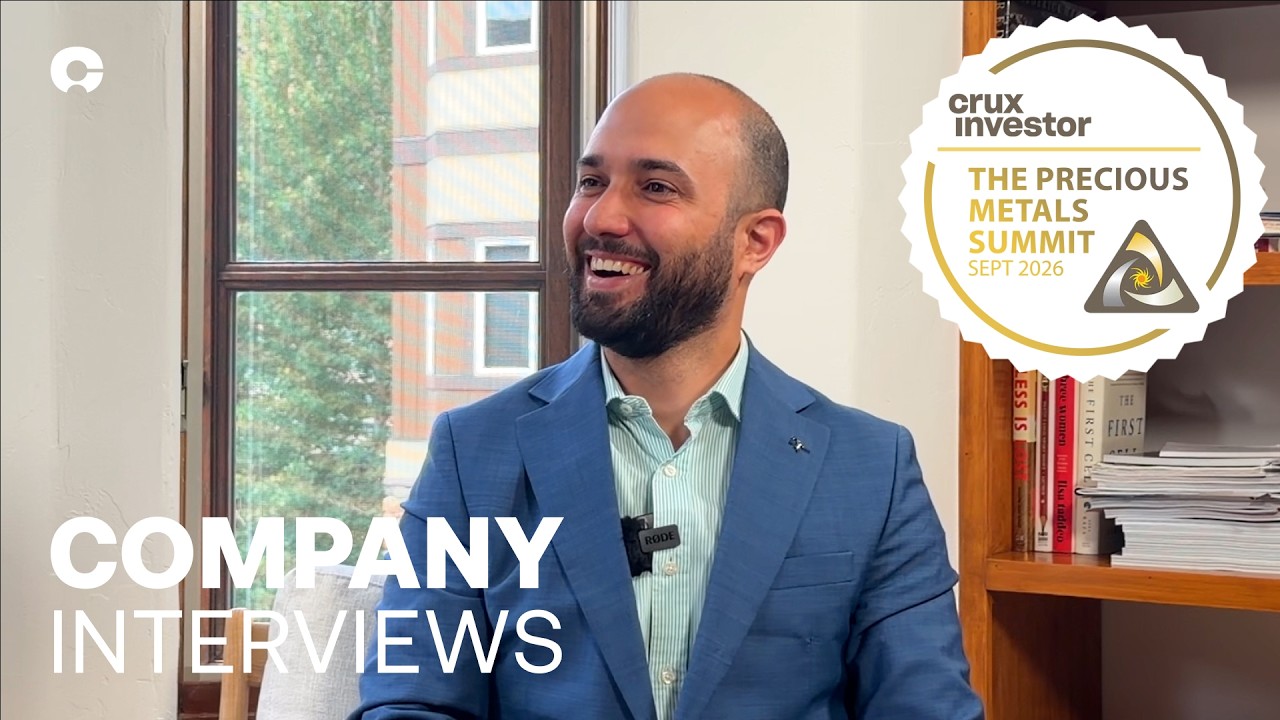
Chief Operating Officer of i-80 Gold, Paul Chawrun, explains the metallurgical basis for pressure oxidation across the Nevada portfolio:
"The reason why you need an autoclave, and it's very common in Nevada, is that the gold is occluded in a pyrite or an arsenopyrite. In our case, it's mostly arsenopyrite, and so fundamentally you need some pressure and oxygen, pressure oxidation leach, to be able to remove that part of the mineral away and have the gold free, and then it's a standard process called the carbon-in-leach process afterwards."
Construction Scale & Execution Basis
At approximately 600,000 estimated direct construction hours, the Lone Tree build is structurally lighter than greenfield autoclave projects, which typically require more than 1 million direct construction hours.
The difference reflects the reduced scope of the brownfield site. That compressed footprint reduces peak labour exposure and shortens the path to first production relative to a comparable greenfield programme of the same capital cost. The execution team carries direct operating experience at autoclave facilities at some of Nevada's largest gold mines.
Chawrun describes the team's direct familiarity with the equipment and operational environment:
"We have a number of people on the team who have operated the autoclaves for NGM in the area, for the other facilities in the area, and also a couple who have operated this autoclave, and our ore is currently going through an autoclave through a third-party partner, so we know this stuff works, and it's well-known technology in Nevada."
Capital Cost Composition & Engineering Depth
The internal structure of the US$430 million capital estimate provides more information about cost confidence than the headline figure alone.
The estimate breaks down as US$253 million in direct costs, US$91 million in indirect costs, US$43 million in contingency (approximately 12% of the total), US$25 million in owner's costs, and US$18 million in capital spares. The major direct cost components are the pressure oxidation circuit and utilities at US$86 million, tailings filtration at US$50 million, reagents and utilities at US$39 million, neutralisation, carbon-in-leach, and cyanide destruction at US$28 million, power and electrical at US$20 million, refinery at US$16 million, and the grinding circuit at US$14 million. The inclusion of capital spares and a 12% contingency within the published total indicates the estimate accounts for execution uncertainty rather than presenting an unprotected base case.
The control estimate is supported by approximately 14,000 cost line items developed following extensive trade-off studies. Chawrun describes the engineering foundation underpinning the capital figure:
"The overall capital cost is $430 million. We're quite confident in that because it's a level three engineering study. And in fact, the vast majority of it is level two."
Feed Sources & Regional Hub Architecture
Lone Tree's central processing role is justified by three geographically proximate underground mines whose refractory ore profiles require centralised pressure oxidation that no per-mine facility could economically replicate.
Granite Creek Underground carries a Measured and Indicated resource of 261,000 ounces at 10.5 grams per tonne gold, with an Inferred resource of 326,000 ounces at 13.0 grams per tonne gold. Archimedes Underground holds 436,000 Indicated ounces at 7.6 grams per tonne gold and 988,000 Inferred ounces at 7.3 grams per tonne gold. Cove Underground contributes 310,000 Indicated ounces at 8.2 grams per tonne gold and 1.16 million Inferred ounces at 8.9 grams per tonne gold. The geological setting that makes pressure oxidation necessary at each mine also makes per-mine processing uneconomical at this scale.
The hub-and-spoke architecture concentrates capital expenditure at Lone Tree, eliminating the need for per-mine processing infrastructure and enabling one engineered, permitted, and funded facility to serve three ore sources incrementally as mine development advances. The oxide bypass mechanism adds a further operational dimension: as each mine's feed composition varies between refractory and oxide material over its production life, Lone Tree can route oxide feed through the bypass circuit to maintain throughput without competing for autoclave capacity.
Funding, Permits & Construction Timeline
Lone Tree's late-2027 first gold pour target is fully financed and construction-ready, with primary permitting for the core processing facility already in place.
The i-80 Gold Board of Directors granted a positive construction decision in the first quarter of 2026. The project is fully funded through a combination of financing arrangements completed between the second quarter of 2025 and the first quarter of 2026, securing more than US$1.0 billion in available capital across four instruments: equity, a gold prepay facility, convertible senior notes, and royalty arrangement with Franco-Nevada. The construction milestone sequence runs from demolition commencement in the second quarter of 2026 through the start of main construction in the second half of 2026, targeting a first gold pour in late 2027.
Of the three pre-production contingency categories typically open at the equivalent stage for greenfield autoclave developments (financing, permitting, and schedule), only schedule execution remains outstanding at Lone Tree.
Payability Economics & Cash Flow
The refurbishment's economic logic centres on payability: replacing third-party toll milling with owner-operated processing converts a structural recovery constraint into a retained asset.
Under the current toll milling arrangement, refractory material from i-80 Gold's Nevada portfolio carries a payability factor of approximately 55% to 60%, representing the share of contained gold for which i-80 Gold receives payment. Owner-operated processing at Lone Tree is projected to deliver an average gold recovery of approximately 92%. The mechanism is direct: toll milling contracts are priced to reflect the toll milling operator's recovery economics; internalising the processing step captures the difference between the two, and the improvement applies across the portfolio's refractory production volume as feed from the three underground mines grows through the ramp-up period beginning in 2028.
At approximately US$3,000 gold, the projected annual net cash flow from Lone Tree once operational is US$150 million to US$200 million, with annual production of 150,000 to 160,000 ounces, depending on the processed grade. Against the US$430 million capital cost, the estimated payback period of approximately 12 to 24 months places full capital recovery within the first two years of full production at current gold pricing.
Investment Thesis for i-80 Gold
- Lone Tree's brownfield designation, existing permitted infrastructure, and previously operated processing components remove the site-establishment risk that defines comparably priced greenfield autoclave projects throughout their development cycles.
- The dual-pressure oxidation-carbon-in-leach circuit's oxide bypass creates 5% to 10% throughput headroom above the nameplate capacity of approximately 827,800 tonnes per annum, a flexibility that a single-circuit greenfield build would not carry at commissioning.
- An approximately 600,000-hour direct construction footprint reflects a structurally compressed build scope, as greenfield autoclave projects of comparable cost typically require more than 1 million direct construction hours.
- The US$430 million capital estimate is anchored by approximately 14,000 cost line items, extensive trade-off studies, and 30% of detailed engineering already complete.
- Three geographically proximate underground mines, Granite Creek, Archimedes, and Cove, provide refractory feed under a hub-and-spoke architecture that concentrates processing capital expenditure at Lone Tree rather than distributing it across per-mine facilities.
- Replacing third-party toll milling with owner-operated processing is projected to lift the effective payability factor from approximately 55% to 60% to approximately 92% average gold recovery, generating a projected annual net cash flow of US$150 million to US$200 million at US$3,000 gold once the facility reaches full operation.
Lone Tree combines a fully permitted brownfield asset with secured funding and an advanced engineering base, removing the key early-stage development risks seen in comparable autoclave projects. The project’s value shift is driven by higher payability under owner-operated processing and a funded path to first gold pour in late 2027.
TL;DR
Lone Tree is a formerly operated, fully permitted autoclave facility in Nevada that i-80 Gold is refurbishing, with major processing components already on site, more than US$1.0 billion in capital secured, and no primary permitting outstanding for the core facility. The dual-circuit design includes an oxide bypass, providing 5% to 10% throughput headroom above nameplate capacity, and the US$430 million capital estimate is anchored by approximately 14,000 cost line items, with 30% of detailed engineering complete. Owner-operated processing is projected to lift the effective payability factor from approximately 55% to 60% under toll milling to approximately 92% average gold recovery, generating a projected annual net cash flow of US$150 million to US$200 million at US$3,000 gold once operational.
FAQs (AI-Generated)
Analyst's Notes





Subscribe to Our Channel



.png)

Stay Informed






















